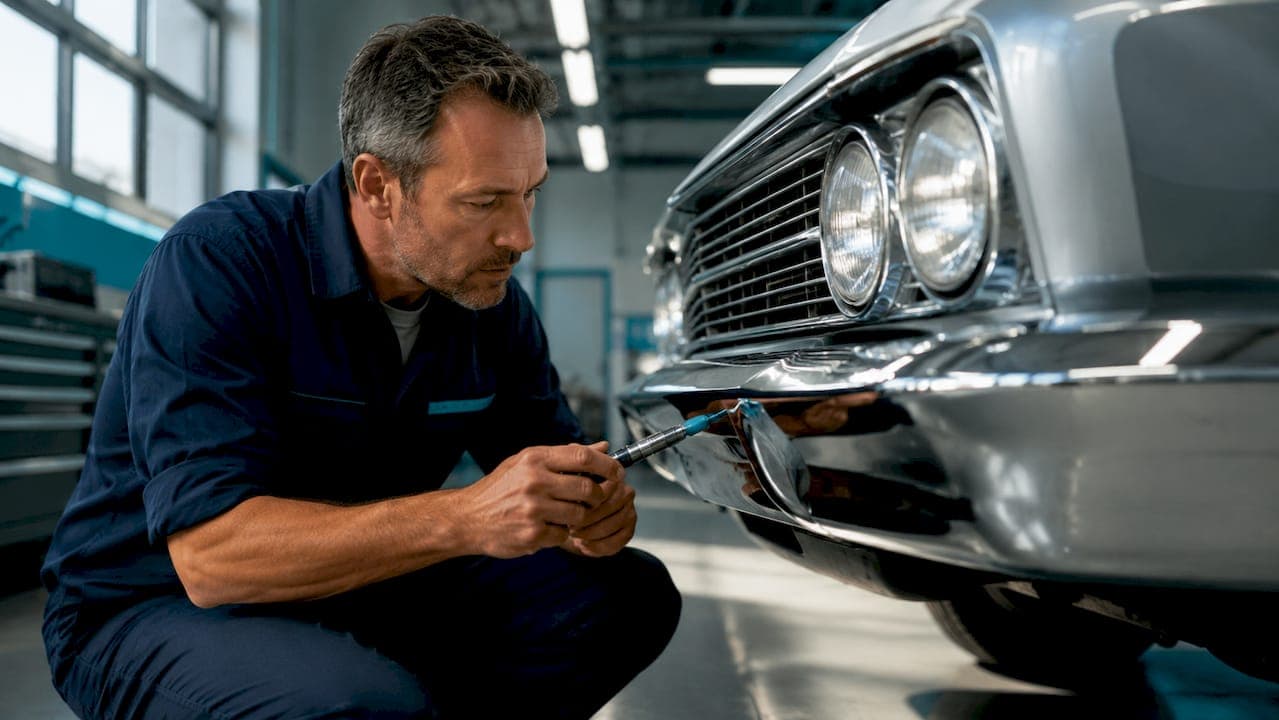
Classic car dent repair requires a fundamentally different approach than fixing a modern vehicle. The heavier gauge steel, original factory paint, and irreplaceable panel geometry of vintage vehicles mean that every classic car dent repair consideration carries real consequences for value and authenticity. Paintless dent repair (PDR) handles the majority of minor damage without touching the original finish, but severe dents, stretched metal, and hidden corrosion demand traditional bodywork with period-correct materials. Choosing the wrong method can permanently reduce a collector car's market value and structural integrity.
1. Which dents qualify for PDR on a classic car?
PDR is the preferred first option for classic car owners because it preserves the original factory finish. 80%–90% of minor dents with intact paint qualify for PDR on any vehicle. That figure matters on a classic because the original paint is often the single most valuable surface on the car.
Classic cars present one specific challenge for PDR technicians: thicker metal. Pre-1980s American and European vehicles used heavier steel than modern cars, which requires more force and skill to massage back into shape without cracking the paint. A technician experienced with vintage vehicles will adjust their technique accordingly.
Dents that typically qualify for PDR on a classic car:
- Small round dents from hail, door dings, or minor impacts
- Dents with no sharp creases or folds in the metal
- Damage located away from panel edges, seams, and body lines
- Areas where the technician can access the back of the panel
Dents that do not qualify for PDR:
- Dents with cracked, chipped, or flaking paint
- Sharp creases or heavily stretched metal
- Damage near welded seams or structural supports
- Rust-compromised panels where the metal has lost integrity
Pro Tip: Address dents as soon as you notice them. Early dent repair reduces stress on the paint and lowers the risk of cracking, which is especially critical on vintage lacquer and enamel finishes that have already aged and become brittle.
2. When traditional bodywork is the right call
Traditional dent repair becomes necessary when the metal is stretched, creased, or when the paint is already compromised. Severe dents require professional classic car body repair involving OEM color matching and period-correct finishes, with timelines ranging from 2–3 weeks for minor work to several months for larger restoration jobs. That timeline reflects the complexity of sourcing correct paint formulas and properly preparing vintage metal.
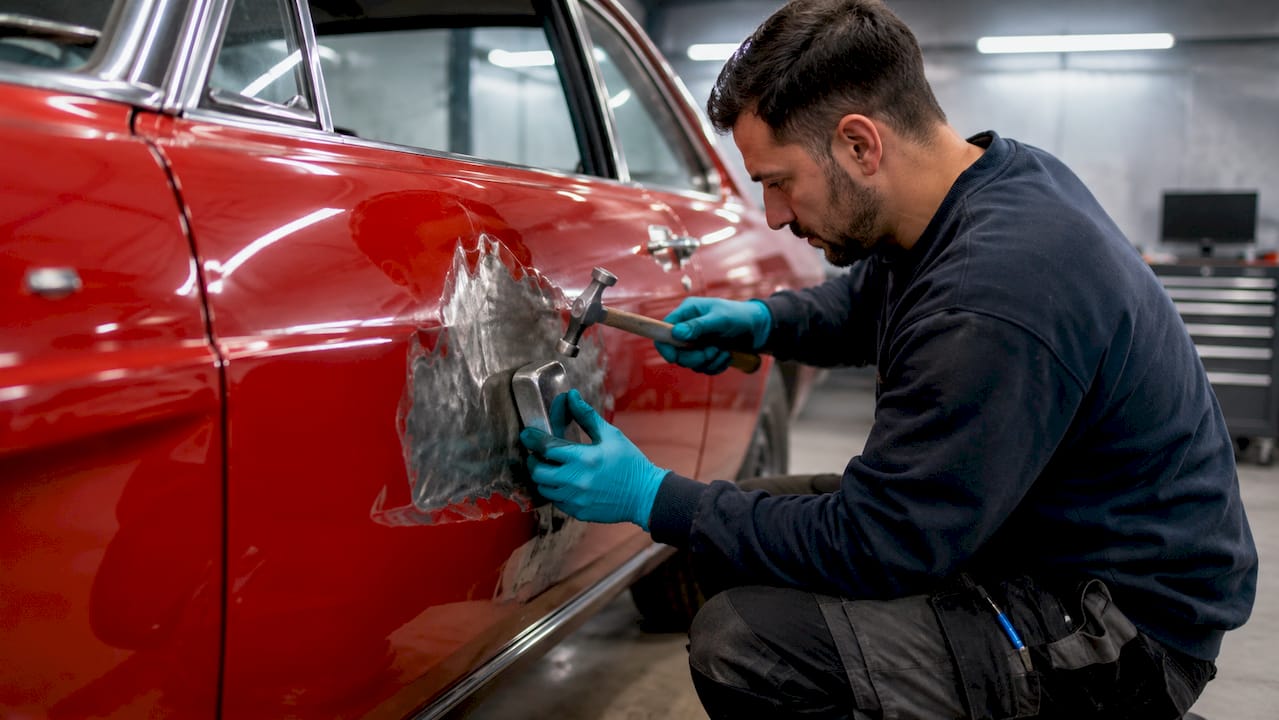
Period-correct paint matching is not optional on a collector car. Using a modern basecoat-clearcoat system on a car originally finished in single-stage lacquer or alkyd enamel changes the visual character of the paint and can reduce show value. A specialist will identify the original finish type and match it exactly.
Situations that require traditional bodywork:
- Dents with visible paint cracking, chipping, or bare metal exposure
- Creased panels where the metal has folded rather than simply deflected
- Damage near structural components like frame rails or door pillars
- Any repair requiring filler, primer, and color-matched paint
Classic cars with unibody or ladder frames require specialized frame straightening equipment and experienced technicians. A general body shop without vintage vehicle experience may straighten the frame to modern tolerances that do not match the original specifications. That error is difficult and expensive to correct.
3. Lead loading vs. plastic filler: the materials debate
The choice of filler material defines the long-term quality of any classic car dent restoration. Lead loading is the period-correct method for seams and joints on British classics from the 1950s through the 1970s, offering superior longevity and appearance over plastic filler. Lead bonds structurally through tinning and capillary action, creating a repair that moves with the metal rather than cracking away from it over time.
Plastic polyester filler is faster and cheaper, but it carries a serious risk on vintage vehicles. Improper filler use can hide corrosion or poor structural repairs, causing future cracks or bubbling under the paint. On a car worth tens of thousands of dollars, a filler repair that fails in five years is not a bargain.
Pro Tip: Before any classic car repair is painted over, ask the shop to document the bare metal condition with photographs. Visible proof that the metal was clean and rust-free before primer application protects you at resale and confirms the repair was done correctly.
"Rust often hides in areas invisible to casual inspection. Thorough structural and rust analysis before dent repair is essential for both safety and long-term value."
Epoxy primer as the first coat creates an airtight, waterproof seal that prevents rust from forming under the paint. Low-quality primers cause sand scratch swelling and paint defects that appear months after the repair. Epoxy primer is the only adequate first coat for a classic car restoration.
4. Evaluating dent location, size, and paint condition
Not all dents are equal, and the location of damage on a classic car often matters more than its size. Dent depth, sharp creases, and location near panel edges or structural components all complicate repair and directly affect which method is appropriate. A shallow dent on a flat door skin is a very different problem from a shallow dent on a curved fender near a body line.
Paint condition tells you how much time you have. Cracked or chipped paint exposes bare metal to moisture, and on a classic car, that means rust can begin forming within days in humid climates. A dent with compromised paint is no longer just a cosmetic issue.
| Dent characteristic | Recommended repair approach |
|---|---|
| Small, round, paint intact | PDR by a vintage-experienced technician |
| Shallow crease, paint intact | PDR assessment first; traditional repair if crease is sharp |
| Deep dent, paint cracked | Traditional bodywork with period-correct primer and paint |
| Dent near seam or body line | Traditional bodywork; PDR access is typically blocked |
| Rust visible at dent site | Full rust treatment before any cosmetic repair |
Hidden rust and structural metal corrosion are common in classic cars and must be assessed before any repair begins. A technician who skips this step delivers a temporary fix that will fail and cost more to correct later.
5. Post-repair maintenance to protect your investment
A quality dent repair on a classic car is only as good as the maintenance that follows it. Regular inspections every 6–12 months catch early signs of paint cracking, rust bubbling, or filler separation before they become expensive problems. On a vintage vehicle, catching a repair failure early can mean the difference between a touch-up and a full panel replacement.
Climate and storage conditions directly affect how long a repair lasts. Moisture is the primary enemy of any classic car repair, particularly in areas where the paint was cut or disturbed. Storing a classic in a climate-controlled garage and keeping it off the road during winter months significantly extends the life of both the original finish and any repaired areas.
Signs that a repair is failing:
- Paint bubbling or lifting at the repair edge
- Hairline cracks appearing around a filled area
- Rust staining bleeding through the paint surface
- Soft spots when pressing gently on a repaired panel
Regular driving also helps. Keeping seals lubricated and fluids circulating prevents the kind of dry-rot deterioration that accelerates paint cracking around repaired areas. A classic car that sits for years without being driven deteriorates faster than one that is used regularly and inspected consistently.
Pro Tip: Choose a shop that specializes in classic vehicles for your annual inspections, not a general body shop. Vintage specialists recognize early repair failures that a generalist technician will miss entirely.
6. Documentation and its effect on resale value
Professional documentation of all classic car repairs preserves and can increase market value. A complete repair history with photographs, paint codes, materials used, and technician credentials gives a buyer confidence that the car was treated correctly. Without documentation, a buyer has no way to verify the quality of past work and will discount the price accordingly.
Documentation also protects you with insurance. If a repaired panel is later damaged again, an insurer needs proof of the prior repair's scope and cost to settle a claim fairly. Keeping a physical and digital record of every repair is one of the simplest ways to protect a significant investment.
Key takeaways
Classic car dent repair done correctly preserves original paint, uses period-appropriate materials, and addresses hidden rust before any cosmetic work begins.
| Point | Details |
|---|---|
| PDR suits most minor dents | 80%–90% of minor dents with intact paint qualify for PDR, preserving the original factory finish. |
| Traditional repair needs period-correct materials | Severe dents require color-matched paint, epoxy primer, and lead loading where appropriate. |
| Location and paint condition drive method choice | Dents near seams, body lines, or with cracked paint require traditional bodywork, not PDR. |
| Hidden rust must be treated first | Structural corrosion under a dent must be fully addressed before any cosmetic repair is applied. |
| Documentation protects and increases value | Photographic records and material logs at every repair stage support resale value and insurance claims. |
What I've learned watching classic cars get repaired wrong
The most common mistake I see classic car owners make is choosing speed over authenticity. A general body shop can fill a dent, shoot some paint, and hand the car back in three days. It looks fine in the parking lot. Six months later, the filler cracks, rust bleeds through, and the repair costs three times as much to fix properly.
The second mistake is treating PDR as a universal solution. PDR is genuinely excellent for the right dents on the right cars. But a technician without vintage vehicle experience will underestimate how differently aged lacquer behaves under pressure compared to modern clearcoat. I have seen PDR attempts on 1960s lacquer finishes cause more damage than the original dent.
The uncomfortable truth about collector car dent repair standards is that patience is the most valuable tool in the process. A proper traditional repair on a significant classic takes weeks, not days. That timeline exists because the metal prep, rust treatment, primer coats, and paint matching each require time to cure and be inspected before the next step begins. Rushing any stage produces a repair that looks correct and fails early.
My consistent advice: work only with shops that have documented experience with vintage vehicles, ask to see their process before committing, and never accept a repair without full photographic documentation of every stage. The cars that hold and grow in value are the ones whose owners treated every repair as a permanent record of stewardship.
— Martin
Dent-boys and classic car dent repair
Classic car owners who want their original paint preserved without the risk of a rushed repaint have a direct option with Dent-boys. Dent-boys specializes in paintless dent repair that leaves factory finishes untouched, with a lifetime warranty on every repair and a $0 deductible process that removes the insurance friction most owners dread.

Dent-boys offers free estimates, pick-up and delivery, and a rental vehicle during the repair period. For classic car owners who have spent years building a collection, that level of care and accountability is exactly what the work demands. Contact Dent-boys for a free inspection and estimate before any dent on your classic gets worse.
FAQ
What makes classic car dent repair different from modern car repair?
Classic cars use heavier gauge steel, original factory paint formulas, and period-specific construction methods that require specialized techniques. Applying modern repair standards to a vintage vehicle risks damaging irreplaceable finishes and reducing collector value.
Can PDR be used on all classic car dents?
PDR works on 80%–90% of minor dents with intact paint, but dents with creases, cracked paint, or rust require traditional bodywork. A vintage-experienced technician can assess which method applies.
How long does traditional classic car dent repair take?
Repair timelines range from 2–3 weeks for minor work to several months for larger jobs involving frame straightening, panel fabrication, or full repaints with period-correct finishes.
Why is epoxy primer required on classic car repairs?
Epoxy primer creates an airtight, waterproof seal that prevents rust from forming under the paint. Low-quality primers allow moisture penetration, which causes paint defects and repair failure within months.
Does repair documentation affect a classic car's resale value?
Yes. Professional repair documentation with photographs, materials records, and technician credentials preserves and can increase market value by giving buyers verified proof of correct restoration work.