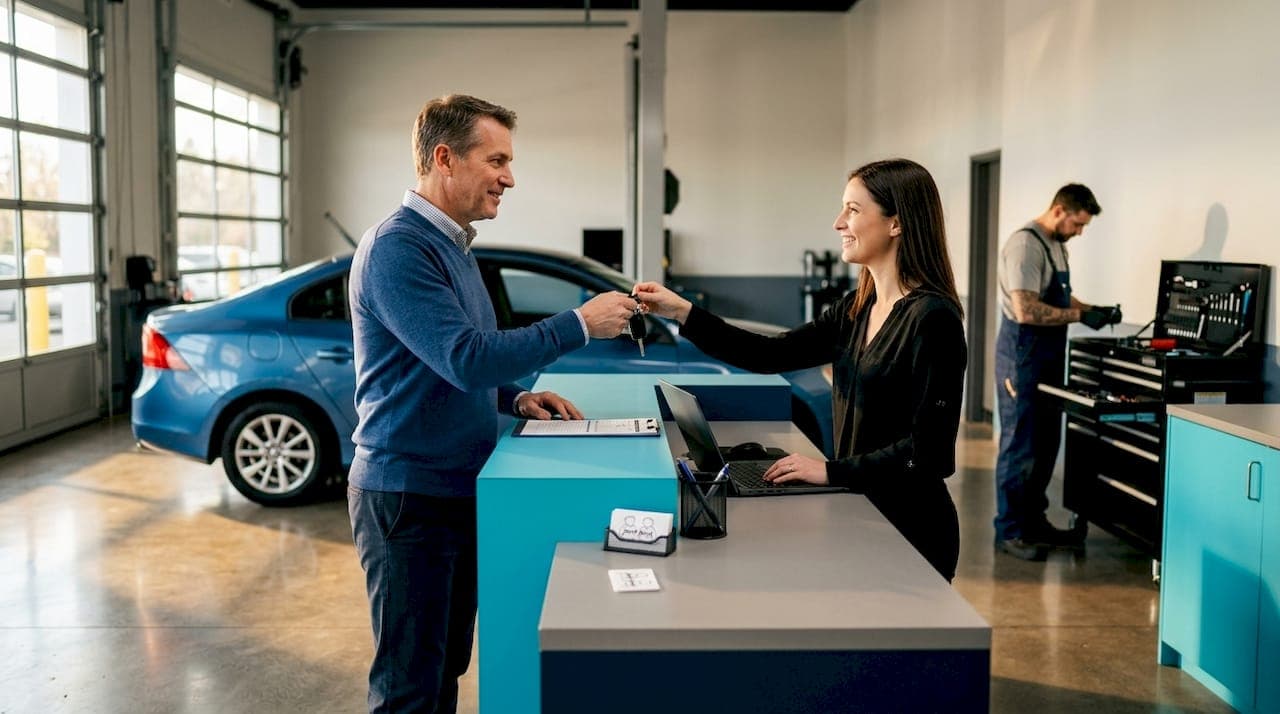
Dent repair turnaround time is the total duration from the moment you drop off your vehicle to the moment you drive it home restored. That window ranges from under two hours for a minor Paintless Dent Repair (PDR) job to several weeks for severe structural damage requiring parts, paint, and insurance approval. The two core repair methods, PDR and traditional body repair, drive most of the difference in dent repair timeframes. Understanding what separates a same-day fix from a multi-week ordeal helps you plan smarter, ask better questions, and avoid being caught off guard.
What factors affect dent repair turnaround time?
Dent repair duration is never a single fixed number. Several variables stack on top of each other, and missing even one can throw off your schedule.
Size and complexity of the dent are the most obvious factors. A quarter-sized door ding on a flat panel is a fundamentally different job than a crumpled fender with creased metal. Larger, deeper dents require more manipulation time and are more likely to need paint correction afterward.
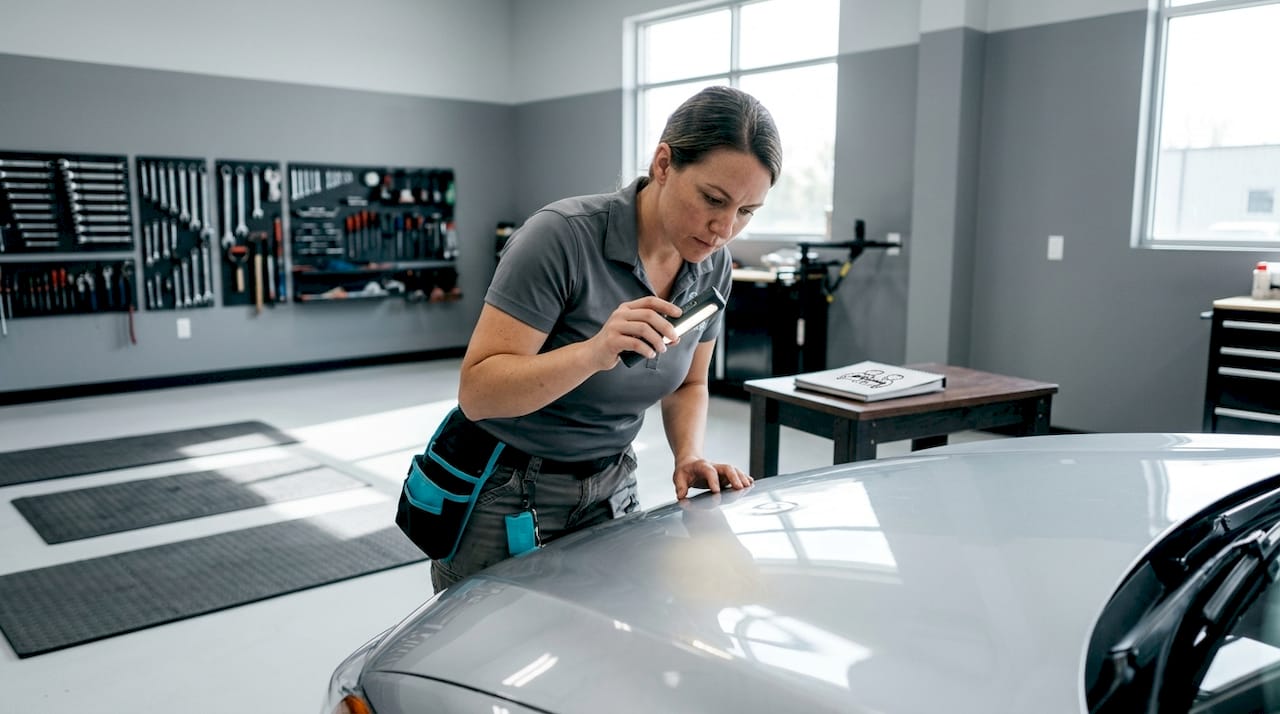
Repair method is the single biggest driver of dent repair timeline differences. PDR skips sanding, filler, and paint entirely. Traditional body repair adds all three, plus curing time. The method chosen shapes every other variable that follows.
Dent location and panel accessibility matter more than most car owners realize. A dent on the center of a hood is easy to reach. A dent tucked behind a door brace or near a body seam may require partial disassembly, which adds hours to the job.
Paint damage is a hard stop. Once the paint is cracked or chipped, PDR alone cannot finish the job. The shop must sand, prime, paint, and cure, and paint curing adds 24–48 hours that no shop can safely skip.
Number of dents scales time directly. A single door ding is one thing. Hail damage across an entire roof, hood, and trunk lid is a different category of work entirely, often requiring one to two full days even with PDR.
Insurance approval and parts availability are the wildcards most car owners underestimate. Parts backorders average 3–7 days for standard vehicles and 7–14 days for luxury or EV models. Insurance supplement approvals add another 1–3 days on top of that.
ADAS sensor recalibration is a newer delay that catches many owners off guard. ADAS calibration adds roughly 3 days per sensor requiring adjustment, and vehicles needing calibration average 20% longer repair times overall. Any modern vehicle with radar, cameras, or parking sensors near the damaged panel may trigger this requirement.
- Dent size and depth
- Repair method (PDR vs. traditional)
- Panel location and access difficulty
- Paint damage presence
- Number of dents or affected panels
- Insurance approval speed
- Parts availability
- ADAS sensor recalibration needs
Pro Tip: Ask the shop upfront whether your vehicle has ADAS sensors near the damaged panel. That single question can save you from a surprise 3-day extension on your anticipated dent repair time.
How does PDR compare to traditional repair for turnaround time?
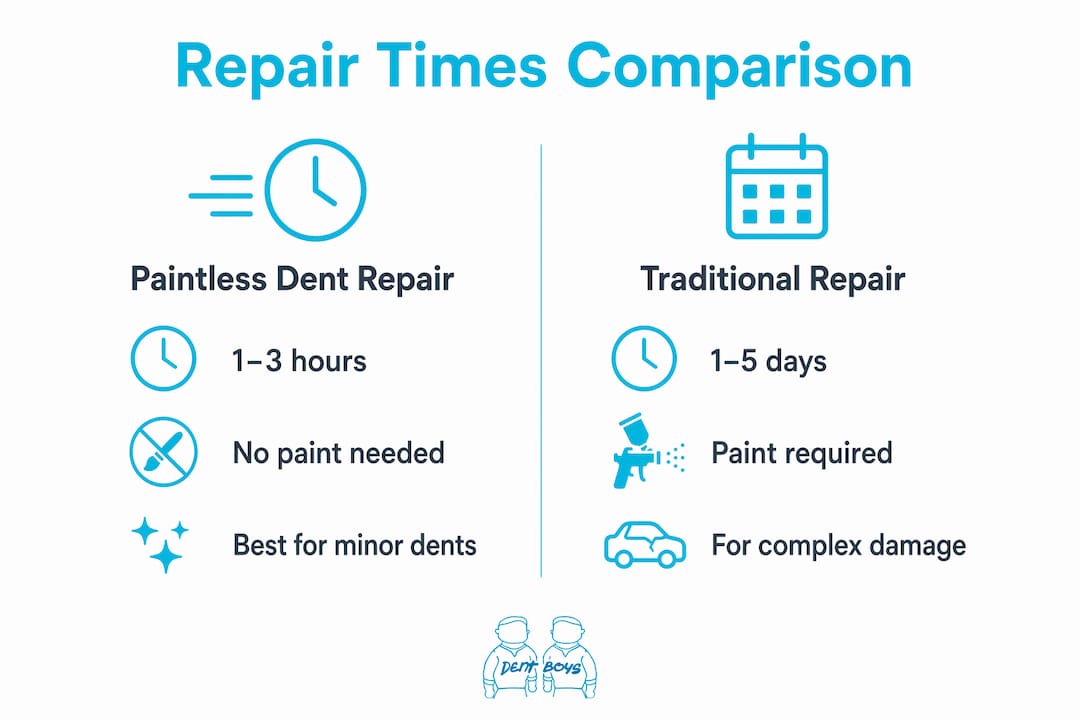
PDR is the fastest route for minor dents because it skips repainting and curing entirely, but it only works when the paint is intact and the metal can be massaged back without cracking.
PDR typically takes 1–3 hours for small dents and can extend to 1–2 days for complex or multiple dents like widespread hail damage. Same-day service is common for minor jobs. That speed is the core reason PDR has become the preferred method for car owners who want minimal downtime.
Traditional body repair follows a longer sequence: sanding, applying filler, priming, painting, and curing. Each step must dry or cure before the next begins. Scratch repairs needing a full repaint take 2–6 hours of labor, but the curing window pushes total time to 1–2 days for a single panel. A full panel repaint with blending can stretch to several days.
Even the best shops cannot speed up paint curing safely. That 24–48 hour window is a physical requirement, not a scheduling preference. Rushing it causes peeling, bubbling, and color mismatch within months.
| Repair type | Typical duration | Paint required | Best for |
|---|---|---|---|
| PDR (minor dent) | 1–3 hours | No | Small dings, no paint damage |
| PDR (hail or multiple dents) | 1–2 days | No | Widespread minor dents |
| Traditional (scratch or chip) | 1–2 days | Yes | Chipped or cracked paint |
| Traditional (moderate panel damage) | 3–5 days | Yes | Larger dents with paint damage |
| Traditional (severe or structural) | 1 week or more | Yes | Crumpled panels, structural work |
Pro Tip: If your dent has no paint damage, always ask whether PDR is an option before agreeing to a traditional repair estimate. Choosing PDR when eligible cuts your repair duration by days, not hours.
What are realistic dent repair timelines for common damage types?
Setting realistic expectations starts with matching your damage category to an honest time range. Shops that quote unrealistically short windows often create frustration when the job runs long.
Minor damage covers small door dings, minor creases, and light surface scratches with no paint cracking. Minor repairs like small dents and touch-ups usually take 1–3 days at a traditional shop, though a PDR specialist can often finish the same job in under three hours. The difference is entirely about method.
Moderate damage includes larger dents, multiple affected panels, or any dent where the paint is compromised. Repair timelines for dents with paint damage typically range from 1–5 business days because curing alone adds 24–48 hours before the car can be safely handled. Blending adjacent panels to match color adds more time.
Severe or structural damage is a different category entirely. Repairs involving bent frames, crumpled structural panels, or significant parts replacement can run one to several weeks. Insurance supplement approvals, parts backorders, and ADAS recalibration all compound the timeline.
Here is a practical reference by damage category:
| Damage category | Repair method | Estimated time |
|---|---|---|
| Small door ding (no paint damage) | PDR | 1–3 hours |
| Minor scratch or chip | Touch-up or spot repaint | 1–4 hours |
| Moderate dent with paint damage | Traditional body repair | 1–5 business days |
| Hail damage (multiple dents) | PDR | 1–2 days |
| Large panel damage with repaint | Traditional body repair | 3–7 days |
| Structural or severe collision damage | Traditional with parts | 1–3 weeks or more |
- Confirm whether your shop uses a spray booth with temperature control, which speeds paint curing.
- Ask for a written timeline estimate, not just a verbal one.
- Verify whether your insurance requires a specific shop, since switching shops mid-process resets approval timelines.
- Check whether your vehicle needs ADAS recalibration before approving any repair near sensors.
How to minimize your dent repair duration
The fastest repairs happen when car owners show up prepared and choose the right method for the damage at hand.
Schedule early in the week. Most shops are busiest on mondays and fridays. Dropping off on tuesday or wednesday often means your car gets into the bay faster, reducing wait time before work even begins.
Choose PDR when the paint is intact. PDR is the fastest route for minor dents because it avoids repainting and curing. If your dent qualifies, insisting on PDR over a traditional estimate saves you days of downtime.
Understand the repair workflow before you commit. A standard repair moves through assessment, insurance or self-pay approval, actual repair work, paint curing if needed, and final inspection. Each stage has its own timeline. Knowing which stage is the bottleneck for your specific job helps you ask the right questions.
Confirm parts availability before dropping off. If your repair requires replacement parts, ask the shop to order them before your appointment. Arriving with parts already on hand eliminates the most common source of unexpected delays.
- Get a written estimate that breaks down labor, curing, and inspection time separately.
- Ask whether parts are in stock or need to be ordered.
- Confirm ADAS calibration requirements for your vehicle.
- Choose PDR if paint is undamaged.
- Plan for a buffer of one extra day beyond the quoted timeline for any job involving paint.
Pro Tip: Parts ordering and insurance processes are the most common reasons repairs run past the original estimate. Build a one to two day buffer into your schedule for any job that involves insurance or parts.
Key Takeaways
PDR is the fastest dent repair method available, completing minor jobs in hours, while traditional paint repairs require a minimum of 24–48 hours for curing alone, making method selection the single most important factor in your total repair duration.
| Point | Details |
|---|---|
| PDR beats traditional on speed | Minor PDR jobs finish in 1–3 hours; traditional repairs with paint take 1–5 business days minimum. |
| Paint curing cannot be rushed | Curing adds 24–48 hours to any painted repair, regardless of shop quality or equipment. |
| Insurance and parts add days | Parts backorders average 3–7 days; insurance approvals add 1–3 more days to the timeline. |
| ADAS calibration is a hidden delay | Sensors near damaged panels require calibration that adds roughly 3 days per sensor. |
| Preparation cuts downtime | Confirming parts availability and ADAS needs before drop-off removes the most common timeline surprises. |
What I've learned about repair timelines after years in this industry
The most common mistake car owners make is treating the quoted repair time as a guarantee rather than an estimate. Shops quote based on the information they have at the moment of the estimate. Hidden damage, back-ordered parts, and insurance supplement requests all surface after the car is already in the bay.
The second mistake is prioritizing speed over method fit. I have seen car owners push shops to rush a painted repair, only to return six months later with peeling clear coat. Paint curing is not a formality. It is the step that determines whether the repair lasts two years or twenty.
What actually works is choosing the right method first, then managing the timeline around it. If your dent qualifies for PDR, that is almost always the better call, not just because it is faster, but because it preserves the original factory paint. Factory paint holds up better than any respray, full stop.
The shops I trust most are the ones that give you a breakdown by stage, not just a single delivery date. When a shop tells you "three days," ask them to break that into assessment, repair, curing, and inspection. If they can do that without hesitation, they know their own process. If they cannot, that is a signal worth taking seriously.
Communication is the variable that separates a good repair experience from a frustrating one. A shop that calls you when a parts delay hits is a shop that respects your time. One that lets you show up on the promised day to find the car still in pieces is one that does not.
— Martin
Dent-boys: fast, reliable dent repair with no guesswork on timing
Dent-boys specializes in paintless dent repair and handles everything from single door dings to full hail damage restoration. Their process includes free estimates, pick-up and delivery service, and a lifetime warranty on every repair.
Dent-boys offers a $0 deductible option and provides a rental vehicle while your car is being repaired, so your schedule does not stop because your car does. Their team communicates clear timelines from the first estimate through final inspection, which means no surprise delays and no vague delivery windows. For car owners who want their vehicle back fast and restored to factory condition, Dent-boys is the call to make first.
FAQ
How long does a typical dent repair take?
Minor PDR repairs take 1–3 hours for small dents. Traditional repairs involving paint typically take 1–5 business days depending on damage severity and curing time.
What is the fastest dent repair option available?
Paintless Dent Repair is the fastest option for dents with no paint damage. A skilled PDR technician can complete minor jobs in under three hours, often the same day.
Does paint damage always extend the repair timeline?
Yes. Any repair requiring paint adds at least 24–48 hours for curing and clear coat durability. That window cannot be shortened without risking the quality of the finish.
Can insurance approval delay my dent repair?
Insurance supplement approvals add 1–3 days to most repair timelines. Parts backorders compound that further, averaging 3–7 days for standard vehicles and up to 14 days for luxury or EV models.
Does my car's ADAS system affect repair time?
Yes. If sensors near the damaged panel require recalibration, expect roughly 3 additional days per sensor. Vehicles needing ADAS calibration average 20% longer repair times overall.