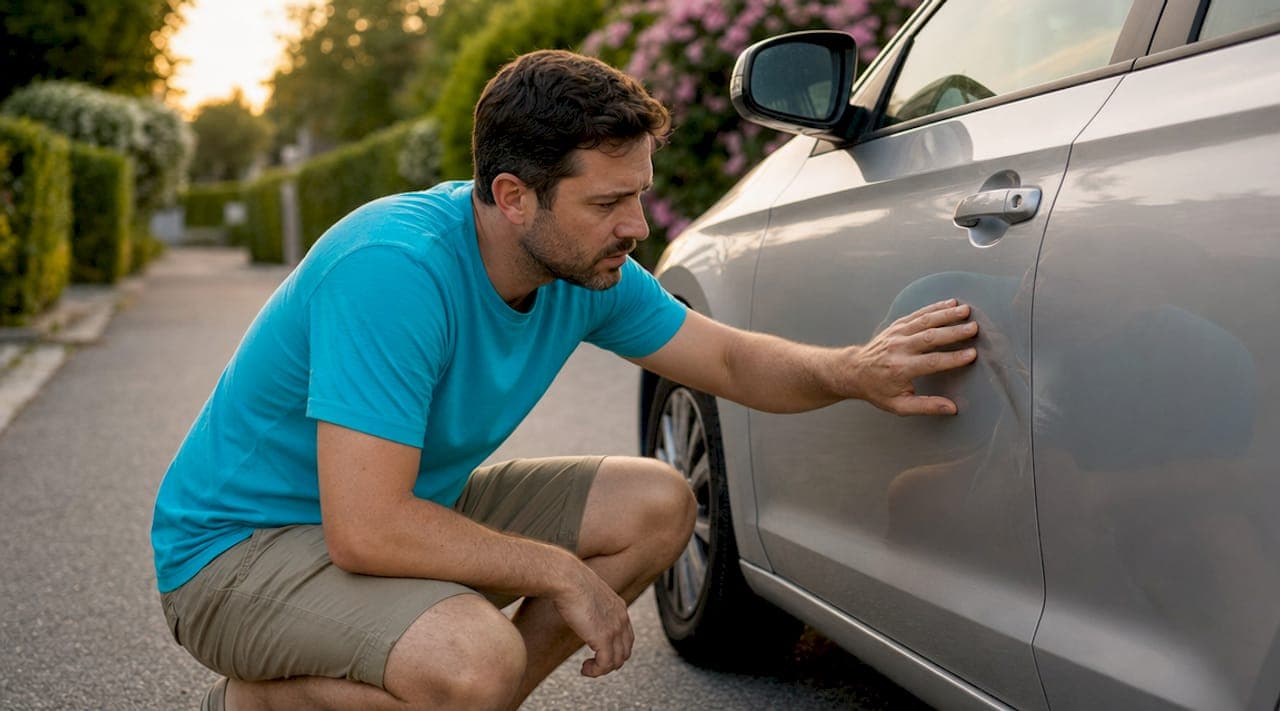
Repairable dents are defined as small to medium, shallow depressions in a vehicle's body where the paint remains fully intact. The most effective method for fixing these dents is paintless dent repair (PDR), a technique that uses specialized tools to massage metal back to its original shape without fillers or repainting. Common examples of repairable dents include door dings, hail damage, and minor parking lot impacts. PDR costs $75–$350 per dent, compared to $300–$1,500 or more for traditional body shop work. Knowing which dents qualify saves you real money.
1. examples of repairable dents perfect for PDR
Paintless dent repair works best on small to medium dents, ranging from coin-sized to roughly dinner-plate size, where the paint is undamaged. These are the dents that respond to PDR tools because the metal has not been stretched, folded, or cracked. The paint layer stays flexible enough to move with the metal during repair.
The most common repairable dent examples you will encounter include:
- Door dings from adjacent car doors in parking lots, typically round and shallow
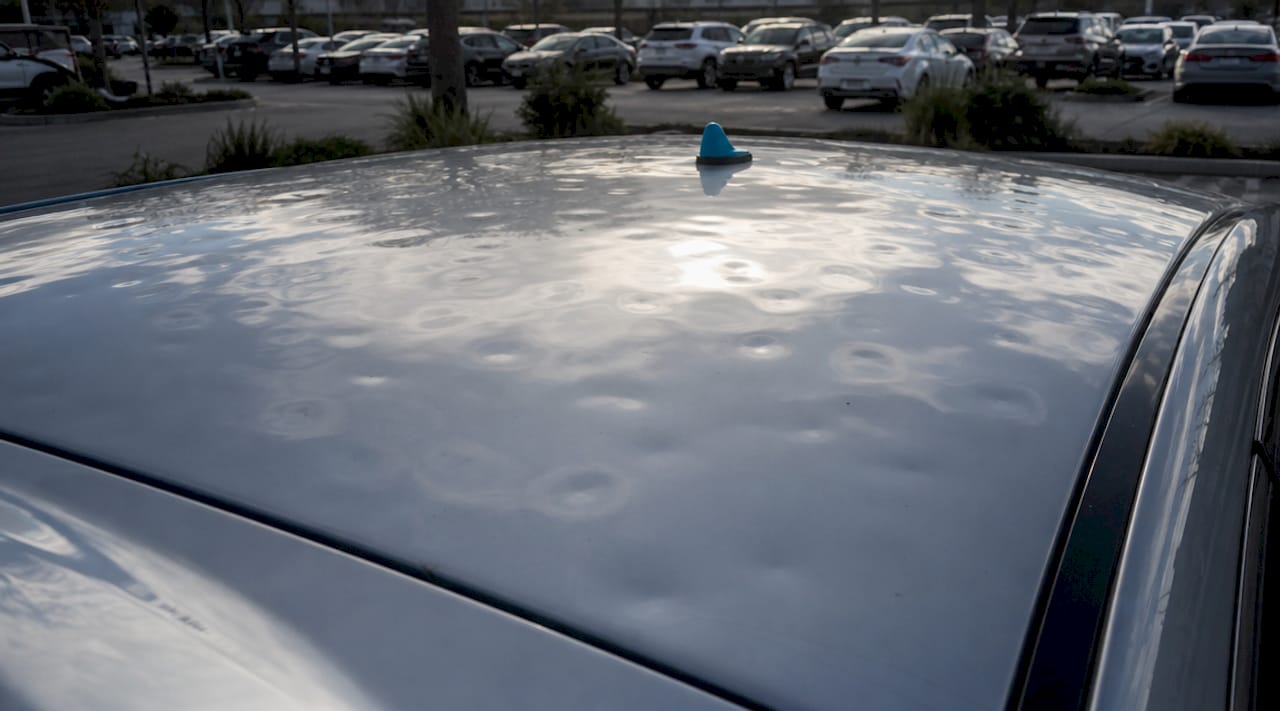
- Hail damage dents scattered across hoods, roofs, and trunks after a storm
- Shopping cart dents on door panels and quarter panels
- Minor parking lot impacts from poles or bumpers that leave smooth, rounded impressions
- Antenna or debris strikes on flat hood or roof surfaces
Hail dents are typically shallow with intact paint, which makes them ideal candidates for PDR. A single hail storm can leave dozens of small dents across a vehicle, and PDR handles all of them without touching the factory finish.
Pro Tip: Run your hand across the dent in low light. If the depression feels smooth and rounded with no sharp edges, it is almost certainly a good candidate for PDR.
2. diy-friendly dents you can fix at home
Shallow dents on flat metal panels without any creases are the only types you should attempt to repair yourself. Trying DIY methods on the wrong dent type risks making the damage worse and more expensive to fix professionally.
Here are the most reliable DIY approaches for minor dents:
- Hairdryer and compressed air method. Heat the dented area for 2–3 minutes, then immediately spray compressed air upside down to rapidly cool the metal. The thermal contraction can pop shallow dents back into shape. This works best on plastic bumpers and thin metal panels.
- Plunger method. A standard cup plunger creates enough suction to pull out shallow, round dents on doors and hoods. Wet both the dent and the plunger rim before applying pressure.
- Glue tab and puller kits. These DIY dent repair kits cost $30–$80 and work by bonding a plastic tab to the dent center, then using a slide hammer or T-bar to pull the metal outward. They are effective on flat panels with no paint damage.
- Dry ice method. Pressing dry ice against a sun-warmed dent causes rapid cooling that contracts the metal. Use gloves and work quickly.
DIY methods have real limits. They fail on dents near body lines, on curved panels, or anywhere the paint has cracked. Attempting to force a stubborn dent with a plunger or tab puller can create a high spot, which is a raised bump that is harder to fix than the original dent.
Pro Tip: Test any DIY method on the least visible part of the dent first. If the metal does not respond within two attempts, stop and call a professional.
3. dents that require traditional body shop repair
Deep dents with sharp creases, folded metal, or broken paint cannot be fixed with PDR. Traditional body shop repair is necessary when the metal has been stretched or the paint layer has cracked, chipped, or separated from the surface.
The following dent types fall outside what PDR can fix:
- Deep creased dents where the metal has folded along a sharp line, common in side-swipe collisions
- Dents with paint cracks or chips that expose bare metal underneath
- Damage on body edges and flanges where PDR tools cannot reach the backside of the panel
- Dents accompanied by rust that has already begun spreading from exposed metal
- Structural damage involving bent frame rails or crumple zones
Traditional repair involves grinding the damaged area, applying body filler, sanding, priming, and repainting the entire panel. The process typically takes several days and costs $300–$1,500 or more per panel. The repainted surface, while visually clean, will never perfectly match the factory finish on older vehicles.
| Dent Type | Repair Method | Estimated Cost |
|---|---|---|
| Shallow, rounded, paint intact | Paintless Dent Repair | $75–$350 |
| Deep crease, paint intact | Traditional body shop | $300–$800 |
| Dent with paint damage | Traditional body shop | $400–$1,500+ |
| Rust present | Traditional + rust treatment | $500–$2,000+ |
4. PDR vs. traditional repair: which method fits your dent?
PDR and traditional body shop repair solve different problems. Choosing the wrong method wastes money and can reduce your vehicle's resale value.
PDR costs $75–$350 per dent and typically takes one hour to a few days for extensive hail damage. Traditional repair costs $300–$1,500 or more per panel and requires days in the shop. The cost difference is significant, but the method choice is determined by the dent, not your budget.
| Factor | Paintless Dent Repair | Traditional Repair |
|---|---|---|
| Paint condition required | Fully intact | Damaged or intact |
| Dent depth | Shallow to moderate | Any depth |
| Time to complete | 1 hour to 2 days | 3–7 days |
| Factory paint preserved | Yes | No |
| Effect on resale value | Minimal impact | Can lower value |
| Cost per dent/panel | $75–$350 | $300–$1,500+ |
Factory paint preservation is the most underrated advantage of PDR. Vehicles with original factory paint consistently sell for more than those with repainted panels. A CarFax or vehicle history report does not flag PDR repairs, but a paint meter scan at a dealership will reveal repainted panels immediately.
PDR is widely endorsed by insurance companies for hail damage claims because it costs less and preserves the vehicle's original finish. If you file a hail claim, ask your adjuster specifically whether PDR is approved before authorizing any traditional repair work.
5. when to call a pro and when to wait
Timing and context determine the right repair decision as much as the dent type itself. Delaying minor dent repairs risks rust formation and more costly structural damage later, especially in climates with road salt or high humidity.
Here is how to think through each scenario:
- Single door ding, paint intact. A professional PDR technician handles this in under an hour. DIY is reasonable if the dent is on a flat panel and you have a glue tab kit.
- Hail damage across multiple panels. Call a PDR specialist immediately. Insurance companies favor PDR for hail claims, and many PDR shops work directly with insurers to handle paperwork.
- Dent near a body line or crease. Do not attempt DIY. Body lines require precise tool placement to avoid creating high spots or distorting the surrounding metal.
- Dent with any paint cracking. Skip PDR and go straight to a body shop. Exposed metal rusts faster than most car owners expect.
- Older vehicle with existing rust. Get a full inspection before authorizing any repair. Rust under a dent changes the entire repair scope and cost.
Experienced PDR technicians work from dent edges inward, never pushing from the center out. Aggressive center-out pressure causes oil-canning, a condition where the metal flexes back and forth without holding its shape. This is permanent and cannot be corrected with PDR.
Pro Tip: Ask any PDR technician to show you their process on the first dent before they work the entire vehicle. A qualified tech will always start at the outer edge of the dent and work slowly inward.
Key takeaways
Repairable dents are shallow, rounded depressions with intact paint that respond to PDR, saving car owners hundreds of dollars compared to traditional body shop repair.
| Point | Details |
|---|---|
| PDR suits small to medium dents | Coin to dinner-plate size with undamaged paint qualifies for paintless repair. |
| Cost difference is significant | PDR runs $75–$350 per dent versus $300–$1,500 or more for traditional repair. |
| DIY has strict limits | Only attempt home repairs on shallow, flat-panel dents with no creases or paint damage. |
| Factory paint preservation matters | PDR keeps original paint intact, protecting resale value in ways traditional repair cannot. |
| Act quickly on any dent | Delaying repair on exposed or cracked paint leads to rust and higher repair costs. |
What i have learned after years of watching dent repairs go wrong
Most car owners make the same mistake: they wait. A door ding sits for six months, the paint develops a hairline crack nobody noticed, and what was a $150 PDR job becomes a $600 panel repaint. I have seen this pattern repeat more times than I can count.
The second mistake is overestimating what DIY tools can do. Glue tab kits are genuinely useful for the right dent. But people buy them, use them on a crease or a curved panel, and then pull out a high spot that a body shop now has to grind down. The original dent would have been cheaper.
My honest recommendation: if you can cover the dent with a playing card and the paint is smooth, try a glue tab kit or call a PDR shop for a free estimate. If the dent has any sharp edge, any paint damage, or sits near a body line, skip the DIY entirely. The cost of getting it wrong always exceeds the cost of getting it right the first time.
Choosing a qualified PDR technician matters more than most people realize. Ask whether they work from the edges inward. Ask whether they offer a warranty. A technician who cannot answer those questions clearly is not someone you want working on your vehicle.
— Martin
Get your dents fixed right the first time with Dent-boys
If your vehicle has door dings, hail damage, or parking lot dents with intact paint, professional PDR is the fastest and most cost-effective path to a factory-quality finish.

Dent-boys specializes in paintless dent repair for all common dent types, from scattered hail damage to single door dings. Their service includes free estimates, pick-up and delivery, a $0 deductible option, and a lifetime warranty on every repair. You get your car back looking like it just left the factory, without the wait or the paint shop markup. Contact Dent-boys today for a free estimate and see why customers consistently praise the speed and quality of the results.
FAQ
What dents can be fixed with paintless dent repair?
PDR works on small to medium, shallow dents with fully intact paint, including door dings, hail damage, and shopping cart dents. Dents with creases, cracked paint, or rust require traditional body shop repair instead.
How much does dent repair cost?
PDR costs $75–$350 per dent, while traditional body shop repair runs $300–$1,500 or more per panel depending on damage severity. Choosing the right method for your dent type is the single biggest factor in controlling repair costs.
Can i fix a car dent myself at home?
DIY methods like glue tab kits and the hairdryer and compressed air technique work on shallow, flat-panel dents without paint damage. Attempting DIY on creased or curved-panel dents risks creating high spots that cost more to fix than the original damage.
Does dent repair affect my car's resale value?
PDR preserves factory paint and does not appear on vehicle history reports, so it has minimal impact on resale value. Traditional repaints, by contrast, are detectable by paint meter scans at dealerships and can lower a vehicle's appraised value.
How long does paintless dent repair take?
A single dent typically takes under one hour with PDR. Extensive hail damage covering multiple panels can take one to a few days, which is still significantly faster than traditional body shop timelines of three to seven days.