
Dents are defined as any deformation of a vehicle's body panels that disrupts the smooth, factory contour of the surface. Understanding how dents impact vehicle appearance goes beyond aesthetics. A single dent breaks the paint barrier, signals neglect to buyers, and can trigger a 10–15% drop in resale value before any negotiation even starts. Car owners who address dents early protect both the look and the market worth of their vehicle. Repair options like paintless dent repair (PDR) make that protection faster and more affordable than most owners expect.
How do dents affect the visual appeal of your car?
Dents disrupt the smooth, flowing lines that define a vehicle's factory appearance. Every modern car body is engineered with precise curves and contours. When a dent deforms a panel, it creates a shadow or highlight that stands out sharply under direct sunlight or artificial lighting. The effect is more visible than most car owners realize until they see it under side-on lighting, which is exactly how professional technicians evaluate repairs for blending flaws not visible from straight-on angles.
The paint surface compounds the problem. A dent does not just push metal inward. It stretches the paint and clear coat, often creating micro-cracks that are invisible to the naked eye at first. Over time, those micro-cracks allow moisture to penetrate, dulling the finish and creating a patchy, uneven look across the panel.
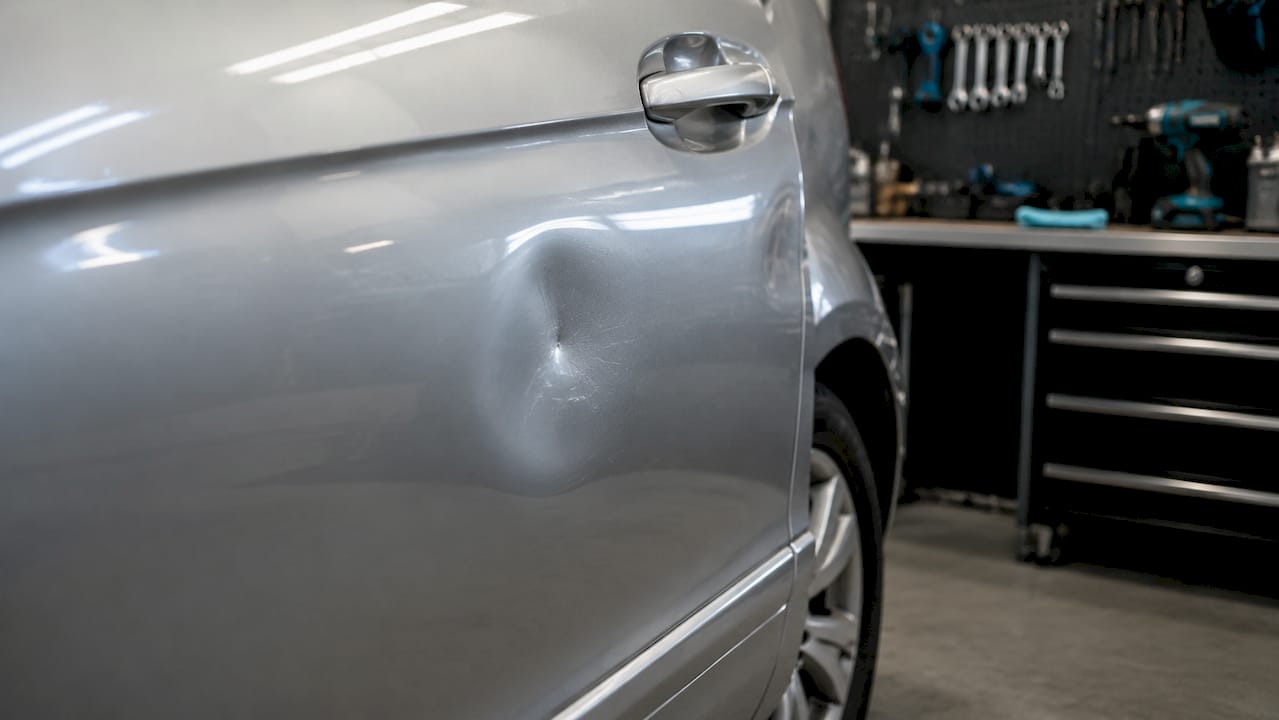
Even minor dents on doors, fenders, or quarter panels draw the eye immediately. The human brain is wired to detect asymmetry, and a dented panel breaks the visual rhythm of the entire side of the car. A vehicle that looks well-maintained commands attention for the right reasons. A dented one commands attention for the wrong ones.
Specific ways dents damage vehicle aesthetics:
- Distorted reflections that reveal panel deformation under any light angle
- Paint micro-failure (clear-coat stretching) that creates dull patches around the dent
- Shadow lines that make the panel look uneven from a distance
- Chipped or flaking paint at the dent's edges that worsens over time
- Mismatched sheen between repaired and unrepaired areas if poor repairs are done
Pro Tip: Walk around your car in a parking lot with overhead lighting. Crouch to eye level and look along each panel. Dents that are invisible standing up become obvious from that angle, and that is exactly how a potential buyer will inspect your car.
Why do dents lower your vehicle's resale value?
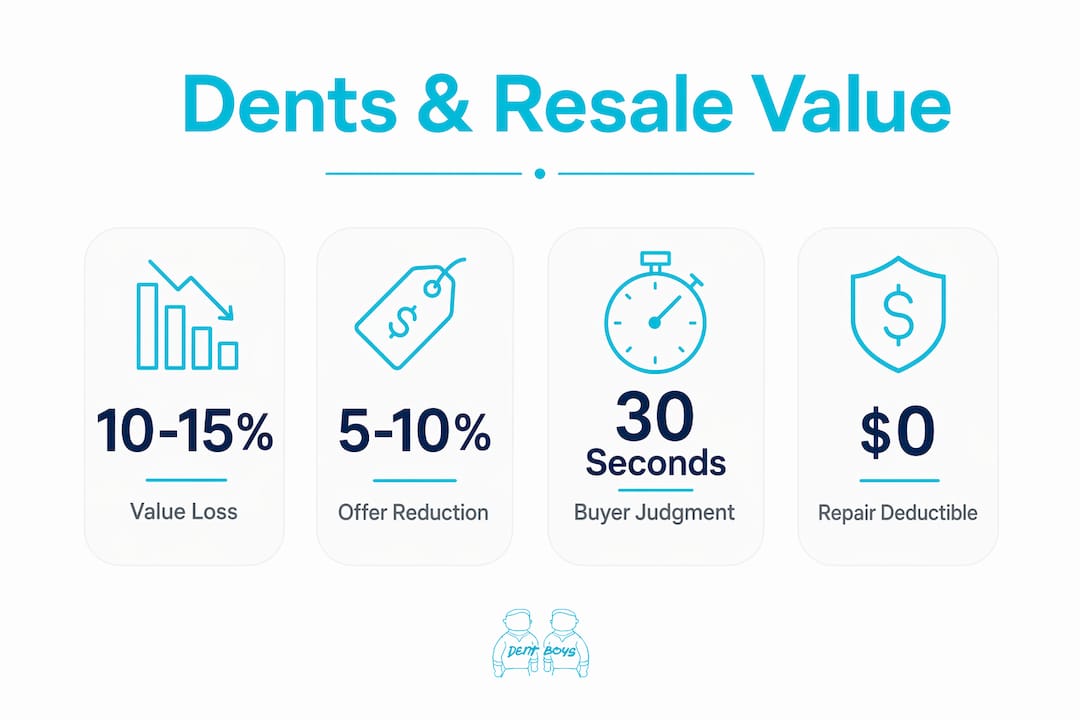
Buyers form opinions about a used car within about 30 seconds of seeing it. Dents activate immediate suspicion. The buyer's first thought is not "that's a small dent." It is "what else has been neglected?" That psychological shift is the real damage dents cause to resale value.
The financial impact is well-documented. Visible dents and scratches reduce used-car offers by 5–10% due to buyer perception of poor maintenance. Separate analysis puts the figure even higher, with dents commonly driving price reductions of 10–15% as buyers use cosmetic damage as negotiation leverage. On a $25,000 vehicle, that range represents a loss of $1,250 to $3,750 before you even respond to the first offer.
Multiple dents compound the problem significantly. A single door ding might be dismissed. Three or four dents across different panels tell a story of general carelessness. Multiple dents amplify buyer assumptions about hidden mechanical neglect, pushing the discount expectation well beyond what the visible damage alone would justify.
What buyers actually think when they see dents:
- The car was not garaged or cared for properly
- There may be unreported accident history
- Other maintenance items were probably skipped too
- The seller is motivated and will accept a lower price
- The vehicle may have hidden structural or paint issues
Dealerships and private buyers both use dents as leverage. A trade-in appraisal at a dealership will factor cosmetic condition into the offer immediately. Private buyers will photograph every dent and use them as talking points to push the price down. Repairing dents before listing a vehicle removes that leverage entirely.
What long-term damage can ignoring dents cause?
Paint is not just a cosmetic layer. It is the primary protective barrier between your vehicle's metal body and the environment. Once a dent compromises that barrier, the consequences accelerate quickly and quietly.
When a dent breaks or stretches the paint, moisture and debris reach the bare metal underneath. Maaco's repair data confirms that dents trap water and dirt under damaged paint, accelerating rust spread beyond the dent area itself. Rust does not stay contained. It migrates outward under the paint surface, creating bubbling and flaking that can cover a much larger area than the original dent.
The progression follows a predictable pattern:
- Dent forms. Paint stretches or cracks at the impact point.
- Moisture enters. Water and road salt reach the exposed metal.
- Oxidation begins. The metal starts to rust beneath the paint surface.
- Paint bubbles. The rust pushes the paint outward, creating visible bubbling.
- Panel damage spreads. Rust migrates beyond the dent, requiring panel replacement rather than simple repair.
"Addressing minor dents early protects your investment by avoiding costly rust and value drops. Neglected dents become structural problems that no amount of paint can fix." — Maaco repair guidance
The cost difference between early and late repair is significant. A small dent caught early is a PDR job that takes a few hours. The same dent left for a year may require panel replacement, primer, paint, and blending work across adjacent panels. Early repair is consistently cheaper than addressing the rust and structural damage that follows neglect.
What repair options restore appearance and protect value?
The right repair method depends on one factor above all others: the condition of the paint. Dent size matters, but paint integrity is the deciding variable.
Paintless dent repair vs. full body repair
| Factor | Paintless dent repair (PDR) | Full auto body repair |
|---|---|---|
| Paint condition | Intact, no cracks or chips | Cracked, chipped, or stretched |
| Dent depth | Shallow to moderate | Deep or sharp-edged |
| Repair time | Hours | Days |
| Cost | Lower | Higher |
| Paint matching needed | No | Yes |
| Risk of color mismatch | None | Possible |
| Best for | Hail damage, door dings | Collision damage, rust |
PDR suits shallow dents where the paint remains intact and undamaged. A trained technician uses specialized tools to massage the metal back to its original shape from behind the panel, without touching the paint surface. The result preserves the factory finish completely. No color matching, no filler, no risk of a mismatched panel.
Full auto body repair becomes necessary when the paint has cracked, chipped, or when the dent is deep enough to have stretched the clear coat beyond recovery. In those cases, the panel needs sanding, filler, primer, paint, and clear coat. Paint micro-failure can occur even without visible chips, which is why a professional inspection matters before choosing a repair path.
Quality dent repair restores panel shape and paint finish consistency. Poor repairs leave visible flaws, including high spots, low spots, and paint texture differences that are immediately obvious under side-on lighting. Choosing a qualified repair provider is not optional if appearance and resale value are the goal.
Pro Tip: Ask any repair shop to show you the finished work under side-on lighting before you accept the job. A quality repair looks perfect from every angle. A poor repair reveals itself the moment light hits the panel at an angle.
Key takeaways
Dents damage both the visual appeal and the market value of a vehicle, and the longer they go unrepaired, the more expensive and visible the consequences become.
| Point | Details |
|---|---|
| Dents disrupt appearance immediately | Deformed panels create visible shadows and distorted reflections under any lighting angle. |
| Resale value drops 10–15% | Buyers use dents as negotiation leverage and assume broader neglect beyond the visible damage. |
| Paint failure accelerates rust | Compromised paint lets moisture reach bare metal, spreading corrosion well beyond the dent. |
| PDR works only with intact paint | Shallow dents with undamaged paint qualify for paintless repair; cracked paint requires full body work. |
| Early repair costs less | Fixing a dent before rust sets in is far cheaper than replacing a panel after corrosion spreads. |
Why I stopped treating dents as "minor" issues
Car owners consistently underestimate dents. The reasoning is understandable. A small door ding does not affect how the car drives. It does not trigger a warning light. Life gets busy, and the dent gets mentally filed under "deal with it later."
The problem is that "later" has a real price tag. I have seen vehicles where a single neglected dent on a rear quarter panel turned into a rust patch the size of a dinner plate within 18 months. The original PDR repair would have cost a fraction of the panel replacement that followed. The owner was not careless. They just did not know what was happening under the paint.
The buyer psychology angle is equally underappreciated. Car owners tend to judge their own vehicle charitably. Buyers do not. A buyer who spots three dents on a car does not think "minor cosmetic issues." They think "what am I not seeing?" That mental shift costs the seller thousands in negotiation, regardless of the car's actual mechanical condition.
My honest advice: treat every dent as a time-sensitive repair, not a cosmetic inconvenience. The visual impact is immediate. The financial impact compounds. And the repair, done correctly by a qualified technician, restores the car to a condition that protects both its appearance and its value for years.
— Martin
Dent-boys: professional dent repair that protects your investment
Dent-boys specializes in paintless dent repair for car owners who want their vehicle restored to like-new condition without the cost or delay of traditional body shop work.
Dent-boys offers free estimates, pick-up and delivery service, a $0 deductible, and a lifetime warranty on every repair. Their technicians handle everything from single door dings to widespread hail damage, using PDR methods that preserve your factory paint finish completely. Customers consistently report fast turnaround and results that hold up under close inspection. If you want to protect your car's appearance and its resale value, get a free estimate from Dent-boys and see what professional repair actually looks like.
FAQ
How much do dents reduce a car's resale value?
Dents typically reduce a vehicle's resale value by 10–15%, according to DentAdvisor's 2026 analysis. Buyers use visible dents as negotiation leverage and factor in assumptions about overall maintenance quality.
Can a small dent really cause rust?
Yes. Even a shallow dent can stretch or crack the paint's clear coat, allowing moisture to reach bare metal. Maaco's repair data confirms that neglected dents accelerate rust spread well beyond the original impact area.
What is paintless dent repair and when does it work?
Paintless dent repair (PDR) is a technique where a technician reshapes a dented panel from behind without touching the paint surface. It works on shallow dents where the paint remains fully intact and has not cracked or chipped.
Does repairing dents before selling a car actually pay off?
Repairing dents before a sale removes the buyer's primary negotiation leverage and eliminates the 10–15% discount buyers typically demand for visible cosmetic damage. The repair cost is almost always lower than the price reduction a dented car attracts.
How do I know if my dent needs PDR or full body repair?
The key factor is paint condition, not dent size. Intact paint with no cracks or chips qualifies for PDR. Cracked, chipped, or visibly stretched paint requires full body repair including sanding, filler, and repainting.