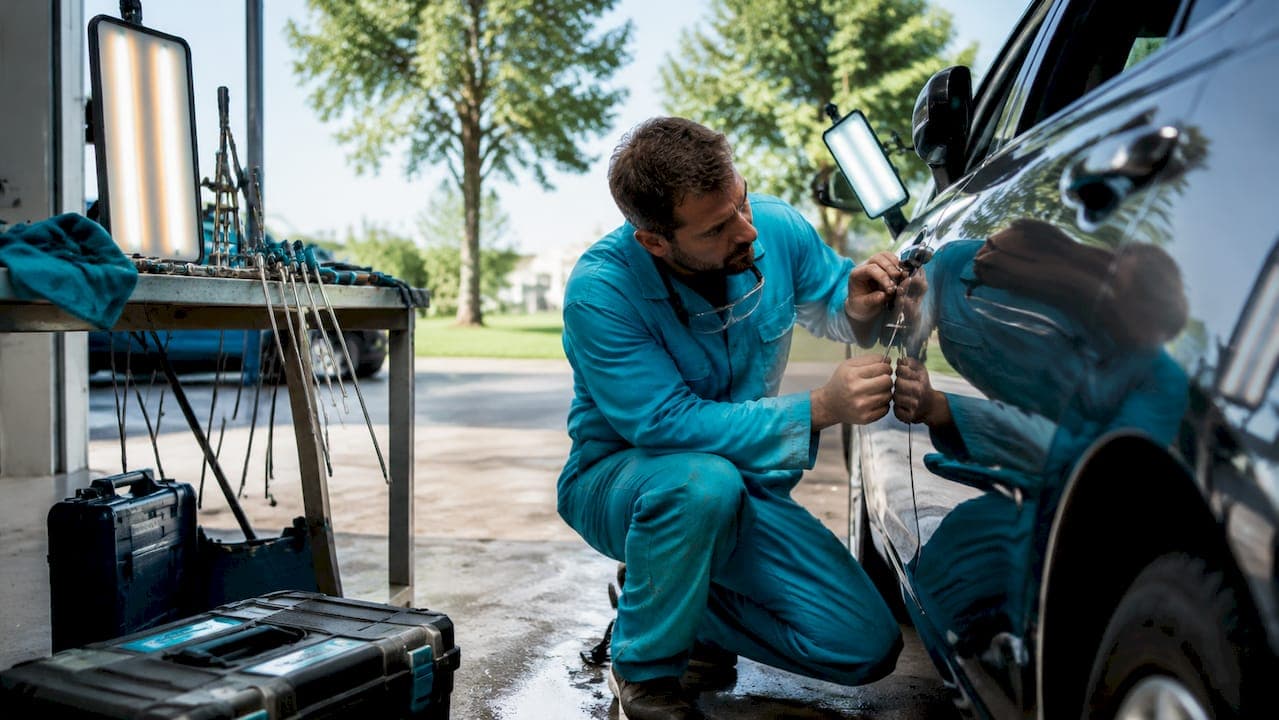
Paintless dent repair (PDR) skill levels are defined by technician training, the complexity of damage a technician can safely address, and the eligibility criteria that determine whether a dent qualifies for the technique at all. Understanding how paintless repair skill levels differ is not just useful trivia. It directly determines whether your car comes back looking factory-fresh or worse than before. I-CAR, the industry's primary training authority, classifies PDR as a distinct skill set entirely separate from general collision repair, with formal competency tiers that reflect real differences in what a technician can and cannot do.
How paintless repair skill levels differ by training and eligibility
PDR is not a single skill. It is a spectrum of competencies, and the I-CAR 2026 framework treats it as a standalone discipline with its own eligibility rules, not an add-on to general body work. That distinction matters enormously when you are choosing who touches your car.
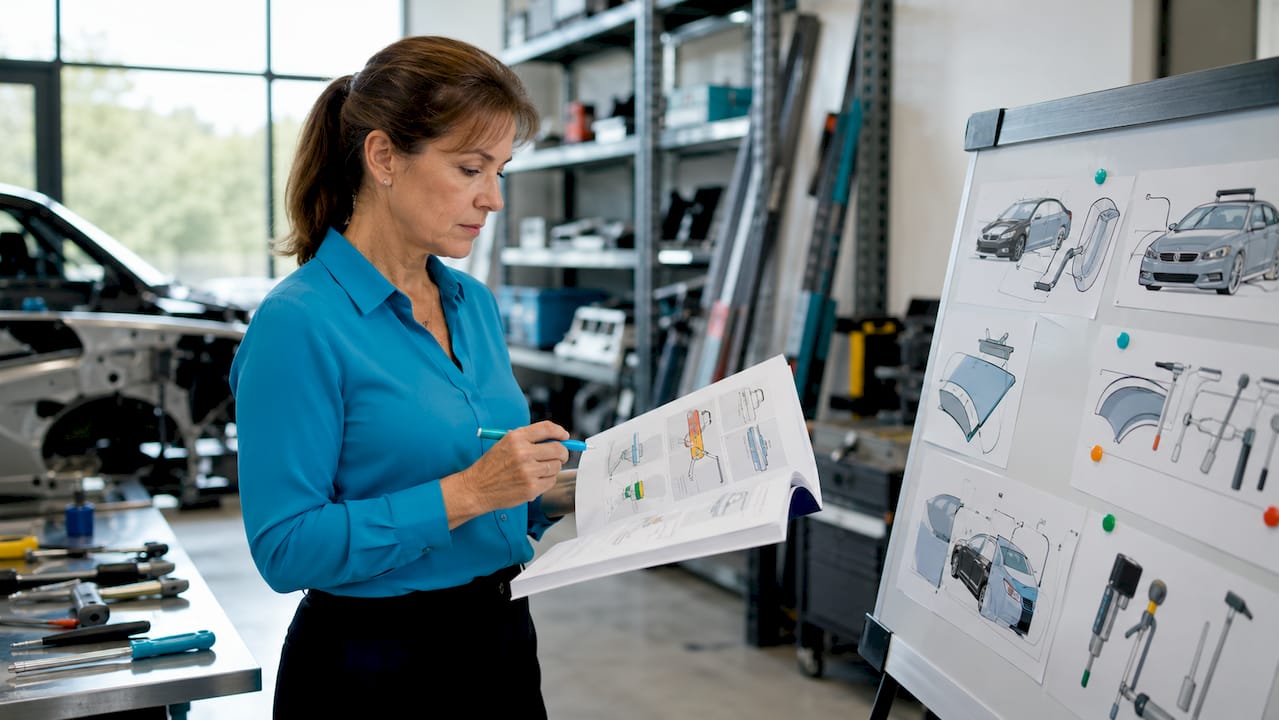
At the foundational level, a PDR technician learns to work within strict eligibility boundaries. The paint must be intact. The dent must have no sharp creases. The depth-to-diameter ratio must stay at roughly 1:3 or less. The panel must be physically accessible for tool placement. These are not suggestions. They are the technical limits that separate a repair a skilled technician can complete invisibly from one that will cause further damage.
Skill tiers build on those fundamentals in three meaningful ways:
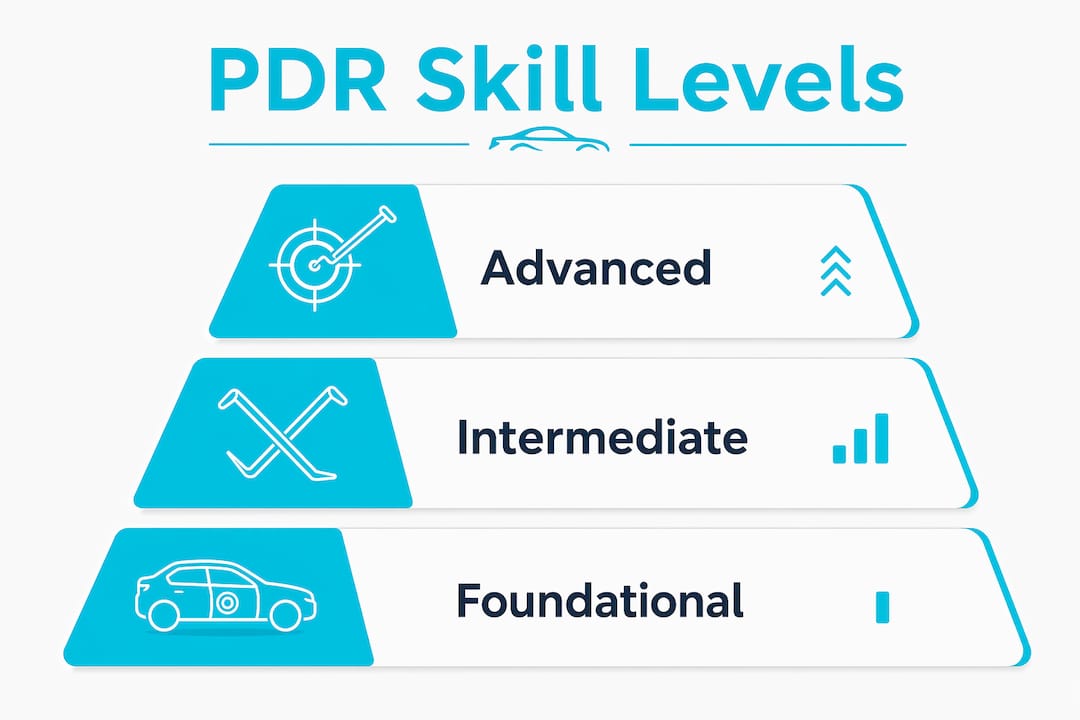
- Foundational technicians handle small, shallow dents on accessible panels. Think door dings from parking lots or minor hail hits on flat hood sections.
- Intermediate technicians work with medium-complexity dents, combining glue pulling and traditional rod-based PDR. Glue pulling requires different technique than rod work and is often layered with it for best results on dents without rear panel access.
- Advanced technicians take on large dents, multi-panel hail damage, and dents near body lines where precision is unforgiving. They also perform the eligibility screening that determines whether PDR is even appropriate.
Pro Tip: Ask any shop you consider whether their technicians hold PDR-specific credentials, not just general collision repair certifications. I-CAR explicitly separates these, and a general body shop credential does not qualify someone to perform PDR at an advanced level.
The eligibility evaluation itself is a skill. Knowing when NOT to attempt PDR is just as important as knowing how to perform it. That judgment only comes with training and experience at the higher tiers.
How skill level affects repair quality and success rates
The gap between a foundational and an advanced PDR technician shows up most clearly in outcomes. A low-skill attempt on a dent that exceeds eligibility limits does not just fail. It can crack paint or stretch metal beyond recovery, turning a $200 PDR job into a $1,500 conventional repaint.
Repair time is one of the clearest indicators of technician experience. Industry data shows that small dents take 30 to 60 minutes, medium dents run 1 to 2 hours, large dents require 2 to 4 hours, and full hail damage can take 1 to 3 days. A technician who quotes you 20 minutes on a large dent is either rushing or underestimating the work. Both outcomes hurt your car.
| Skill tier | Typical dent complexity | Risk of poor outcome |
|---|---|---|
| Foundational | Small, shallow, accessible dents | Low if eligibility is respected |
| Intermediate | Medium dents, limited access, glue pull needed | Moderate without proper technique combination |
| Advanced | Large dents, hail damage, near body lines | Low with proper assessment and tool control |
| Unskilled attempt | Any dent beyond technician's competency | High: paint cracking, ripples, high spots |
The most common failure modes from low-skill work are ripples in the metal, high spots where the dent was over-pushed, and paint cracking from excessive pressure. These are not cosmetic annoyances. Ripples and high spots affect resale value and can signal structural irregularities to a trained appraiser.
Pro Tip: Request before-and-after photos from previous repairs before committing to a shop. Advanced technicians are proud of their work and keep portfolios. A shop that cannot show you documented results is telling you something.
Experience of 5 or more years in PDR specifically, rather than general body work, is the threshold most industry practitioners cite for consistent high-quality outcomes on complex repairs.
Comparing traditional dent repair and PDR skill requirements
Traditional body repair and PDR require entirely different skill sets, and confusing the two leads to mismatched expectations. PDR works by exploiting metal memory. A trained technician uses rods, picks, and sometimes glue tabs to coax the metal back to its original shape from behind or outside the panel, without breaking the paint surface. No filler. No repainting.
Traditional repair involves grinding, applying body filler, priming, color-matching, and repainting. It is appropriate when paint is cracked, metal is stretched past its elastic limit, or sharp creases have created tension points that PDR tools cannot resolve. A technician trained only in traditional repair does not automatically know PDR, and the reverse is equally true.
The skill comparison breaks down like this: traditional repair demands knowledge of paint chemistry, filler application, and color matching. PDR demands tactile precision, an understanding of metal behavior under pressure, and the ability to read a dent's geometry to choose the right tool path. Neither is simpler. They are just different disciplines applied to different damage profiles.
Where the differences in repair expertise become critical is in the gray zone. A dent that sits right at the edge of PDR eligibility requires an advanced technician to assess correctly. Push it with PDR when it should go to traditional repair, and you risk worsening the damage. Refer it to traditional repair when PDR could handle it, and you pay more and lose original paint. That judgment call is the mark of a genuinely skilled technician.
How to evaluate a PDR technician's skill level before hiring
Choosing the right technician comes down to asking the right questions and knowing what the answers should look like. Here is what to check before you hand over your keys:
- Verify PDR-specific credentials. Licensed shops document which technicians hold PDR credentials from I-CAR or manufacturer programs. Ask for that documentation directly, not just a general shop certification.
- Review years of PDR-only experience. General body shop experience does not transfer directly. You want someone who has spent years working specifically on dent repair, not someone who does it occasionally between paint jobs.
- Ask how they assess eligibility. A skilled technician will walk you through the paint condition, dent shape, metal condition, and panel access before quoting. Honest assessment prevents bad outcomes and signals that the shop prioritizes your car's result over a quick sale.
- Check before-and-after portfolios. Photos document real-world results on dents similar to yours. Ask specifically for examples matching your dent type and panel location.
- Be skeptical of unusually low prices. Pricing that seems too good usually reflects either a foundational-level technician taking on intermediate or advanced work, or a shop skipping the eligibility assessment entirely.
- Look for specialty PDR shops over general body shops. Shops that focus exclusively on PDR invest more in technician training and tool quality. A general body shop that "also does PDR" is not the same as a shop built around it.
- Check insurance recommendations. Many insurers maintain preferred vendor lists of shops that meet documented skill standards. Being on that list requires meeting minimum competency thresholds.
The paintless repair skill comparison between a specialist shop and a generalist shop is not subtle. Specialty shops screen dents carefully and will tell you honestly when PDR is not the right call. That honesty protects your car and your money.
Key takeaways
PDR skill levels are defined by formal training tiers, eligibility judgment, and technique mastery. Choosing the wrong tier for your dent's complexity is the single most avoidable cause of poor repair outcomes.
| Point | Details |
|---|---|
| Skill tiers are formal, not informal | I-CAR classifies PDR as a distinct credential separate from general collision repair. |
| Eligibility judgment is a skill itself | Advanced technicians assess paint, metal, and dent geometry before attempting any repair. |
| Repair time signals experience | Small dents take 30 to 60 minutes; rushing any repair beyond that range is a warning sign. |
| Low-skill attempts increase total cost | Failed PDR on ineligible dents often requires expensive conventional repair to fix the damage. |
| Specialty shops outperform generalists | PDR-focused shops invest in training and tools that general body shops typically do not match. |
Why skill verification is the most overlooked step in PDR
Most car owners walk into a PDR shop the same way they walk into any service business. They check the price, read a few reviews, and make a decision. What they almost never do is ask for documented proof of PDR-specific training. That gap is where most bad repair experiences originate.
I have seen cars come in after a "bargain" PDR job where the technician pushed a dent that had a hairline paint crack nobody bothered to check for. The result was a cracked panel that needed a full repaint. The owner paid twice. The original PDR shop was not dishonest. They were simply operating at a skill level that did not include proper eligibility screening.
The uncomfortable reality is that the levels of paintless dent repair competency are not visible to the untrained eye until something goes wrong. A technician who lacks the skill to assess eligibility will often attempt the repair anyway, not out of malice, but because they genuinely cannot see the risk. That is why credentials and documented experience matter more than price or even reviews.
Experienced technicians protect your paint integrity and your car's resale value. They also save you money in the long run by telling you when PDR is not the right tool for the job. That kind of honest assessment is the clearest signal of advanced skill you will find.
— Martin
Why Dent-boys is the skill standard worth trusting

Dent-boys employs technicians trained to I-CAR standards with documented PDR credentials, specializing in hail damage and minor dent repair. Every repair starts with a transparent eligibility inspection so you know exactly what to expect before work begins. Dent-boys offers free estimates, pick-up and delivery, a $0 deductible option, and a lifetime warranty on completed repairs. If your dent qualifies for PDR, their technicians have the verified skill to restore your car to factory condition. If it does not qualify, they will tell you that too. Visit Dent-boys to schedule your free assessment and see certified PDR results firsthand.
FAQ
What are the main skill levels in paintless dent repair?
PDR skill levels range from foundational (small, accessible dents) to intermediate (medium complexity, glue pulling) to advanced (large dents, hail damage, near body lines). I-CAR formally classifies PDR as a distinct credential with eligibility boundaries that define what each level can safely handle.
How do I know if a PDR technician is qualified?
Ask for documented PDR-specific credentials from I-CAR or a manufacturer training program, and request before-and-after portfolios from similar repairs. Licensed shops document technician credentials to meet certification standards, so a reputable shop will have this information readily available.
Can a low-skill PDR attempt make my dent worse?
Yes. Attempting PDR on dents with cracked paint, sharp creases, or stretched metal can crack paint or worsen the dent, often requiring conventional repair that costs significantly more than the original PDR quote.
When is traditional repair better than PDR?
Traditional repair is the correct choice when paint is already cracked, metal has stretched past its elastic limit, or sharp creases have created tension points that PDR tools cannot resolve without causing further damage. An advanced PDR technician will identify these conditions during the eligibility assessment.
How long should a PDR repair take?
Repair time depends on dent size and complexity. Small dents typically take 30 to 60 minutes, medium dents run 1 to 2 hours, large dents require 2 to 4 hours, and hail damage can take 1 to 3 days. A quote significantly below these ranges is a signal that the technician is either underestimating the work or skipping steps.