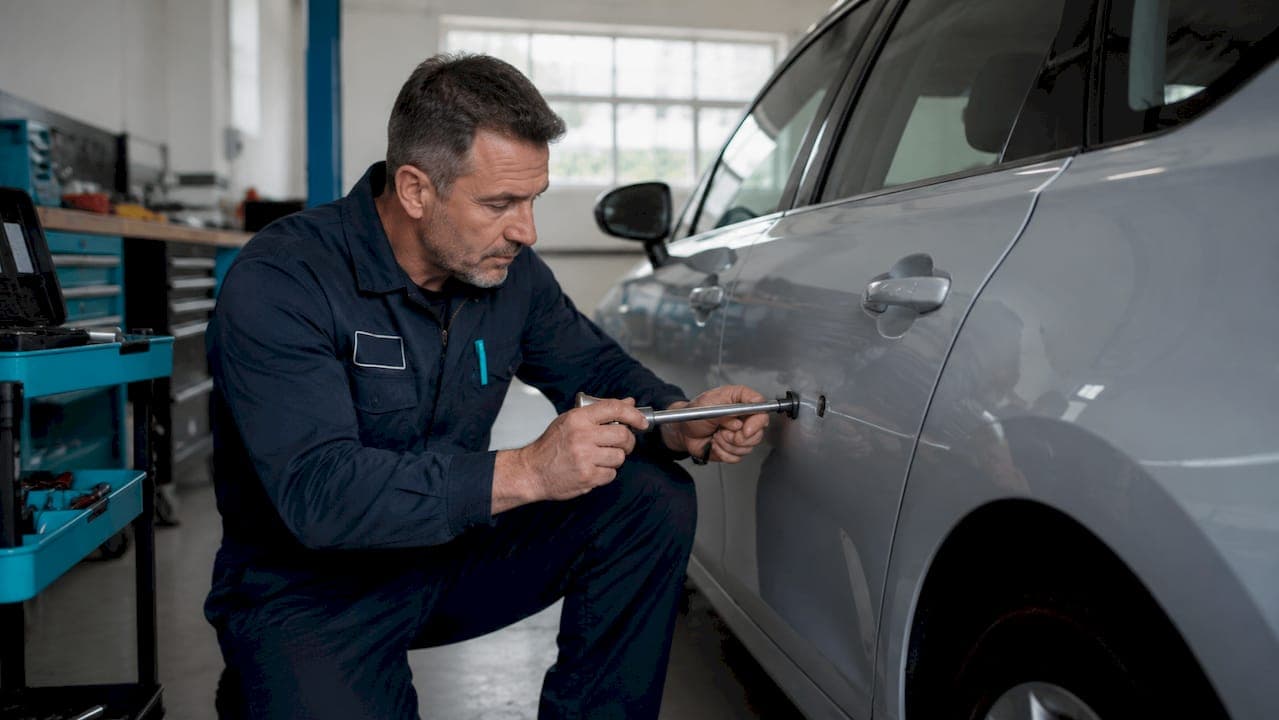
The vehicle dent repair timeline depends primarily on which repair method your technician uses. Paintless dent repair (PDR) handles minor dents in as little as 30 minutes to one hour, while traditional body shop repairs for the same damage can take one to two days due to painting and curing. For hail damage with 50 or more dents, PDR typically runs 1–3 days, and traditional methods can stretch two to six weeks. Knowing these benchmarks upfront helps you plan, ask the right questions, and avoid shops that overpromise.
1. How long does the vehicle dent repair timeline take with PDR?
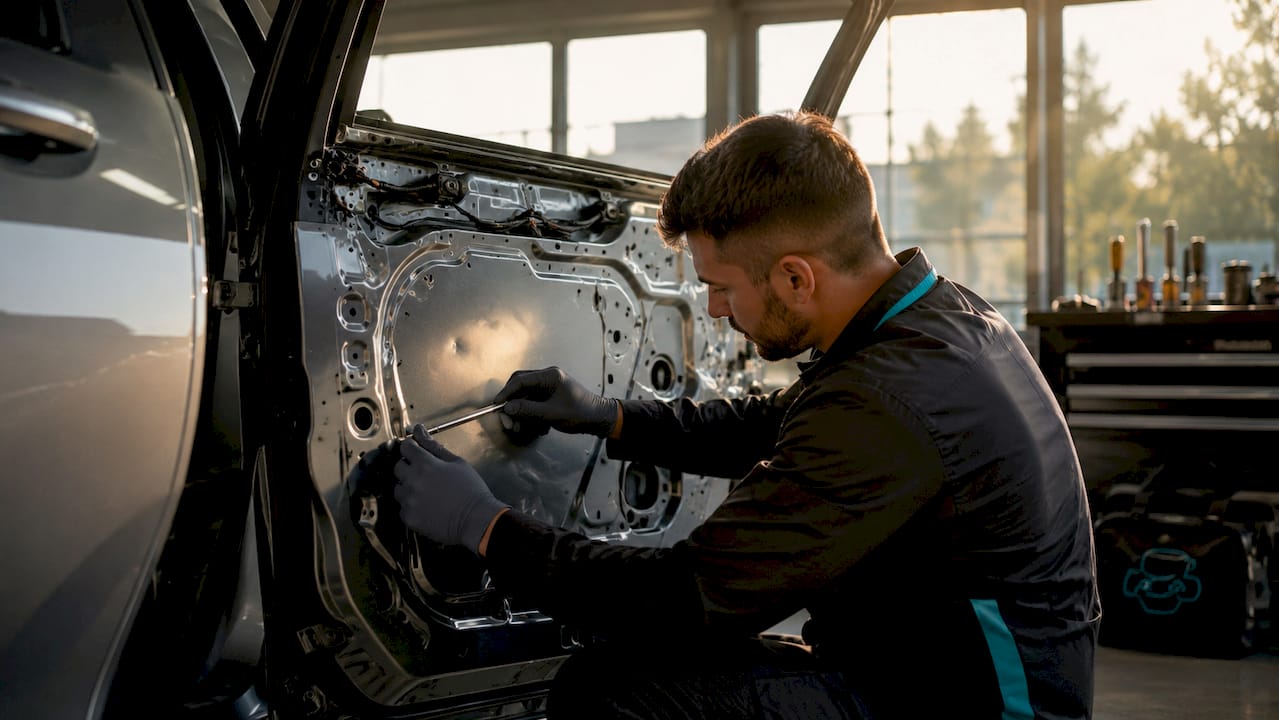
Paintless dent repair is the fastest method available for dents with intact paint. A small dent takes 30 minutes to one hour when the paint is undamaged and the technician has clear access to the panel. Moderate dents or hail damage across multiple panels typically require one to three days.
PDR works by using specialized metal rods and body picks to massage the metal back into its original shape from behind the panel. No filler, no primer, no paint. That process eliminates the curing time that slows down traditional repairs.
- Small single dent with intact paint: 30 minutes to 1 hour
- Moderate dent or crease: 1–3 hours
- Light hail damage across one or two panels: half a day to one full day
- Extensive hail damage across the full vehicle: 1–3 days
Pro Tip: Ask your shop how many dents they are quoting and how many technicians will work on your vehicle simultaneously. A shop with two experienced technicians can cut a three-day hail job down to one and a half days.
2. What is the typical timeframe for traditional dent repair?
Traditional auto body repair follows a multi-step process that adds time at every stage. The standard sequence runs: damage assessment, parts ordering, body filler application, sanding, priming, repainting, clear coat application, and final inspection. Each step has its own drying or curing window.
Minor dents at a body shop take one to three business days. That estimate assumes no parts are needed and the paint color matches quickly. When parts are involved, lead times add two to ten or more days before the technician even touches your car.
Major structural damage or multi-panel repairs push the car body repair timeline to two to four weeks or longer. The steps that consume the most time are:
- Parts ordering and receiving (2–10+ days depending on vehicle make and model)
- Body filler application and sanding (requires multiple passes and drying time)
- Paint matching and application (color blending is an art, not a quick spray)
- Clear coat curing (rushing this step causes peeling within months)
- Final quality inspection and reassembly
Major repairs extending two to four weeks are standard when teardown, part replacement, and full repainting are required. The tradeoff is that traditional repair handles damage PDR cannot, including deep creases, cracked paint, and structural deformation.
3. The fingernail test: how paint condition shapes your repair options
Paint condition is the single fastest way to determine which repair method applies to your car. The fingernail test is the industry's go-to diagnostic. Run your fingernail across the dent. If it catches or snags on a ridge, the clear coat has cracked or the paint has fractured. PDR is not feasible when the fingernail catches, and traditional repair becomes necessary.
This matters for your timeline because a dent that looks minor from ten feet away may have cracked paint that forces a one-to-three-day body shop visit instead of a one-hour PDR appointment. The test takes five seconds and gives you an immediate answer before you call any shop.
Dents with smooth, unbroken paint surfaces are the best PDR candidates. Sharp creases, door edge damage, and any dent where the metal has stretched significantly are harder for PDR and take longer even when the paint is intact.
4. What variables speed up or extend your dent repair duration?
Several factors outside the technician's direct control affect how long your repair takes. Understanding them helps you set realistic expectations and avoid surprises.
- Dent size and location: Dents near panel edges or body lines require more careful manipulation and add time. A dent in the center of a hood is faster to access than one near a door frame.
- Number of dents: A single dent is a different job than a hail storm that hit every horizontal surface. Multiple dents multiply labor time proportionally.
- Paint damage severity: Cracked or chipped paint eliminates PDR as an option and adds painting and curing time to the job.
- Shop workload and scheduling: A busy shop may have your car sitting for two days before a technician starts work. Ask specifically when hands-on work begins, not just when they can accept the vehicle.
- Insurance approval delays: Insurance approvals frequently add days or weeks to the total repair time, even when the actual repair work is fast. Adjuster visits, supplement requests, and approval chains are the most common invisible timeline extenders.
Pro Tip: Before filing a claim for a minor dent, calculate the math. The premium increase over two years from filing a small claim can exceed what you would have paid out of pocket. For dents under a few hundred dollars, paying directly often saves both money and time.
5. How to read repair shop estimates and manage your timeline expectations
A repair estimate is not just a price quote. It is a timeline commitment, and you should treat it that way. When you receive an estimate, ask three specific questions: What is the expected completion date? What steps are included in that timeline? What could cause that date to change?
Shops that give vague answers to those questions are shops that will call you with delays. The best shops walk you through each phase and tell you exactly when parts are expected, when painting begins, and when the car will be ready for pickup.
Watch for these red flags when reviewing estimates:
- A shop promising two-day completion for a vehicle with 50 or more hail dents. Reliable hail repairs take 5–10 business days for large jobs. A two-day quote signals corner-cutting or outsourced labor.
- No mention of parts lead times in the estimate for a job that clearly requires replacement panels.
- Vague language like "a few days" without a specific completion date.
- No written timeline included with the written price estimate.
"The shops that are honest about timeline complexity are the same shops that do quality work. Speed and quality are not opposites, but unrealistic speed is always a warning sign."
Insurance coordination adds another layer. If your insurer requires a direct repair program shop, you may have less flexibility on timing. Independent shops can often move faster because they are not waiting on insurer-specific approval chains.
6. PDR vs. traditional repair: a timeline and method comparison
Choosing between PDR and traditional repair comes down to damage type, paint condition, and how quickly you need your vehicle back. PDR costs 50–70% less than traditional repair and completes in hours rather than days for minor damage. Traditional repair handles damage that PDR cannot, but the tradeoff is time and cost.
| Factor | Paintless Dent Repair (PDR) | Traditional Body Shop Repair |
|---|---|---|
| Typical duration | 30 minutes to 3 days | 1 day to 4+ weeks |
| Best for | Small to moderate dents, hail damage, intact paint | Deep creases, cracked paint, structural damage |
| Paint preservation | Full factory paint preserved | New paint applied, color match required |
| Cost range | 50–70% less than traditional | Higher due to materials and labor |
| Same-day service | Possible for minor dents | Rarely available |
| Long-term risk | Minimal when done correctly | Filler cracking and paint mismatch are known risks |
Vehicle owners who need daily use of their car find PDR particularly attractive for minor damage because the car is back in their hands the same day or the next morning. Traditional repair requires leaving the vehicle at the shop through every stage of the process.
When traditional repair is unavoidable, patience is the right call. Rushing a body shop through paint curing or parts installation produces results that fail within a year.
Key takeaways
The fastest and most cost-effective car body repair timeline comes from matching the right method to the damage, with PDR delivering same-day results for minor dents and traditional repair reserved for damage that has broken the paint or altered the structure.
| Point | Details |
|---|---|
| PDR is fastest for minor dents | Small dents with intact paint are repaired in 30 minutes to one hour using PDR. |
| Traditional repair takes days to weeks | Minor body shop repairs run one to three days; major damage can take two to four weeks or more. |
| Paint condition decides the method | Use the fingernail test to determine if PDR is viable before booking any appointment. |
| Insurance adds invisible time | Adjuster approvals and supplement requests frequently extend total repair time beyond the hands-on work. |
| Unrealistic timelines signal poor quality | Any shop quoting two days for 50+ hail dents is cutting corners; reliable shops need 5–10 business days. |
What I have learned after years of watching dent repairs go right and wrong
Most car owners walk into a repair shop focused entirely on price. Timeline is an afterthought until they are three days into a rental car they did not budget for. That is the wrong order of priorities.
The repair method matters more than the shop's hourly rate. A PDR technician who charges more per hour but finishes in two hours beats a body shop that charges less but keeps your car for five days. When you factor in rental costs, lost time, and the risk of paint mismatch, PDR wins on minor damage almost every time.
The one mistake I see repeatedly is owners filing insurance claims for small dents. The premium math rarely works in their favor. Pay out of pocket for anything under a few hundred dollars and keep your claims history clean for damage that actually warrants it.
Traditional repair is not the enemy. It is the right tool for the right job. When a door has a deep crease with cracked paint, PDR is not going to fix it properly. Accept the longer timeline, ask for a written completion schedule, and check the paint match before you sign off on the finished work.
The shops worth trusting are the ones that give you a specific date, explain every step, and call you if anything changes. Vague timelines are not humility. They are a warning.
— Martin
Dent-boys and your repair timeline
Car owners dealing with dents or hail damage deserve clear answers, not vague estimates. Dent-boys specializes in auto hail repair using PDR, which means no painting, no fillers, and no weeks-long waits at a body shop.

Dent-boys offers free estimates, pick-up and delivery service, a rental vehicle during repairs, a $0 deductible, and a lifetime warranty on every repair. The process is built around getting your car back to you fast, with factory paint intact and quality you can verify. If you want a straight answer on how long your specific repair will take, Dent-boys gives you that before any work begins.
FAQ
How long does dent repair typically take?
PDR for a small dent takes 30 minutes to one hour. Traditional body shop repair for the same damage takes one to two days due to painting and curing requirements.
Can hail damage be repaired in one day?
Light hail damage on one or two panels can be completed in a single day using PDR. Extensive hail damage across a full vehicle requires 1–3 days for PDR and up to several weeks for traditional repair.
What is the fingernail test for dent repair?
The fingernail test checks whether the paint has cracked by running a fingernail across the dent. If the nail catches, PDR is not suitable and traditional repair is required.
Does insurance slow down the dent repair process?
Yes. Insurance adjuster visits, approval processes, and supplement requests frequently add days or weeks to the total repair timeline, even when the hands-on repair work is fast.
How do I know if a shop's timeline estimate is realistic?
A quote of two days for a vehicle with 50 or more hail dents is a red flag. Reputable shops need 5–10 business days for large hail jobs and provide a written completion schedule with their estimate.