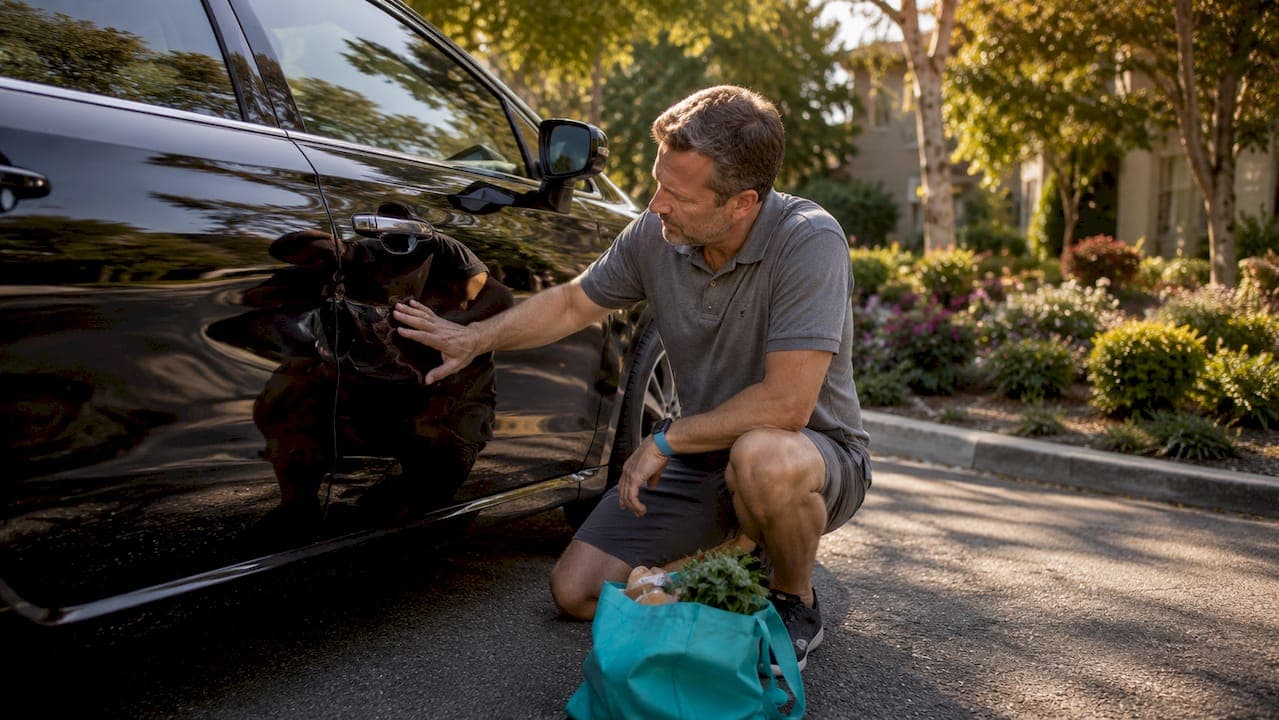
Car door dents are defined as localized depressions in a vehicle's door panel caused by low-speed impacts, environmental forces, or contact with objects in everyday driving situations. They rank among the most common forms of vehicle damage, and understanding what causes them puts you in a much stronger position to prevent them. Door dings are typically small, round or oval, located on doors, fenders, or quarter panels, and may or may not involve paint damage. The industry term for minor door impact damage is "door ding," though the broader category falls under low-energy impact dents. Knowing the difference between a door ding and a sharp crease matters because each requires a different repair approach.
Why are door dents so common on vehicles?
Car doors are the most exposed panels on any vehicle. They protrude outward from the body, sit at the exact height of adjacent car doors, and face direct contact every time you park near another vehicle. That combination makes them far more vulnerable than hoods or roofs.
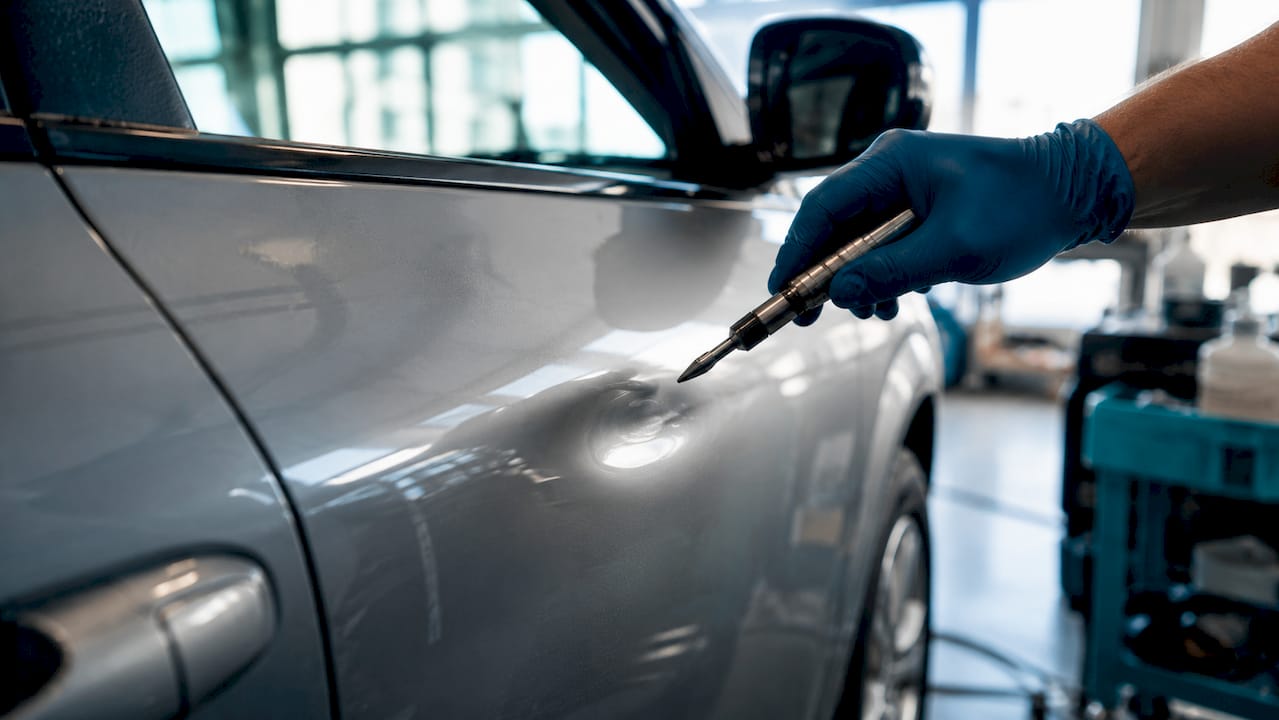
Panel construction plays a role too. Modern car doors use relatively thin sheet metal to reduce weight, which means even low-energy contact creates a visible depression. The metal has less resistance to flex than older, heavier gauge panels from decades past.
Parking lots account for about 20% of car accidents, and door dents are a major contributor to that number. Tight spaces, distracted drivers, and hurried exits create the perfect conditions for repeated low-speed contact. A driver checking their phone while opening their door does not gauge how far it swings.
The physics of door swing mechanics also explain the oval shape you see on most door dings. Dents form from repeated low-energy impacts and pendulum-like door swings rather than single hard hits. The swinging arc distributes force across a wider area, pressing the metal into an egg or oval shape instead of a sharp point.
- Door edges sit at the same height as adjacent vehicle doors, making contact almost inevitable in tight parking spots.
- Thin modern sheet metal deforms under surprisingly low force, often under 10 pounds of lateral pressure.
- Distracted behavior during parking lot exits raises the odds of uncontrolled door swings.
- Body lines and panel edges make dents near those areas harder to push back out cleanly.
Pro Tip: Park at the end of a row whenever possible. One open side cuts your dent exposure in half immediately.
How do typical car door dents occur in everyday situations?
The most common source of door dents is the adjacent vehicle in a parking lot. A driver in the next space opens their door without checking clearance, and the edge of their door contacts your panel at low speed. The result is a classic door ding: small, oval, and often paint-free if the contact was brief.
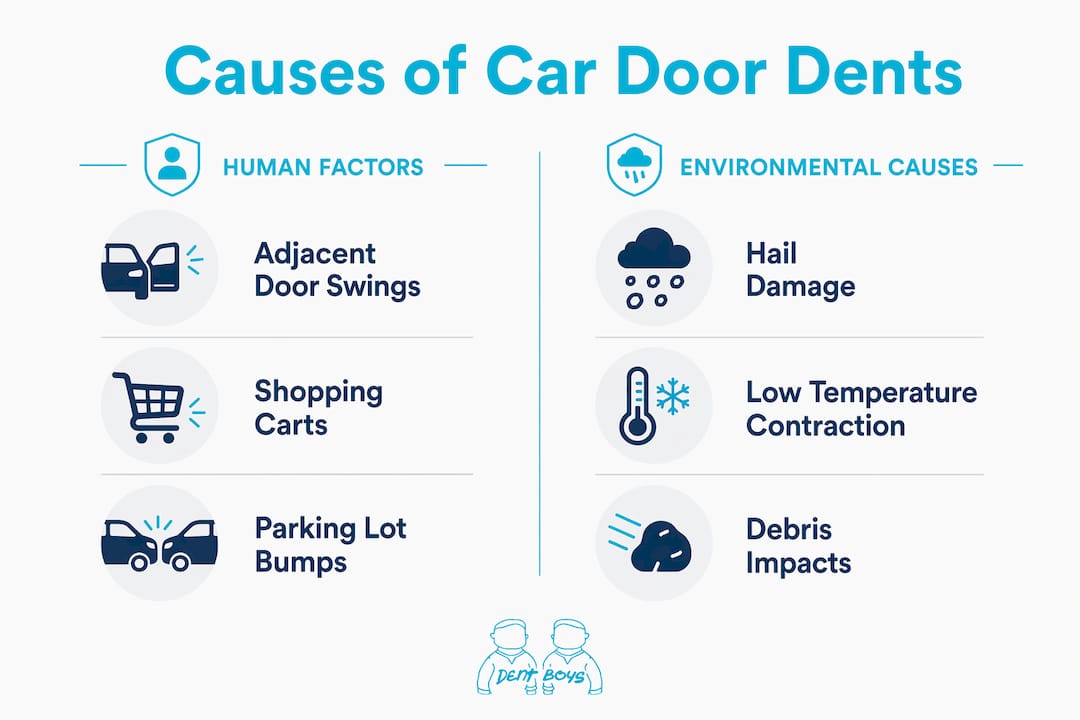
Shopping carts are the second most frequent culprit. A cart left on a slope rolls into your door with enough force to leave a round dent, sometimes with a paint scuff at the center. Low-speed bumper impacts and shopping cart hits produce similar dent profiles, which is why body shops often group them together.
Here are the most common everyday scenarios that cause door dents:
- Adjacent door contact in parking lots, where a neighboring driver opens their door into your panel.
- Shopping cart impacts, especially in grocery store lots where carts roll freely on uneven pavement.
- Minor low-speed collisions, such as bumper-to-bumper taps in slow-moving traffic or tight garage exits.
- Hail strikes, which create multiple small round dents across the roof, hood, and door panels simultaneously.
- Falling debris, including tree branches, acorns, and road stones kicked up by passing vehicles.
Temperature also affects how dents develop after impact. Metal has memory. In cold weather, the panel contracts and a dent may appear sharper and more defined. In heat, the metal expands slightly, and very shallow dents sometimes partially self-correct. This is not a repair strategy, but it explains why the same dent can look different on a cold morning versus a warm afternoon.
| Cause | Typical dent shape | Paint damage likely? |
|---|---|---|
| Adjacent door swing | Oval or round | Sometimes |
| Shopping cart impact | Round, small | Often (scuff) |
| Hail strike | Multiple small rounds | Yes, if severe |
| Falling debris | Irregular | Depends on object |
| Minor collision | Linear or crease | Usually yes |
What role do environmental factors play in causing dents and paint damage?
Hail is the most destructive environmental cause of car door dents. A single hailstorm can leave dozens of dents across every horizontal and vertical panel on your vehicle. Severe hail impact can fracture or chip the clearcoat, exposing primer or bare metal beneath. Once bare metal is exposed, corrosion begins within days in humid conditions.
Paint clearcoat fractures are more serious than they look. The clearcoat is the outermost protective layer over your color coat. When hail cracks it, moisture penetrates the layers below and begins lifting the paint from the inside. What starts as a small dent becomes a rust spot within months if left untreated.
Winter road salt compounds the problem significantly. AAA warns that road salt accelerates rust and undercarriage corrosion, particularly in areas where dents have already broken the paint surface. Salt is hygroscopic, meaning it draws moisture from the air and holds it against the metal. A dent that seems cosmetic in october can become a rust hole by march.
- Inspect your vehicle after every hailstorm, even minor ones. Small dents with cracked clearcoat need prompt attention.
- Wash your car thoroughly after driving on salted roads, paying attention to door sills and lower panels where dents collect road spray.
- Check dented areas for paint discoloration, which signals that moisture has already begun working under the surface.
- Avoid leaving hail damage unrepaired through a full winter season. Salt and moisture together accelerate corrosion faster than either does alone.
The combination of a dent and a compromised paint surface is always worse than either problem alone. A dent without paint damage is a cosmetic issue. A dent with cracked clearcoat is a corrosion risk that grows with every rain, wash, and temperature change.
How can car owners prevent door dents and minimize damage risks?
Parking strategy is the single most effective prevention tool available to car owners. Choosing spots near the ends of rows and beside smaller vehicles reduces contact risk more than any accessory or product. End-of-row spots give you one open side, and smaller neighboring vehicles have shorter doors with less swing reach.
Spatial awareness during exit matters just as much as where you park. Open your door slowly and check the gap before swinging it wide. In tight spaces, exit at an angle and use your body to control the door's movement. This takes three extra seconds and prevents the majority of outgoing door dings you would otherwise cause yourself.
- Choose end-of-row spots to eliminate one side of contact exposure entirely.
- Park beside compact vehicles rather than trucks or SUVs, which have heavier, wider doors.
- Use door edge guards on your own vehicle to reduce the damage your door causes to others and to absorb minor return impacts.
- Avoid parking near cart return stations in grocery lots. Carts cluster there and roll unpredictably.
- Wash your car after winter driving to remove road salt before it contacts any existing dents or paint chips.
- Inspect your vehicle after storms and address any new dents before the next weather event compounds the damage.
Pro Tip: After a hailstorm, photograph every panel in direct sunlight before filing an insurance claim. Shadows hide dents in standard lighting, and documentation taken immediately strengthens your case.
What are the repair options for car door dents?
Repair method selection depends entirely on two factors: dent depth and paint condition. A shallow oval dent with no paint damage is a strong candidate for paintless dent repair, known in the industry as PDR. A sharp crease or a dent with cracked paint requires conventional body work involving filler and repainting.
DIY dent repair methods like plunger techniques and dent puller kits can address minor, shallow dents on flat panel sections. Their effectiveness drops sharply near body lines, edges, or anywhere the metal has creased rather than simply flexed. Applying a DIY puller to a crease can worsen the damage by stretching the metal unevenly.
PDR is the professional standard for door dings and hail damage where the paint surface remains intact. Trained technicians use specialized metal rods and light boards to massage the panel back to its original shape from behind, preserving the factory finish entirely. Professional PDR tools and expertise preserve factory finish and resale value in ways no DIY kit can replicate.
Timing matters for any repair. A fresh dent in undamaged paint is the easiest and least expensive repair scenario. Waiting allows moisture, salt, and temperature cycles to work on the metal, and what was a $150 PDR job can become a $600 repaint if rust takes hold.
- Small, shallow, paint-free dents: PDR is the best option. Fast, affordable, and preserves factory finish.
- Dents with cracked or chipped paint: Conventional body repair with filler and color-matched repainting.
- Sharp creases: Require professional assessment. PDR may not be possible depending on crease depth.
- Hail damage across multiple panels: PDR specialists handle multi-panel hail jobs efficiently, often working with insurance directly.
Key takeaways
Car door dents result primarily from low-speed parking lot contacts, shopping cart impacts, and environmental forces like hail, and addressing them promptly with paintless dent repair prevents the corrosion that turns cosmetic damage into structural problems.
| Point | Details |
|---|---|
| Primary cause | Adjacent door swings and shopping cart hits in parking lots cause most door dents. |
| Environmental risk | Hail and road salt turn untreated dents into corrosion problems within one season. |
| Prevention priority | Parking at row ends beside compact vehicles reduces dent exposure more than any accessory. |
| Repair timing | Fixing dents before paint damage worsens saves significant money on body repair costs. |
| Best repair method | Paintless dent repair preserves factory finish for shallow dents with intact paint. |
What I've learned after years of watching car owners get this wrong
Most car owners think door dents are random bad luck. They are not. The same vehicles get dented repeatedly, and the same vehicles stay clean for years. The difference is almost always parking behavior, not chance.
The misconception I see most often is that door guards and accessories are the primary defense. They help at the margins. But a magnetic door guard does nothing when the car next to you has a driver who swings their door open without looking. Parking position is the real variable you control.
The other thing most articles skip is the timeline problem. A fresh door ding with intact paint costs very little to fix with PDR. That same dent after one winter on salted roads, with cracked clearcoat and surface rust starting, costs three to five times more. Car owners who delay repairs because the dent "looks small" are making an expensive mistake.
My honest advice: treat your first post-hailstorm inspection as seriously as you treat an oil change. Walk the car in direct sunlight, photograph everything, and get a professional assessment before the next weather event. The cost of doing nothing compounds faster than most people expect.
— Martin
Dent-boys: professional dent repair when you need it most
Car door dents are common, but living with them is optional. Dent-boys specializes in paintless dent repair for door dings, hail damage, and parking lot impacts, restoring your vehicle to factory condition without fillers or repainting.

Dent-boys offers free estimates, pick-up and delivery service, a $0 deductible option, and a lifetime warranty on every repair. Customers get a rental vehicle during the repair process, so there is no disruption to your schedule. If your vehicle has taken a hit from hail, a runaway cart, or a careless neighbor, Dent-boys has the tools and experience to fix it right the first time.
FAQ
What causes car door dents most often?
Adjacent vehicle doors opening in parking lots cause the majority of door dents, followed by shopping cart impacts and minor low-speed collisions. These low-energy contacts create the small, oval dents commonly called door dings.
Why do door dents have an oval shape?
Oval dents result from the pendulum-like arc of a swinging door rather than a direct point impact. The swinging motion distributes force across a wider area of the panel, pressing the metal into an elongated depression.
Can a dent without paint damage still cause rust?
A dent without visible paint damage is lower risk, but hail dents and sharp impacts can fracture the clearcoat invisibly. Hail can chip clearcoat and expose metal, making professional inspection after storms the safest approach.
Is paintless dent repair effective for all door dents?
PDR works best on shallow dents with intact paint on flat panel sections. Dents near body lines, sharp creases, or areas with cracked paint require conventional body repair instead.
How do I reduce door dents in parking lots?
Park at row ends beside smaller vehicles and avoid spots near cart return stations. Spatial awareness when opening your own door prevents the majority of outgoing door dings as well.