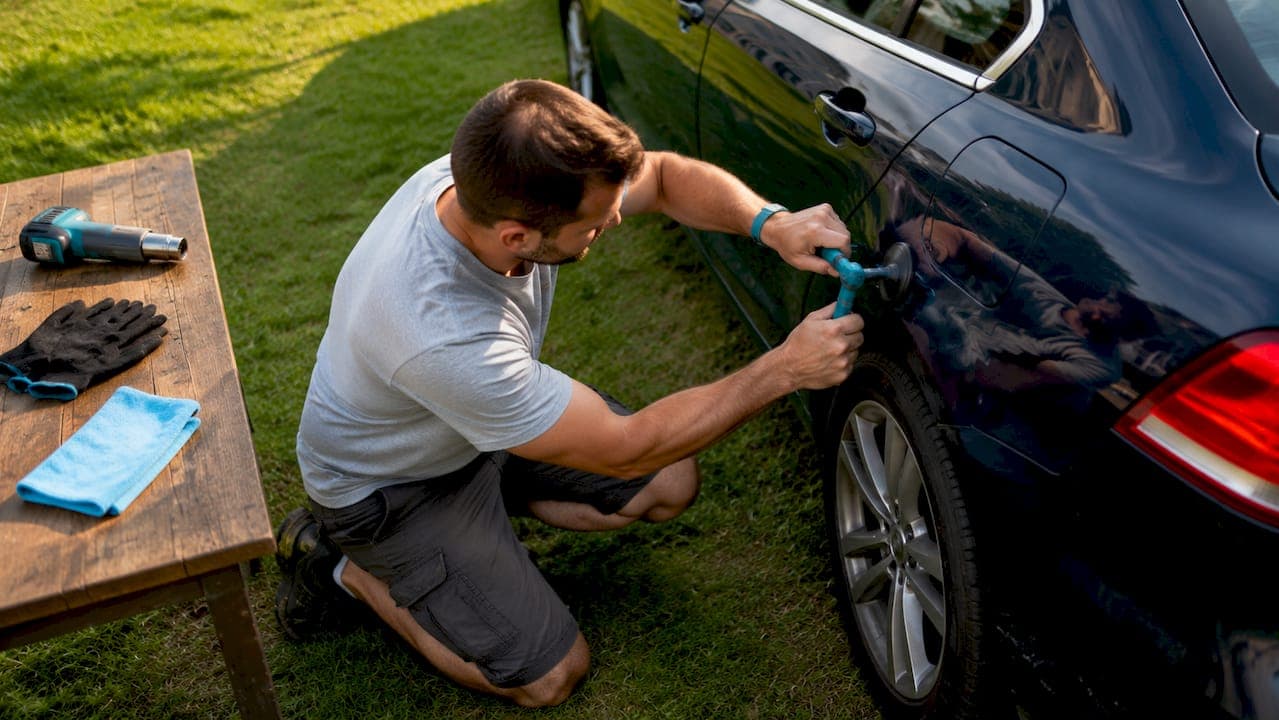
A dent puller is a tool that uses suction or adhesive force to pull shallow dents out of vehicle body panels without damaging the original paint. The industry term for this repair method is paintless dent repair, or PDR, a metalworking craft developed in the 1960s that emphasizes gentle, controlled restoration over sanding and repainting. For anyone dealing with a parking lot ding or a hail-damaged hood, a dent puller is the fastest and most affordable first line of defense. The two main categories are suction cup pullers and glue pullers, and each suits a different type of damage.
What is a dent puller and how does it work?
A dent puller works by exploiting a physical property called metal memory. Car body panels are stamped steel or aluminum, and when a force deforms them, the metal "remembers" its original shape. Metal memory physics allow a controlled outward pull to reverse that deformation without heat, filler, or paint.
The two main pulling methods each apply that principle differently:
- Suction cup pullers press a rubber or silicone cup over the dent, pump out the air to create a vacuum seal, then apply steady outward force. Suction pullers apply controlled pull force gradually, which minimizes the risk of overstretching the panel.
- Glue pullers use a hot glue gun to bond a plastic tab directly to the dent's center. A T-bar or slide hammer then pulls the tab outward. This method reaches dents where a suction cup cannot seal, such as curved or textured surfaces.
Both methods share one hard limit: they work only when the paint is intact. Once paint cracks or the metal creases sharply, the pulling force cannot restore the panel to factory condition.
Pro Tip: Warm the dented panel slightly with a heat gun or hair dryer before pulling. Warmer metal is more pliable and responds to pulling force with less resistance.
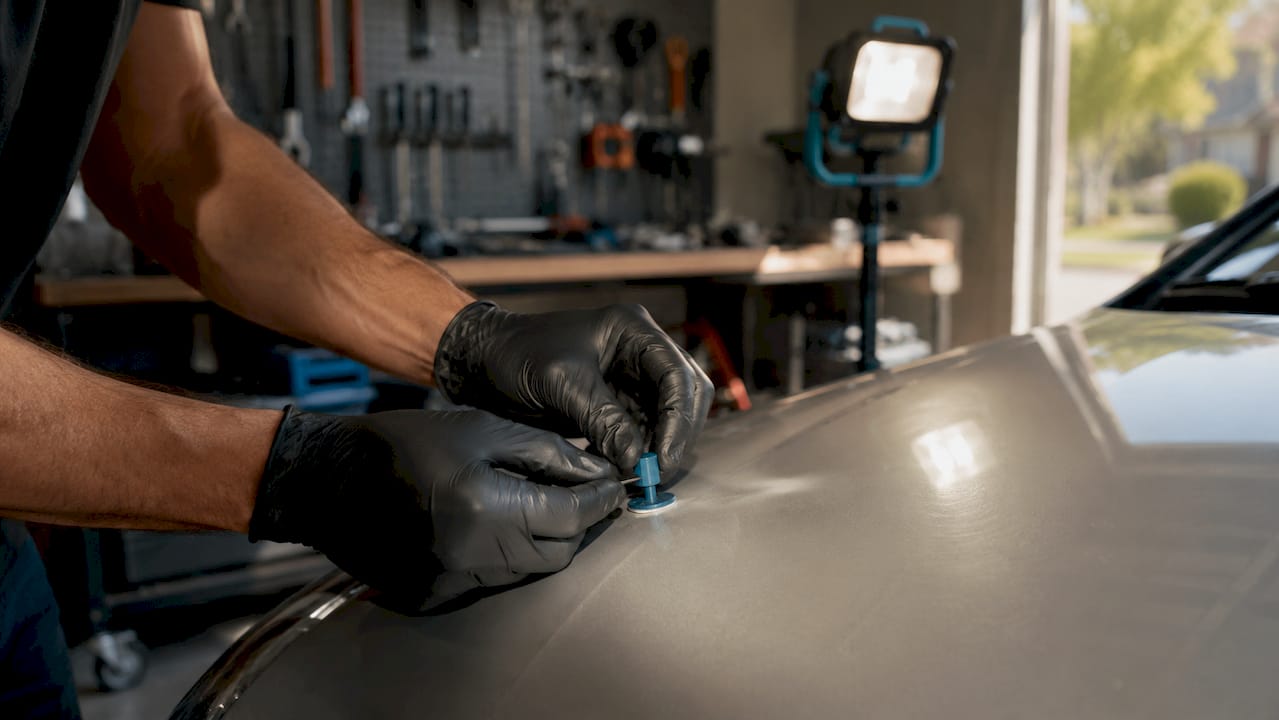
Overstretching is the most common mechanical failure in DIY dent pulling. Applying force too quickly risks oil canning, a condition where the metal bulges outward past its original position and cannot spring back. Multiple light pulls beat one aggressive yank every time.
What are the main types of dent pullers?
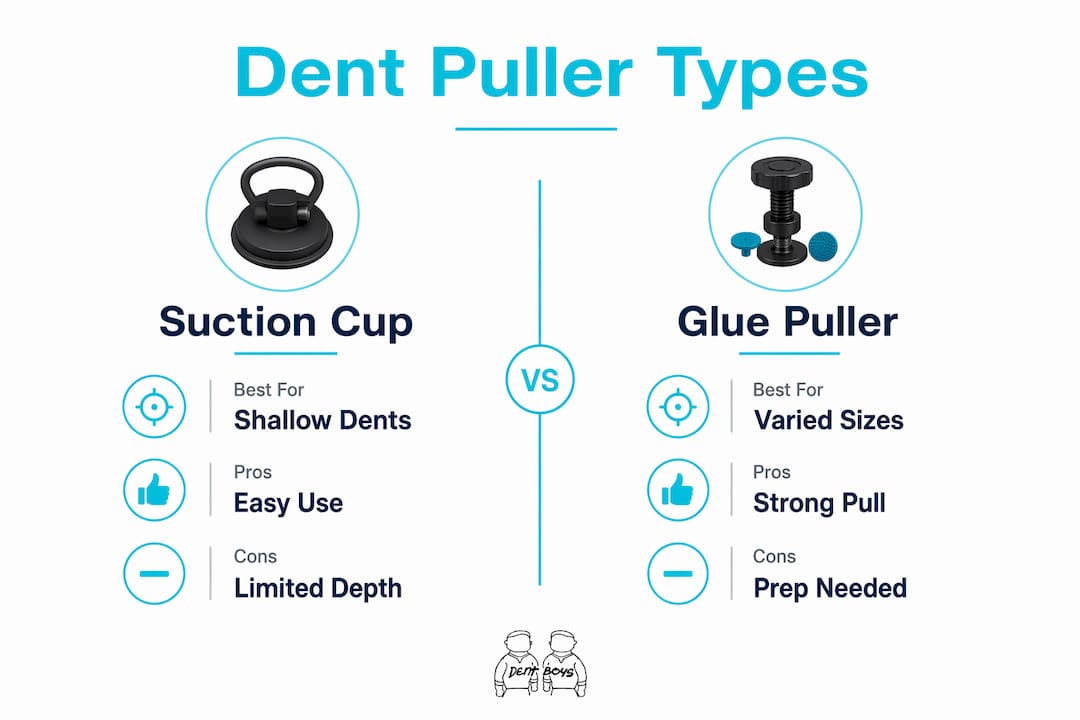
Choosing the right tool depends on the dent's size, location, and depth. The three main categories cover most DIY scenarios, and their price ranges reflect their complexity.
| Type | Best For | Pros | Cons | Cost Range |
|---|---|---|---|---|
| Suction Cup Puller | Round, shallow dents on flat panels | Fast setup, no adhesive needed, reusable | Poor seal on curved or textured surfaces | $10–$30 |
| Glue Puller Kit | Curved panels, hail damage, small dings | Works on complex surfaces, precise placement | Requires glue removal, slower process | $30–$150 |
| Slide Hammer / PDR Rods | Deep dents, professional-level work | Maximum pulling force, versatile | Steep learning curve, risk of damage | $50–$300+ |
Suction cup pullers are the entry point for most DIYers. They cost as little as $10 and require zero setup beyond cleaning the surface. The tradeoff is that they lose suction on anything other than a smooth, flat panel.
Glue puller kits, sold by brands like Anyyion and GLISTON, sit in the $30–$150 range and include a hot glue gun, multiple tab sizes, and a pulling bridge or T-bar. They handle hail dents and door dings on curved doors far better than suction cups. The extra steps, including gluing, waiting, pulling, and removing residue, add time but deliver more consistent results.
Slide hammers and PDR rods are professional tools. A slide hammer attaches to a glue tab and uses weighted momentum to pull. PDR rods are inserted behind the panel to push the dent from the inside. Both require practice and a working knowledge of panel geometry. For most home repairs, a quality glue kit is the better investment.
How to use a dent puller: best practices and common mistakes
Preparation determines whether a dent puller succeeds or fails. Degreasing with isopropyl alcohol before any pull is mandatory. Wax, silicone, and road grime all break the seal or weaken glue adhesion, which causes the tool to slip and the repair to fail.
Follow these steps for a clean repair:
- Wash and degrease the panel. Use isopropyl alcohol on a microfiber cloth. Surface cleaning removes wax and silicones that would otherwise prevent proper adhesion.
- Select the right tool and tab size. Match the tab diameter to the dent's widest point. A tab that is too small concentrates force and risks a high spot in the center.
- Apply the puller. For suction cups, press firmly and pump until the seal is tight. For glue tabs, apply hot glue, center the tab, and press flat.
- Wait before pulling. Hold glue tabs for 30 seconds before applying any pulling force. Rushing this step is the single most common reason tabs pop off mid-pull.
- Pull slowly and incrementally. Apply steady, even pressure. Release, assess, and repeat. Never try to fix the dent in one pull.
- Remove residue and inspect. Use a glue remover or rubbing alcohol to clean tab adhesive. Check the panel under a light at a low angle to spot any remaining high or low spots.
Pro Tip: Use a dent light or a reflective board to inspect your progress. Overhead shop lighting hides small imperfections that a raking light source reveals instantly.
The most common mistakes are skipping the degreasing step, using a tab that is too small, and pulling too hard too fast. Incremental pulling prevents oil canning and paint cracking, two outcomes that turn a fixable dent into a body shop bill.
When should you skip the dent puller and call a pro?
Dent pullers are effective only on small to medium, shallow dents where the paint is fully intact. Several damage types fall outside that window, and attempting to pull them yourself usually makes the repair more expensive.
Avoid DIY dent pulling when you see any of the following:
- Sharp creases or fold lines. Metal that has folded cannot be pulled back to shape. The crease has already exceeded the metal's elastic limit.
- Cracked or chipped paint. Pulling a dent with broken paint will lift more paint around the edges and expose bare metal to rust.
- Dents on panel edges or body lines. These areas have complex geometry and very little flex. Pulling them without professional tools creates new damage.
- Dents over structural panels. Door pillars, roof rails, and frame components require professional assessment, not cosmetic tools.
- Large impact zones. A dent wider than a softball typically involves metal that has stretched beyond its memory range.
When DIY is not the right call, the two professional options are certified PDR technicians and traditional body shop repair. PDR pros use specialized lighting, professional rod sets, and years of trained technique to handle damage that consumer tools cannot touch. Traditional body shop repair involves sanding, body filler, and repainting. Sanding and repainting can decrease vehicle resale value compared to PDR, which preserves the original factory finish. That difference matters at trade-in time.
Consumers increasingly choose PDR over traditional bodywork for exactly that reason. Preserving the original finish avoids the color-match issues and overspray that come with repainting, and it keeps the vehicle's factory paint record intact.
If you are unsure whether your dent qualifies for DIY repair, a free estimate from a PDR specialist costs nothing and tells you exactly where you stand. Understanding vehicle repair options before committing to a method saves both money and frustration.
Key takeaways
A dent puller is the most cost-effective tool for small, shallow, paint-intact dents, but knowing its limits is what separates a clean repair from a costly mistake.
| Point | Details |
|---|---|
| Definition and purpose | A dent puller uses suction or adhesive force to restore dented panels without repainting. |
| Surface prep is non-negotiable | Degrease with isopropyl alcohol before every pull to guarantee adhesion and a clean result. |
| Match the tool to the dent | Suction cups work on flat panels; glue kits handle curves; slide hammers are for advanced users. |
| Pull incrementally, not aggressively | Multiple light pulls prevent oil canning and paint cracking, the two most common DIY failures. |
| Know when to stop | Sharp creases, cracked paint, and structural panels require a professional PDR technician, not a consumer tool. |
The part most DIY guides leave out
I have watched a lot of first-time dent pullers make the same mistake: they treat the tool like a magic wand and skip straight to pulling. The preparation step feels tedious, so they skip it. The 30-second glue wait feels unnecessary, so they rush it. Then the tab pops off, the panel gets a new scratch, and suddenly a $20 fix becomes a $400 body shop visit.
The honest truth about dent pullers is that the tool itself is almost irrelevant. A $15 suction cup in the hands of someone who preps the surface correctly and pulls with patience will outperform a $150 glue kit used carelessly. The physics are simple. The discipline is the hard part.
My other observation is that people consistently overestimate what a dent puller can fix. If you can feel a sharp ridge when you run your finger across the dent, the metal has creased. No consumer puller will fix that. Accepting that limit early saves you from making the damage worse.
Practice on a junk panel or an old hood before you touch your daily driver. The technique clicks fast once you feel how the metal responds to incremental pulling. Start with a suction cup on a round, flat dent. Get comfortable with the feedback. Then graduate to a glue kit if your repairs demand it.
The goal of PDR is not a perfect factory finish every time. The goal is preserving your paint and avoiding a repaint. For most shallow dents, a patient DIYer with the right tool and proper prep gets 90% of the way there.
— Martin
When DIY is not enough, Dent-boys has you covered

Some dents are simply beyond what any consumer tool can handle. Hail storms, parking lot collisions, and sharp impact damage require the kind of precision that only professional PDR equipment and trained hands can deliver. Dent-boys specializes in paintless dent repair for exactly those situations, restoring vehicles to like-new condition without fillers, paint, or lengthy shop waits. Every repair comes with a lifetime warranty, a $0 deductible option, and free pick-up and delivery so you never have to rearrange your schedule. If your dent is too deep, too creased, or too close to a body line for a DIY fix, get a free estimate from Dent-boys and let the professionals handle it right the first time.
FAQ
What is a dent puller used for?
A dent puller removes small to medium, shallow dents from vehicle body panels without repainting. It works best when the paint is fully intact and the dent has no sharp creases.
How does a glue puller differ from a suction cup puller?
A glue puller bonds a plastic tab to the dent with hot adhesive and pulls via a T-bar or slide hammer, making it effective on curved surfaces. A suction cup puller creates a vacuum seal and works best on flat, smooth panels.
Are dent pullers effective on all car dents?
No. Dent pullers are effective only on shallow dents with intact paint. Deep creases, cracked paint, and dents on body lines or structural panels require professional repair.
How much does a dent puller cost?
Suction cup pullers cost $10–$30, glue puller kits run $30–$150, and professional slide hammer and PDR rod sets range from $50 to over $300, depending on quality and included accessories.
What is paintless dent repair (PDR)?
Paintless dent repair is a professional technique that uses specialized tools to restore dented panels from behind or through adhesive pulling, preserving the original factory paint finish without sanding or repainting.