A dent becomes unrepairable by paintless dent repair (PDR) when the metal has stretched beyond its elastic limit, the paint is cracked or missing, sharp creases have formed, or previous filler repairs have stiffened the panel. Not every dent you see on a car qualifies for the quick, affordable PDR route. Understanding what makes dents unrepairable helps you set realistic expectations, avoid wasting money on the wrong repair method, and protect your vehicle's resale value.
What makes dents unrepairable by PDR?
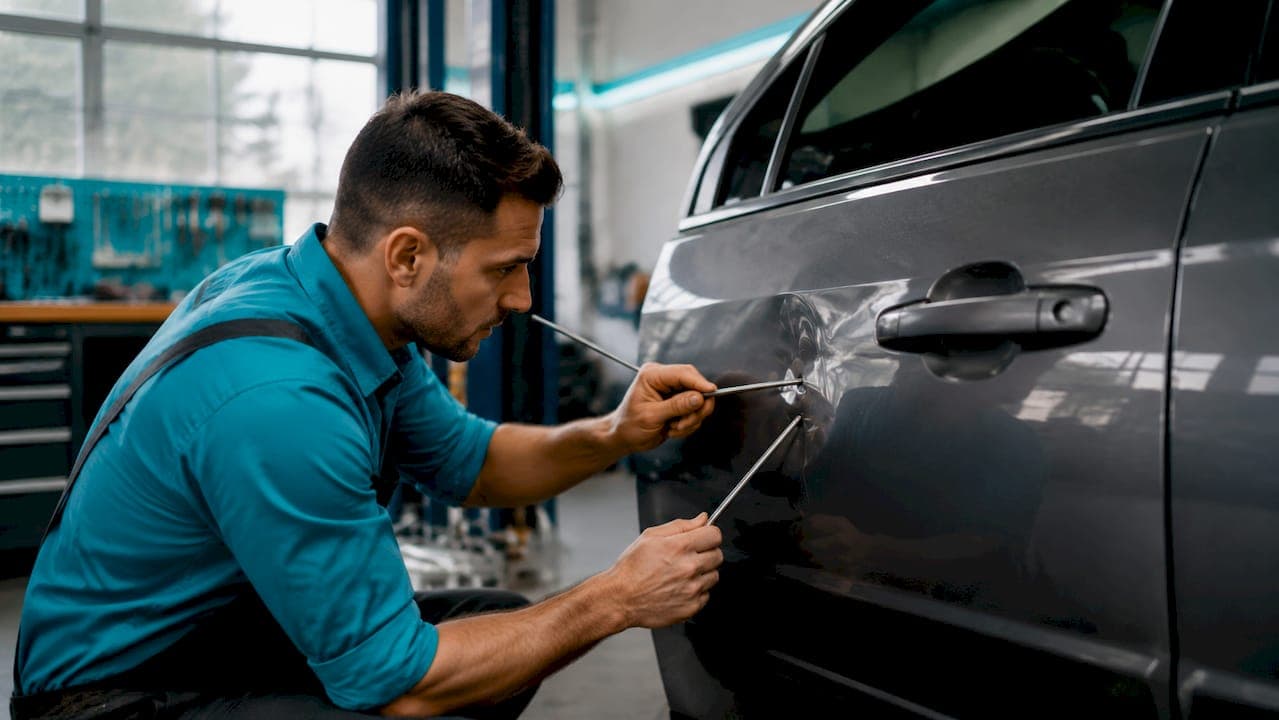
PDR is defined as a technique that massages metal back to its original shape from behind the panel, without touching the paint surface. It works only when the paint is intact and the metal retains enough elasticity to return to its factory contour. When either condition fails, PDR fails with it.
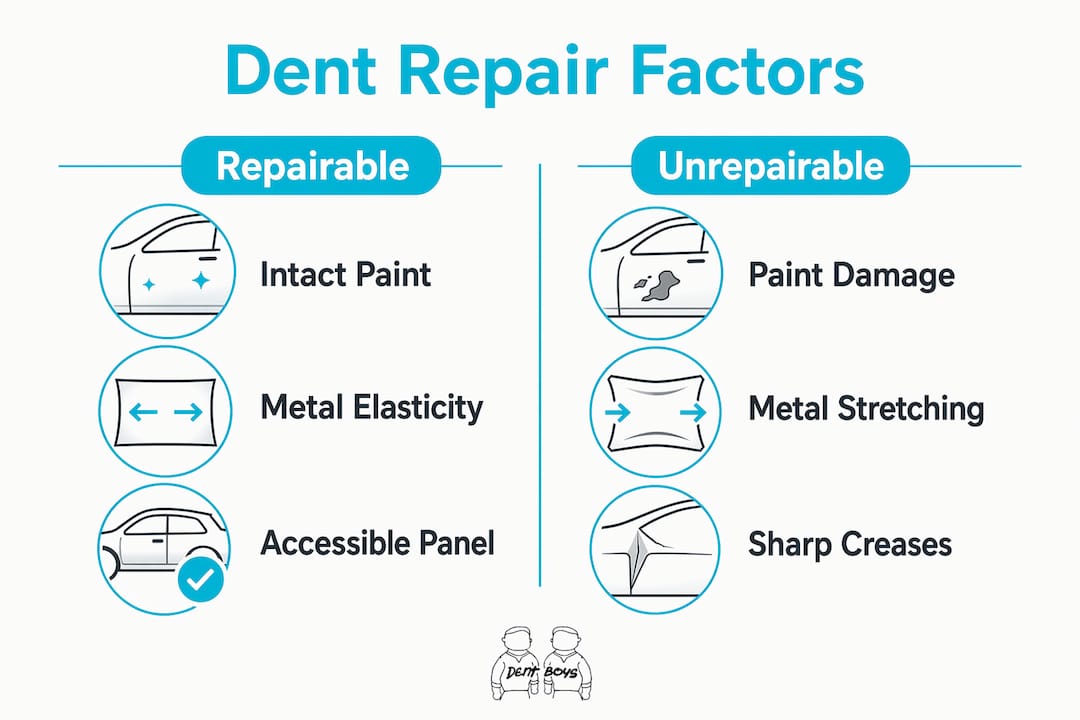
The four primary factors that determine whether a dent crosses into unrepairable territory are paint condition, metal deformation, panel location, and prior repair history. Each factor operates independently, meaning a dent can be unrepairable for just one reason or for all four at once. Knowing which factor applies to your damage tells you exactly which repair path is realistic.
Does paint damage make a dent impossible to fix?
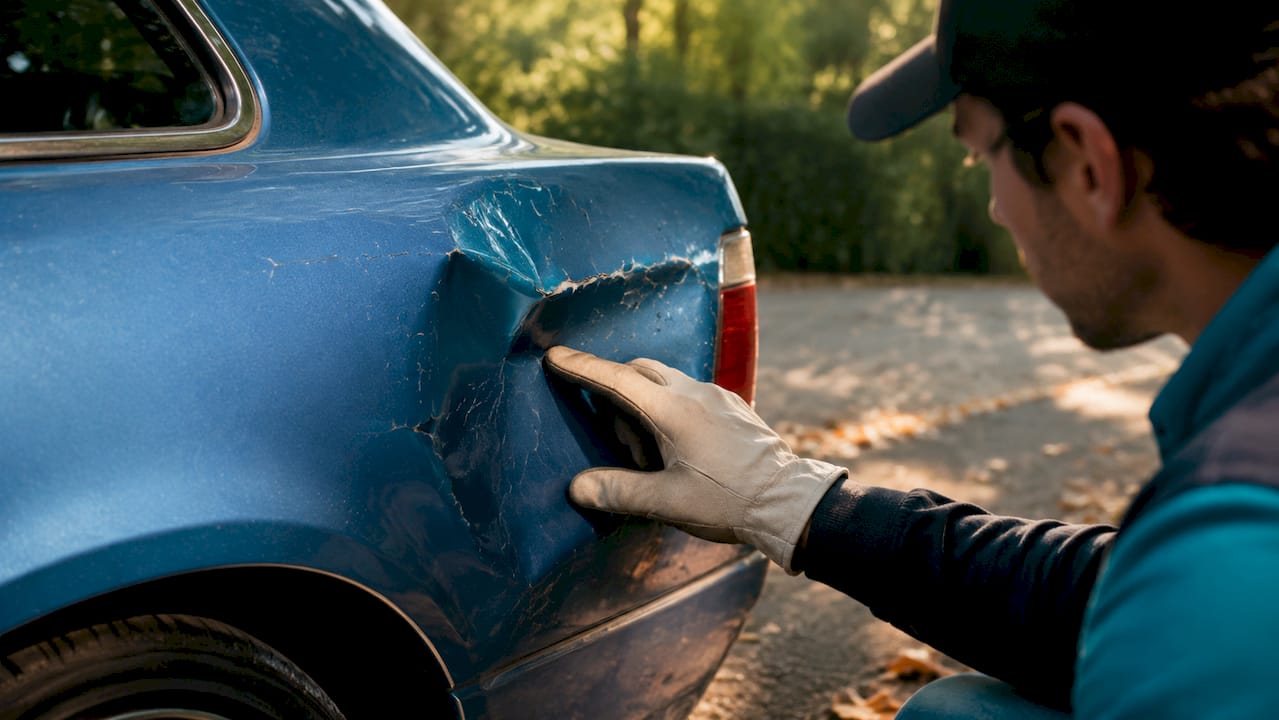
Paint damage is the most immediate sign that PDR is off the table. PDR cannot fix dents where paint is cracked, chipped, or missing because the technique relies entirely on intact factory paint to avoid worsening the surface. Applying PDR tools to a panel with compromised paint causes the surrounding finish to flake and crack further, turning a manageable repair into a full respray job.
Signs of paint damage that rule out PDR include:
- Cracked paint along the dent's edge, which appears as fine spider lines radiating outward
- Chipped or missing paint at the point of impact, often caused by rock strikes or low-speed collisions
- Rust bubbling beneath the surface, indicating moisture has already reached the metal
- Faded or mismatched paint from a previous repair, which signals the panel has already been refinished
When paint is damaged, the repair path shifts to traditional bodywork: sanding, applying filler, priming, and repainting the affected panel. This process costs more and takes longer, but it is the only method that produces a clean result when the factory finish is gone.
Pro Tip: Before calling a shop, photograph the dent in direct sunlight. Cracked paint is easiest to spot in bright light, and having clear photos speeds up your estimate.
How do metal stretching and sharp creases create difficult dents to repair?
Metal has a property called elastic memory, which is its ability to spring back toward its original shape after a minor deformation. High-force impacts push metal past that elastic limit, permanently stretching the surface area. Once stretched, the metal cannot return to its factory dimensions through massage alone, making these among the most difficult dents to repair with PDR.
| Dent Type | PDR Success Rate | Why |
|---|---|---|
| Shallow, rounded dent | High | Metal retains elastic memory |
| Deep, rounded dent | Moderate | Metal may be near elastic limit |
| Sharp crease along body line | Low | Metal is permanently deformed |
| Stretched metal at impact center | Very low | Surface area is irreversibly expanded |
Sharp creases present a separate but related problem. Body line dents are visually and structurally more complex because restoring them requires rebuilding both the dent shape and the factory body line simultaneously. The crease creates a tension zone where metal fibers have been compressed on one side and stretched on the other. PDR technicians must release that tension gradually, which is technically demanding and slow.
Highly skilled technicians typically achieve 90–95% appearance improvement on sharp crease dents, rarely reaching 100% invisible results. That gap matters if you are trying to maintain a factory-perfect finish for resale or lease return. In severe cases, the tension zones make fully invisible repair physically impossible, and the honest answer from a quality shop is traditional repair or panel replacement.
Pro Tip: Run your fingernail lightly across a dent. If you feel a sharp ridge rather than a smooth curve, the metal has creased. That single test tells you PDR is unlikely to deliver a perfect result.
How does panel location affect whether a dent can be fixed?
PDR requires physical tool access to the back side of the damaged panel. Dents near panel edges, structural braces, or reinforced areas are typically unrepairable by PDR because there is simply no room to position a tool behind the metal. The closer a dent sits to a weld seam, a door frame, or a factory brace, the less likely PDR becomes.
Material type adds another layer of complexity. Aluminum panels, used extensively in vehicles like the Tesla Model S and the Ford F-150, behave differently from steel under impact. Aluminum has weaker metal memory than steel, making dent repair with PDR more unpredictable and challenging. Without controlled heat applied during the repair process, aluminum repairs risk locking the dent in place or causing irreversible surface damage.
Locations and materials that commonly limit or eliminate PDR as an option:
- Door edges and corners, where the metal folds over a structural frame
- Hood and trunk edges, reinforced with inner bracing that blocks tool access
- Aluminum body panels on high-end and modern trucks, requiring specialized heat-assisted techniques
- Roof panels near the drip rail, where the metal meets the vehicle's structural skeleton
- Quarter panels near the wheel arch, often reinforced and difficult to access from behind
Understanding the accident repair process helps you ask the right questions when a shop evaluates your damage. A technician who walks you through tool access and material type is giving you an honest assessment, not an upsell.
Why do previous filler repairs make dents unrepairable?
A panel that has been repaired with body filler in the past is no longer a pure metal surface. Previous filler repairs make panels rigid and prone to cracking, rendering PDR largely ineffective on those areas. The reason is straightforward: PDR tools work by manipulating metal. Filler is not metal. It does not flex, it does not have elastic memory, and it responds to pressure by cracking or flaking off.
Here is how the failure sequence typically unfolds when PDR is attempted on a previously filled panel:
- The technician positions a PDR tool behind the panel and applies upward pressure.
- The metal beneath the filler begins to move, but the filler layer above it cannot flex with the metal.
- The filler cracks or separates from the metal, creating a new surface defect.
- The paint bonded to the filler flakes away, exposing bare metal or primer.
- The repair now requires full sanding, re-filling, priming, and repainting, at a cost far higher than the original estimate.
Attempting PDR on previously filled panels often causes paint cracking or filler flaking because PDR tool pressure is applied to a non-metallic surface. This is one of the most common reasons customers end up with a more expensive repair than they expected. Always disclose any prior bodywork to your technician before work begins.
When does a dent require traditional repair or panel replacement?
Traditional repair becomes necessary when PDR cannot restore the panel to an acceptable condition. Professional shops emphasize honest assessment to tell customers when dents are not good candidates for PDR, specifically to avoid worsening damage and triggering more expensive repairs later. Choosing the wrong method first does not save money. It adds cost.
Situations that require traditional repair or full panel replacement include:
- Paint damage at the impact site, requiring sanding, filler, primer, and color-matched repainting
- Stretched metal that cannot be massaged back to factory dimensions
- Sharp creases crossing body lines, where invisible repair is physically impossible
- Rust at or near the dent, which must be cut out before any surface repair can hold
- Structural damage affecting the vehicle's frame or safety systems, which requires certified collision repair
Traditional repair costs more than PDR and takes longer, typically requiring a rental vehicle while work is completed. Knowing which types of auto repair shops handle collision work versus PDR-only services helps you find the right facility from the start. A PDR-only shop cannot perform a full respray. A full-service collision center can handle both.
Key takeaways
Unrepairable dents share four common traits: compromised paint, stretched or creased metal, inaccessible panel locations, and prior filler repairs that block effective PDR.
| Point | Details |
|---|---|
| Paint condition is decisive | Cracked or missing paint forces traditional repair; PDR cannot proceed without intact factory finish. |
| Metal elasticity has a hard limit | Stretched metal and sharp creases cannot be massaged back to factory shape with PDR alone. |
| Panel location controls tool access | Dents near edges, braces, or welds are often physically unreachable by PDR tools. |
| Aluminum requires special handling | Vehicles like the Ford F-150 and Tesla use aluminum panels that need heat-assisted techniques. |
| Prior filler blocks PDR entirely | Disclose past bodywork before any repair attempt to avoid cracking filler and escalating costs. |
The honest truth about evaluating dent damage
I have seen car owners walk away from a PDR estimate frustrated because they expected a simple fix and got a complicated answer. Here is what I have learned from years of watching these evaluations: the shops that tell you a dent cannot be repaired by PDR are the ones worth trusting.
A technician who declines a job because the metal is stretched or the paint is cracked is protecting you from a worse outcome. PDR is not a cure-all, and honest evaluation and knowing when to decline are genuine signs of quality workmanship. The shops that say yes to everything are the ones that generate the expensive follow-up repairs.
My advice is to ask every technician two specific questions before authorizing work: "Is the paint intact?" and "Has this panel been repaired before?" Those two questions surface the most common reasons PDR fails. If a technician cannot answer both confidently after a physical inspection, find someone who can. The cost of a second opinion is always less than the cost of a botched repair.
Get an honest dent assessment from Dent-boys
Knowing whether your dent is repairable starts with a professional evaluation, not a guess.

Dent-boys specializes in PDR and provides straightforward assessments of what your dent actually needs. If PDR is the right call, Dent-boys delivers a factory-quality result with a lifetime warranty, $0 deductible, and free pick-up and delivery. If your damage requires traditional repair, the team tells you that upfront so you are never surprised by the outcome. Get a free estimate from Dent-boys auto hail repair and find out exactly what your vehicle needs before committing to any repair path.
FAQ
What makes a dent unrepairable by PDR?
A dent is unrepairable by PDR when the paint is cracked or missing, the metal has stretched beyond its elastic limit, the panel has sharp creases, or prior filler repairs have stiffened the surface. Any one of these conditions prevents PDR from restoring the panel cleanly.
Can all dents be fixed with paintless dent repair?
No. PDR works only on dents with intact paint and metal that retains elastic memory. Dents with paint damage, deep creases, stretched metal, or previous filler repairs require traditional bodywork instead.
How do i identify signs of unrepairable damage on my car?
Look for cracked or chipped paint at the impact point, sharp ridges you can feel with your fingernail, rust bubbling near the dent, or paint that looks mismatched from a prior repair. Any of these signs indicate the dent likely falls outside PDR's scope.
Are aluminum panel dents harder to repair than steel?
Yes. Aluminum has weaker metal memory than steel, making PDR results less predictable. Repairs on aluminum panels like those on the Ford F-150 require controlled heat and specialized techniques to avoid locking the dent or cracking the paint.
Does previous body filler always prevent PDR?
Yes, in the affected area. Filler does not flex like metal, so PDR tool pressure causes it to crack and flake. Always tell your technician about any prior bodywork before a repair attempt begins.