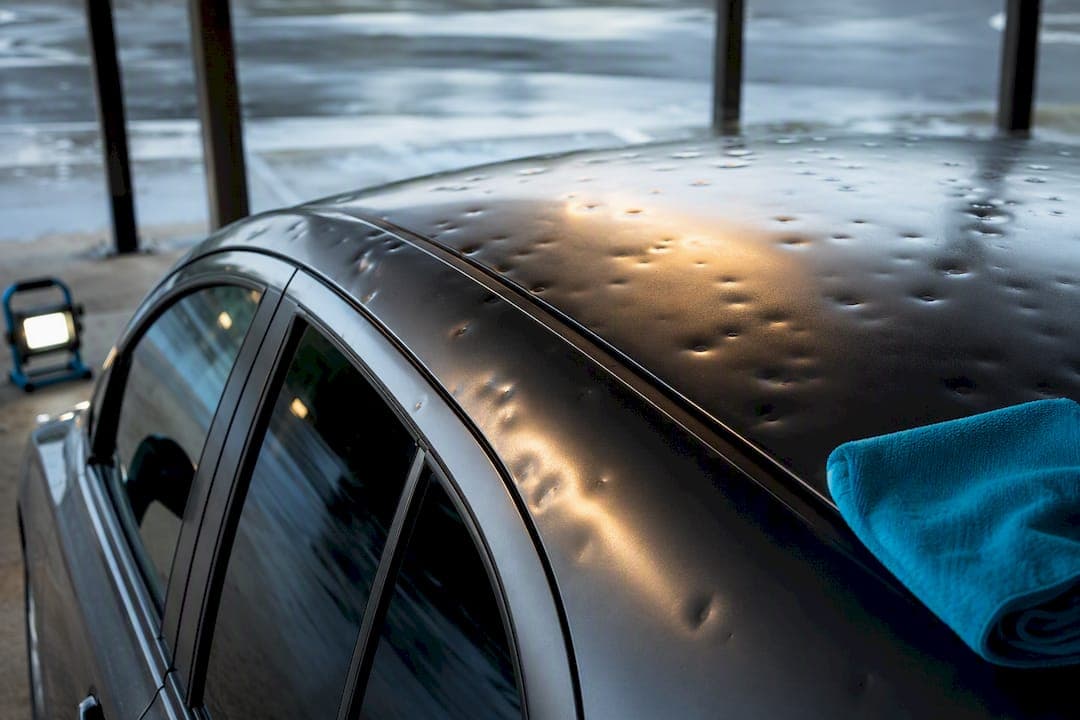
Move to safety, then document before you touch anything else. If the windshield is cracked, don't drive. Photograph every panel from a distance and up close, note the date and location, and check your comprehensive coverage and deductible before you call your insurer. Once you've got the evidence, get a paintless dent repair (PDR) assessment. A provider specializing in paintless dent repair can give you a free estimate and handle pickup so the car doesn't sit exposed any longer than it has to.
TL;DR:
- Complete thorough documentation with wide, panel, and close-up photos of all damaged areas, including a panel map, to speed up claim processing.
- Confirm your comprehensive coverage, deductible, and rental reimbursement details with your insurer before filing a claim or paying out-of-pocket.
- Use paintless dent repair when paint remains intact and damage conditions meet panel-specific criteria; otherwise, consider traditional repairs.
- Get multiple estimates from certified shops, ensuring they handle insurance billing and offer warranties, with careful attention to avoid high deposits.
- Protect your property by promptly covering roof and window damage with tarps and moving valuables indoors within the first 48 hours after a storm.
Table of Contents
- Immediate Safety Steps After a Hail Storm
- How Do You Document Hail Damage on a Car?
- Does insurance cover Hail Damage to Your Car?
- Should You Choose Paintless Dent Repair or Traditional Body Work?
- How Do You Schedule and Manage the Actual Repair?
- Checking Your Home for Hail Damage Beyond the Car
- Protecting Your Property Right After the Storm
- How to Find a Reputable Repair Shop or Contractor
- Staying Safe While You Inspect the Damage Yourself
- Watching for Water Damage and Mold After the Storm
- A Technician's View on What Actually Slows Repairs Down
- Get a Free Hail Damage Estimate From Dent-boys
- Sources
Immediate Safety Steps After a Hail Storm
Don't approach a hail-battered car in the middle of the storm. Wait until the hail stops and check your surroundings for downed branches, power lines, or standing water before you walk outside.
If it's safe to move the vehicle, get it under a carport, garage, or any solid overhang. If it's not safe, or the car is already stranded somewhere exposed, leave it and photograph it in place. Moving a car with a cracked or badly pitted windshield is a separate problem: don't drive it. A compromised windshield can fail under normal driving stress, and it's a liability if you get pulled over or into an accident. Call roadside assistance or arrange a flatbed tow instead.
Before you drive anywhere, run a quick triage:
- Check for fluid leaks under the car (hail rarely causes this, but debris impact sometimes does).
- Look at the windshield and all windows for cracks, chips, or spiderwebbing.
- Check dashboard warning lights, especially airbag or sensor alerts, if the car took a hard hit.
- Confirm mirrors, wipers, and lights still function before any drive.
- Note any broken glass inside the cabin from a shattered window or sunroof.
Only once the car and the area around it are safe should you move to full documentation.
How Do You Document Hail Damage on a Car?
A clean photo record is the single biggest factor in how fast your claim or estimate moves. Prompt documentation with clear photos and a simple panel map materially speeds up insurer decisions and repair scheduling, according to AAA. Insurers and repair shops both work faster when they don't have to guess what they're looking at.
Work through this shot list systematically:
- Take four wide shots of the whole car, one from each corner, showing the overall scene and location.
- Photograph each panel individually, including roof, hood, trunk, and all four doors, even ones that look untouched.
- Get close-up shots of every dent cluster, angling your phone so reflected light shows the dent's depth and shape.
- Photograph all glass surfaces up close, including the windshield, back glass, and side windows, checking for chips or cracks you might miss at a glance.
- Snap a screenshot of your phone's location or a nearby street sign to timestamp and geo-tag the damage.
- Check any exterior mirrors, trim, and the roof antenna for cracks or dents that often get skipped.
While you shoot, build a simple panel map. Grab a notepad or use your phone's notes app and jot down, for each panel: rough dent count, whether paint is chipped or intact, and any creases versus round dents. This distinction matters more than most people realize; a round dent with intact paint behaves very differently in a repair estimate than a crease or a spot where paint has chipped off.
Don't try to fix anything yourself before documenting it. No wiping down loose paint chips, no temporary touch-up paint, no popping a dent out with a plunger. Altered evidence complicates insurance claims and can mask damage a technician needs to see.
Pro Tip: Shoot your close-up photos at a slight angle instead of straight on. Dents are far easier to see when light rakes across the panel and casts a shadow inside the dent, rather than reflecting flat off the surface.
Hail isn't rare in large parts of the country. NOAA logged 4,437 hail storms in 2022, with roughly 40% concentrated in Texas, Nebraska, Minnesota, Kansas, and South Dakota. If you live in that belt, keep this shot list saved somewhere you can find it fast, because you may need it more than once.
Self-documentation gets you most of the way there, but a professional PDR assessment goes further. Technicians map damage panel by panel, checking paint condition, metal stretch, and access before quoting a repair. That level of detail is hard to replicate with a phone camera alone, which is exactly why an in-person or virtual estimate from a PDR shop matters once your own documentation is done.
Does insurance cover Hail Damage to Your Car?
Hail damage almost always falls under comprehensive coverage, not collision, since it's a weather event rather than a crash. Comprehensive is the part of your policy that also covers theft, falling objects, and vandalism.
Before you file anything, confirm three things with your policy documents or your agent:
- Your comprehensive deductible amount, since this is what determines whether filing is even worth it for smaller damage.
- Whether your policy includes rental reimbursement, and for how many days.
- Your insurer's reporting window; most companies want a claim filed within a set number of days after the storm.
GEICO and other major carriers publish state-specific guidance on hail coverage, and many offer online tools to check your policy details before you call. Use those tools first; it saves a phone call and gives you numbers to reference when you do talk to an adjuster.
When you're ready to file, gather your panel-map notes, your full photo set, the approximate date, time, and location of the storm, and at least one repair estimate. Insurers increasingly accept virtual estimates, so clear photos and a documented panel map can sometimes replace an in-person adjuster visit entirely, cutting days off the process. If your damage looks minor and your deductible is high, paying out of pocket for a PDR repair without filing a claim can sometimes cost less than the deductible itself, and it keeps your claims history clean.
Pro Tip: Call your insurer before you get any repair work started, even if you plan to pay out of pocket. Some policies have language about preauthorization that can affect reimbursement later if you change your mind.
Should You Choose Paintless Dent Repair or Traditional Body Work?
Paintless dent repair works by massaging the metal back into shape from behind the panel, without cutting, sanding, or repainting. When paint is intact, PDR is the standard fix for hail dents recommended by major insurers, and it costs less and takes less time than a paint-and-body repair because there's no color match, no drying time, and no filler.
Whether a panel qualifies comes down to a handful of factors, and they get judged panel by panel rather than for the car as a whole:
- Paint condition: cracked, chipped, or missing paint over a dent usually rules out PDR on that panel.
- Metal stretch: a dent that stretched the metal past its original shape, rather than just denting it, may need filler and paint.
- Panel material: some plastic composite or aluminum panels respond differently to PDR than standard steel.
- Location: dents near sharp body lines, edges, or reinforced areas are harder to access and repair cleanly.
- Access: technicians need room to work from behind the panel, which isn't always possible without partial disassembly.
Your roof might be a clean PDR job while your hood, with a crease near the edge, needs body-and-paint work instead. Treating each panel as its own decision, rather than assuming one verdict for the whole car, is how professional technicians actually work.
Glass is judged separately. Small chips smaller than a quarter can often be repaired in place. Cracks, especially ones longer than a few inches or near the edge of the windshield, generally require full replacement rather than repair. For a broader look at how PDR interacts with resale value and salvage-title risk after serious hail events, see this repair action plan for hail damage.
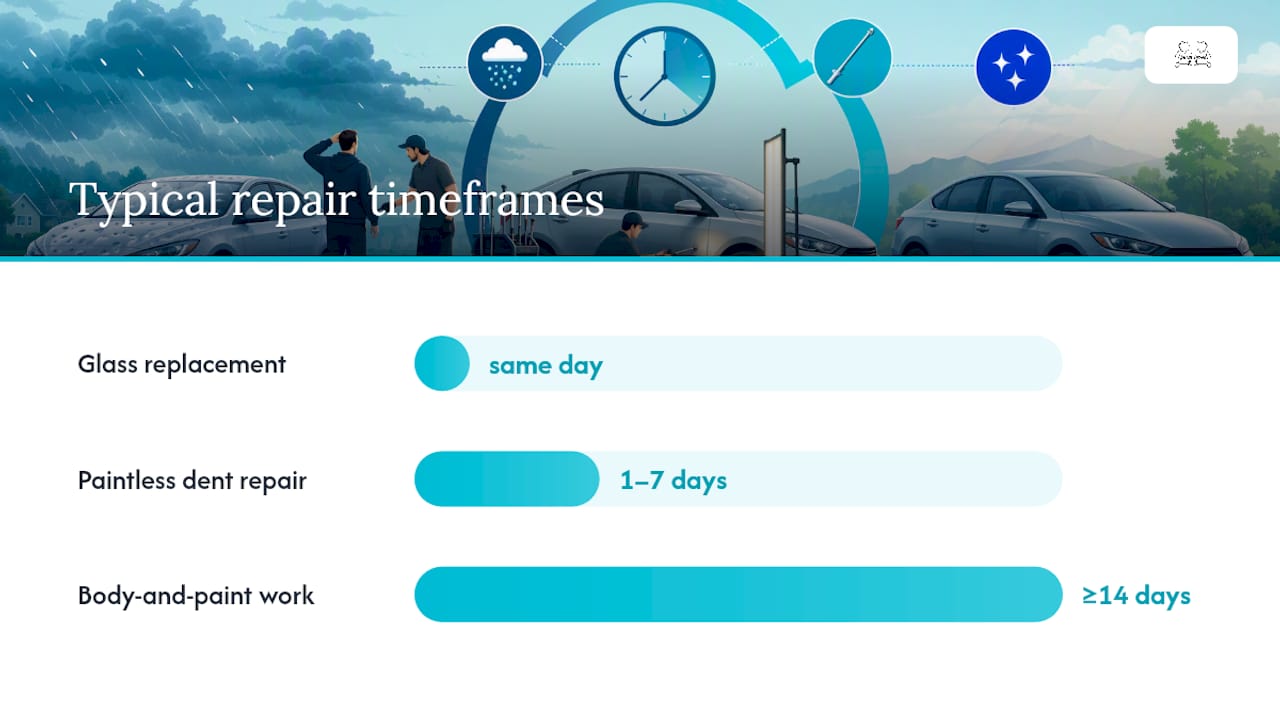
Expect a PDR repair to run anywhere from a single day to about a week depending on dent count, while body-and-paint work often stretches to two weeks or more because of drying and curing time. Glass replacement is usually the fastest of the three, often same-day.
How Do You Schedule and Manage the Actual Repair?
Once you know roughly what kind of repair you need, request estimates from more than one shop so you can compare. Send your photos, panel map, VIN, and general location upfront; shops that can quote off good documentation tend to be the same ones that run efficient operations in person.
When you're comparing quotes, ask:
- How long is the warranty, and does it cover the repaired panels for life or for a set number of years?
- Does the shop bill your insurer directly, or do you pay and get reimbursed?
- Is a rental car included or arranged while your car is in the shop?
- Do they offer pickup and delivery, or do you need to drop the car off yourself?
Mobile PDR technicians can work in your driveway or office parking lot for smaller jobs, which saves you a trip, but a shop setting usually has better lighting and equipment for large-scale hail damage covering dozens of panels. After major regional storms, some large insurers set up temporary pop-up repair centers staffed by PDR technicians to handle volume quickly, so ask your insurer if one is active in your area.
Pro Tip: Keep your before-and-after photos and the final invoice together in one folder. If a repaired dent ever reappears or the paint doesn't quite match near a repaired panel, you'll want that paper trail for a warranty claim.
Checking Your Home for Hail Damage Beyond the Car
Your vehicle usually isn't the only thing that took a beating. Once you've handled the car, walk your property with the same documentation mindset.
Start with the roof, but don't climb up there yourself if it's steep or wet. Use binoculars from the ground or check gutters for granules washed off asphalt shingles, a sign of impact damage. Look for dented gutters, downspouts, and vents; hail dings metal fixtures the same way it dents car panels, leaving round, shallow depressions.
Check window and door screens for tears, and inspect any window glass for cracks or chips, especially on the storm-facing side of the house. Skylights deserve a close look too, since they crack more easily than standard windows.
Walk the yard for outdoor equipment: AC units, grills, patio furniture, and any vehicles like boats or motorcycles that were left outside. Air conditioner fins bend easily under hail impact and can reduce cooling efficiency even when the damage looks cosmetic.
Photograph everything the same way you did the car: wide shots for context, close-ups for detail, and a note of the date and approximate storm time. If you have a second story or attic access, check the underside of the roof deck for any daylight coming through or damp spots, since these can indicate a breach before you see stains on the ceiling below.
Protecting Your Property Right After the Storm
Damage control matters as much as documentation in the first 24 to 48 hours. A cracked window or compromised roof section left unprotected turns a hail claim into a much bigger water damage claim fast.
If you spot obvious roof damage, cover the affected area with a tarp secured with wood strips or sandbags rather than nails, which can create new holes. Most hardware stores sell tarps sized for emergency roof coverage, and getting one up before the next rain is worth the effort even if you're not confident on a ladder; call a professional if the roof pitch is steep or you're not comfortable up there.
Move anything you can carry indoors: patio cushions, small grills, potted plants, and portable equipment. For items too large to move, like a boat or a window AC unit, a heavy-duty cover can at least reduce exposure to a follow-up storm, which is common during active hail season.
Close and latch any windows with cracked glass, and place towels or a shallow container underneath to catch drips if you can't board it up immediately. If you have a chimney cap or vent cover that's visibly bent or knocked loose, that's a path for water intrusion worth sealing temporarily with tape or a tarp until a contractor can look at it.
Don't wait on any of this hoping insurance will "cover the delay." Most policies expect you to take reasonable steps to prevent further damage, and failing to do so can affect a claim later.
How to Find a Reputable Repair Shop or Contractor
Storm season brings out traveling contractors who show up in damaged neighborhoods offering fast, cheap repairs. Some are legitimate. Many are not, and the pattern is predictable enough to spot.
Be cautious of anyone who knocks on your door unsolicited, pressures you to sign a contract on the spot, or asks for a large deposit before any work starts. Legitimate contractors don't need to door-knock after a storm; they're already busy with existing customers and referrals.
Verify any roofing contractor's license through your state's licensing board, and ask for proof of liability insurance before they set foot on your roof. For auto repair, check whether the shop is certified by a recognized industry body, and ask directly how many years they've operated in your area under the same business name. A shop or contractor that's been through the same local storm cycles before, and has the local reviews to show for it, is a safer bet than a company that appeared the week after the hail hit.
Get at least two estimates for anything beyond a small repair, and never pay the full amount upfront. A reasonable deposit, with the balance due on completion, is standard. Ask directly whether they handle insurance billing themselves or expect you to pay and get reimbursed, since that answer affects your cash flow during the repair.
Staying Safe While You Inspect the Damage Yourself
Checking your own car and property for hail damage is fine, but a few precautions keep a bad storm from turning into a bad fall or a bad shock.
Wait for the storm to fully pass, including any secondary bursts, before you go outside. Wear closed-toe shoes; hail leaves ice and debris on driveways and sidewalks that stay slick for a while after the storm ends. If you're inspecting the roof from the ground, stay off any ladder if the rungs or the ground are wet.
Watch for downed power lines anywhere near your property, especially if the storm came with high winds. Treat any line on the ground as live regardless of how it looks, and keep well clear of it. If a tree limb came down near power lines or your house, don't attempt to move it yourself; call your utility company or a tree service instead.
Inside the car, check for shattered glass on seats and floors before you sit down, particularly if a window or sunroof broke. Broken glass has a way of hiding in seams and cupholders long after the obvious pieces are cleared.
If you're not confident checking your roof safely, skip it and call a professional instead of risking a fall for a few photos. A licensed inspector or contractor has the harness, ladder stability, and experience to do it safely, and the documentation ends up more reliable anyway.
Watching for Water Damage and Mold After the Storm
The damage you can see right after a hail storm isn't always the damage that costs the most. Cracked seals, compromised shingles, and hairline breaches in a roof or window frame let water in slowly, sometimes for weeks before anyone notices a stain.
Check your attic, ceilings, and the areas around window frames over the days following a storm, not just immediately after. Look for discoloration, a musty smell, or any soft spots in drywall or wood trim. These signs often show up gradually as water works its way through insulation and framing.
Inside the car, check under floor mats and in the trunk if any window or seal was compromised during the storm. Trapped moisture in a car's carpet or headliner can develop mold within 24 to 48 hours in warm, humid conditions, and it's far easier to dry out a wet interior on day one than to remove mold odor later.
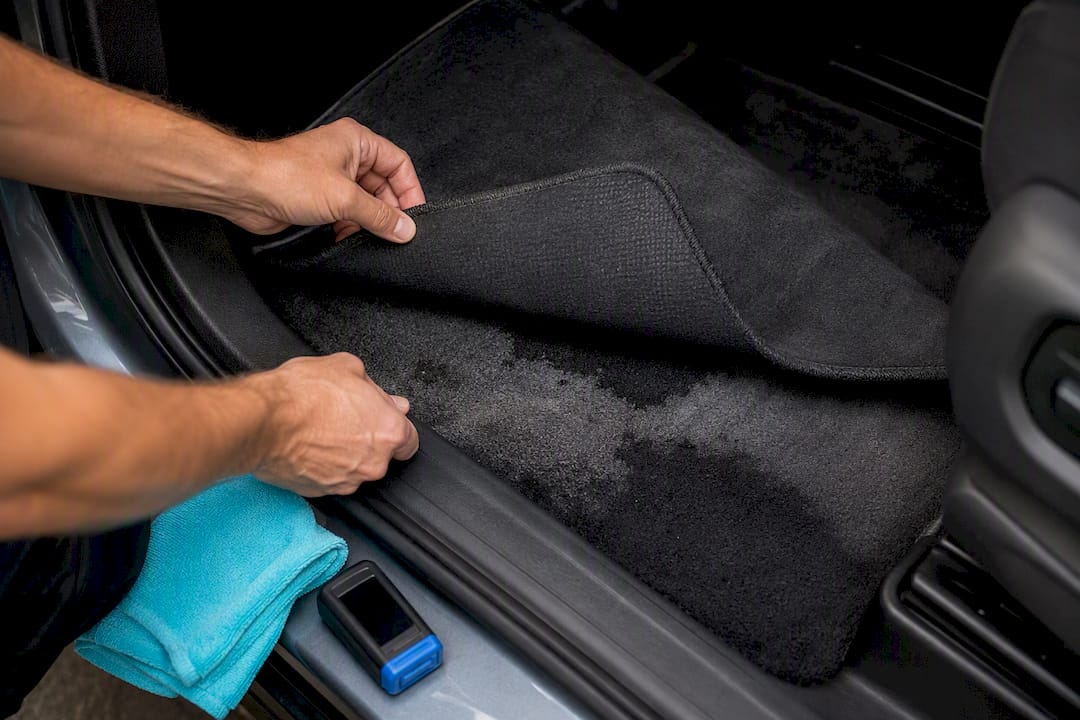
If you do find water intrusion, dry the area as fast as possible with fans or a dehumidifier, and photograph the damage before you clean it up, the same way you documented the original hail damage. Delayed water damage sometimes qualifies as part of the original storm claim if you can show it traces back to the same event, but that connection gets harder to prove the longer you wait to report it.
A Technician's View on What Actually Slows Repairs Down
The single most common mistake is waiting. A dent with intact paint today can develop a hairline paint crack in a week if left exposed to sun and temperature swings, and once paint is compromised, PDR is often off the table. The second most common mistake is incomplete documentation, missing panels because "that one looked fine," only to find the dent in better light a month later with no timestamp to back up when it happened.
A coordinated process beats a piecemeal one every time: get the estimate, confirm coverage, and schedule the PDR appointment with pickup arranged in the same conversation. That sequence, done in the first few days rather than spread over weeks, is what actually protects the car's resale value and your own time.
— Martin
Get a Free Hail Damage Estimate From Dent-boys
Skip the guesswork on repair costs. Some paintless dent repair providers offer free estimates, and because paintless dent repair doesn't involve paint or fillers, most jobs move faster and cost less than traditional body work for the same dents.

The process is built around getting your car back to you with as little disruption as possible: free estimates, pickup and delivery so you don't have to find time to drop the car off, deductible assistance when your claim qualifies, a rental vehicle while the repair is underway, and a warranty on completed work, supported by a digital vehicle inspection workflow that streamlines photo documentation and panel mapping. That combination covers the logistics most people dread most about a hail claim, arranging everything separately with an insurer, a rental company, and a shop.
If you've already worked through your photos and panel map and confirmed your coverage, the next step is straightforward. Head to the Dent Boys hail repair page and request your free estimate. Send the photos you took, note your general location, and expect a quote back with next steps for pickup or a repair appointment. Photograph the damage, check your coverage, then request the estimate. That's the whole sequence.
Sources
- Does car insurance cover hail damage? | AAA (ACE subpage)
- Hail damage to your car: everything you need to know | AAA Automotive
- Paintless Dent Repair - State Farm®
- Does car insurance cover hail damage? | GEICO