Dent repair cost factors are defined by five variables: dent size, paint condition, repair method, vehicle type, and local labor rates. Understanding these factors before you call a shop puts you in control of the estimate. The difference between a $75 fix and a $2,500 repair often comes down to one question: is the paint still intact? Paintless dent repair (PDR) is the industry standard for paint-intact dents, while traditional bodywork takes over the moment paint cracks or chips.
1. How dent size and depth influence repair costs
Dent size is the most direct driver of your final bill. Small dents under 1 inch typically cost $75–$150 with PDR. Medium dents in the 1–4 inch range run $150–$400. Large dents or sharp creases can exceed $1,000, and that number climbs fast once panel replacement enters the picture.
Depth matters as much as diameter. A shallow quarter-sized dent on a flat door panel is a straightforward PDR job. A deep crease along a body line is a different problem entirely. Creased or large dents handled at a body shop typically run $1,000–$2,500, because the technician must reshape metal that has been stressed beyond what PDR tools can safely correct.
Repair time scales with size too. A small PDR job wraps up in 30 minutes. A large, multi-dent repair can take several hours. More time means more labor cost, which compounds the material expenses on traditional repairs.
- Small dents (under 1 inch): $75–$150 with PDR
- Medium dents (1–4 inches): $150–$400 with PDR
- Large dents or creases: $300–$800 PDR, $1,000–$2,500 at a body shop
- Multi-panel hail damage: $1,200–$4,000 with PDR
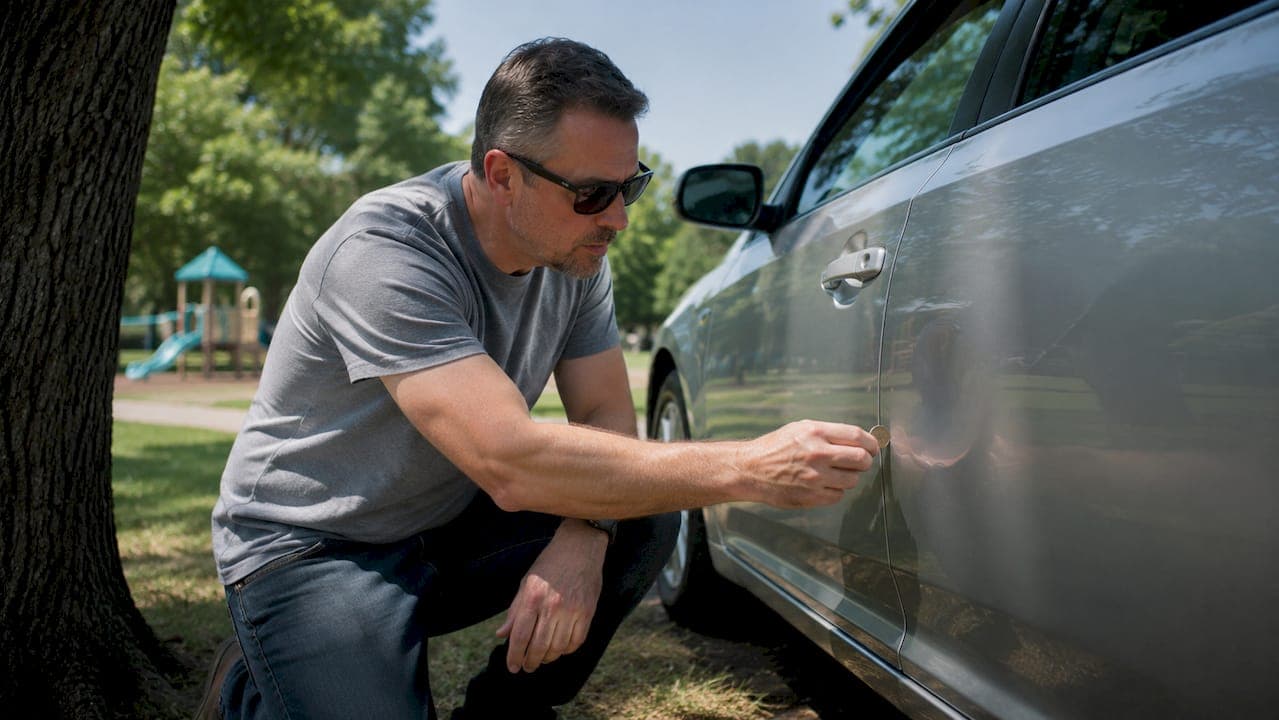
Pro Tip: Take a coin and hold it next to the dent before you call for a quote. Knowing the approximate diameter in inches gives the technician a starting point and helps you spot-check whether the estimate you receive is reasonable.
2. Why paint condition drives up dent repair expenses
Paint condition is the single biggest fork in the road for pricing. When paint is intact, PDR is viable. A skilled technician uses specialized rods and picks to massage the metal back into shape from behind the panel, with no filler, no sanding, and no repainting. The job costs less and finishes faster.
The moment paint cracks, chips, or flakes, PDR is off the table. Paint damage shifts the repair to traditional bodywork, which triples labor hours and expenses. A technician must apply body filler, sand it smooth, prime the surface, match the paint color, spray, and then cure. That process adds 8–20 hours of labor at $80–$150 per hour, depending on the shop.
Traditional body shop repairs for paint-damaged dents typically run $500–$1,500 or more per panel. That is a significant jump from a $150 PDR job on the same-sized dent. The paint itself is not the expensive part. The labor to prep, match, and finish is where the cost accumulates.
- Paint intact: PDR viable, $75–$400 depending on dent size
- Paint cracked or chipped: body shop required, $500–$1,500+ per panel
- Panel repaint labor: 8–20 hours at $80–$150 per hour
- Color-matching complexity adds cost on metallic or specialty finishes
Statistic to know: Body shop repaint for paint-broken dents runs $500–$1,000 for a single panel. That figure does not include blending adjacent panels for a seamless color match, which many shops recommend and charge separately.
3. How repair methods compare and affect your total cost
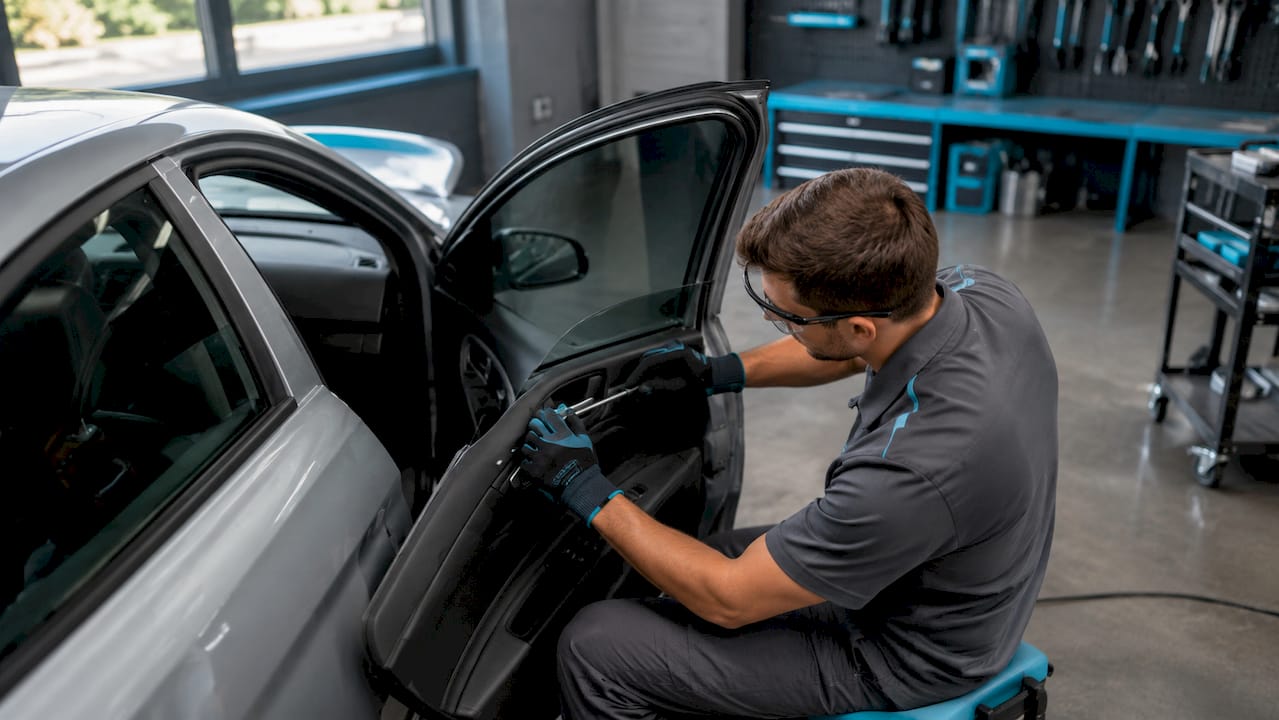
PDR and traditional bodywork are not interchangeable options. They solve different problems at different price points. PDR works only when the paint is intact and the metal has not been stretched beyond recovery. Traditional bodywork handles everything else, but at a significantly higher cost and longer turnaround.
| Factor | PDR | Traditional bodywork |
|---|---|---|
| Paint condition required | Intact | Damaged or intact |
| Average cost per panel | $75–$400 | $500–$1,500+ |
| Turnaround time | 30 minutes–3 hours | 3–7 days |
| Filler or repainting | None | Required |
| Best for | Minor to medium dents | Deep creases, paint damage |
Multi-panel hail damage is priced differently than single dents. PDR shops quote hail jobs in bulk, ranging from $1,200 to $4,000 for full-vehicle damage. Traditional repainting for the same hail damage can exceed $5,000 to $12,000. That gap is why insurance companies strongly prefer PDR for hail claims.
Turnaround time has a real cost too. A PDR job finished in an hour means you keep your car. A traditional repair taking 3–7 days means rental car expenses, scheduling disruptions, and the inconvenience of being without your vehicle.
Pro Tip: If a shop immediately recommends traditional bodywork without checking whether the paint is intact, get a second opinion. PDR is almost always the better starting point for dents without paint damage.
4. Additional factors: dent location, vehicle type, and labor rates
Three factors that car owners frequently underestimate are where the dent sits on the car, what the car is made of, and where the shop is located.
Dent location changes the difficulty of the repair. Dents on edges or body lines require more precision and time than dents on flat panels. A technician working a dent off a body crease has less room to maneuver tools and risks distorting the surrounding metal. Dents near door edges, wheel arches, or pillar seams carry a labor premium for exactly this reason.
Vehicle material is a cost factor that surprises many car owners. Aluminum panels cost 30–50% more to repair than steel panels. Aluminum "work-hardens" when bent, meaning the metal stiffens and becomes more resistant to reshaping with each tool pass. Technicians need specialized equipment and more time, both of which raise the price. Luxury vehicles and newer trucks use aluminum extensively, so owners of these vehicles should expect higher quotes across the board.
Labor rates vary sharply by geography. Major U.S. metro shops charge $120–$160 per hour, while shops in lower-cost areas charge $65–$95 per hour. A shop in Los Angeles pays roughly $6,000 per month in bay rent. A comparable shop in Wichita pays around $1,200 per month. Those overhead differences flow directly into your estimate.
- Body line or edge dents: higher labor cost due to access difficulty
- Aluminum panels: 30–50% premium over steel
- Luxury vehicles: specialized tools and expertise add to the base price
- Metro labor rates: $120–$160 per hour vs. $65–$95 in lower-cost markets
5. Situational considerations and cost-saving tips for dent repair
Geography gives you more leverage than most car owners realize. Local market factors like shop density and cost of living directly affect what you pay. Driving 20–30 miles to a suburban or rural shop can produce meaningfully lower quotes for the same quality of work.
Insurance coverage is worth checking before you pay out of pocket. Comprehensive auto insurance typically covers hail damage, and insurers often steer claims toward PDR because it costs less than traditional bodywork. If you have a $0 deductible option through your insurer or repair provider, PDR becomes essentially free to you.
DIY dent repair kits exist and are sold at most auto parts stores. They work on very shallow, small dents where the paint is intact. For anything deeper, on a body line, or on an aluminum panel, DIY attempts frequently make the damage worse and more expensive to fix professionally.
- Get at least two quotes before committing to a shop
- Ask specifically whether PDR is viable before accepting a body shop estimate
- Check your comprehensive insurance policy for hail or impact damage coverage
- Consider suburban shops for the same repair at lower labor rates
- Avoid DIY kits on aluminum panels or body line dents
Pro Tip: Timing matters. Some shops offer lower rates during slow seasons or for same-week appointments. If the repair is not urgent, ask whether scheduling flexibility earns you a discount.
Key takeaways
The most important thing to know about dent repair pricing is this: paint condition determines your repair method, and your repair method determines your cost more than any other single variable.
| Point | Details |
|---|---|
| Paint condition is decisive | Intact paint means PDR is viable, cutting costs to $75–$400 per panel. |
| Dent size sets the baseline | Small dents under 1 inch start at $75; large creases can exceed $2,500 at a body shop. |
| Aluminum costs more | Panels made of aluminum run 30–50% more to repair due to work-hardening. |
| Location adds a premium | Dents on body lines or edges take longer and cost more than flat-panel dents. |
| Geography affects your quote | Metro shops charge $120–$160 per hour; suburban shops often charge $65–$95. |
What I've learned about getting a fair dent repair quote
Most car owners walk into a dent repair conversation without knowing the one question that changes everything: "Is the paint intact?" That single answer determines whether you are looking at a $150 PDR job or a $1,200 body shop repair. I have seen car owners accept traditional bodywork quotes for dents that were perfectly suited for PDR, simply because they did not know to ask.
My honest recommendation is to evaluate paint condition yourself before you call anyone. Run your finger across the dent. If the paint feels smooth and unbroken, PDR is almost certainly your best path. If you feel rough edges, chips, or cracks, budget for a body shop and get multiple quotes.
The aluminum panel issue is one that catches luxury vehicle owners off guard. If you drive a newer truck or a European luxury sedan, assume aluminum is involved and factor in that 30–50% premium when comparing quotes. A shop that does not mention aluminum when quoting your BMW or F-150 is either not checking or not telling you.
For classic car owners, the calculus is different. Paint matching on older vehicles is more complex, and the classic car dent repair process requires technicians who understand vintage finishes. Do not send a classic to a general body shop without verifying their experience with older paint systems.
Getting two or three quotes is not about being cheap. It is about understanding what a fair price looks like in your market. A quote that is 40% below the others is a warning sign. A quote that is 40% above the others probably reflects metro overhead, not superior skill.
— Martin
Dent-boys: quality PDR at a price that makes sense
Dent-boys specializes in paintless dent repair and hail damage restoration, handling everything from small door dings to full-vehicle hail claims. Every repair comes with a lifetime warranty, and the process includes pick-up and delivery so you are not rearranging your schedule around a shop visit.
Dent-boys also offers a $0 deductible option and a rental vehicle during repairs, which removes two of the biggest friction points car owners face. Free estimates mean you know exactly what you are looking at before committing. If your paint is intact and you want the most cost-effective path to a like-new finish, Dent-boys is built for exactly that situation.
FAQ
What is the average cost to repair a car dent?
PDR averages $75–$400 per panel for minor to medium dents with intact paint. Traditional body shop repairs for paint-damaged dents typically run $500–$1,500 or more per panel.
Does insurance cover dent repair?
Comprehensive auto insurance generally covers hail damage and other impact-related dents. Insurers frequently prefer PDR because it costs significantly less than traditional repainting.
Why does dent location affect the price?
Dents on body lines or edges require more precision and restricted tool access, which increases labor time and raises the final cost compared to flat-panel dents.
Is paintless dent repair always cheaper?
PDR is cheaper when the paint is intact and the dent is not a sharp crease. Once paint is damaged or the metal is severely stretched, traditional bodywork becomes necessary and costs more.
Why do aluminum panels cost more to repair?
Aluminum work-hardens when bent, making it stiffer and harder to reshape with each tool pass. Technicians need specialized equipment and more time, which adds 30–50% to the repair cost compared to steel panels.