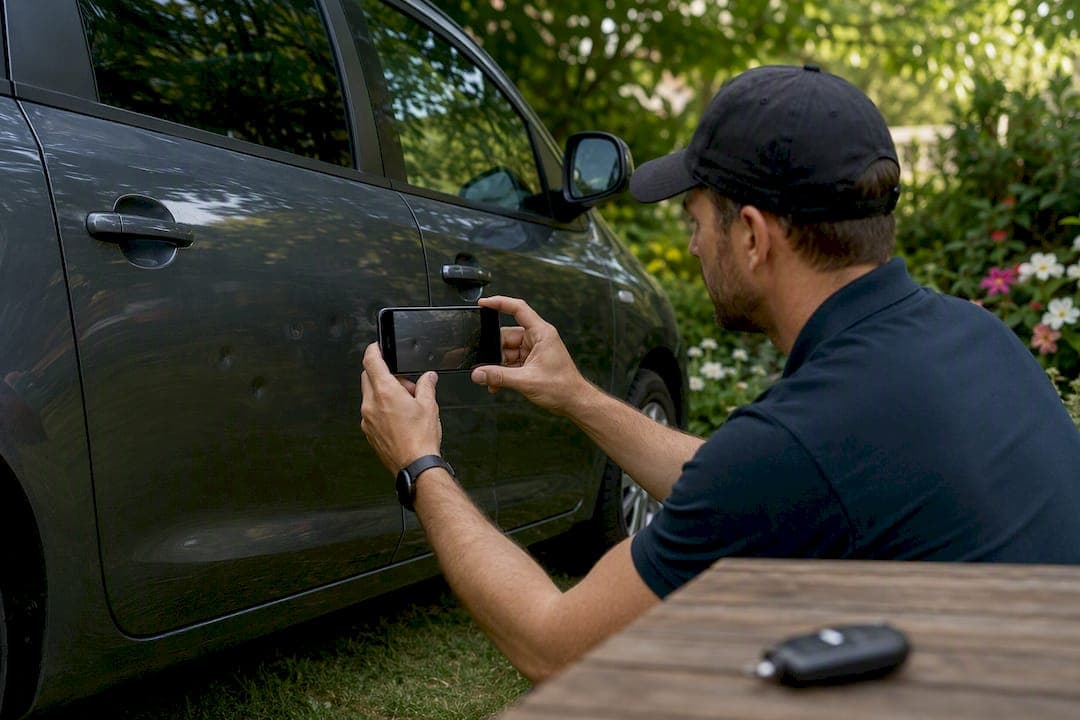
The fastest path to a repaired car is a photo estimate sent before you ever call. Text or email clear pictures of every dent, confirm a pickup and drop-off window that matches your calendar, and lock down rental coverage the same day, not after the shop already has your keys. If insurance is involved, get the deductible and approval process settled on that first call, not mid-repair. Before the vehicle leaves your driveway, photograph the damage yourself and ask what the warranty and recheck policy covers. Two things worth confirming up front are whether the shop offers a free estimate and whether it backs the work with a warranty with clear terms. Providers like Dent Boys build their booking process around exactly these steps.
On that first call or message, confirm:
- Photo estimate turnaround time
- Pickup and drop-off scheduling flexibility
- Rental vehicle availability or insurer rental limits
- Insurance approval process and deductible handling
- Warranty terms and post-repair recheck policy
Key Takeaways
Scheduling paintless dent repair works best when you confirm photo estimates, pickup windows, rental coverage, and insurance approval all before drop-off, not during it.
| Point | Details |
|---|---|
| Lead with photos | Send wide, close-up, and contextual shots plus vehicle details to speed up the estimate. |
| Confirm rental timing | Know your insurer's rental day cap and align it with your actual drop-off date. |
| Book early after hail | Storm season backlogs form within days, so same-week booking beats waiting to compare quotes. |
| Document before handoff | Take your own pre-repair photos and note aftermarket parts to avoid disputed claims. |
| Verify warranty terms | Providers like Dent Boys pair free estimates and pickup/delivery with a lifetime warranty and $0 deductible support. |
Table of Contents
- Vehicle Service Scheduling Best Practices: The Step-by-Step Checklist
- Coordinating Insurance and Rental Coverage When You Book
- Getting Your Vehicle Ready Before Pickup or Drop-Off
- How Dent Boys Puts These Scheduling Steps Into Practice
- What Most Scheduling Advice Gets Wrong
- Ready to Book Your Dent Repair Pickup?
- Frequently Asked Questions
- Sources
Vehicle Service Scheduling Best Practices: The Step-by-Step Checklist
Booking paintless dent repair well comes down to sequencing. Do these steps out of order and you end up with a rental gap, a mismatched estimate, or a car sitting untouched for a week longer than it needed to.
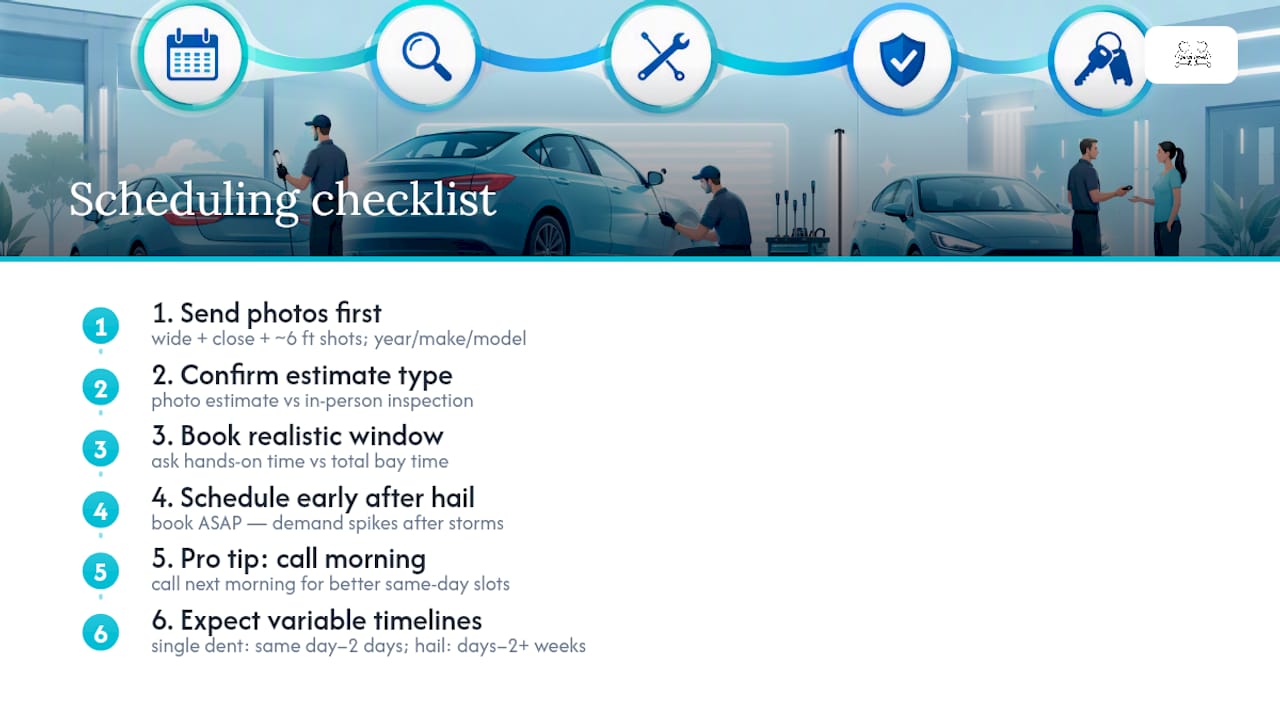
Step 1: Send clear photos and vehicle details first. Skip the phone tag and go straight to images. Take a wide shot of the full panel so the shop can gauge scale, a close-up of each dent under angled light (this shows depth better than direct overhead light), and one shot from about six feet back for context. Include your vehicle's year, make, and model, since panel curvature and metal thickness affect repair time and technique.
Step 2: Ask whether the estimate is photo-based or requires an in-person inspection. A photo estimate can confirm rough scope and pricing within a day, but it doesn't always catch everything. Paintless dent repair works best when the paint isn't cracked and the metal underneath isn't stretched, and a shop may need to see the vehicle in person to confirm the dent actually qualifies for PDR versus a repair that requires paint or panel work. Clear communication at this stage, including specifics about each dent's location and size, predicts a smoother booking with fewer surprises once the car is in the shop.
Step 3: Book a pickup and drop-off window that matches your actual schedule, not the shop's first opening. Ask directly: how much of that window is hands-on repair time versus total time the car sits at the shop? A single dent might take a technician an hour, but the vehicle could occupy a bay for a day depending on queue position. Getting this distinction up front helps you plan around a realistic pickup dent repair schedule instead of guessing.
Step 4: Book early if you're scheduling after a hail event. Demand spikes hard in the days following a storm, and backlogs build fast. Some providers respond with staggered pickup windows or temporary mobile teams to absorb the surge, but even then, the first customers to book after a hailstorm tend to get earlier service dates than those who wait a week to call around.
Pro Tip: Call the morning after a hailstorm, not the afternoon. Insurance adjusters and repair shops both see call volume triple within 24 hours, and a same-day booking often beats a next-week slot by a wide margin.
Timeline expectations vary by job size. A single small dent handled through paintless dent repair often finishes same day to within two days. Multi-panel hail damage is a different animal entirely, running anywhere from several days to more than two weeks depending on parts availability and how many vehicles are ahead of yours in the queue. Check a detailed repair timeline breakdown if you're trying to plan a rental car budget around the wait.
Coordinating Insurance and Rental Coverage When You Book
Scheduling PDR through insurance adds a layer most people underestimate. The repair itself might take two days, but the paperwork around it can stretch that timeline if you don't get ahead of it.
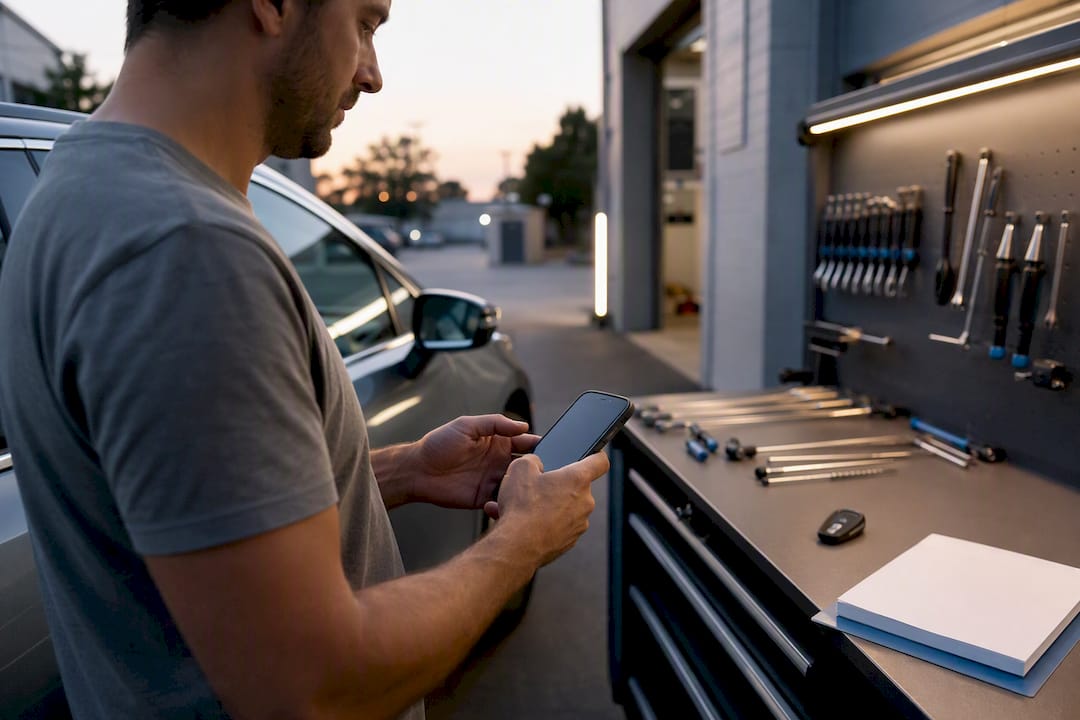
Document the damage before you file anything. Take your own pre-repair photos and jot down written notes on each dent's location and size. This becomes your reference point if the insurer's estimate and the shop's estimate don't match later.
Ask the shop directly whether it bills your insurer or requires you to pay upfront and file for reimbursement yourself. This single question determines your cash flow for the entire repair. If the shop advertises $0 deductible support, confirm exactly what that covers and whether it applies to your specific claim type before you assume it does.
Rental coverage needs its own conversation. Know your insurer's daily rental limit and total day cap, and ask the shop whether it provides a rental vehicle directly or expects you to arrange one through the insurer's network. Timing matters here: a rental that starts before drop-off wastes covered days, and one that starts late leaves you without a car.
A few red flags worth watching for:
- The shop's estimate scope doesn't match what the insurer approved
- Rental approval hasn't come through before your scheduled drop-off date
- Required parts haven't been confirmed as in stock
Pro Tip: Before your drop-off appointment, call your insurer and ask one specific question: "What's my rental cap in days, and does it start the day I drop off the vehicle or the day repair begins?" That single answer prevents most of the scheduling conflicts that stretch a simple repair into a two-week headache.
Shops that spell out timelines, parts needs, and inspection steps clearly upfront tend to produce far fewer scheduling surprises for owners juggling rental days against a fixed budget.
Getting Your Vehicle Ready Before Pickup or Drop-Off
A little prep the night before saves the shop time and protects your belongings. Here's what actually matters:
- Clear personal items from the cabin and trunk, and remove a child seat if you'll need it elsewhere during the repair
- Photograph every affected panel plus the overall vehicle condition before handoff, and keep receipts for any parts you remove yourself
- Note any aftermarket modifications (spoilers, trim, wraps, tinted windows) and mention them to the shop, since unlisted aftermarket parts are one of the more common causes of mid-repair delays
- Provide clear pickup instructions, including gate codes and exact parking location, and have keys and a signed intake form ready if the shop requires one
None of this takes more than fifteen minutes, but skipping it is exactly how a same-day pickup turns into a shop calling you back to ask where the car actually is.
How Dent Boys Puts These Scheduling Steps Into Practice
Every step in the checklist above maps to a specific feature a repair shop either offers or doesn't. Dent Boys structures its service around exactly this sequence: a free estimate from submitted photos, pickup and delivery so you're not driving anywhere during the process, rental vehicle options to keep you mobile, $0 deductible support when insurance is involved, and a warranty with clear terms on the finished repair.
A typical flow looks like this: you send photos and vehicle details, get a scope and price back, schedule a pickup window, arrange a rental for the gap, and the vehicle comes back with documentation covering the warranty terms. Insurance approval and any deductible handling happen in that middle stretch, not as an afterthought once the car is already back in your driveway.
Detailed intake forms and warranty paperwork at delivery cut down on follow-up calls and speed up any recheck that turns out to be necessary later.
That paperwork isn't bureaucratic overhead. It's what keeps a dispute over a supposedly finished repair from turning into a second appointment three months later.
What Most Scheduling Advice Gets Wrong
Most guides on booking auto repair treat every job the same: call around, compare quotes, pick the cheapest bay. That approach falls apart for hail damage and dent repair specifically, because the real cost isn't the repair price. It's the number of days you're without a car and the number of phone calls it takes to get insurance approval before work even starts.
The conventional advice to "get three quotes" makes sense for collision work involving structural damage. It makes far less sense for PDR, where the meaningful comparison isn't price. It's who can confirm your rental gap and insurance approval before your car ever leaves the driveway. A shop that answers those two questions in the first conversation is worth more than one that's $50 cheaper but leaves you guessing about a rental car for a week.
If you're scheduling after a hailstorm, prioritize speed of response over everything else. Backlogs form within days, and a shop willing to give you a real pickup window on the first call beats one that promises a callback that never quite comes.
Ready to Book Your Dent Repair Pickup?
Before you request an estimate, have a few things handy: photos of each dent, your insurance information if you're filing a claim, a preferred pickup window, and any notes on gate codes or parking access. That's it. It's enough for Dent Boys to give you a real scope and timeline instead of a vague ballpark.
Dent Boys builds its process around the exact steps this guide walks through: a free estimate from your photos, pickup and delivery so you skip the drive, a rental vehicle to keep you mobile, $0 deductible support on qualifying insurance claims, and a warranty with clear terms once the repair is done. There's no separate quote-comparison step to manage and no guessing about whether rental days line up with drop-off. Request a free estimate through Dent Boys and get a real pickup window back the same day you send your photos.
Frequently Asked Questions
How far in advance should I schedule PDR after a hailstorm? Call within the first day or two if possible. Demand surges immediately after a storm, and shops offering staggered pickup windows still fill their earliest slots fastest.
Do I need an in-person inspection, or is a photo estimate enough? A photo estimate can confirm rough scope quickly, but the shop may still want to see the vehicle in person to verify the dent qualifies for paintless repair rather than work requiring paint or panel replacement.
What should I ask about rental vehicle coverage before booking? Ask your insurer for the daily rental cap and total day limit, then ask the shop whether it provides a rental directly or expects you to arrange one separately.
How long does a typical PDR or hail repair take? Repairs for a single small dent often finish quickly, sometimes within a couple of days. More extensive hail damage involving multiple panels can take several days to over a week depending on parts availability and shop backlog.
What documentation should I keep during the repair process? Keep your own pre-repair photos, written notes on damage locations, and any intake or warranty paperwork the shop provides at drop-off and pickup.
Sources
- Grimes PDR prep guide: Get your vehicle ready