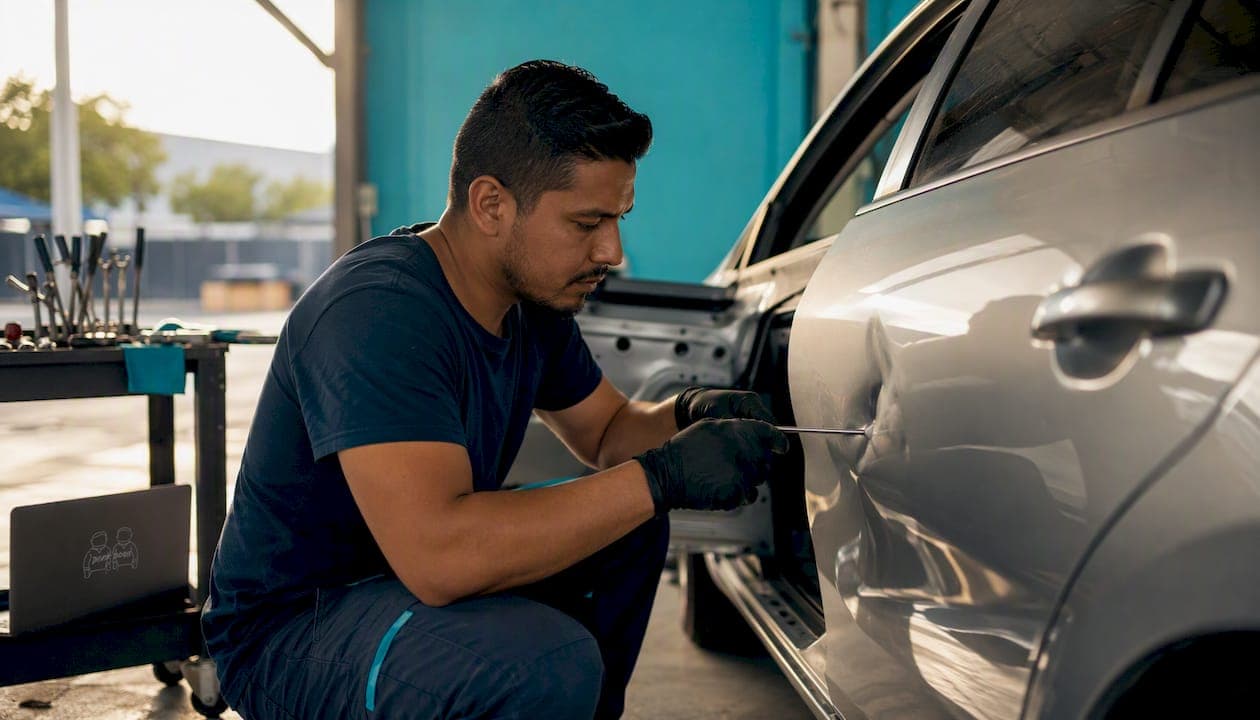
Paintless dent repair (PDR) is the most effective way to preserve a car's exterior long term when the factory paint is intact. Skip the body shop. Get a free estimate from a certified PDR provider first. Dent-boys offers free estimates, pickup and delivery, and a lifetime warranty on every repair. A clean, original-paint vehicle also carries more weight on a Carfax report, which matters the moment you sell or trade.
Table of Contents
- How paintless dent repair preserves your car's exterior long term
- How long does PDR actually take?
- What to expect when you book a PDR service
- When PDR won't work and what to do instead
- How to choose a PDR provider you can trust
- What does PDR cost, and how does insurance handle it?
- Key Takeaways
- Why PDR should be your default answer
- Dent-boys restores your car's exterior without touching the paint
How paintless dent repair preserves your car's exterior long term
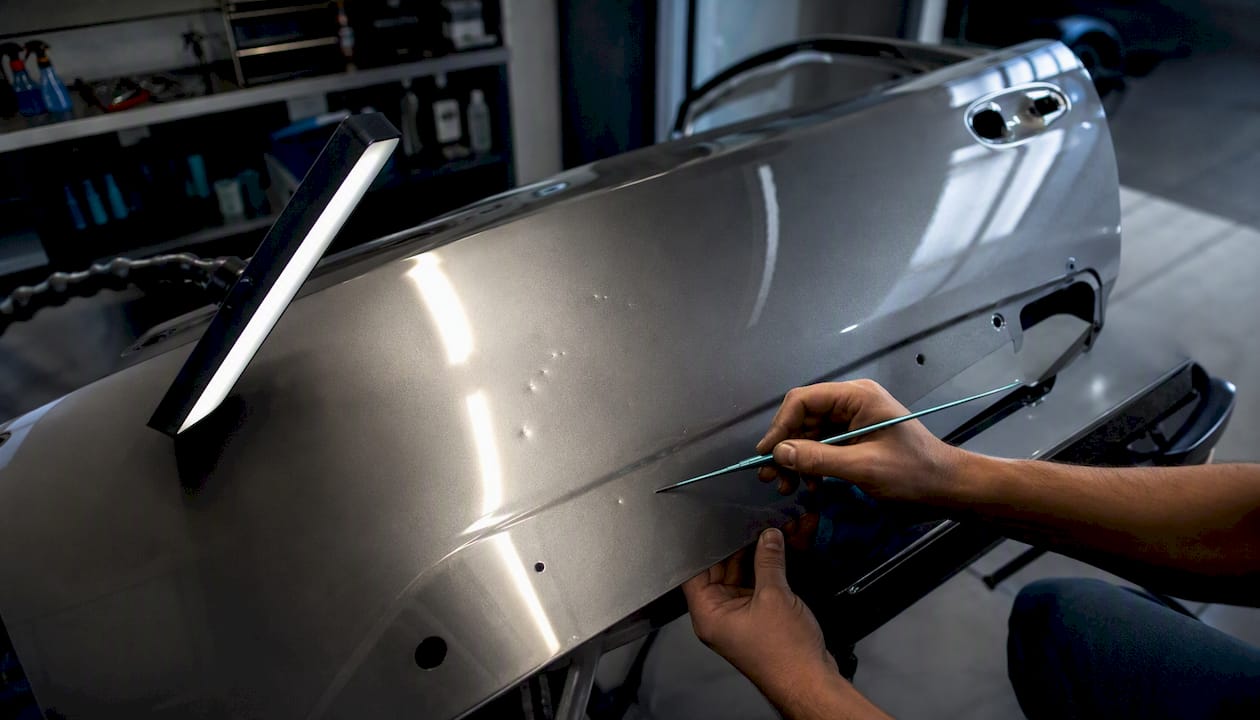
PDR restores dented panels by manipulating the metal from behind using specialized rods and picks, guided by LED reflection boards, without touching the paint surface. No filler. No sanding. No color matching.
Original factory paint is engineered for durability in a way no body shop respray can replicate. When a technician repaints a panel, buyers and dealers notice the color variance under direct light, and that raises questions about the vehicle's history. PDR sidesteps that entirely. The OEM finish stays intact, the panel stays original, and the car's history reads clean.
PDR succeeds on 80–90% of dents that have no paint damage, including most door dings and hail dents. Technicians use an LED board positioned at an angle to the panel surface, watching how light reflects off the metal as they work from behind. The reflection distortion tells them exactly where pressure is needed. It's precise, methodical work.
| PDR Strength | What It Means for Your Car |
|---|---|
| No repainting | OEM finish stays factory-original |
| No filler or Bondo | No hidden repairs detectable by magnet |
| Works on hail and door dings | Handles the most common damage types |
| Undetectable when done well | Resale value and buyer confidence hold |
Pro Tip: Ask any technician whether they use heat on plastic-adjacent panels and how they control paint stress. A certified tech will have a direct answer. Vague responses are a signal to look elsewhere.
PDR is also the go-to method for hail damage because a technician can work through dozens of small dents methodically across multiple panels without a single drop of paint. For hail-hit vehicles, that's the difference between a two-day repair and a two-week body shop ordeal.
How long does PDR actually take?
Minor dents often finish in under one to two hours. Extensive hail jobs typically run one to ten days. Either way, PDR is faster than conventional repair work that requires filler application, sanding, paint matching, and curing time.
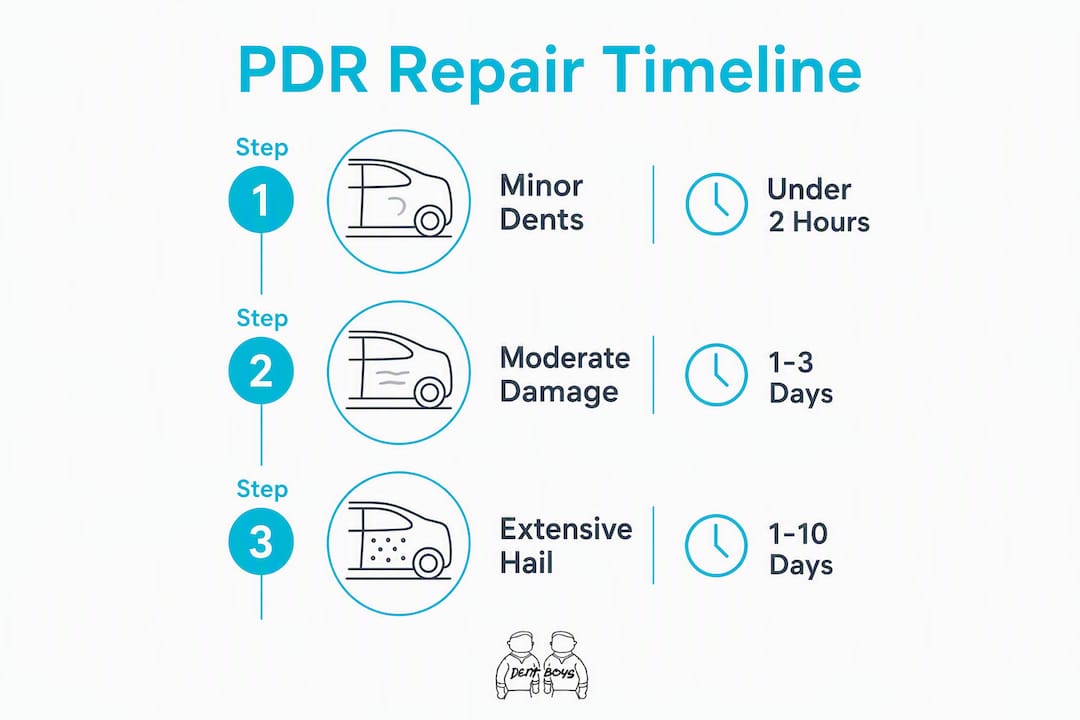
| Damage Type | PDR Timeline | Traditional Body Shop |
|---|---|---|
| Single minor dent | under one to two hours | 1–3 days |
| Moderate door/fender dent | 2–4 hours | 2–4 days |
| Extensive hail damage | one to ten days | 1–3 weeks |
What drives the range on hail jobs is panel count, dent density, and whether insurance approval is needed before work starts. A roof with 200 dents takes longer than a hood with 40. Technician availability and parts access (for any trim that needs removal) also factor in. For a detailed breakdown of what affects your specific repair timeline, the damage scope at your free estimate will give you the clearest picture.
What to expect when you book a PDR service
The process is straightforward once you know the steps.
- Free estimate. A certified technician inspects the damage, confirms paint integrity, and gives you a written scope and price. No commitment required.
- Insurance coordination. If you're filing a claim, the provider handles direct billing and deductible paperwork. Dent-boys offers $0 deductible support.
- Scheduling and vehicle intake. Drop off at the shop, or use mobile/pickup service. Dent-boys provides pickup and delivery so you never have to rearrange your day.
- Rental vehicle. While your car is in service, Dent-boys arranges a rental so you stay mobile.
- Repair with LED inspection. The technician works from behind the panel using rods and LED boards, checking progress continuously.
- Final quality check. A thorough LED-board inspection confirms the repair. A magnet check verifies no filler was used anywhere on the panel.
- Delivery and warranty documentation. You receive before/after photos and written lifetime warranty paperwork.
Before/after documentation isn't just a nice touch. It's proof of work quality and a record that supports your vehicle's history if you sell.
When PDR won't work and what to do instead
PDR is not the right tool for every dent. If the paint is cracked, chipped, or peeling at the damage site, the repair requires conventional bodywork regardless of dent size. Stretched or torn metal, very large dents (roughly grapefruit-sized or bigger with visible metal stretch), and panels where back-access is physically blocked also fall outside PDR's range.
For those cases, the realistic options are conventional body repair with filler and paint, partial panel refinishing, or full panel replacement. Each one affects factory-finish integrity differently. Filler-and-paint repairs are detectable by magnet and visible under certain lighting. Panel replacement preserves structure but introduces a new painted surface that rarely matches the original exactly. For guidance on that specific decision, the dent repair vs. panel replacement breakdown covers the trade-offs clearly.
The practical decision rule: If the paint is intact, PDR is almost always the right call. If the paint is cracked or the metal is stretched, conventional repair is the path forward. When in doubt, get a written assessment from a certified PDR technician before authorizing any work.
How to choose a PDR provider you can trust
Not all PDR shops are equal. The quality of the result depends almost entirely on technician skill, not equipment.
What to look for:
- Certified PDR technicians with documented experience
- A gallery of before/after photos from real repairs
- A written lifetime warranty on completed work
- $0 deductible support and direct insurance billing
- Mobile service or pickup and delivery
- Transparent, itemized pricing before any work starts
Questions to ask during your estimate:
- Is the paint fully intact at the damage site?
- Can you show me a before/after example of a similar repair?
- What warranty do you provide, and is it in writing?
- How long will this specific repair take?
- How do you handle insurance coordination and deductible assistance?
Red flags that should stop you:
- No written warranty or vague verbal promises
- No before/after photo documentation
- Pressure to repaint without a clear explanation of why PDR won't work
- No written estimate before work begins
- Evasive answers about timeline or process
Pro Tip: During the estimate, ask the technician to show you the dent under a directed LED light. A skilled tech will do this without hesitation and explain what they see. If they skip the light check or can't describe their approach, walk away.
For high-value vehicles, the stakes on provider selection are higher. The high-end vehicle restoration guide covers additional documentation and verification steps worth reviewing before you authorize any work.
What does PDR cost, and how does insurance handle it?
Cost depends on four main variables: number of panels affected, dent size and density, access difficulty, and whether any paint or trim repair is needed alongside the PDR work.
| Cost Driver | Typical Impact |
|---|---|
| Panel count | Higher count = higher total cost |
| Dent density (hail) | More dents per panel = more labor time |
| Paint or trim damage | Adds conventional repair costs |
| Access difficulty | Blocked panel backs increase labor |
| Rush scheduling | May carry a premium |
PDR typically costs 50–70% less than conventional repair because it eliminates paint, filler, and curing steps entirely. For hail damage specifically, most auto insurance policies cover PDR under the comprehensive claim, and many providers, including Dent-boys, handle direct billing and $0 deductible support so the out-of-pocket cost to you is minimal or zero.
One thing worth knowing: filing a comprehensive claim for hail damage rarely triggers a rate surcharge the way a collision claim might. Confirm with your insurer before filing, but hail is generally treated as an act of nature rather than a fault event. For a closer look at what drives your specific repair cost, the dent repair cost factors guide breaks it down by scenario.
Always get a free, itemized estimate before authorizing any work.
Key Takeaways
PDR is a reliable method to preserve a vehicle's factory finish long term when paint is intact, and it generally costs less than conventional repair.
| Point | Details |
|---|---|
| PDR success rate | Works on 80–90% of dents with no paint damage, including hail and door dings. |
| Repair timelines | Minor dents often finish in under one to two hours; extensive hail jobs can take one to ten days. |
| When PDR won't work | Cracked paint, stretched metal, or blocked panel access requires conventional repair instead. |
| Provider checklist | Verify written warranty, before/after photos, insurance support, and itemized estimate before booking. |
| Dent-boys | Offers free estimates, pickup and delivery, $0 deductible support, rental vehicles, and a lifetime warranty. |
Why PDR should be your default answer
Most car owners I talk to assume a dent means a trip to the body shop. That assumption costs them money and, more importantly, it costs them their factory finish. Once a panel gets repainted, you can't undo it. The color match fades differently over time, the repair shows under certain lighting, and buyers notice. A Carfax that shows body shop work on multiple panels tells a story the seller rarely wants told.
PDR flips that. The repair is invisible, the paint is original, and the car's history stays clean. For hail damage especially, where dozens of dents appear overnight, PDR is the only method that handles the volume without turning your car into a repaint project. The turnaround is faster, the cost is lower, and the result holds up for the life of the vehicle.
The one caveat worth repeating: PDR only works when the paint is intact. Get a written assessment first. If a provider pushes you toward repainting before confirming paint damage exists, that's the clearest red flag in the business. For owners of classic or high-value vehicles, preserving original panels is even more important. The classic car show preparation guide is worth a read if originality is a priority for your specific vehicle.
Dent-boys restores your car's exterior without touching the paint
Dent-boys delivers certified PDR with every service feature that matters: free estimates, pickup and delivery, a rental vehicle while your car is in service, $0 deductible support for insurance claims, and a lifetime warranty on completed repairs. Before/after photos are documented on every job, and every repair comes with written warranty paperwork you keep.
If your car has hail damage, door dings, or minor dents and the paint is intact, there's no reason to wait. Book your free estimate with Dent-boys today and get a written scope before authorizing a single dollar of work.