Yes, buying a hail-damaged car can be smart, but only when the discount still leaves you ahead after repairs, insurance, title costs, and resale penalties. That's not a guess you make from the listing photos. Before you sign anything, get an independent inspection, a written repair estimate, and confirmation from your insurer and lender that the vehicle qualifies for normal coverage and financing.
TL;DR:
- Buyers should obtain an independent inspection, repair estimates, and confirmation of coverage and financing eligibility before purchasing a hail-damaged car.
- Repair costs vary greatly depending on the method, with paintless dent repair being the cheapest and most factory-preserving option, but not suitable for cracked paint or stretched metal.
- The resale value of a hail-damaged car depends heavily on repair quality and documentation, with well-documented repairs nearly matching no-accident vehicles.
- Title brands such as salvage or rebuilt significantly affect insurance premiums, financing options, and future resale value, often leading to 10-20% higher costs.
- Negotiation should focus on written repair estimates and condition concerns rather than just the dirt-cheap sticker price, especially on older inventory or poorly documented repairs.
Table of Contents
- How to Inspect a Car With Hail Damage Before You Buy
- Repair Options and What They Actually Cost
- Where to Find Hail-Damaged Cars for Sale
- Title Branding, Insurance, and Financing: What to Verify First
- The Buyer's Math: Does the Discount Actually Cover the Risk?
- What a Skilled PDR Shop Tells You About the Real Risk
- Disclosure Laws and Lemon Law Protections You Should Know
- How to Negotiate a Hail-Damaged Car Down to a Fair Price
- Will a Hail-Repaired Car Hold Its Value Later?
- Why the "Great Deal" Framing Misses the Point
- Get a Free Repair Estimate Before You Finalize the Purchase
- Sources
How to Inspect a Car With Hail Damage Before You Buy
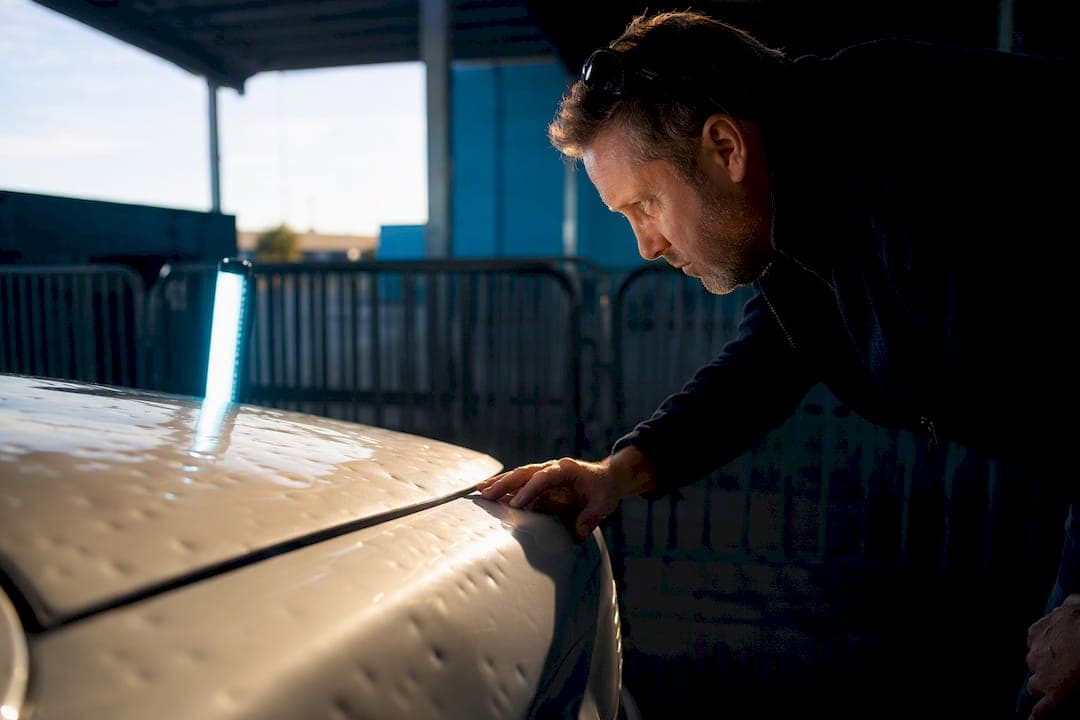
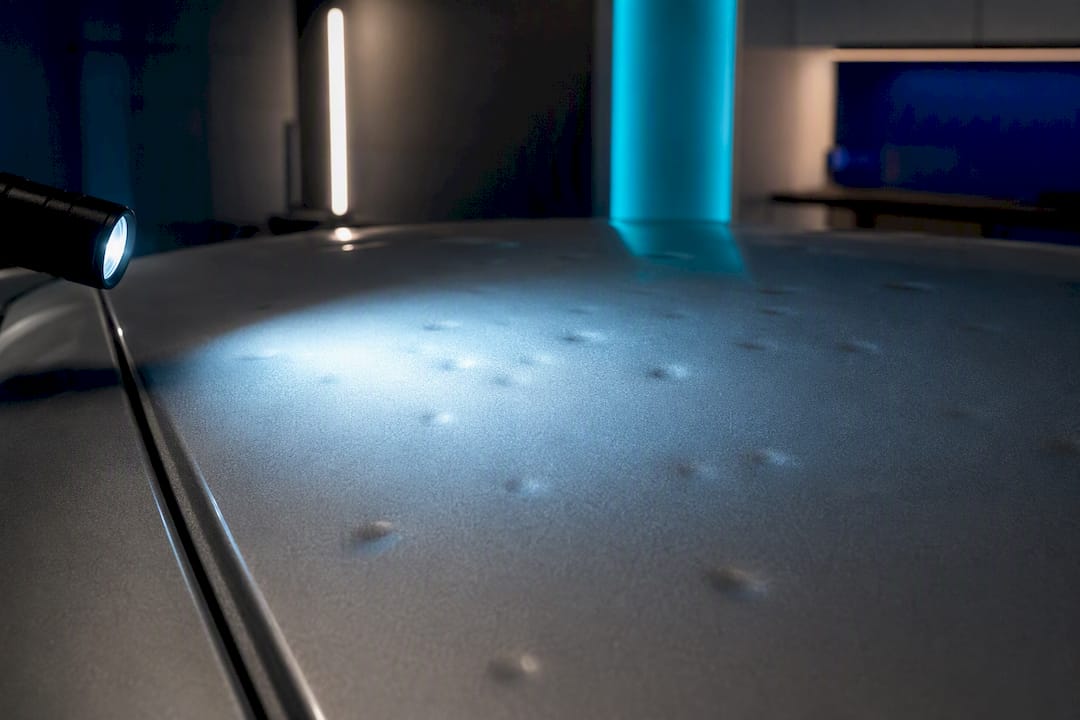
Hail damage hides in plain sight. Start with the panels most exposed to falling ice: the roof, hood, trunk lid, doors, and side mirrors. Run your hand across each surface in direct sunlight, since dents that are invisible from three feet away often show up as shadows when you crouch and look along the metal at a low angle.
Count the dents and note where they sit. A dozen shallow dings spread across a hood is a routine repair. A cluster of deep dents near a body line, a door edge, or a panel seam is a different problem entirely, since metal that has stretched near a crease is harder to pull back and sometimes requires panel replacement instead of dent removal.
Beyond the obvious dings, look for signs the car has bigger issues than cosmetic damage:
- Uneven panel gaps or doors that don't close flush, which can mean prior frame work
- Musty odors, damp carpet, or water stains under the seats, a red flag for water intrusion through hail-cracked seals
- Dashboard warning lights or electrical glitches, since hail can crack sensor housings and antenna mounts
- Paint that doesn't quite match between panels, a sign of prior bodywork unrelated to the hail event
Ask the seller for the vehicle's VIN history, before-and-after repair photos if any work was done, and itemized repair invoices rather than a vague "hail repaired" note.
Pro Tip: Bring a flashlight and check panels at a raking angle, light nearly parallel to the metal. Hail dents that vanish under overhead lighting jump right out under a low, angled beam.
Repair Options and What They Actually Cost
Most hail damage gets fixed one of three ways, and which one applies changes your math completely. Paintless dent repair (PDR) uses specialized tools to massage metal back into shape from behind the panel, preserving the factory paint and finish entirely. It's the fastest and cheapest option when the paint isn't cracked and the dents aren't too close to a body edge.
When paint has cracked or metal has stretched too far, you're looking at conventional repair: filler, sanding, and repaint, or in severe cases, full panel replacement. Windshields and other glass cracked by hail need replacement outright; PDR doesn't touch glass.
Rough cost patterns buyers should expect:
- PDR: typically priced per panel, and far less than bodywork involving paint
- Repaint or panel replacement: multiplies quickly once primer, paint matching, and labor enter the picture
- Glass replacement: a separate line item, and one insurers often cover differently than dent repair
Rebuilt-title hail cars with strong repair work often sell for 20 to 50% less than clean-title equivalents, but that range depends entirely on repair quality and documentation. A car with itemized invoices, warranty paperwork, and before-and-after photos carries far less resale stigma than one with a vague "hail repaired" note and nothing to back it up.
Where to Find Hail-Damaged Cars for Sale
You'll run into hail-damaged inventory in three main places, and each carries its own tradeoffs. If you're looking to sell or buy quickly, learn how to sell your damaged car fast and get fair cash to maximize your returns without hassle.
- Franchise and used-car dealers. Many dealers buy fleets of hail-damaged vehicles after storms, repair them, and resell with clearer disclosures and sometimes limited warranties. This is usually the lowest-risk path since you can inspect and test-drive before buying.
- Private sellers. Prices can be lower, but paperwork is often thin, and you're relying entirely on the seller's word about what got fixed and how.
- Salvage and online auctions. Marketplaces like Copart list huge volumes of storm-damaged vehicles, but you'll deal with buyer registration, transport costs, and often no chance to inspect in person before you bid.
Read title flags and listing notes carefully. "Hail damage, drivable" and "hail damage, not running" describe very different purchases.
Title Branding, Insurance, and Financing: What to Verify First
A car's title status changes everything about ownership cost. Clean titles mean no significant damage was ever declared. Salvage titles mean an insurer deemed the vehicle a total loss, usually because repair costs exceeded a set percentage of its value. Rebuilt titles mean a salvage vehicle passed a state inspection after repair and is now legal to register and drive, though rules for what counts as "rebuilt" vary by state.
That title brand follows the car into your insurance rates. Carriers can charge 10 to 20% higher premiums for branded-title vehicles compared to clean-title equivalents, and some policies exclude coverage for damage the insurer considers pre-existing.
Financing gets tighter too. Several lenders decline loans on salvage or rebuilt titles outright, and others approve them only with a larger down payment or a higher interest rate.
Before you commit to a purchase:
- Call your insurance company with the exact VIN and title status, not a generic estimate
- Get pre-approval from your lender specifically for a branded-title vehicle if that's what you're buying
- Ask your insurer directly whether existing hail damage would be excluded from future claims
AAA and insurance advisors consistently recommend doing this verification before you finalize a deal, not after.
The Buyer's Math: Does the Discount Actually Cover the Risk?
Here's the simple formula. Add up every cost the discount has to beat:
- Purchase price plus any auction or dealer fees
- Transport cost if buying from an auction or out of state
- Independent inspection fee, generally worth every dollar
- Repair estimate total, from a written quote, not a guess
- Insurance premium delta versus a clean-title equivalent, annualized over how long you'll own it
- Resale penalty, the gap you'll eat when you eventually sell a branded-title car
Repairs run over budget more often than under, and you want a buffer before something in the estimate turns out wrong.
What a Skilled PDR Shop Tells You About the Real Risk
A high-quality paintless dent repair job restores factory paint entirely, no filler, no repaint, no color-match risk, which is exactly the detail that determines whether a hail-damaged buy is worth the discount. Shops that document their work properly change the entire trust equation for a buyer.
- Itemized invoices tying each repaired panel to the specific technique used, not a flat "hail repair" line
- Before-and-after photos that a lender or insurer can actually review
- A lifetime warranty on the repaired panels, which signals the shop stands behind the work
That kind of paperwork is what reduces resale stigma and insurance questions down the line, since a buyer three years from now can see exactly what was done and by whom.
Pro Tip: Get a professional PDR estimate before you bid at auction or before you hand over final payment on a private sale. Dent Boys offers free estimates, pick-up and delivery, and $0 deductible support through insurance, so you know the real repair number before you're locked in.
Disclosure Laws and Lemon Law Protections You Should Know
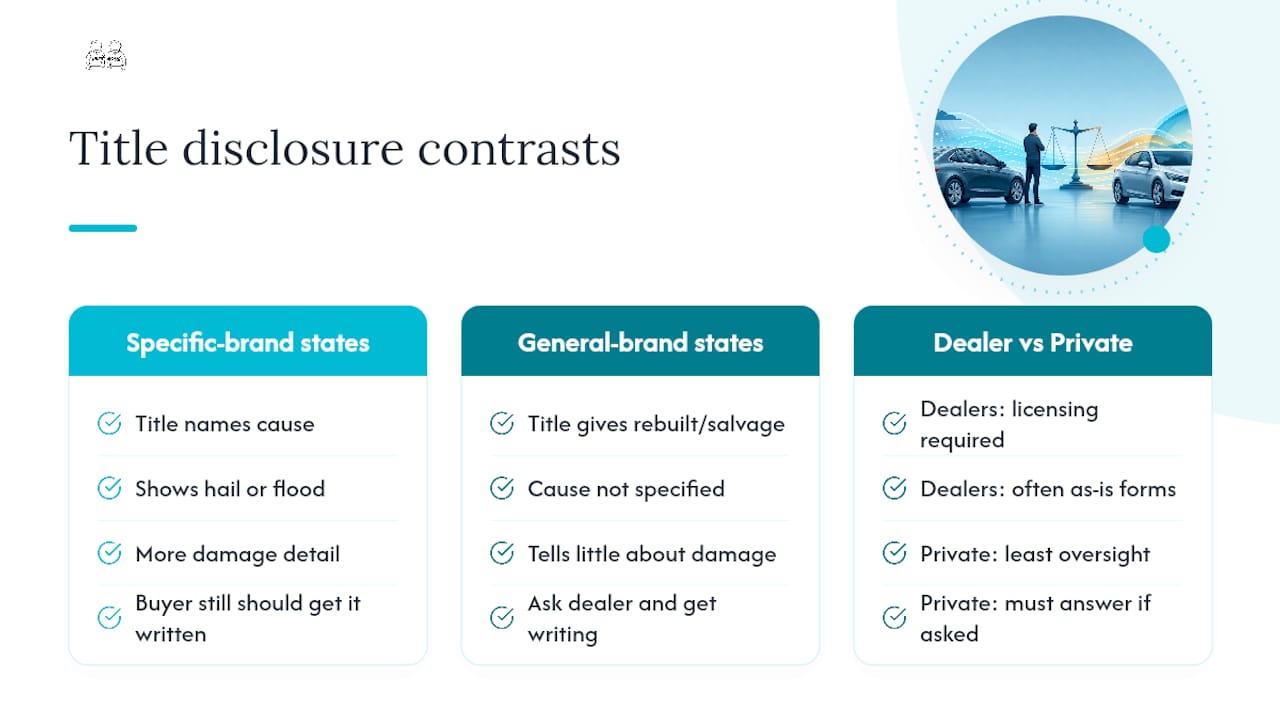
Every state requires sellers to disclose a branded title, whether salvage or rebuilt, on the paperwork transferred at sale. What states do not agree on is how much detail dealers must volunteer about the underlying damage itself. Some states mandate a specific "hail damage" or "flood damage" notation on the title; others simply use a general "rebuilt" or "salvage" brand without specifying the cause.
That gap matters more than most buyers realize. A title that says "rebuilt" tells you almost nothing about whether the damage was hail, flood, collision, or theft recovery. Ask the dealer directly and get the answer in writing, since a verbal assurance carries no weight if a dispute comes up later.
Lemon law protections, which typically apply to new vehicles with persistent defects, generally don't extend to used vehicles sold with a disclosed salvage or rebuilt title. If you buy a hail-damaged car "as is" with the brand disclosed, you have very limited legal recourse if repairs turn out worse than expected. Your leverage comes from due diligence before the sale, not legal remedy after it.
Private-party sales carry the least regulatory oversight. Dealers face state licensing requirements and, in many states, mandatory as-is disclosure forms; a private seller often just has to answer honestly if you ask. That's exactly why an independent pre-purchase inspection and a VIN history report matter more in a private sale than almost anywhere else in this process.
How to Negotiate a Hail-Damaged Car Down to a Fair Price
Your negotiating leverage comes from specifics, not a general sense that the car "has some dents." Walk into the conversation with a written repair estimate in hand, ideally from an independent shop, and use that number as your anchor rather than the seller's asking price.
If the estimate says $1,800 in PDR work across four panels, that figure becomes your opening subtraction from whatever the seller is asking, not a vague request for "a discount for the damage." Sellers who've priced in the damage already expect this; sellers who haven't will often move once you show them the number in writing.
Push separately on anything the inspection turned up that isn't purely cosmetic. Water intrusion, electrical faults, or evidence of prior unrelated bodywork are different negotiating points from hail dents, and they deserve their own line item in your counteroffer.
Don't negotiate against yourself by assuming the dealer's "as is" pricing is final. Many hail-sale dealers price inventory to move fast after a storm event, and there's often more room than the sticker suggests, especially on vehicles that have sat on the lot for weeks. Ask when the car arrived; older hail-sale inventory is where you'll find the softest pricing.
Will a Hail-Repaired Car Hold Its Value Later?
Resale value after hail repair splits sharply along one line: how the repair was done and how well it's documented. A car repaired with quality PDR and full paperwork behaves close to a clean-title equivalent at resale, since the panels are structurally sound and the paint is original factory finish. A car with rough bodywork, mismatched paint, or no documentation carries a permanent discount every time it changes hands.
The title brand itself never goes away. Even a beautifully repaired rebuilt-title car will typically sell for less than an identical clean-title vehicle, because branded titles show up on every future VIN check and history report a buyer runs. That's a fixed cost of ownership you should factor in from day one, not a surprise you discover at trade-in time.
Where owners lose the most value is skipping documentation at the time of repair. A shop that hands over itemized invoices, before-and-after photos, and a warranty gives every future buyer a reason to trust the car. A shop that just says "we fixed it" leaves the next owner guessing, and guessing always shows up as a lower offer.
Why the "Great Deal" Framing Misses the Point
Most advice on hail-damaged cars treats the sticker discount as the headline number, and that's backward. The discount is just one input in a math problem that also includes repair quality, title consequences, insurance premiums, and how much a buyer three years from now will discount your car for the exact same reasons you're discounting this one.
What conventional advice underplays is documentation. A well-repaired car with itemized invoices and photo records behaves almost nothing like an identically repaired car with no paperwork, even though the metal work might be indistinguishable to the eye. Lenders, insurers, and future buyers all price uncertainty, and paperwork is what removes it.
If you take one thing from this, prioritize the written repair estimate over the sticker price. A car priced $5,000 below market with a vague "hail repaired" note is a bigger gamble than a car priced $3,500 below market with an itemized PDR invoice and warranty attached. The second one, you can actually price with confidence. The first one, you're guessing, and guessing is how buyers end up upside down on a car nobody else wants to buy from them either.
— Martin
Get a Free Repair Estimate Before You Finalize the Purchase
If you've found a hail-damaged car worth pursuing, the smartest move before you sign anything is getting a professional repair estimate in writing. Dent-boys specializes in paintless dent repair, which means restoring factory paint without fillers or a repaint, often at a fraction of what conventional bodywork costs. That estimate becomes your negotiating leverage and your proof of value once repairs are done.
Dent-boys backs every repair with a lifetime warranty, and if you're working through insurance, the team supports $0 deductible claims and arranges a rental vehicle so you're never without a car during the repair window. Pick-up and delivery service means you don't have to rearrange your week around a repair appointment. Whether you're evaluating a car before you buy or you already own one that took a beating in a storm, request a free estimate from Dent-boys before you make your next move.
Sources
- Cars
- Hail damage rebuilt title cars: 2026 buyer's guide
- Hail Damaged Cars for Sale - Copart Auto Auction