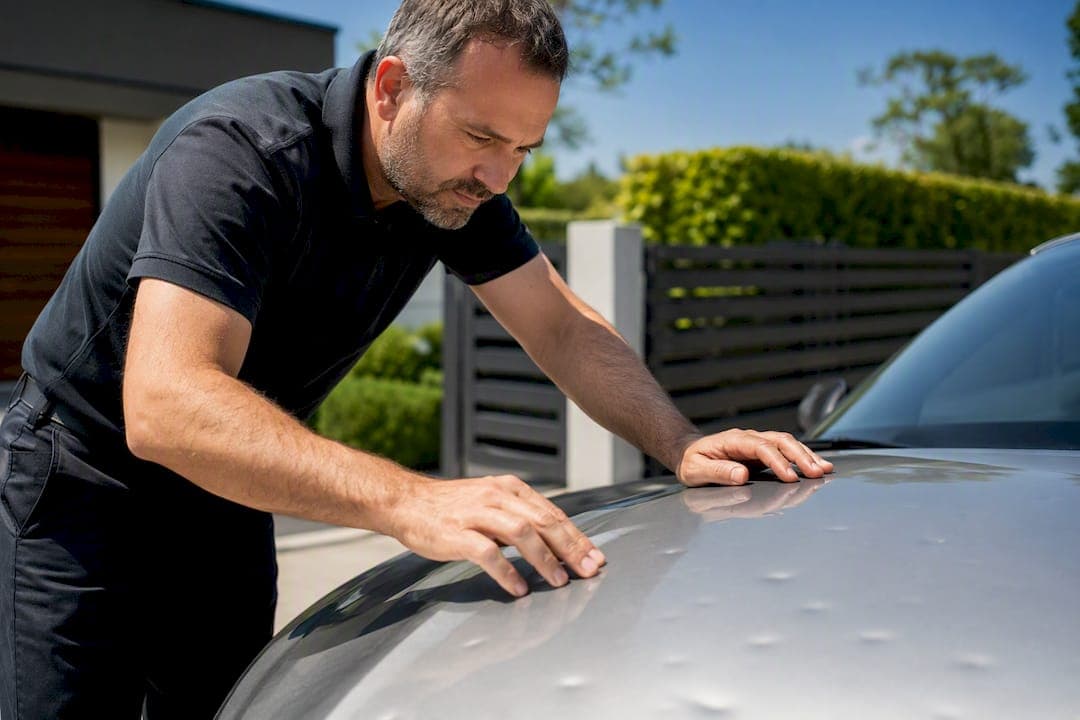
The fastest, least expensive way to restore a hail-damaged car is insurance-supported paintless dent repair. PDR pulls dents out from behind the panel without paint or fillers, which keeps costs down and turnaround measured in days, not weeks. If your comprehensive policy is active, the smart move right now is simple.
- Document every dent with photos and video before you touch anything
- Call your insurer and open a claim (or ask about your deductible before you do)
- Request a free PDR estimate from a specialist
Dent Boys offers free estimates, pick-up and delivery, $0 deductible assistance, a rental vehicle while your car is in the shop, and a lifetime warranty on the repair. That combination covers most of what stresses people out about hail claims: cost, logistics, and whether the fix will hold.
Key Takeaways
Insurance-supported paintless dent repair restores hail-damaged cars faster and cheaper than traditional bodywork, provided the paint is intact and the dents are shallow.
| Point | Details |
|---|---|
| Document first, call second | Photograph every panel and note the storm's date and location before contacting your insurer. |
| Check your deductible math | File a claim only when the PDR estimate clears your deductible by a real margin. |
| PDR beats repainting for hail | Intact paint and shallow dents mean PDR usually costs less and finishes faster than filler-and-paint repair. |
| Get an estimate before deciding | A free written estimate tells you the actual cost before you decide whether to involve your insurer. |
| Dent Boys removes the logistics headache | Free estimates, pick-up and delivery, $0 deductible assistance, a rental vehicle, and a lifetime warranty cover the parts of hail repair that usually cause the most friction. |
Table of Contents
- How Do You Protect Your Car From Hail Damage After a Storm?
- When Does Paintless Dent Repair Work for Hail Damage?
- Should You File an Insurance Claim for Hail Damage?
- What Happens During a Professional PDR Repair?
- Why Dent Boys Handles Hail Repair Differently
- What Should You Have Ready Before You Call?
- What Most Hail-Damage Advice Gets Wrong
- Get a Free Hail Damage Estimate From Dent Boys
- Sources
How Do You Protect Your Car From Hail Damage After a Storm?
The 24 to 72 hours after a hailstorm decide how smoothly your claim goes. Insurers and repair shops both point to the same early habits: document fast, report fast, and don't drive a compromised vehicle until you know it's safe.
- Check for safety issues first. A car with shattered glass or fluid leaking from a cracked radiator shouldn't be driven until it's inspected.
- Photograph every damaged panel from at least three angles, mixing wide shots of the whole car with close-ups of individual dents.
- Note the exact date, time, and location of the storm, and save any weather alerts or local news coverage confirming it happened.
- Check the windshield and side glass for cracks and check the interior for water intrusion, documenting each separately from the exterior dents.
- Call your insurer to report the event and get a claim number. Ask what their inspection timeline looks like.
- Request a free PDR estimate. Many shops, Dent Boys included, offer virtual or on-site inspections within a day or two.
GEICO's guidance on hail claims stresses that hail damage typically includes dents, cracked glass, and chipped paint, and that documenting all three separately speeds up processing.
Pro Tip: Take one photo that includes your license plate or VIN sticker alongside the damage. It timestamps the claim to your specific vehicle and saves back-and-forth with the adjuster later.
When Does Paintless Dent Repair Work for Hail Damage?
PDR works by accessing the backside of a dented panel and massaging the metal back to its original shape, no sanding, no filler, no repaint. It only works because hail dents rarely break the paint's surface tension. That's the entire reason PDR became the standard fix for hail damage across the collision repair industry.
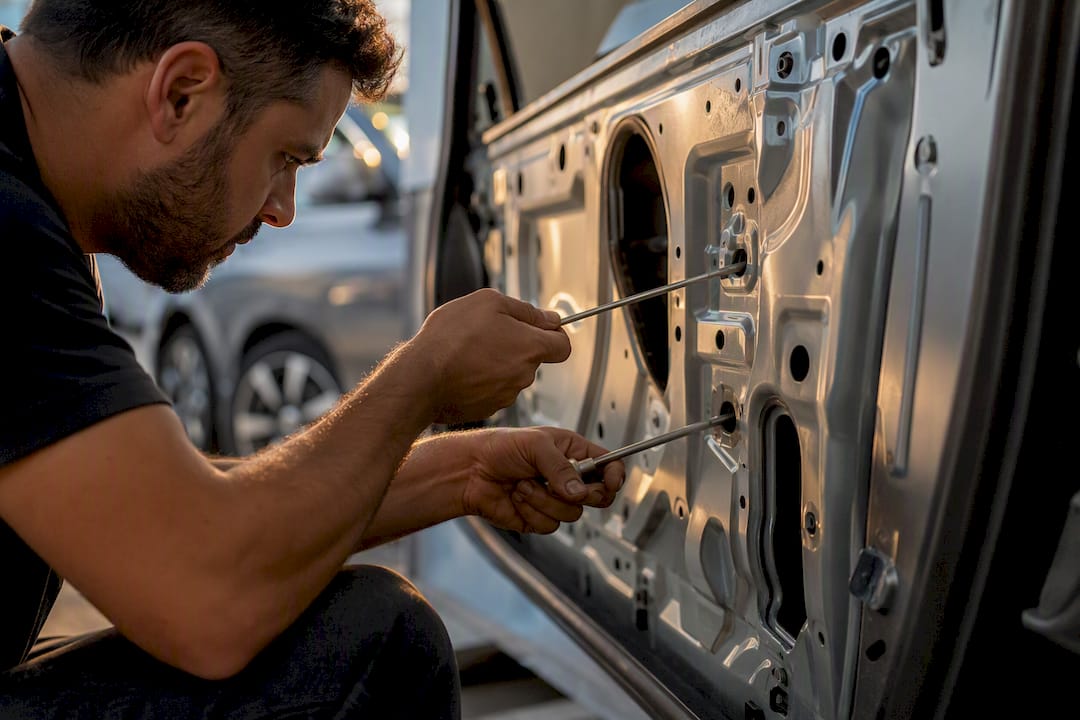
Traditional repair, by contrast, involves body filler, sanding, and a full repaint, which takes longer and costs more because you're paying for materials and labor the dent itself doesn't require.
Whether your car qualifies for PDR comes down to a short checklist:
- The paint is intact, with no cracking or chipping over the dent
- The dent is shallow rather than deeply creased
- There's no sharp fold or crease line in the metal
- A technician can reach the back of the panel
Cost ranges vary by severity: a single small dent often runs $75 to $150, while a full-car hail job with dozens of dents can run $300 to $4,000. Traditional repair with paint and filler typically costs more and takes longer to complete.
Traditional repair or panel replacement becomes necessary when paint has chipped or cracked over a dent, when a crease is too sharp for PDR tools to reach, or when the impact caused structural damage beneath the panel. A decision guide on repair versus panel replacement walks through those edge cases in more detail.
Should You File an Insurance Claim for Hail Damage?
Comprehensive coverage is the piece that matters here. It's the part of your policy that reimburses non-collision events like hail, according to Progressive, and it's separate from liability-only coverage, which doesn't cover your own vehicle's damage at all. If your policy only carries liability, hail repair comes out of your pocket regardless of how bad the storm was.
Whether filing makes sense depends on your deductible. A repair estimate that barely clears your deductible often isn't worth the hassle of a claim. One that clears it by a wide margin usually is.
- Get your PDR estimate in writing before deciding whether to file
- Compare that estimate against your deductible, not against the "feels expensive" instinct
- Ask your agent whether a hail claim is likely to affect your premium (comprehensive claims usually have a smaller impact than at-fault collision claims, but it varies by insurer)
"Comprehensive coverage reimburses for non-collision events such as hail; deductibles apply and may affect whether a claim is filed," is the core guidance Progressive gives policyholders weighing whether a claim is worth filing.
After you report the claim, the insurer either sends an adjuster to inspect the vehicle in person or accepts a virtual estimate from photos and a shop-provided quote. Submitting a documented PDR estimate directly to the adjuster usually speeds this along, since it gives them a number to work from instead of scheduling a separate inspection. In rare cases where repair costs approach or exceed the car's actual cash value, the insurer may declare the vehicle a total loss instead of authorizing repair. AAA notes that severe multi-panel hail events are one of the more common paths to that outcome.
What Happens During a Professional PDR Repair?
The process runs in a predictable sequence: estimate, insurer coordination, scheduling, the repair itself, then a final inspection before you get the keys back.
- A technician inspects the car (in person or via submitted photos) and provides a free written estimate.
- If you're filing a claim, the shop sends that estimate to your insurer for approval.
- Once approved, you schedule the repair, either at a shop or through mobile service at your home or office.
- The technician works each panel from behind, checking for missed dents as they go.
- A final walkaround confirms every dent is out and the finish matches the rest of the car.
Timelines vary with severity. A single dent or two is often a same-day fix. A whole car covered in hail damage usually takes one to three days, depending on how many panels need work and whether any require the dashboard or interior trim removed for access.
Because PDR preserves the factory paint instead of replacing it, it also protects resale value in a way repainting doesn't. Buyers and appraisers can spot a respray; original factory finish carries more weight on a vehicle history report and in a private sale.
Pro Tip: Ask upfront whether the shop offers pick-up and delivery. If your car has dozens of dents and needs multiple days in the shop, not having to arrange your own transportation twice is worth more than it sounds.
Why Dent Boys Handles Hail Repair Differently
Dent Boys built its process around the two things that make hail claims stressful: cost and logistics. That shows up in five concrete pieces of the service.
- Free estimates, whether you're filing a claim or paying out of pocket
- Pick-up and delivery, so you don't lose a day arranging transportation
- $0 deductible assistance for qualifying insurance claims
- A rental vehicle while your car is being repaired
- A lifetime warranty on every completed repair
Martin, who covers hail damage and PDR for the Dent Boys blog, has written extensively on how storm season affects claim volume and what separates a rushed repair from a durable one. Customers consistently point to the same three things: speed, how close the finish looks to factory original, and not having to juggle a rental car reservation on their own. If your car took a hit this season, a free estimate is the fastest way to find out what you're actually working with.
What Should You Have Ready Before You Call?
Getting a fast, accurate estimate means showing up with the right information instead of making the estimator dig for it.
- Your insurance policy number and deductible amount
- Photos of every damaged panel, taken in daylight if possible
- The location and date of the hailstorm
- Your vehicle's VIN
- A short list of questions: Is this car a good candidate for PDR? What's the expected timeline? What does the warranty cover? Will the shop coordinate directly with my insurer? Is a rental vehicle included?
Dent Boys typically handles the back-and-forth with your insurer directly, arranges pick-up and delivery around your schedule, and confirms $0 deductible eligibility before work begins, so the version of this you experience is mostly just handing over keys and photos.
What Most Hail-Damage Advice Gets Wrong
Most hail advice online spends too much time on prevention (covers, garages, parking strategy) and too little on what to actually do once the damage is already sitting on your hood. By the time you're searching for answers, the storm has passed. The decision in front of you isn't how to have avoided it, it's how to fix it without losing money or a week of your life to logistics.
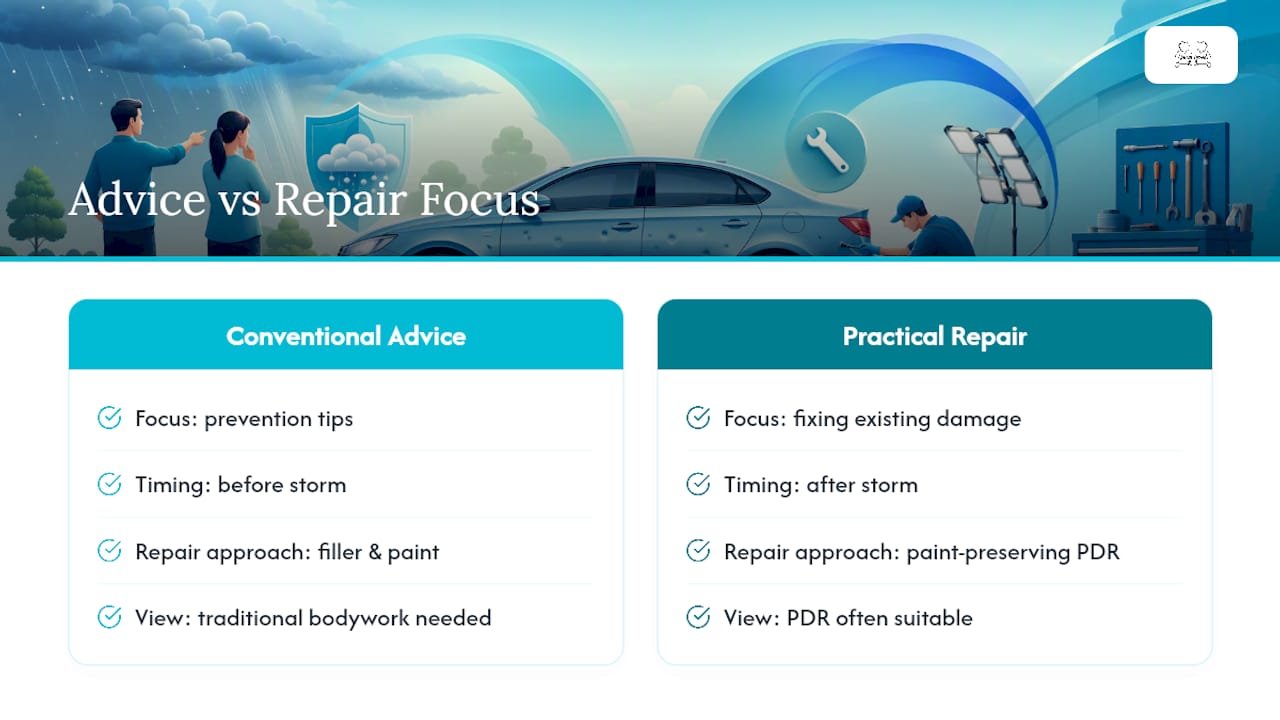
The conventional wisdom also overstates how often traditional bodywork is necessary. Most hail damage is exactly the shallow, paint-intact kind PDR was built for, yet plenty of shops default to filler and paint because it bills higher. That's worth pushing back on. If a shop tells you PDR "won't work" on a dent without walking you through why (a crease, chipped paint, hard-to-reach panel), get a second estimate.
What I'd prioritize first isn't the claim, it's the estimate. A documented, itemized PDR estimate is the single piece of paper that makes every other decision easier: whether to file, what your insurer will approve, and how fast you can get your car back to normal.
— Martin
Get a Free Hail Damage Estimate From Dent Boys
Most hail repair shops make you choose between speed and doing it right. Dent Boys built its process so you don't have to. Every job starts with a free estimate, and if you're filing through insurance, the team coordinates directly with your adjuster and can qualify you for $0 deductible assistance, so the repair doesn't cost you more than the wait already has.
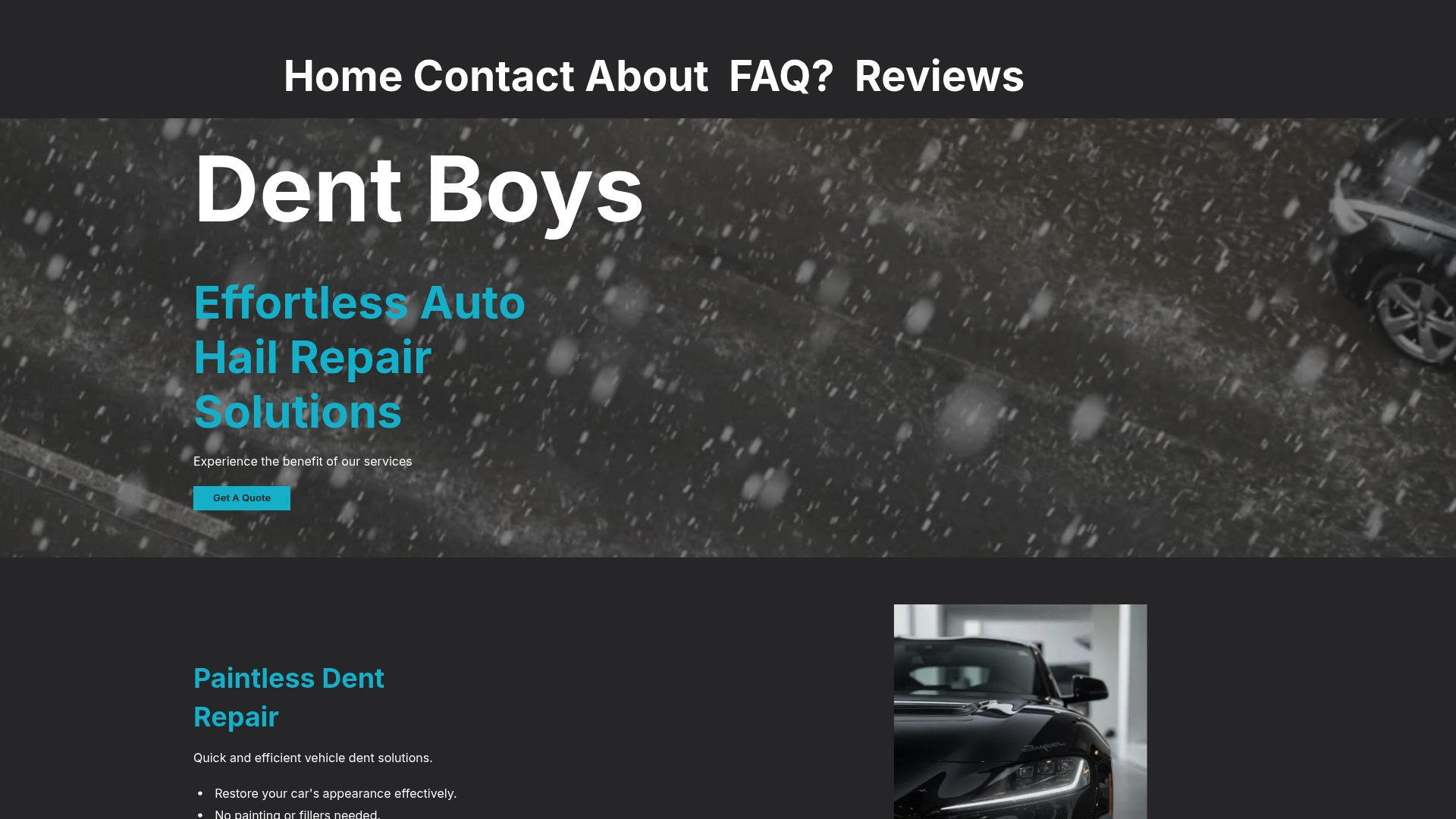
The service includes pick-up and delivery so you're not rearranging your week around a shop's hours, plus a rental vehicle while your car is in for repair. Every completed job carries a lifetime warranty, which matters most on hail jobs where dozens of small repairs all have to hold up over time. If your car took a hit this season, request a free estimate from Dent Boys and find out what PDR would cost before you decide whether to file a claim.
Sources
- Does Car Insurance Cover Hail Damage? Plus Tips on Protecting Your Car from Hail Damage | Progressive
- Does Car Insurance Cover Hail Damage? | GEICO
- Paintless Dent Repair vs. Traditional: Which Do You Need? | Northeast Collision
- Hail and Car Damage: What Auto Insurance Covers | AAA