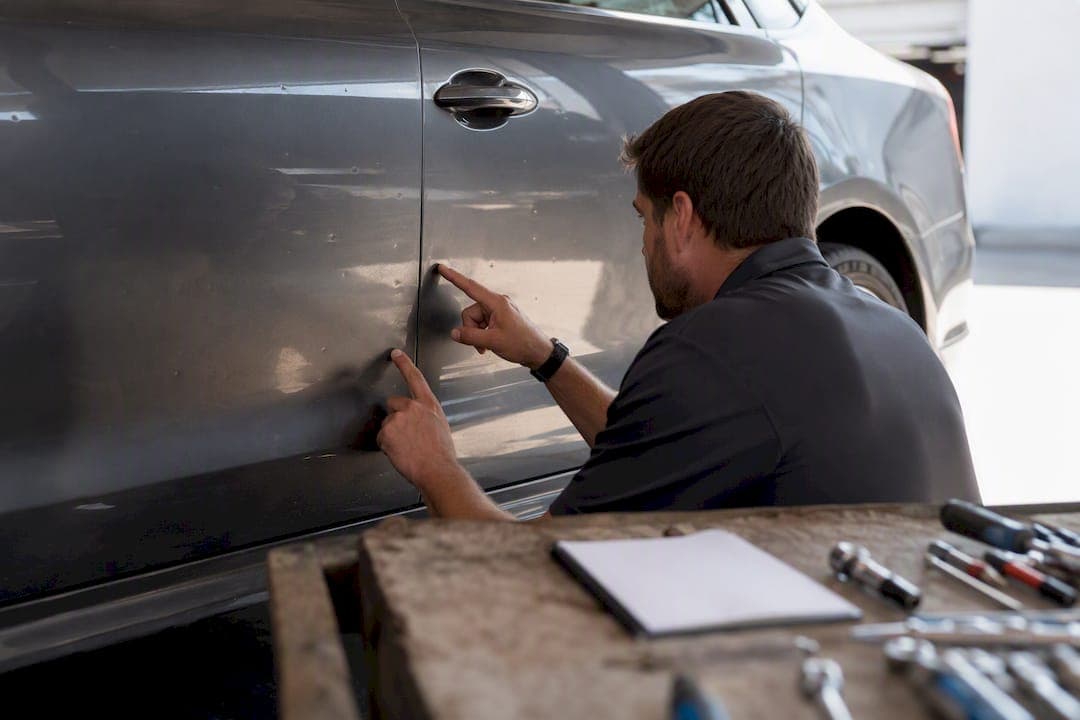
Yes, hail can total a car, and it happens more often than most owners expect. Insurers declare a total loss when repair costs approach or exceed the vehicle's actual cash value, not because the car is unsafe to drive. Your immediate options are simple: accept the payout, buy back the salvage, or dispute the number with an independent appraisal.
TL;DR:
- Repair costs for hail damage often reach 50% to 75% of a vehicle's actual cash value, depending on state thresholds, which frequently results in total loss declarations.
- Paintless dent repair can significantly reduce repair estimates, often making the difference between a total loss and a repairable vehicle.
- Filing a claim does not usually raise premiums, but buying back a salvage vehicle results in a salvage title that decreases resale value and limits insurance coverage options.
- Independent appraisals and detailed photos are essential for disputing low valuation or high repair estimates, especially when repair methods like PDR could prevent a total loss.
- Timing and accurate estimates are crucial; a quick, precise PDR estimate might alter the insurer’s decision, saving owners from unnecessary total-loss costs.
Table of Contents
- What "Total Loss" Means for a Hail-Damaged Vehicle
- How Insurers Decide: Thresholds, Formulas, and State Rules
- Your Options After a Total-Loss Declaration
- Salvage Titles, Insurability, and Resale After a Hail Total
- Can Repair Prevent a Total Loss? PDR vs. Panel Replacement
- What to Do the Moment You Get a Total-Loss Notice
- How to Dispute Your Insurer's Valuation
- Dent-boys' Take: When Repair Beats Accepting the Payout
- Get a Free Hail Repair Estimate Before You Accept a Payout
- Sources
What "Total Loss" Means for a Hail-Damaged Vehicle
A total loss is a math problem, not a safety verdict. Insurers compare your car's actual cash value (ACV), what a similar vehicle would sell for in your local market right before the storm, against the estimated cost to fix every dent, replace cracked glass, and repaint affected panels. When repair costs get close to or exceed that ACV, the math stops favoring repair.
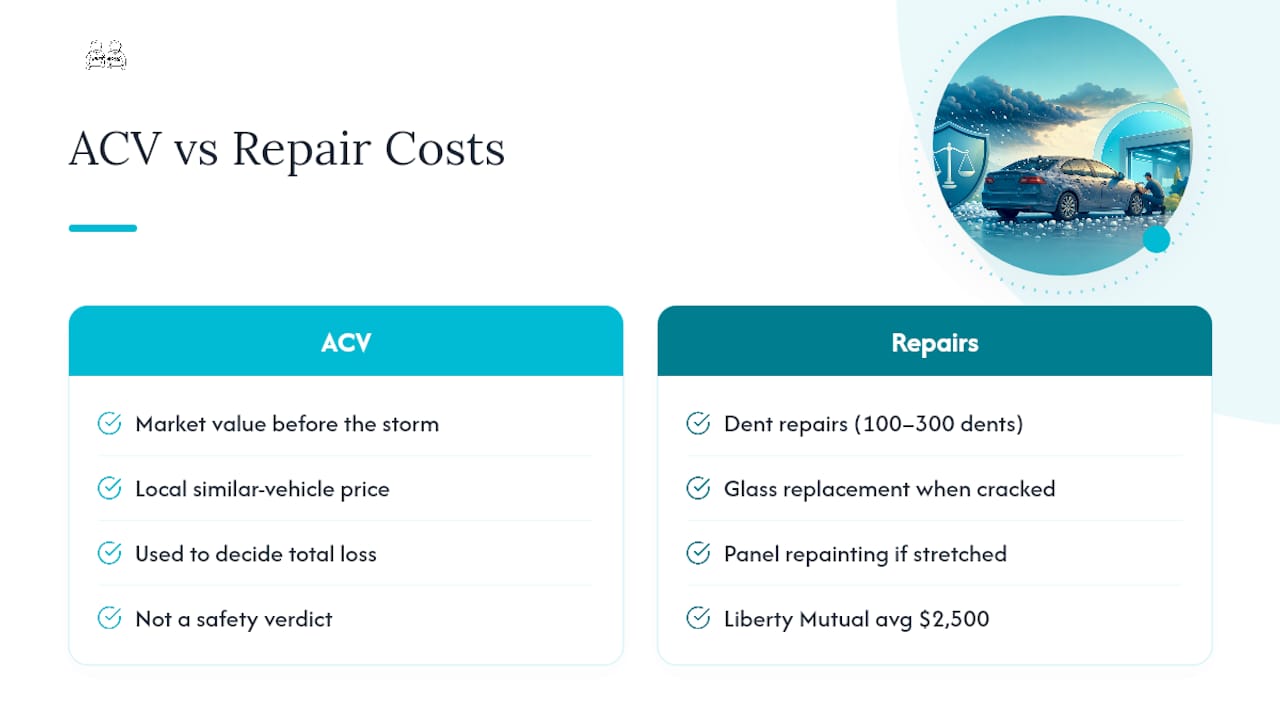
Hail is uniquely good at running up that number. A single fender-bender might involve one or two panels. A hailstorm can leave 100 to 300 dents scattered across the hood, roof, trunk, and every horizontal surface in between. Each dent might cost relatively little to address individually, but multiply that by panel count and add glass replacement or full repaints where the metal stretched too far for paintless repair, and the estimate climbs fast. Liberty Mutual puts the average cost to repair moderate hail damage at roughly $2,500, and severe storms with deep, dense pitting push that figure much higher.
Here's the part that surprises a lot of owners: a car declared a total loss from hail is usually still mechanically sound, meaning the decision is based on repair economics rather than safety. The engine runs, the brakes work, the frame is intact. What's "totaled" is the economics of fixing cosmetic damage on a vehicle that isn't worth enough to justify the repair bill. That distinction matters when you're deciding whether to walk away or fight to keep it.
How Insurers Decide: Thresholds, Formulas, and State Rules
Insurers use one of two main methods to decide whether your hail-damaged car crosses into total-loss territory, and which one applies depends on where you live and who you're insured with.
The first is a straightforward percentage threshold. Many states and carriers total a vehicle once repair costs hit somewhere between 50% and 75% of ACV, according to GEICO's guidance on totaled vehicles. A handful of states set that bar as low as 50%, while others allow repair costs to climb closer to 100% before the total-loss label kicks in. Because these thresholds vary by jurisdiction, Policygenius maintains a state-by-state breakdown worth checking before you argue with your adjuster.
The second method, the total-loss formula, factors in salvage value alongside repair cost. The formula generally works like this:
- Repair cost + salvage value ≥ ACV → the car is declared a total loss
- Repair cost + salvage value < ACV → the insurer typically authorizes repairs
Run the numbers on a real example. Say your car's ACV is $18,000. The hail damage estimate comes back at $13,000 for PDR, glass, and two repainted panels. Salvage value on a hail-damaged vehicle in that condition might run $4,000. Add those together: $13,000 plus $4,000 equals $17,000, just under the $18,000 threshold. In a strict percentage state, though, $13,000 already exceeds 70% of $18,000, so that same car gets totaled anyway. The method your state and insurer use changes the outcome, sometimes dramatically.
Your Options After a Total-Loss Declaration
Once the letter arrives, you're not stuck. You have three real paths, and each one changes your finances differently.
- Accept the payout and surrender the vehicle. The insurer cuts a check for ACV minus your deductible, and the car becomes their property. This is the cleanest option if you don't want the hassle of a salvage title or further repair coordination.
- Buy back the salvage. You keep the car, but the insurer subtracts the salvage value (what a junkyard or rebuilder would pay for it) from your payout. If your ACV was $18,000 and salvage value is $4,000, you'd net roughly $14,000 minus your deductible, and you keep a car with a branded title.
- Negotiate or request a formal appraisal. If you believe the ACV number is too low or the repair estimate too high, you can push back before accepting anything.
A few things change the math depending on your situation:
- If you're financing or leasing, your lender or lessor gets paid first out of the settlement, and any shortfall between what you owe and what the payout covers becomes your responsibility unless you carry gap insurance.
- Buying back salvage may trigger sales tax or re-registration fees in your state, on top of the cost of any repairs needed to get a rebuilt title.
- Filing a comprehensive claim for hail typically doesn't raise your premium the way an at-fault accident would, according to Allstate, though it's worth checking how a hail claim affects your specific rate before you file.
Salvage Titles, Insurability, and Resale After a Hail Total
Choosing to buy back your hail-totaled car means living with a salvage title, and that label follows the vehicle for as long as you own it. Most states require the car to pass a rebuilt inspection before it can be re-registered for road use, which typically means proving the repairs were done properly and the vehicle meets safety standards again. Requirements vary; Illinois's Department of Insurance and Minnesota's Department of Commerce both publish state-specific guidance on salvage retention and repair documentation, and the rules in your state may look nothing like your neighbor's.
Insurance gets trickier too. Many carriers will only offer liability coverage on a salvage or rebuilt-title vehicle, refusing comprehensive or collision because the car's history makes it a harder risk to price. That leaves you exposed if something else goes wrong down the road.
Resale value takes the biggest hit. A salvage or rebuilt brand shows up on every vehicle history report, and buyers know it. Even a flawlessly repaired hail car with a rebuilt title will sell for noticeably less than a clean-title equivalent, because the stigma outlasts the repair. If preserving a clean title matters to you, the window to act is before the total-loss declaration gets finalized, not after.
Can Repair Prevent a Total Loss? PDR vs. Panel Replacement
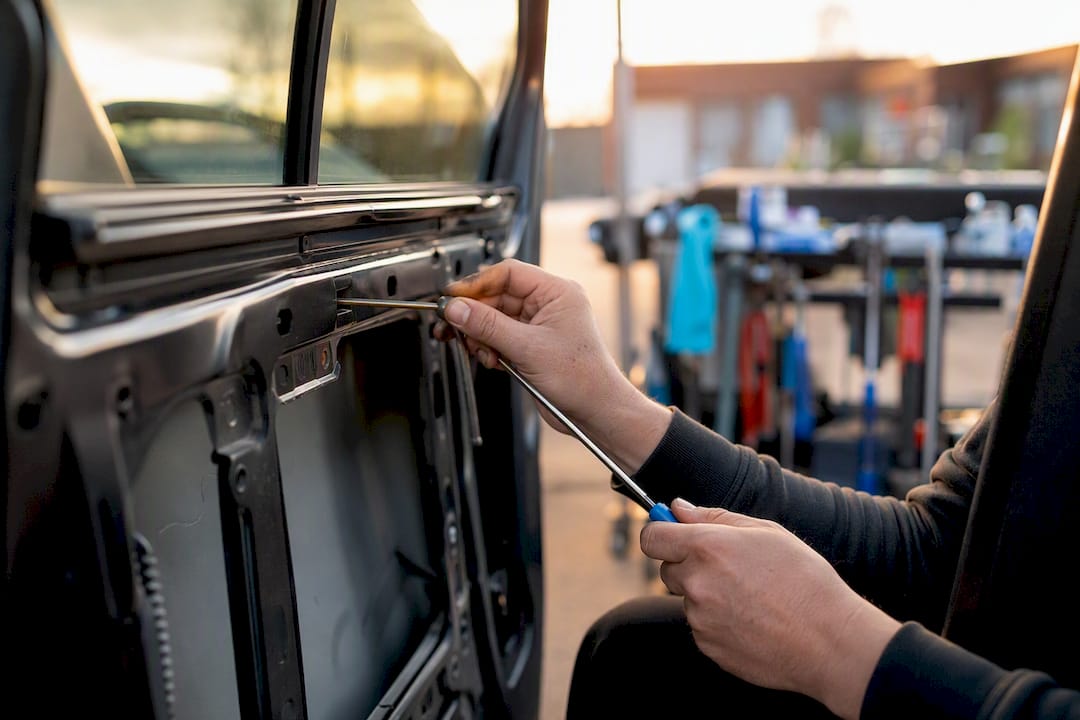
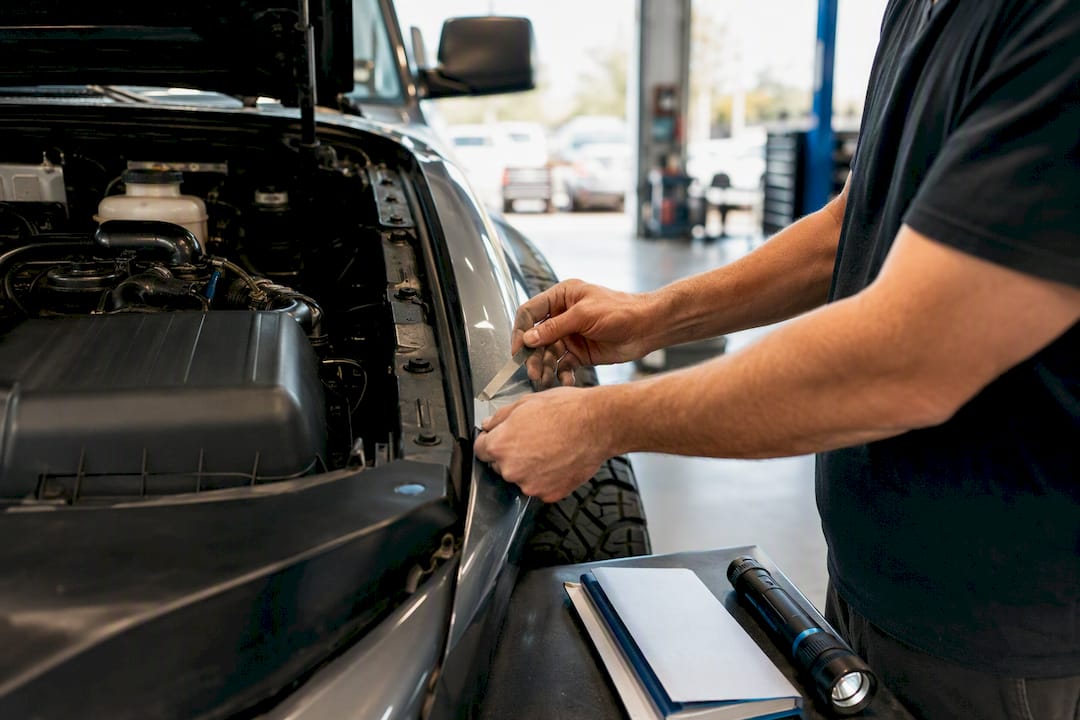
The single biggest lever you have before a total-loss decision is locked in is the repair method itself, and this is where paintless dent repair changes the equation. PDR works by massaging dents out from behind the panel using specialized tools, without cutting, filling, or repainting. Because it skips paint and body labor entirely, it costs a fraction of traditional bodywork and turns around in days rather than weeks.
Panel replacement and repaint become unavoidable when metal has stretched past its elastic limit, when paint has cracked at the dent's edge, or when a hailstone hit hard enough to crease rather than dent. Each panel that needs replacement adds parts, labor, paint matching, and blend time, and that's exactly what drives an estimate over the total-loss threshold.
- PDR: no paint, no fillers, typically 1 to 3 days depending on dent count
- Panel replacement: parts sourcing, paint matching, blending, often a week or more
- Mixed estimates: some panels PDR-eligible, others requiring replacement, which is common after severe storms
Consider a car with 150 dents across the roof, hood, and trunk, but no cracked paint anywhere. A PDR-only estimate might land at $3,000 to $4,000. The same damage priced with panel replacement and repaint could hit $9,000 or more, potentially crossing the total-loss line on a lower-value car. The repair method chosen for the estimate can be the difference between keeping a clean title and losing the car entirely.
Pro Tip: Get a PDR-specific estimate before your insurer finalizes their number. Adjusters sometimes default to body-shop pricing that assumes repainting even when most of the damage qualifies for paintless repair, and that gap alone can push a repairable car into total-loss territory on paper.
What to Do the Moment You Get a Total-Loss Notice
- Photograph everything immediately. Shoot every panel in daylight, note the date and time, and record your VIN and current mileage before anything moves.
- Get at least two independent estimates. Include one specifically for PDR where the damage allows it, since that number often comes in well below a standard body-shop quote.
- Ask your insurer exactly how they calculated salvage value, and request a buyback quote in writing if you're leaning toward keeping the car.
- Call your lender or lessor right away if the car is financed or leased, to confirm your payoff balance and whether gap coverage applies to any shortfall.
- Save every email, letter, and receipt. If you end up disputing the valuation, this paper trail becomes your evidence.
Moving fast matters here. Estimates and salvage values shift, and insurers move toward settlement quickly once a total-loss file is opened.
How to Dispute Your Insurer's Valuation
If the ACV number feels low or the repair estimate feels padded, you have a formal path to push back. Most states recognize an appraisal process built around three parties: you hire your own appraiser, the insurer keeps theirs, and if the two disagree, a neutral umpire settles the difference. Each side typically pays for their own appraiser, splitting the umpire's fee.
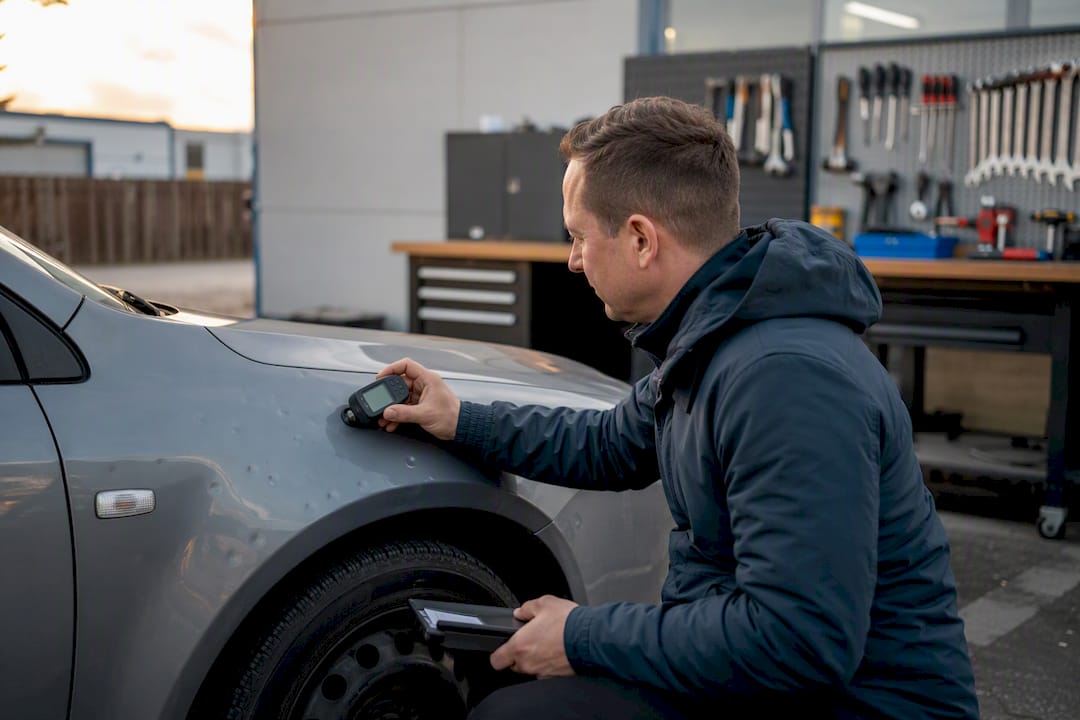
What actually moves the number? A handful of strong, close-in-mileage market comparables carry more weight than a stack of loosely related listings. Maintenance records, recent tires or brakes, and any documented upgrades all support a higher ACV, because they show the insurer's baseline undervalued your specific car rather than a generic version of it.
If the appraisal process stalls or your insurer refuses to engage in good faith, your next stop is your state's Department of Insurance, which can investigate unfair claims practices. For high-value disputes, a consultation with an attorney who handles insurance claims may be worth the cost before you sign off on a settlement you're not sure is fair.
Dent-boys' Take: When Repair Beats Accepting the Payout
We've watched adjusters default to panel-replacement pricing on damage that never needed it. Our free estimates, pick-up and delivery, $0-deductible support, and lifetime warranty exist because a fast, accurate PDR number can shift an insurer's decision from total loss to repair, especially on cars where the paint never cracked. Rental support keeps you mobile while we work.
If your car just got a total-loss letter and you're not ready to let it go, get a second opinion before you sign anything.
— Martin
Get a Free Hail Repair Estimate Before You Accept a Payout
Dent-boys gives you a real alternative to signing away a car that might not need to be totaled at all. Where a body shop's repaint-heavy quote can push your estimate over the threshold, our paintless dent repair pricing often comes in low enough to keep the decision in your hands instead of your insurer's.
Scheduling is simple: request a free estimate, and we'll assess the damage on-site or through pick-up and delivery if getting to a shop isn't convenient. We work directly with insurance paperwork, support $0-deductible claims where applicable, arrange a rental car during repair, and back every completed job with a lifetime warranty. If you're still deciding whether to buy back salvage or push for repair, get a free PDR estimate from Dent-boys before you sign the total-loss paperwork; the number alone might change your decision.
Sources
Review Progressive's hail coverage guidance, the Policygenius state threshold roundup, and your state DOI page for rules specific to your title and salvage situation. If a buyback doesn't fit your plans, selling a damaged vehicle for cash is another route worth comparing.