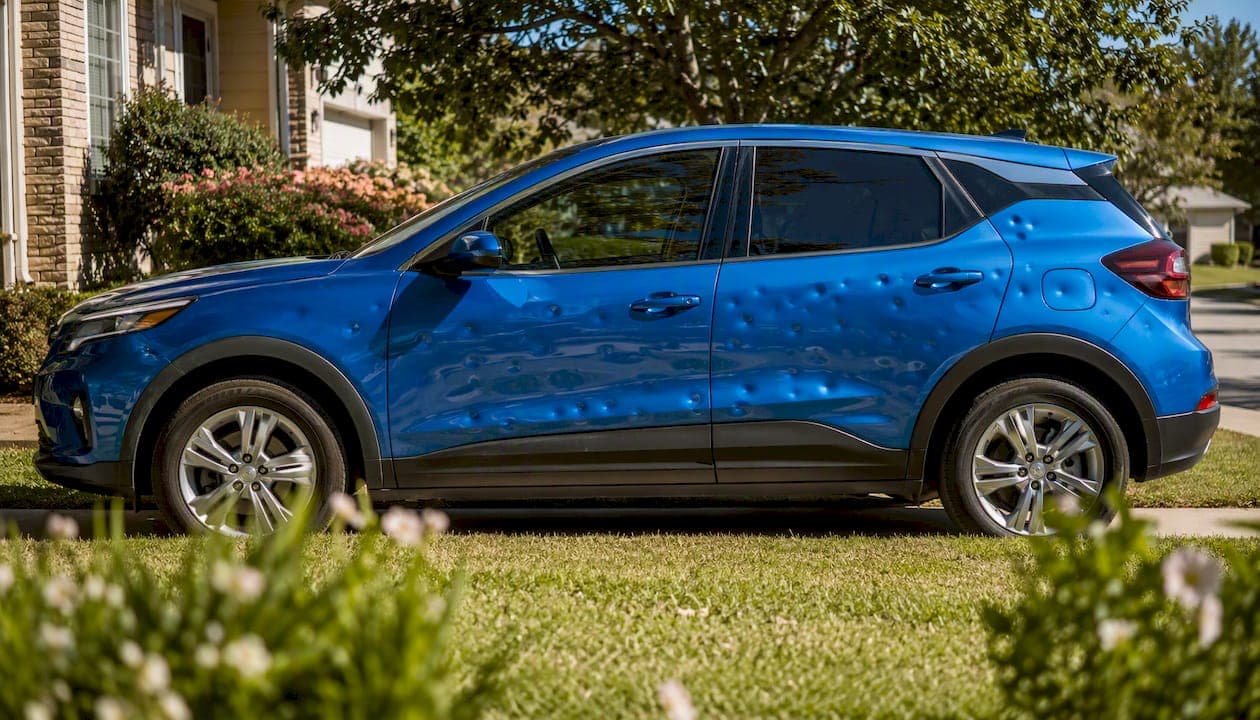
Hail season in the United States generally runs from April through September, with June producing the highest number of severe hail reports nationally, according to NOAA and SPC climatology data. That six-month window covers the bulk of your risk, but the exact peak shifts depending on where you live. Southern states like Texas can see damaging hail as early as March, while northern Plains and Mountain West states tend to peak in late June and July.
Here is the short version before the regional detail:
- National window: April through September
- Peak month: June (highest severe hail reports nationally)
- Regional caveat: Southern states peak earlier; northern states peak later
- Year-round exception: Hail can occur outside this window when strong updrafts and instability align, though it is rare
Key Takeaways
U.S. hail season runs April through September nationally, with June as the peak month for severe reports, though southern states face risk as early as February and preparation before the storm determines most outcomes.
| Point | Details |
|---|---|
| National hail window | April through September covers the bulk of U.S. hail risk, with activity peaking sharply in June. |
| Regional timing shifts | Southern states (TX, Gulf Coast) can see hail in February–March; northern Plains and Mountain West peak in June–July. |
| Colorado specifics | Colorado's season runs roughly April 15 to September 15, with mid-June the most destructive stretch. |
| Pre-storm preparation | Time-stamped photos, covered parking, and SPC forecast checks are the three highest-impact steps before a storm. |
| Dent-boys repair route | Free estimates, $0 deductible support, pickup/delivery, and a lifetime warranty make post-hail repair straightforward. |
Table of Contents
- When are the hail season months worst nationally?
- How hail risk months differ by region
- Why spring and summer dominate hail storm timing
- How to protect your car and home before, during, and after hail
- Is hail season changing? What recent research shows
- What hail damage repair actually looks like in practice
- Hail damage to your car? Dent-boys can help
- Sources
When are the hail season months worst nationally?
The national picture is fairly consistent across decades of SPC severe-report data: severe hail activity climbs through April and May, peaks sharply in June, then tapers through July and August before dropping off fast in September. By October, reports have fallen dramatically. November and December are effectively quiet.
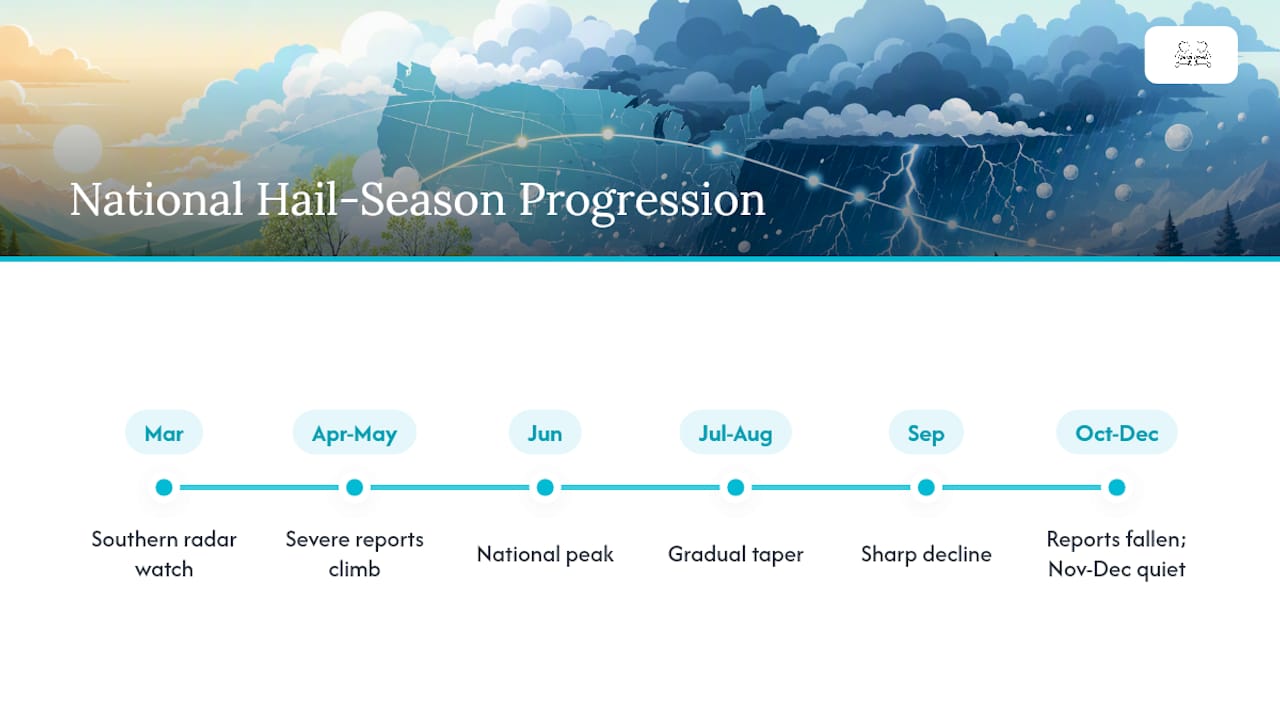
June is the national peak. The combination of Gulf moisture pushing north, strong surface heating, and wind shear creates the most favorable conditions for supercell thunderstorms during that month. May runs a close second, especially across the Southern and Central Plains.
The seasonal progression follows the sun. As surface temperatures warm from south to north through spring, the atmospheric instability that fuels hail-producing storms migrates northward with it. That is why Texas and Oklahoma are already watching the radar in March while Minnesota and Wyoming are still weeks away from their peak risk.
Statistic callout: June consistently records the highest severe hail report totals in the U.S., and reports decline sharply after September, per Weather.com's hail climatology analysis.
How hail risk months differ by region
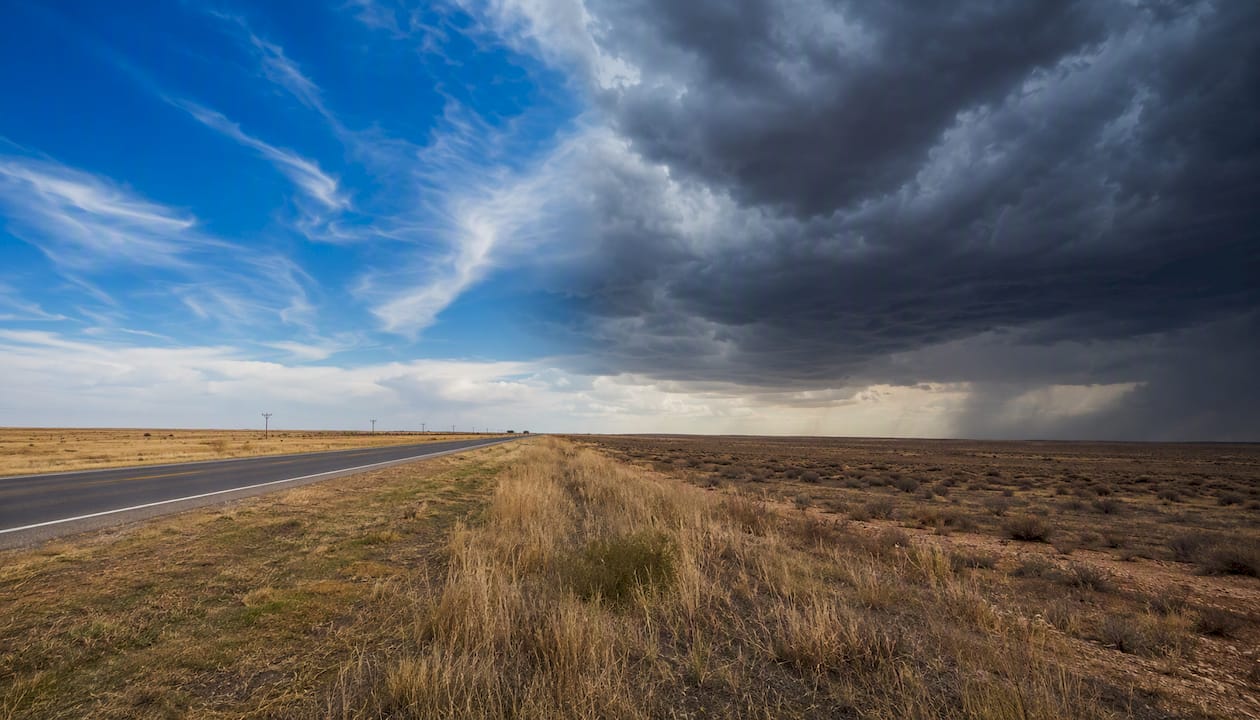
Regional timing matters more than the national average for practical preparedness. A driver in Denver and a driver in Houston face different windows, different storm types, and different peak threats.
| Region | Typical Season | Peak Month(s) |
|---|---|---|
| Southern Plains (TX, OK) | March–August | April–May |
| Central Plains (KS, NE) | April–August | May–June |
| Hail Alley (NE/CO/WY) | April–September | June–July |
| Northern Plains (MN, ND, SD) | May–August | June–July |
| Mountain West (CO foothills) | April–September | June |
| Southeast (AL, GA, MS) | March–May, Nov | April–May |
| Gulf Coast (TX, LA) | February–May | March–April |
A few state-level specifics worth knowing:
- Colorado: The CoCoRaHS hail-season guidance places Colorado's window at roughly April 15 to September 15, with mid-June identified as the most destructive stretch. The high elevation keeps the freezing level close to the ground, which lets hailstones grow large before they reach your car.
- Texas: Gulf Coast areas and the Panhandle can see hail in February and March, well ahead of the national peak. The dryline, a boundary between dry and moist air masses, fires some of the most intense hail-producing storms in the country across the state's western regions in spring.
- Kansas and Nebraska: These states sit in the heart of Hail Alley. May and June bring the highest frequency of large-stone events, and insurance data consistently ranks them among the costliest states for hail damage.
- Southeast: The region sees a split season. Spring (March–May) brings one active period as Gulf moisture interacts with cold fronts, and a secondary window can open in November when late-season systems push through.
Pro Tip: If you live in Texas, Colorado, Kansas, Nebraska, or Minnesota, those are the states where hail damage to vehicles is most financially significant. Move your car to covered parking at the first sign of a severe thunderstorm watch in those states, not just a warning.
Why spring and summer dominate hail storm timing
Hail needs three things to form: strong updrafts, supercooled water droplets, and a freezing level high enough above the surface that stones can grow before falling. Spring and early summer deliver all three in abundance.
Surface heating through April and May destabilizes the atmosphere. Warm, moist air from the Gulf of Mexico flows north and collides with drier air masses, creating the instability that fuels thunderstorm development. Wind shear, the change in wind speed and direction with altitude, organizes those storms into supercells capable of sustained, powerful updrafts. Those updrafts carry water droplets above the freezing level, where they accrete into hailstones layer by layer, as NSSL's hail formation research explains.
Elevation adds another variable. The MRCC's hail guidance notes that higher elevations bring the freezing level closer to the ground, giving hailstones less warm air to fall through before they reach the surface. That is a big reason why Colorado's Front Range and High Plains see some of the largest hailstones in the country despite not having the highest raw frequency of storms.
Outside the April–September window, hail is possible but uncommon. A strong late-season low-pressure system or an unusually warm December day can occasionally produce the instability needed for hail. These events are outliers, not patterns to plan around.
How to protect your car and home before, during, and after hail
Preparation is straightforward, but timing matters. Most hail damage happens in the 15–30 minutes of a storm, so decisions made before the storm arrives determine the outcome.
Before the storm:
- Check the Storm Prediction Center daily during peak hail season months. SPC outlooks flag severe-weather risk days in advance.
- Move vehicles into a garage or under a carport when a severe thunderstorm watch is issued for your county.
- Take time-stamped photos of your vehicle's exterior before hail season begins. These establish a pre-storm baseline for insurance claims.
- Photograph your VIN plate and license plate at the same time. Adjusters use these to pull vehicle history, and having them documented speeds the claims process.
- Secure outdoor furniture, grills, and other items that can become projectiles or sustain damage.
During the storm:
- Do not drive into a hailstorm. If caught on the road, pull under an overpass or into a covered structure. Hailstones can exceed golf-ball size in severe events and will crack windshields.
- Stay away from windows inside your home. Large hail can break glass.
- Never inspect a roof during an active storm.
After the storm:
- Document all damage with time-stamped photos immediately after the storm passes, before any cleanup.
- Note the storm date, time, and any weather service reports for your area. This documentation supports your insurance claim.
- Contact your insurer to open a claim, then get a free estimate from a paintless dent repair (PDR) provider before authorizing any work. Understanding why hail creates multiple dents on a single vehicle helps you communicate the scope of damage to your adjuster.
- Ask about rental vehicle coverage. Many PDR shops, including Dent-boys, coordinate directly with insurers and can arrange a rental so you are not without transportation during repairs.
Pro Tip: Photograph every dent from multiple angles in natural light, not just a wide shot of the car. Close-up images of individual dents carry far more weight with insurance adjusters than a single overview photo.
Is hail season changing? What recent research shows
The short answer is: possibly, but the signal is complicated. Research from the Wisconsin State Climatology Office notes that some climate-model work suggests hail season may be starting earlier in certain regions and that the frequency of large hail (stones exceeding one inch) could increase in some areas. At the same time, historical hail-reporting inconsistencies across states and decades make it genuinely difficult to separate real trend signals from data artifacts.
A few things the evidence does support:
- Southern states may see their active window push earlier, toward February and March, as Gulf moisture patterns shift.
- Large-hail events could become more frequent in high-elevation areas, though models project possibilities rather than near-term certainties.
- The rapid decline in reports after September appears consistent across datasets, suggesting the fall shoulder season is not meaningfully expanding.
Statistic callout: Reporting inconsistencies historically complicate trend detection; researchers adjust for reporting bias when evaluating long-term changes in hail frequency and size, per the Wisconsin State Climatology Office.
The practical takeaway for drivers: watch your local NWS forecast more closely in February and March if you live in the Gulf Coast or Deep South. Everywhere else, the April–September window remains the right planning frame for now.
What hail damage repair actually looks like in practice
After years of repairing hail-damaged vehicles, the pattern is consistent: the busiest months at the shop mirror the regional peak almost exactly. In Colorado, the phones start ringing in mid-June. In Texas, April and May bring the first surge. The cars that come in earliest, with clean documentation and a prompt insurance claim, almost always get the fastest turnaround and the smoothest repair experience.
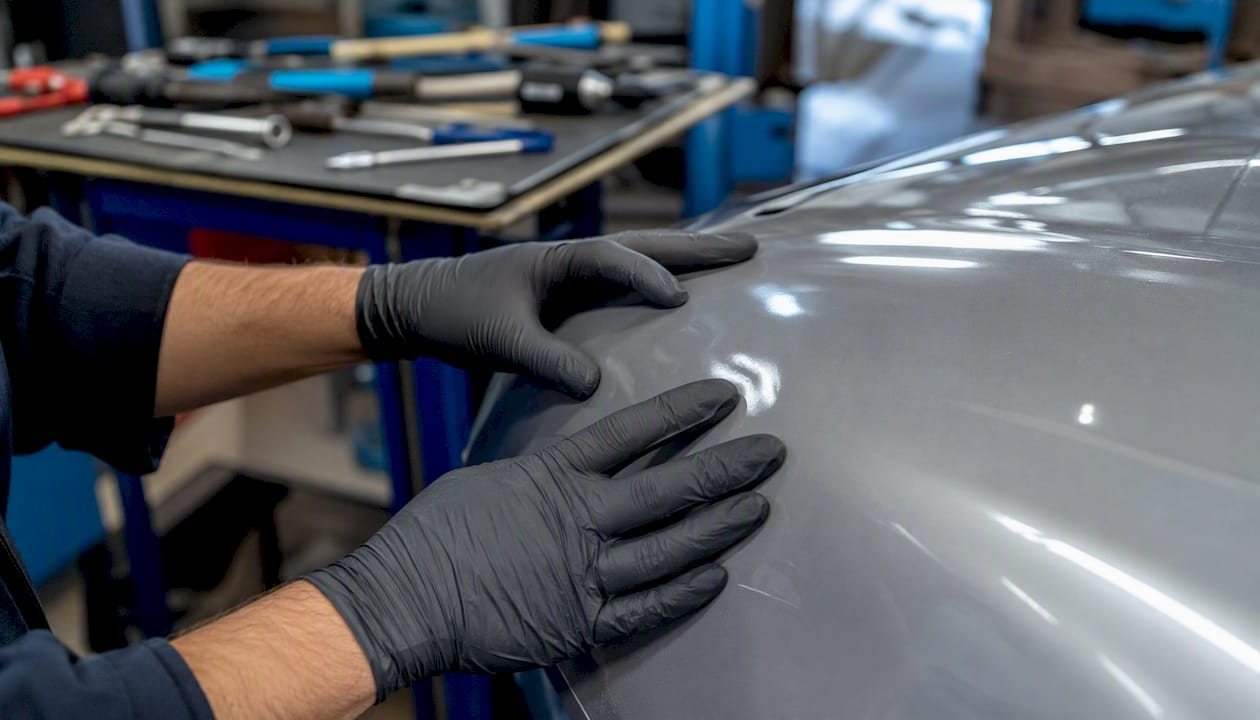
What I see repeatedly is that drivers who wait, hoping the dents are minor or that the insurer will reach out first, end up in a longer queue and sometimes face complications with their claims. Time-stamped photos taken the day of the storm are worth more than any amount of follow-up explanation. The hail damage and salvage title implications are real for severe events, and catching damage early keeps repair costs within the range that PDR handles cleanly, without painting or filler.
Dent-boys offers free estimates, pickup and delivery, $0 deductible support through your insurer, a rental vehicle during repairs, and a lifetime warranty on every repair. Those proof points exist because hail season is stressful enough without adding logistics headaches.
Hail damage to your car? Dent-boys can help
When a storm leaves your car covered in dents, the repair process does not have to be complicated. Dent-boys specializes in paintless dent repair for hail damage, restoring vehicles to pre-storm condition without painting, fillers, or lengthy shop stays.

Here is what to expect when you book:
- Free estimate: No obligation, no pressure. Get a clear picture of the damage and cost before committing.
- Pickup and delivery: Dent-boys comes to you. Drop-off logistics are handled so you can stay focused on your day.
- $0 deductible support: The team works directly with your insurer to coordinate the claim, often at no out-of-pocket cost to you.
- Rental vehicle: If your car needs to be in the shop, a rental is arranged so you are never without transportation.
- Lifetime warranty: Every repair is backed for the life of the vehicle.
After a hailstorm, the smartest move is a fast estimate. Get yours at Dent-boys and let the team handle the rest.
Sources
These are the most authoritative places to verify hail timing, track active threats, and dig into historical climatology:
- MRCC - Hail
- Colorado hail season
- NSSL - Hail education
- Hail and agriculture impacts — Wisconsin State Climatology Office
- SPC climo reports