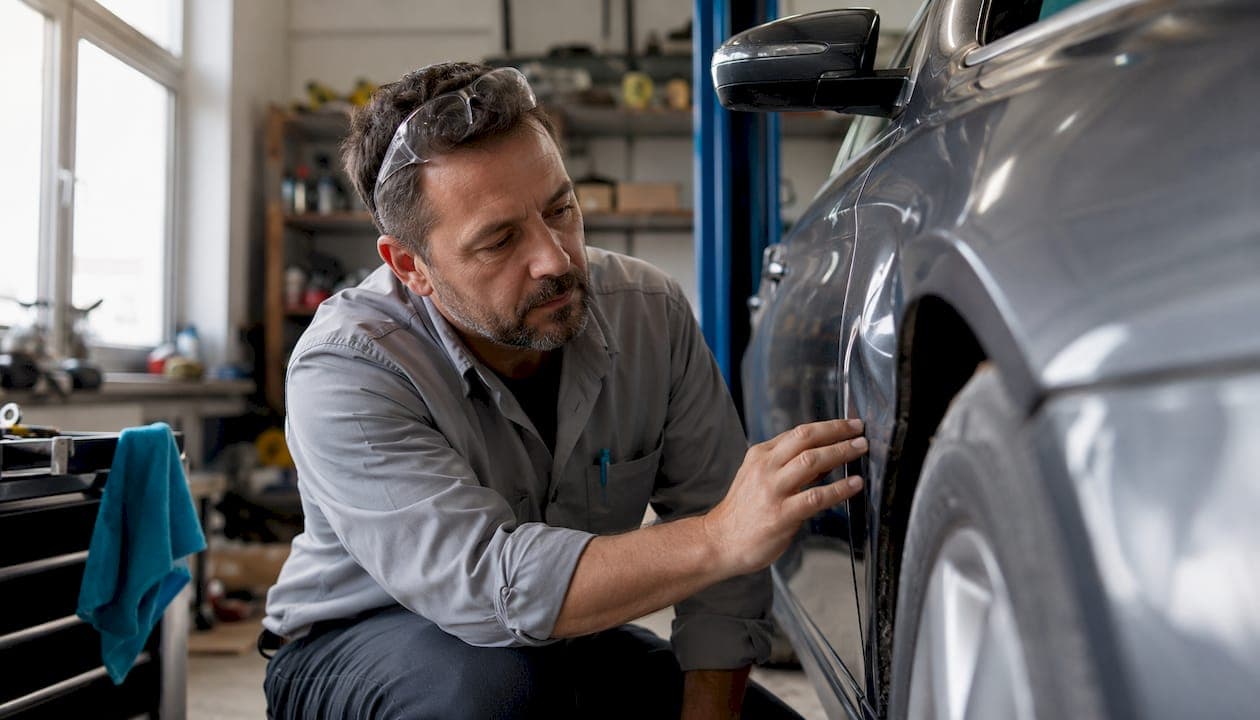
Temperature changes panel flexibility and paint behavior, which means it directly affects when and how paintless dent repair (PDR) works. Cold metal stiffens and resists reshaping; hot paint softens and becomes vulnerable to lifting or bubbling. The practical window where PDR works most reliably sits in moderate temperature ranges, though skilled technicians can work outside that range using indoor bays and controlled heating. In cold conditions, metal becomes firmer and paint more brittle. In very hot conditions, clearcoat can soften enough that manipulation risks damage. If your dent is shallow, paint is intact, and temperatures are moderate, book the repair now. If paint is chipped, rust is visible, or you're in an extreme weather stretch, get an inspection first. Waiting carries its own risk: trapped moisture leads to rust that spreads beneath surrounding paint and turns a simple PDR job into a panel repair.
Table of Contents
- How metal and paint actually change when a panel is dented
- Cold vs. heat: which condition is harder on PDR?
- Humidity, rain, hail, and what they do beyond temperature
- What temperature range works best, and what happens if you wait?
- What technicians do to work safely in non-ideal temperatures
- Dents that PDR cannot fix, regardless of temperature
- What to do right after you notice a dent
- How Dent-boys handles temperature-sensitive repairs
- Key Takeaways
- The part of this most guides skip over
- Dent-boys gets your repair done right, whatever the weather
How metal and paint actually change when a panel is dented
Steel and aluminum panels expand when heated and contract when cooled. That sounds simple, but the practical effect on a dent is significant. Warmer metal is more pliable, which means a technician can coax it back toward its original shape with less force. Cooler metal has more springback, meaning it resists the gradual pressure PDR relies on. At very low temperatures, some panels behave almost like cold-worked steel, requiring more deliberate technique and longer working time.
Paint and clearcoat follow a different curve. Heat softens them, which sounds helpful but actually raises the risk of lifting or bubbling when a technician applies pressure or pulls with a glue tab. Cold makes coatings brittle. Push or flex a panel in freezing conditions and the clearcoat can micro-crack along the dent edge, a failure that is invisible until you look at the right angle in sunlight.
Pre-existing paint chips matter more than most owners realize. Once the clearcoat is broken, moisture gets under the paint film. In humid or rainy conditions, heat, UV, and humidity can worsen paint and clearcoat damage at the dent site and accelerate corrosion. A chip that looks minor in March can be a rust bubble by July.
Pro Tip: Before booking a repair, run your fingernail lightly around the dent edge. If you feel any lifting, flaking, or a ridge where the clearcoat has separated, flag it for the technician — that micro-crack changes the repair approach entirely.
Cold vs. heat: which condition is harder on PDR?
Neither extreme is ideal, but they create different problems.
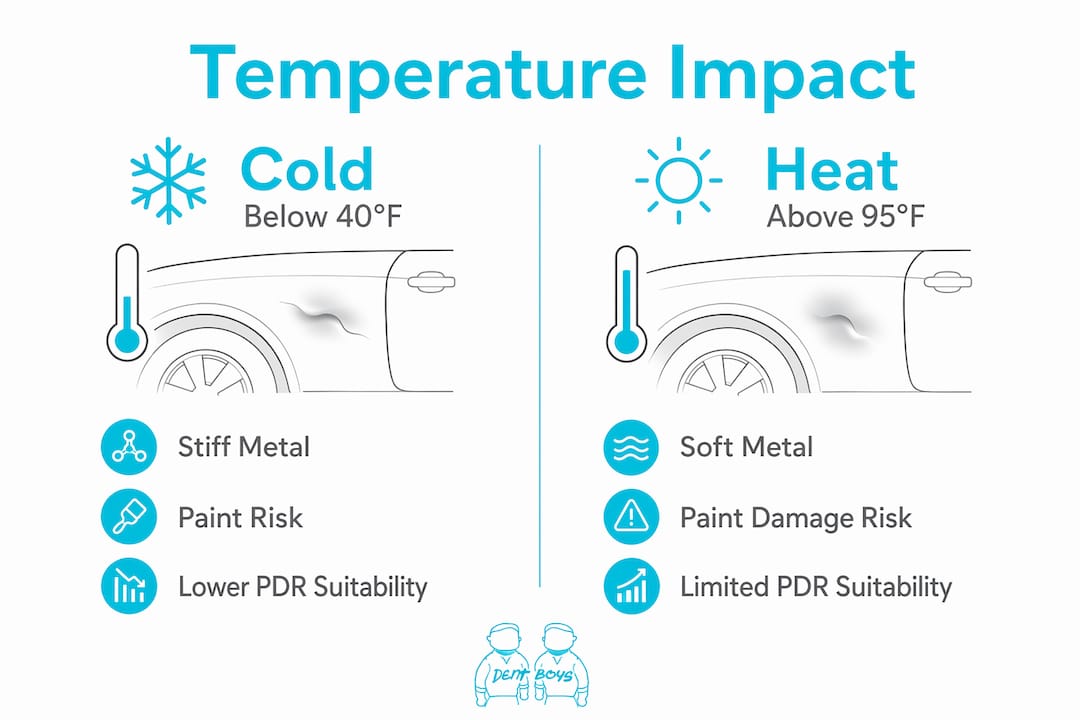
Cold weather stiffens the metal and reduces how much a panel will flex without cracking the paint. PDR adhesives also cure more slowly in cold, which extends working time but can reduce bond strength if the glue never reaches its optimal temperature. Shallow, round dents that would pop out easily at 65°F may need significantly more effort at 30°F, and sharp creases become more likely to crack the paint when manipulated.
Hot weather softens the metal, which sounds like an advantage. In moderate heat it is. But above roughly 95–100°F, the clearcoat softens too, and that creates real risk. Glue tabs can bond too aggressively and leave residue, or pull the clearcoat when removed. Extreme regional heat can expose or worsen pre-existing panel issues, and older finishes are especially susceptible to cracking and peeling under repeated heat cycles.
| Condition | Metal behavior | Paint/clearcoat risk | PDR suitability |
|---|---|---|---|
| Below 40°F | Stiff, high springback | Brittle, crack risk | Reduced — needs indoor staging |
| 50–85°F | Flexible, responsive | Stable | Best range for most PDR |
| 85–95°F | Softer, easier to shape | Moderately vulnerable | Workable with care |
| Above 95–100°F | Very soft | High lift/bubble risk | Caution — inspect clearcoat first |
A shallow door ding that is a straightforward PDR job in October may shift categories in January or August. Deep creases with sharp edges are the most temperature-sensitive because they require more manipulation, which amplifies whatever risk the temperature creates.
Humidity, rain, hail, and what they do beyond temperature
Moisture is the factor most owners underestimate. Rain itself does not damage a dent, but wet conditions complicate glue-pull PDR because adhesion requires a clean, dry surface. More importantly, if paint is already chipped at the dent site, every rain event pushes moisture under the film. That is how a small chip becomes a rust patch.
Hail is a special case. A hail storm typically leaves dozens of small, round dents that are actually well-suited to PDR in terms of shape. The problem is that hail often chips paint too, and those chips are easy to miss when you're looking at a panel covered in dents. Getting a professional dent inspection after a hail event is worth doing before assuming everything qualifies for PDR. Grouping hail repairs into one appointment also matters for cost and scheduling.
Hail damage often produces many small dents that are PDR-friendly in shape, but accompanying paint chips or clearcoat cracks change the recommended repair path. Never assume hail dents are paint-free without a close inspection under proper lighting.
Salt and snow exposure adds urgency to any repair with broken paint. Road salt accelerates corrosion dramatically once it reaches bare metal. A chip that sits untouched through a salted winter road season can rust through to the substrate by spring. For weather-caused dents in snowy climates, prompt inspection is not optional.
What temperature range works best, and what happens if you wait?
The practical sweet spot for PDR is roughly 50–85°F at the panel surface. In cold conditions, the combination of stiff metal and brittle paint makes most PDR jobs harder and riskier without indoor staging. In very hot conditions, clearcoat vulnerability becomes the limiting factor.
One detail worth knowing: car panel surface temperatures can run significantly higher than ambient air temperature on sunny days. An afternoon with direct sun can put your hood or roof well above moderate safe temperatures at the surface, even if the air feels manageable.
PDR adhesives have their own temperature sensitivity. Some glues work effectively only between roughly 43–102°F, so adhesive selection is part of the technician's temperature calculation, not just a background detail.
Decision checklist before booking:
- Is the paint intact around the dent? If yes, proceed with scheduling.
- Is the dent shallow and round with no sharp crease? PDR is likely appropriate.
- Is there any rust, bubbling, or clearcoat lifting at the edge? Get an inspection before repair.
- Is the current temperature below 40°F or above 95°F? Ask about indoor staging.
- Has the vehicle been exposed to road salt or standing water? Prioritize inspection urgency.
Delaying a repair when paint is compromised is the costliest mistake. Rust spreads beneath surrounding paint, and what starts as a PDR-eligible dent can become a panel replacement job within a single humid season. The cost and value impact of delaying compounds faster than most owners expect.
What technicians do to work safely in non-ideal temperatures
Professional PDR technicians do not simply cancel jobs when the weather is inconvenient. They adapt.
Indoor bays and temperature-controlled staging are the most reliable mitigation. Bringing a vehicle inside a heated or cooled shop normalizes the panel temperature before work begins, which matters more than the outside air temperature. A car that has been sitting in a 20°F parking lot needs time to warm before any PDR work starts, even indoors.
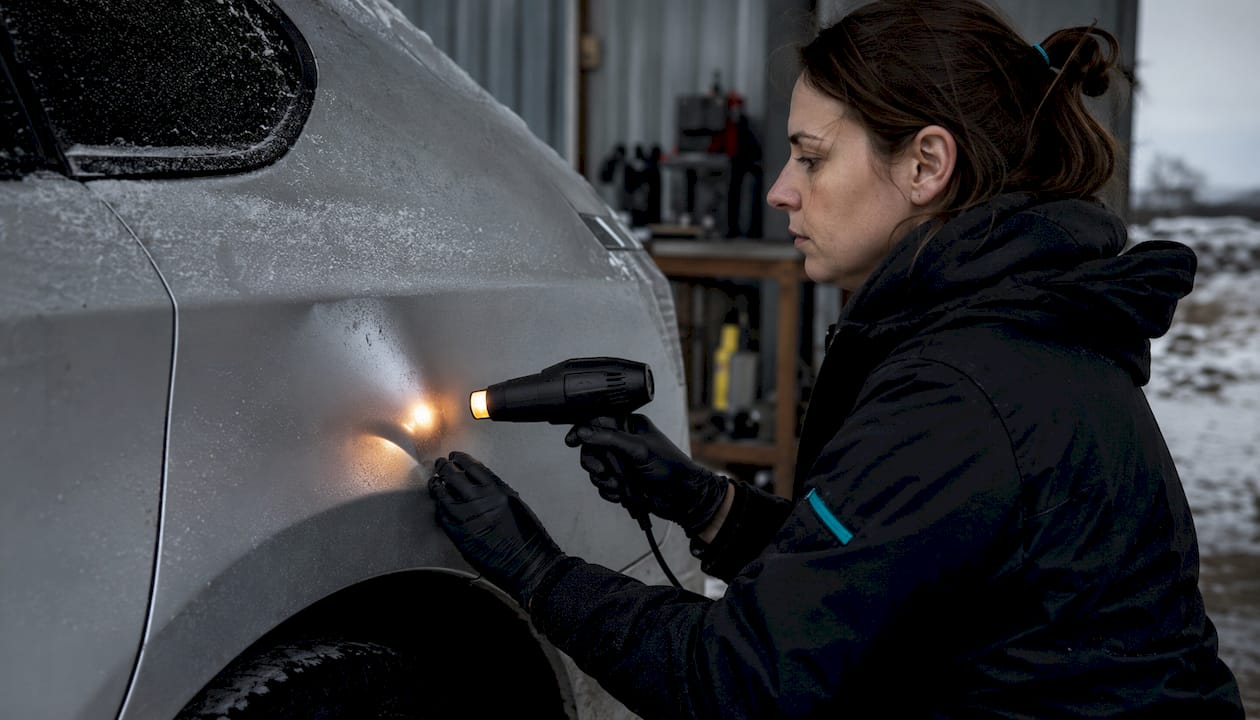
Localized heating with LED heat lamps or controlled hot-air guns lets technicians warm a specific panel section without heating the whole vehicle. This is common in cold-weather PDR where the goal is to restore enough flexibility for the metal to respond without overheating the clearcoat.
Adhesive selection is a practical lever that expands the working window. Different glue formulations are designed for different temperature ranges, and adhesive selection and glue temperature range are technician-controlled decisions that determine whether a repair can proceed safely on a given day.
In extreme climates, the technician's judgment about staging — indoor bay versus mobile service — often determines whether the repair will be fully successful and warrantied.
Pro Tip: When booking a repair in marginal weather, ask your technician specifically whether the car will be staged indoors and whether the warranty covers work done in those conditions. A confident answer tells you a lot about the shop's process.
Dents that PDR cannot fix, regardless of temperature
Temperature optimization only helps when the dent itself is a PDR candidate. These situations typically require traditional bodywork instead:
- Deep creases with paint cracking along the fold line
- Sharp impact edges where metal has been forced past its elastic limit
- Stretched or thinned metal that cannot return to its original shape
- Folded or ripped panels with structural deformation
- Rust-through at or around the dent site
- Underlying structural damage affecting frame or support rails
- Misaligned panel gaps or seams indicating the damage goes beyond the outer skin
Visual signs that PDR is off the table: flaking paint at the dent edge, rust bubbling under the clearcoat, or paint that looks discolored or sunken around the impact point. For a clear breakdown of when PDR applies versus when a panel needs replacement, the dent repair vs. panel replacement guide covers the decision in detail.
Heating a panel with boiling water or an open flame to "pop out" a dent is not a safe DIY fix. It can soften and bubble the clearcoat, cause paint to lift, and permanently damage modern multi-layer finishes — often creating a repair that costs more than the original dent.
The risks of DIY hot-water dent methods are well documented: even when the dent temporarily improves, the finish damage that follows can be irreversible on modern paint systems.
What to do right after you notice a dent
Immediate steps:
- Photograph the dent from multiple angles in natural light, including close-ups of the paint at the dent edge.
- Note whether paint is chipped, cracked, or lifting anywhere around the impact.
- If bare metal is exposed, apply a small amount of touch-up paint to seal it from moisture until your inspection appointment.
- Schedule an inspection promptly — do not wait through a rainy season if paint is compromised.
What not to do:
- Do not pour boiling water on the dent hoping it will pop out. It rarely works reliably and frequently damages the clearcoat.
- Do not use improvised suction tools or pulling devices that could tear the paint film.
- Do not skip the inspection because the dent "looks small." Small dents with hidden paint damage are the ones that rust fastest.
Seasonal prevention:
- Park in a covered garage or carport whenever possible, especially during hail season and peak summer UV exposure.
- Keep your clearcoat protected with regular waxing or a ceramic coating that adds a durable barrier against UV, moisture, and minor abrasion.
- Touch up paint chips immediately, before the next rain or freeze cycle.
Pro Tip: A ceramic coating does not prevent dents, but it significantly slows the corrosion process if a dent does chip the paint — buying you more time before a PDR-eligible dent becomes a rust problem.
How Dent-boys handles temperature-sensitive repairs
Dent-boys builds temperature awareness into every step of the repair process, not just the actual PDR work.
- Free estimates that include a paint and clearcoat condition check, so you know upfront whether PDR is the right path
- Indoor, temperature-controlled staging for repairs in cold or hot conditions, keeping panel temperatures in the workable range
- Pick-up and delivery so your vehicle gets to a controlled environment without sitting in extreme heat or cold before the technician starts
- Adhesive and technique adjustments matched to the day's conditions, including glue selection for cold or warm weather
- Lifetime warranty on repairs, with $0 deductible options, so you are not absorbing risk if conditions affect the outcome
Technician experience is the variable that matters most in marginal conditions. Dent-boys' team has handled repairs across the full range of seasonal conditions, and the indoor staging option means you rarely need to delay a repair just because the weather is uncooperative.
Key Takeaways
Temperature and weather directly affect PDR success, but a skilled technician with the right setup can work year-round — the key is knowing when to stage indoors and when to inspect before proceeding.
| Point | Details |
|---|---|
| Ideal PDR temperature | The 50–85°F range gives the best balance of metal flexibility and paint stability. |
| Cold weather risk | Below 40°F, metal stiffens and paint becomes brittle, raising the chance of cracking during repair. |
| Heat and clearcoat | Above 95–100°F, clearcoat softens and becomes vulnerable to lifting or glue damage. |
| Delay costs more | Unaddressed dents with broken paint allow rust to spread, often turning a PDR job into a panel replacement. |
| Dent-boys' approach | Indoor staging, adhesive selection, and a lifetime warranty make temperature-aware PDR available year-round. |
The part of this most guides skip over
Most temperature-and-PDR articles stop at "don't repair in extreme heat or cold." That is true but incomplete. The more important point is that the panel surface temperature, not the air temperature, is what actually matters. On a sunny summer afternoon, a dark hood can hit 150°F or more at the surface while the air reads 88°F. A technician working mobile in that condition is not working in "88-degree weather." They are working on a panel that is well past the safe clearcoat threshold.
The other thing worth saying plainly: timely inspection is often the single biggest factor in whether a repair stays affordable. A small chip around a dent can change the solution from PDR to panel repair if left through a humid season. That is not a scare tactic — it is just how rust works. Moisture gets under the paint, the corrosion spreads laterally, and by the time you see a rust bubble, the damage is already wider than the original dent.
The practical takeaway is this: do not wait for "better weather" if your paint is already compromised. Get the inspection done now, let the technician assess the actual panel condition, and make the decision with real information rather than assumptions about what the season will bring.
Dent-boys gets your repair done right, whatever the weather
When temperature or weather makes a dent repair feel complicated, Dent-boys removes the guesswork. Instead of asking you to wait for a perfect weather window, the team brings your vehicle into a temperature-controlled environment, selects the right adhesives for the conditions, and completes the repair under warranty.

The practical advantages are straightforward: free estimates, pick-up and delivery so your car never sits baking in a parking lot before the repair starts, a lifetime warranty on PDR work, and $0 deductible options that mean no surprise costs. Whether it is a hail-season rush or a single winter door ding, Dent-boys' indoor staging means the repair happens on the technician's terms, not the weather's.
Get a free estimate today and find out whether your dent qualifies for PDR — before the next rain or freeze cycle makes the decision for you.