
Hail creates multiple dents because each falling stone transfers kinetic energy directly into your vehicle's metal panels, and a single storm can deliver hundreds of those impacts across every exposed surface. The physics are straightforward: when a hailstone's force exceeds the yield strength of steel or aluminum, the metal deforms permanently. Quarter-sized hail at 1 inch marks the standard damage threshold for steel panels, while aluminum panels show denting from stones as small as 0.75 inches. Understanding why hail creates multiple dents, rather than just one or two, requires looking at hailstone size, storm dynamics, and how your car's body panels respond to repeated impact.
Why hail creates multiple dents: the physics explained
The number of dents your car collects in a storm is directly tied to hailstone size, speed, and shape. Kinetic energy equals one-half times mass times velocity squared, which means even a small increase in hailstone speed produces a large jump in destructive force. A golf ball-sized stone falling at storm speeds carries enough energy to punch a deep, clean dent into a hood in a single strike.
Shape matters just as much as size. Irregularly shaped hailstones concentrate impact force into a smaller contact area, increasing pressure tenfold compared to smooth, spherical stones. A jagged stone acts like a chisel, while a round stone spreads force more evenly. That difference explains why two hailstones of identical size can produce very different damage: one leaves a smooth, round ding while the other tears paint and creates a sharper, more severe depression.
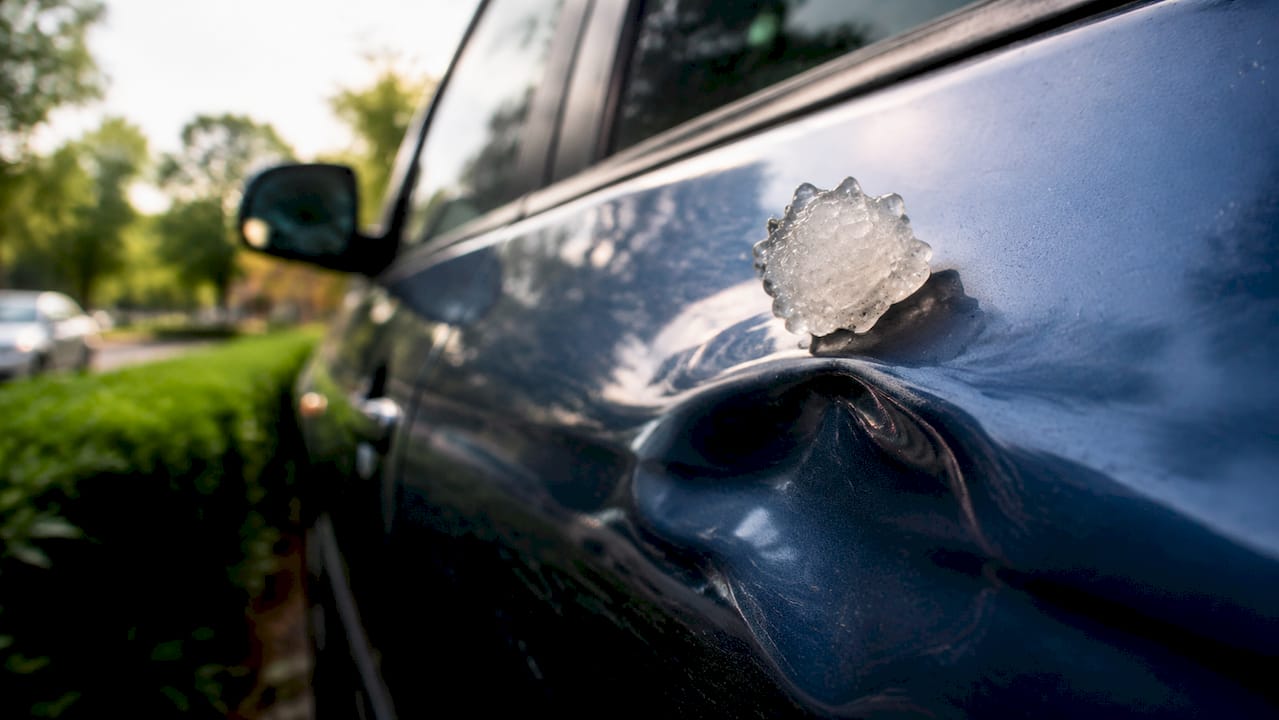
Smaller hailstones cause a different problem. Pea-sized hail at 0.25 inches poses minimal risk to steel, but marble-sized hail at 0.50 inches starts creating low-level surface stress. When those smaller stones fall by the thousands, the cumulative effect across your roof and hood adds up fast.
Pro Tip: After a storm, run your hand across the hood in low-angle light. Your fingertips will detect shallow dents your eyes miss entirely, especially from smaller hailstones.
| Hailstone size | Approximate diameter | Typical damage outcome |
|---|---|---|
| Pea-sized | 0.25 inches | Minimal risk to steel panels |
| Marble-sized | 0.50 inches | Low risk, surface stress possible |
| Quarter-sized | 1.00 inch | High risk, insurance claim threshold |
| Golf ball-sized | 1.75 inches | Severe denting, paint damage likely |
Why do storms produce so many dents instead of just a few?
A hailstorm is not a single event. It is a continuous bombardment that can last several minutes, with thousands of stones striking every square foot of exposed surface. That volume alone explains why multiple dents from hail are the rule, not the exception.
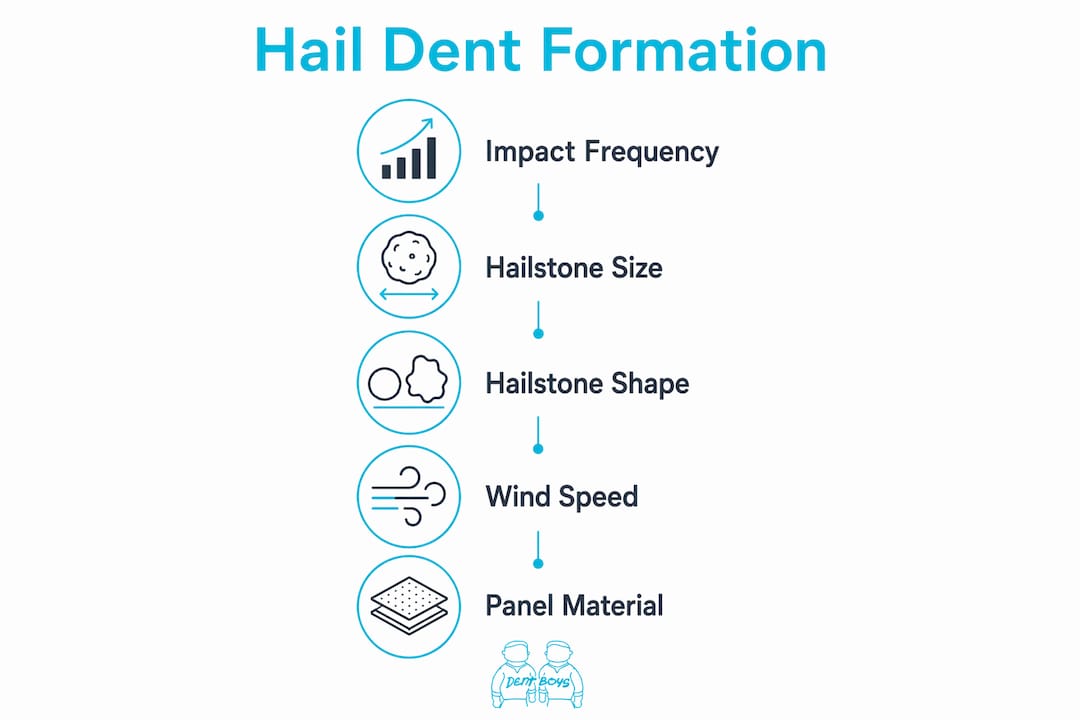
Wind is the other major factor. Hail rarely falls straight down during an active storm. Horizontal wind speed adds lateral velocity to each stone, which increases total impact energy significantly. A stone falling at 45 degrees hits with the combined force of its vertical drop and horizontal push. That angled impact also means the sides of your car, not just the roof, take direct hits.
Hail swaths make the pattern even more concentrated. Hail swaths are corridors of dense hail accumulation that move through storms in defined paths. A vehicle parked inside a swath receives far more impacts per square foot than one at the storm's edge. This explains why two cars parked a block apart can show dramatically different damage levels after the same storm.
Key storm dynamics that drive multiple dent formation:
- Storm duration: Longer storms deliver more total impacts across all surfaces.
- Wind velocity: Horizontal wind increases impact energy and expands which panels get hit.
- Hail density: Swaths concentrate stone accumulation, multiplying impacts in specific zones.
- Storm cell movement: A slow-moving cell lingers over a vehicle longer, increasing total strikes.
- Hail size variation: Mixed-size storms produce both shallow and deep dents simultaneously.
Pro Tip: If you get caught in a hailstorm while driving, pull over immediately and find shelter. Your forward speed adds directly to each stone's relative impact velocity, multiplying the number and depth of dents your car receives.
How vehicle materials and panel design affect dent patterns
Not every panel on your car dents at the same rate. The material, thickness, and angle of each surface all determine how much damage accumulates during a storm.
Aluminum panels dent from smaller hailstones than traditional steel because aluminum has a lower yield strength. Many modern vehicles use aluminum for hoods and doors to reduce weight, which makes them more vulnerable to hail impact damage than older all-steel designs. A storm that leaves a steel-bodied car with minor dings can leave an aluminum-paneled car with deep, widespread denting.
Panel orientation is equally important. Flat horizontal surfaces like roofs, hoods, and trunk lids take the most punishment because hail strikes them at close to a 90-degree angle. A perpendicular impact transfers maximum energy into the panel with almost no deflection. Curved or angled panels, like fenders and pillars, redirect some of that force sideways, which reduces dent depth and frequency.
| Surface type | Impact angle | Dent risk level |
|---|---|---|
| Roof | Near 90 degrees | Highest |
| Hood | Near 90 degrees | Highest |
| Trunk lid | Near 90 degrees | High |
| Fenders (curved) | Angled, varies | Moderate |
| Door panels (vertical) | Low angle | Lower |
| A/B pillars | Highly angled | Lowest |
Paint and surface coatings affect how visible the damage appears, but they do not prevent denting. A thicker clear coat may hide micro-surface stress initially, but the metal deformation underneath remains. This is why paintless dent repair works so effectively on hail damage: the paint is often intact even when the metal has deformed significantly.
What other damage comes with multiple hail dents?
Dents are the most visible result of hail impact damage, but they are rarely the only problem. A thorough post-storm inspection covers several categories of damage that are easy to miss.
Jagged hailstones create micro-cracks in paint and clear coat that are not visible to the naked eye immediately after a storm. Those cracks allow moisture to reach bare metal, which starts a corrosion process that compounds over weeks and months. Catching this early is the difference between a straightforward repair and a rust problem.
A complete post-storm inspection should cover:
- Paint surface: Look for chips, cracks, and areas where the clear coat has lifted or separated from the base coat.
- Windshield and glass: Hail chips windshields frequently. Small chips spread into full cracks with temperature changes.
- Rubber seals and weatherstripping: Impact force can compress and crack door and window seals, creating water intrusion paths.
- Sunroof panels: Glass sunroofs are especially vulnerable to cracking from direct hail strikes.
- Antenna and trim pieces: Plastic trim and antennas break or crack under repeated impact.
- Interior: Check headliners and door panels for moisture staining, which signals seal failure.
Hidden damage like micro-cracks and seal compromise escalates quickly if left unattended. Rust forming under intact paint is nearly impossible to spot until it has already spread. Scheduling an inspection within days of a storm, not weeks, protects your car's structural integrity and resale value. The repair timeline varies by damage severity, but acting fast consistently produces better outcomes.
Key Takeaways
Hail creates multiple dents because storms deliver hundreds of kinetic impacts across every exposed panel, and the size, shape, and speed of each stone determines how deep and widespread that damage becomes.
| Point | Details |
|---|---|
| Damage threshold by size | Quarter-sized hail at 1 inch triggers steel panel denting; aluminum dents from 0.75-inch stones. |
| Shape multiplies severity | Jagged hailstones concentrate force tenfold, causing sharper, deeper damage than round stones. |
| Flat panels take the most hits | Roofs, hoods, and trunk lids suffer the highest dent counts due to near-perpendicular impact angles. |
| Hidden damage is the real risk | Micro-cracks in paint and compromised seals cause corrosion if not caught and repaired quickly. |
| Stop driving in hail | Vehicle motion adds to each stone's relative speed, directly increasing dent count and depth. |
What most people get wrong about hail damage
People consistently underestimate hail damage because they judge it by what they can see from five feet away. That is the wrong standard. The most consequential damage from a hailstorm is often what you cannot see at all.
I have watched car owners dismiss a storm as "minor" because the dents looked shallow. Three months later, they are dealing with rust bubbling under the paint on the hood because micro-cracks let moisture in from day one. The dents were cosmetic. The corrosion was structural.
The other misconception I see constantly is the belief that all dents are equal. A smooth, round dent from a spherical stone is a very different problem than a sharp-edged depression from a jagged one. The jagged impact often breaks the paint bond, even when the paint looks intact on the surface. That invisible break is where the real damage clock starts ticking.
Driving through a storm also makes things dramatically worse than most people realize. Your car's forward speed adds directly to each hailstone's relative impact velocity. A 30 mph drive into a storm can double the effective impact energy on your front hood and windshield. Pulling over is not just cautious. It is the single most effective thing you can do to limit the total number and depth of dents your car collects.
— Martin
Dent-boys handles hail damage the right way
After a hailstorm, the number of dents on your car can feel like an impossible repair job. Dent-boys specializes in exactly this situation.

Dent-boys uses paintless dent repair to restore hail-damaged vehicles without repainting or using fillers. That means your factory paint stays intact, your repair costs stay low, and your car comes back looking exactly as it did before the storm. Dent-boys offers free estimates, picks up and delivers your vehicle, provides a rental car during repairs, and backs every job with a lifetime warranty at $0 deductible. If your car took a beating in a recent storm, getting a free estimate from Dent-boys is the fastest way to understand what you are dealing with and what it costs to fix it.
FAQ
Why does hail leave so many dents instead of just one or two?
A hailstorm delivers thousands of individual stone impacts across your vehicle's surface over several minutes. Each impact that exceeds the panel's yield strength creates a permanent dent, so the total count reflects the storm's duration, hail density, and wind velocity.
What hail size causes dents on a car?
Quarter-sized hail at 1 inch is the standard damage threshold for steel panels, while aluminum panels can dent from stones as small as 0.75 inches. Golf ball-sized hail at 1.75 inches causes severe, widespread damage.
Does driving during a hailstorm make dent damage worse?
Yes. Vehicle motion increases relative impact velocity, which multiplies both the number and depth of dents. Pulling over and finding shelter is the most effective way to limit hail damage to your car.
Can hail damage a car without leaving visible dents?
Yes. Jagged hailstones can create paint micro-cracks and compromise rubber seals without producing obvious dents. These hidden issues lead to corrosion and water intrusion if not identified and repaired quickly after the storm.
Is hail damage covered by car insurance?
Comprehensive auto insurance policies typically cover hail damage. Repair costs vary based on dent count and severity, and in extreme cases the vehicle may be declared a total loss if repair costs exceed its market value.