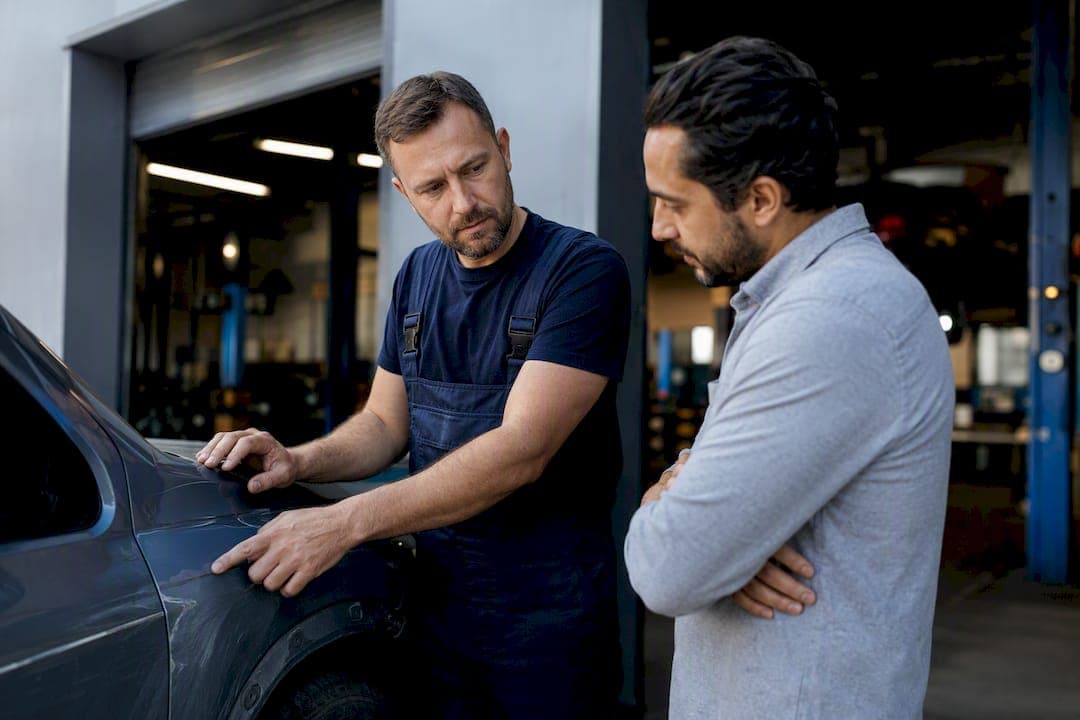
Yes, in nearly every state you have the right to choose your own repair shop for an insurance claim, whether that's an insurer-recommended shop or an independent one. Your insurance company can suggest a shop in its Direct Repair Program, but it generally cannot force you into one. Picking a network shop tends to speed up approvals; picking your own shop gives you more control but may mean more back-and-forth over labor rates and parts.
TL;DR:
- Choosing an independent shop gives you more control over parts and repair methods but may require more negotiations and documentation on your part.
- Insurer-recommended DRP shops offer direct billing, faster approvals, and guaranteed completion dates, though they may prioritize aftermarket parts to cut costs.
- Verify each shop’s certifications, warranty scope, and ability to handle ADAS calibration before committing, especially in markets with limited options.
- Keep detailed written estimates, photos, and invoices for all repairs to prevent disputes and strengthen your case during insurer disagreements.
- State-specific rules and anti-steering protections mean your location significantly impacts your negotiation power and repair options.
Table of Contents
- Your Legal Right to Choose a Repair Shop Insurance Covers
- What an Insurer-Recommended (DRP) Shop Actually Offers
- Choosing an Independent Shop: What You Gain and What You Manage
- The Exact Questions to Ask Before You Commit to a Shop
- How Insurers Handle Billing, Supplements, and Parts
- What to Do If the Insurer Disputes the Bill
- How Dent-boys Handles Insurance Claims for Dent Repair
- Does Your Choice of Repair Shop Affect Resale Value?
- Red Flags That Should Make You Walk Away
- How Your Location Shapes Your Repair Shop Options
- A Quick Framework for Deciding: Speed, Cost, or Control
- Get a Free Estimate and Insurance Coordination From Dent-boys
- Where to Verify the Rules Yourself
- Sources
- FAQ
Your Legal Right to Choose a Repair Shop Insurance Covers
Most states give consumers the right to select a licensed repair facility of their choice, and many require insurers to say so in writing when a claim opens. But the exact protections vary, and enforcement depends on where your policy was issued and, in some cases, where the accident happened. Anti-steering rules exist in most states specifically to stop adjusters from pressuring you toward a particular shop.
A few practical distinctions matter before you decide:
- First-party claims (your own policy, your own collision or comprehensive coverage) usually give you the most flexibility.
- Third-party claims (the other driver's insurer pays) can come with more pushback since that insurer has less incentive to make things easy for you.
- Check your policy for any language about "preferred providers" or "recommended shops," since some clauses affect reimbursement timing even when they don't restrict your choice outright.
If an adjuster implies you must use a specific shop, ask for that in writing. If they don't put it in writing, that's often a sign it isn't actually a requirement.
What an Insurer-Recommended (DRP) Shop Actually Offers
A Direct Repair Program shop has a pre-negotiated contract with your insurer, and that relationship is designed to remove friction from the process. State Farm's guidance on choosing an auto body shop notes that DRP shops typically offer direct billing, faster approvals, guaranteed completion dates, and sometimes a repair warranty backed by the insurer's network agreement.
Here's what that convenience usually includes:
- Direct billing between the shop and insurer, so you're not fronting money and waiting on reimbursement.
- Faster claim approvals because the insurer already trusts the shop's estimating software and labor rates.
- Pick-up and delivery in many programs, plus loaner or rental coordination.
- A standardized warranty that follows the insurer's terms rather than the shop's own policy.
The tradeoff: DRP shops sometimes lean toward aftermarket or remanufactured parts to stay within the insurer's preferred cost structure, and their repair methods are shaped by that same relationship. One insight worth remembering is that DRP programs aren't uniform. Coverage terms, warranty length, and even whether a program operates in a given state at all can differ by insurer, so "insurer-recommended" doesn't mean identical experiences everywhere.
Choosing an Independent Shop: What You Gain and What You Manage
An independent shop answers to you, not to a network contract, which usually means more say over parts and repair methods. Many independents specialize in things DRP shops route elsewhere, like OEM-only calibration work or specific makes they've serviced for years. If you've used the same trusted local shop for a decade, that continuity carries real value.
The cost of that freedom is more legwork on your end:
- You may need to negotiate labor rates directly, since independent shops aren't bound to an insurer's pre-set hourly figure.
- You'll want written confirmation the shop will submit supplements (additional damage found during teardown) with proper documentation.
- Calibration requirements on newer vehicles with driver-assist systems can add cost and time that a DRP shop's process might already account for.
Oregon's Department of Financial Regulation is direct about this: choosing an independent shop does not void your claim, but insurers can inspect the vehicle and may cap payment at what they consider a reasonable charge. That single fact drives most of the friction people run into with independent repairs.
The Exact Questions to Ask Before You Commit to a Shop
Whether you're calling around or standing in a shop's lobby, a short, consistent script protects you from surprises later.
- Ask if they work directly with your insurer. Some shops handle the entire claims conversation, including supplements and teardown documentation; others expect you to be the go-between.
- Get a written estimate that specifies parts. OEM, aftermarket, or recycled parts should be listed by name, not lumped into a total.
- Confirm the repair plan and timeline. Ask what happens if hidden damage extends the job past the original estimate.
- Ask about the warranty's length and geographic scope. A shop's warranty that only applies within 50 miles of its location isn't much good if you move or travel for work.
- Check for ASE or I-CAR certification, and ask about OEM factory certifications for your specific make. ASE's find-a-repair-shop tool is a fast way to confirm technician credentials before you commit.
- Ask about their track record with insurer disputes. A shop that's handled hundreds of supplements knows exactly what documentation an adjuster needs.
- Get names and emails, and agree in writing on who authorizes what before work starts.
Pro Tip: Ask specifically whether the warranty is transferable and honored nationwide, not just locally. A shop's own paperwork rarely spells this out unless you ask directly, and it matters more than most owners realize until they've relocated.
How Insurers Handle Billing, Supplements, and Parts
An adjuster's estimate and your shop's estimate rarely match on the first pass, and that gap is where most disputes start. Insurers compare the two and may limit payment to what they judge "reasonable" for labor and parts in your area, regardless of what the shop actually charges.
Supplements are a normal part of this process, not a red flag. Once a shop opens the panel or removes a bumper, they often find damage the original estimate missed. Reputable shops photograph the teardown and attach labor-time breakdowns to justify the extra cost, which speeds up approval considerably.
Parts choice affects your bottom line too:
- OEM parts cost more but preserve fit and factory specs; some policies specify when aftermarket parts are acceptable.
- Aftermarket and recycled parts lower the bill but can affect resale disclosures depending on your state.
- Rental coverage typically has a daily cap and duration limit; anything beyond that, including storage fees while parts are backordered, may become your responsibility. Understanding how rental car coverage works during repairs before the job starts avoids an unpleasant surprise at pickup.
What to Do If the Insurer Disputes the Bill
Get every denial or reduction in writing, then request the adjuster's line-item estimate so you can compare it directly against your shop's version. Ask the shop for supporting teardown photos, labor-time documentation, and parts invoices. That paperwork is usually what turns a denial into an approved supplement.
If the insurer still won't budge, file a formal appeal with the specifics attached, not just a phone call. Oregon's DFR points unresolved disputes toward the state department of insurance, which can investigate steering complaints and improper handling when you bring documented evidence. Avoid paying a disputed difference out of pocket until you've gotten a written explanation and checked your policy language.
How Dent-boys Handles Insurance Claims for Dent Repair
Dent-boys focuses on paintless dent repair, including hail damage, and builds insurance coordination into the process rather than leaving it to you.
On the claims side, Dent-boys submits estimates and supplements directly to insurers, attaching the documentation adjusters actually need. That takes most of the phone-tag and paperwork burden off your plate, which matters most when hail hits a whole neighborhood at once and every shop's phone is ringing.
Does Your Choice of Repair Shop Affect Resale Value?
The shop you choose shapes what shows up on your vehicle's history, and that has real consequences down the road. A repair that uses OEM parts and follows manufacturer procedures typically holds resale value better than one patched with mismatched aftermarket panels or a rushed paint match, because buyers and appraisers can spot the difference during an inspection.
Paintless dent repair sits in a category of its own here. Because it doesn't involve fillers, sanding, or repainting, it leaves the factory paint and body panel intact, which means there's no repaint to flag on a vehicle history report and no risk of a color mismatch under direct sunlight. That's a meaningful advantage over traditional bodywork for hail damage or minor collision dents, where even a good paint job can be detected by a trained eye or a paint-thickness gauge.
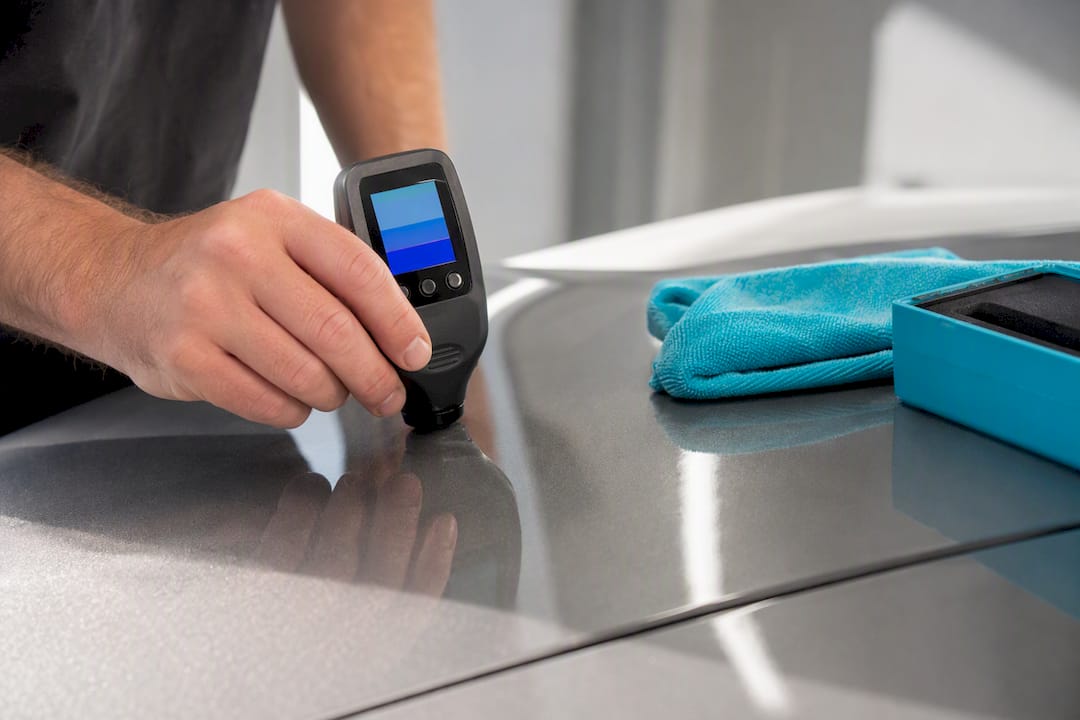
Poor repair work creates the opposite problem. Uneven panel gaps, overspray, or aftermarket parts that don't sit flush are the kinds of details that knock thousands off a trade-in offer or give a private buyer leverage to negotiate the price down. Some states also require sellers to disclose certain accident repairs, and a sloppy job makes that disclosure look worse than it needs to.
If resale value matters to you, that's a strong argument for prioritizing repair quality and proper documentation over whichever shop is fastest or cheapest. Keep every estimate, invoice, and warranty document. A buyer or appraiser who sees a paper trail showing OEM parts and a reputable shop's name is far more likely to accept the vehicle's condition at face value.
Red Flags That Should Make You Walk Away
Certain warning signs show up again and again in complaints filed with state insurance departments, and most of them are avoidable if you're paying attention during that first visit or phone call.
A shop that refuses to give you a written estimate is the clearest red flag there is. Verbal quotes leave you with no recourse if the final bill balloons, and a legitimate shop has no reason to avoid putting numbers on paper. Similarly, be cautious of any shop that pressures you to sign a repair authorization before you've seen a detailed breakdown of parts and labor.
Watch for these patterns too:
- Pressure to use only aftermarket parts without explaining the tradeoff or asking your preference first.
- No mention of certifications when you ask, or vague answers about ASE or I-CAR credentials.
- A warranty that's verbal only, or one the shop can't produce in writing on request.
- Reluctance to explain how they'll handle supplements or communicate with your insurer.
- A shop that guarantees a specific insurer payout before ever inspecting the vehicle, which suggests they're more focused on volume than accuracy.
If a shop performs collision work involving sensors or cameras, confirm they can actually complete required calibration, since ADAS calibration after certain repairs is a legal and safety requirement on many modern vehicles, not an optional upsell. A shop that shrugs off the question or claims it's unnecessary is one to avoid.
How Your Location Shapes Your Repair Shop Options
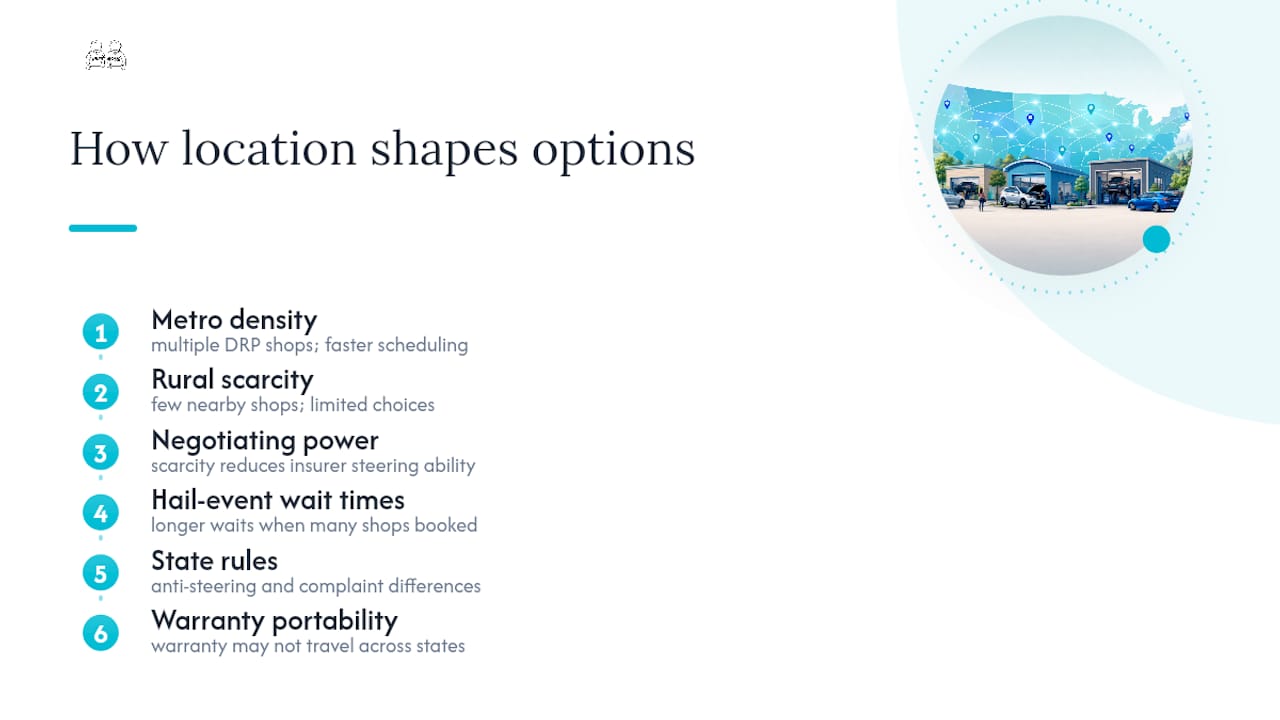
Where you live changes both how many shops you can choose from and how much leverage you have with your insurer. Dense metro areas usually have several DRP-affiliated shops competing for volume, which can mean faster scheduling and more insurers with local network relationships. Rural areas often have far fewer options, sometimes just one or two shops capable of handling collision or hail work within a reasonable driving distance.
That scarcity affects negotiating power. In a market with limited shop availability, insurers have less ability to steer you toward a specific location, simply because there might not be a true alternative nearby. It can also mean longer wait times after a major hail event, when every shop within a hundred miles is booked out for weeks.
State rules layer on top of geography. Anti-steering protections and DOI complaint procedures differ by state, and a shop's certifications or warranty terms might carry differently depending on whether you plan to stay local or eventually move. If you split time between two states, or you're stationed somewhere temporarily, ask specifically whether a shop's warranty travels with you or expires the moment you leave its service area.
A Quick Framework for Deciding: Speed, Cost, or Control
If your priority is speed and the least amount of claims paperwork, an insurer-recommended shop is usually the better fit. The direct billing and pre-negotiated approvals exist specifically to remove friction from your side of the process.
If you care more about OEM parts, specialty expertise, or sticking with a shop you already trust, an independent shop is worth the extra communication it demands. Just go in prepared: get everything in writing, and don't assume the insurer will automatically approve every line item without documentation to back it up.
Whichever way you lean, the checklist above works as a fast gut check on any shop you're considering. When something feels off during that first phone call, it usually is.
— Martin
Get a Free Estimate and Insurance Coordination From Dent-boys
If hail or a parking-lot dent has you weighing a network shop against something more hands-on, Dent-boys gives you a third path: paintless dent repair with the insurance legwork handled for you.
Because Dent-boys works directly with insurers on estimates and supplements, you're not the one chasing down paperwork or explaining teardown findings to an adjuster. If you want to see how the cost side typically plays out before you call, the PDR insurance coverage breakdown walks through typical claim thresholds. Ready to get a number on your specific dent? Request a free estimate from Dent-boys and find out whether your repair qualifies for $0 deductible handling.
Where to Verify the Rules Yourself
Don't take any shop's word, including this article, as the final say on your state's specific rules.
- Oregon's Department of Financial Regulation offers a clear model of how one state handles repair-shop rights and insurer obligations.
- State Farm's guide to choosing a body shop explains how one major insurer's Select Service program works.
- ASE's shop locator lets you confirm certification before you commit to anyone.
- Your own state department of insurance is the right place to file a complaint if you suspect improper steering.
Sources
- Helpful tips: How To Choose an Auto Body Shop
- Oregon Department of Financial Regulation: Repair shops and insurance claim guidance
- ASE find-a-repair-shop
FAQ
What Type of Insurance Does a Repair Shop Need?
A legitimate repair shop should carry general liability insurance, garage keepers liability for vehicles in its care, and workers' compensation for employees. Ask to see proof of coverage if you're leaving your vehicle there for more than a same-day repair.
How Much Does a $1,000,000 Liability Insurance Policy Cost for a Repair Shop?
Cost varies widely by state, shop size, and claims history, and no single figure applies nationwide. Shop owners should get quotes from a licensed commercial insurance agent rather than relying on a generic estimate.
What Should You Avoid Telling Your Insurance Company?
Avoid guessing at fault, speculating about the cause of damage, or agreeing to a settlement amount before you've seen a written estimate. Stick to the facts you know for certain and let the adjuster's estimate and your shop's documentation do the talking.
Is $100 an Hour Fair for Mechanic Labor?
Labor rates vary heavily by region and specialty, and rates vary depending on location and type of work. Compare it against a couple of local shop estimates rather than treating any single number as a universal benchmark.
Can My Insurer Force Me to Use a Specific Repair Shop?
Generally, no. Most states protect your right to choose a licensed shop, though insurers can recommend a Direct Repair Program shop and may limit payment to what they consider reasonable if you choose a different one.
Does Dent-boys Handle the Insurance Paperwork for Me?
Yes. Dent-boys submits estimates and supplements directly to insurers and coordinates documentation on your behalf.