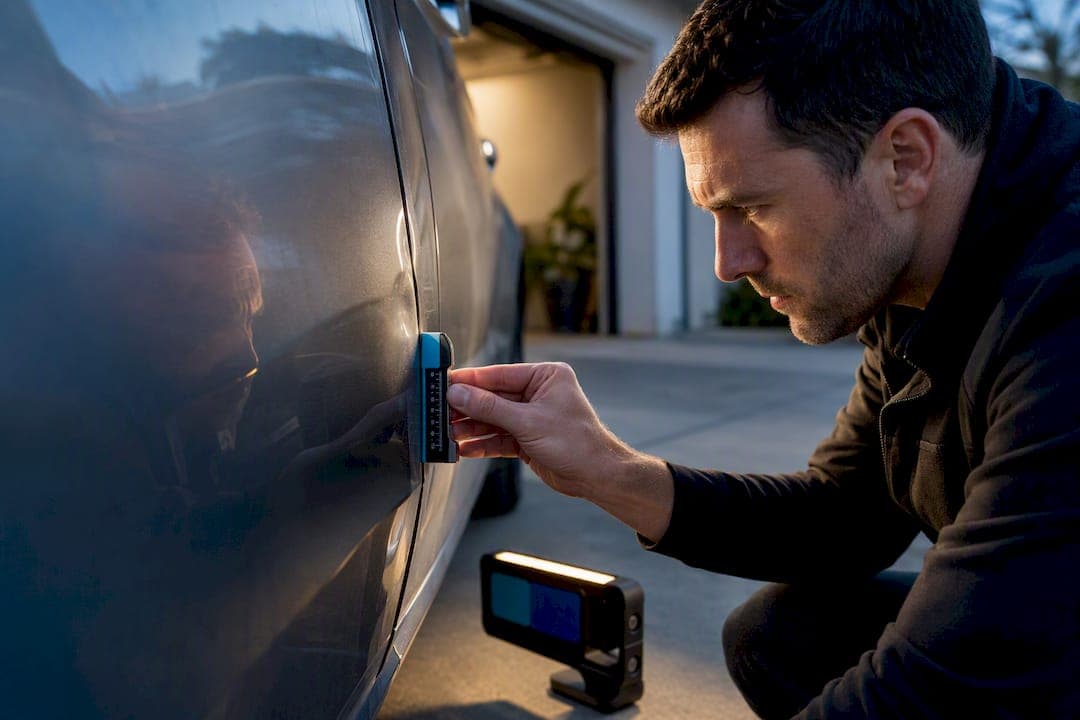
Yes, but only under specific conditions: paintless dent repair itself isn't a coverage category, it's a repair method, so your insurer pays for PDR only when the dent came from an event your policy covers. Check three things before you file: which coverage applies (comprehensive, collision, or someone else's liability), whether the cause is actually covered, and whether the repair cost even clears your deductible.
TL;DR:
- Only certain types of damage, such as hail or vandalism covered under comprehensive, or dents caused by accidents covered by collision, qualify for insurance-paid PDR.
- Typical PDR costs range from $75 to $500 for a single dent, but extensive hail damage can exceed $3,000, making claims with high repair estimates worth considering if costs surpass your deductible.
- Insurance companies prefer PDR over traditional bodywork because it is faster, preserves factory paint, and reduces costs, but they will not pay for dents from normal wear or deliberate damage.
- Filing a PDR claim involves documenting damage, comparing repair estimates to your deductible, and negotiating supplements if insurer appraisal is lower than your shop’s estimate.
- Most claims process within one to two weeks, but multiple claims or complex damage can prolong reimbursement, especially when involving other drivers' insurers through subrogation.
Table of Contents
- Which Coverage Pays for PDR: Comprehensive, Collision, or Liability?
- How Much Does PDR Cost, and Does It Clear Your Deductible?
- Why Do Insurers Prefer PDR Over Traditional Body Work?
- What Does the PDR Insurance Claims Process Actually Look Like?
- Will Filing a PDR Claim Raise Your Insurance Rates?
- What Rights Do You Have When Filing a PDR Claim?
- When Will Insurance Not Pay for Dent Repair?
- How Dent Boys Works With Your Insurance Claim
- What Does a PDR Insurance Claim Timeline Look Like Day by Day?
- How Does PDR Coverage Compare Across Major Insurers?
- Ready to Start a PDR Claim? Here's the Fast Path
- A Quick Take on Insurance vs. Paying Out of Pocket
- Sources
Which Coverage Pays for PDR: Comprehensive, Collision, or Liability?
Insurance companies don't sell "PDR coverage." They cover an event, and PDR is simply the technique the shop uses to fix what that event did to your sheet metal. That distinction trips up a lot of drivers who call their agent asking for "dent insurance" and get confused when the answer depends entirely on how the dent got there.
Three parts of a standard auto policy can end up paying for PDR:
- Comprehensive coverage handles non-collision events. Progressive notes that comprehensive typically pays for dents from hail, falling branches, vandalism, and animal strikes, which is why hailstorms generate the bulk of PDR insurance claims nationwide.
- Collision coverage applies when your own driving caused the damage, such as backing into a pole or a low-speed parking lot mishap where the paint stays intact but the panel dents.
- Liability coverage, specifically the other driver's liability, only pays when someone else caused the damage. If you carry liability-only insurance and you dent your own car, that policy pays nothing toward your repair.
If you're unsure which dents even qualify for PDR versus a body shop repair, it helps to understand which dent types PDR can actually fix before you call your insurer at all.
How Much Does PDR Cost, and Does It Clear Your Deductible?
A single dent typically runs $75 to $500 in PDR labor, while a hail-damaged vehicle needing multi-panel work often costs $1,500 to $3,000 or more. That range matters because most comprehensive and collision deductibles sit between $250 and $1,000, and filing a claim only makes sense when the repair bill clearly exceeds what you'd pay out of pocket.
Run the math before you call your insurer:
- Get a real PDR estimate, not a guess. A dented door might legitimately cost $150 to repair.
- Compare that number to your deductible. If your deductible is $500, paying out of pocket is the obvious move.
- If a hailstorm left twenty dents across your hood, roof, and trunk pushing the estimate to $2,200, filing against a $500 deductible saves you real money.
- Factor in the intangible cost too: a claim goes on your record even when it doesn't raise your premium immediately.
Choosing the right deductible in the first place shapes this math every time you're deciding whether a repair is worth filing, which is worth revisiting at your next renewal.
Why Do Insurers Prefer PDR Over Traditional Body Work?
Insurers usually push for PDR whenever the damage allows it, and the reasoning is financial as much as practical. State Farm's own PDR guidance points to lower repair costs and preserved factory paint as the core reasons adjusters steer claims toward paintless technique instead of conventional bodywork.
The advantages stack up quickly:
- Factory paint stays untouched, which protects resale value.
- Turnaround is measured in hours or a day, not the week or more a paint-and-fill job takes.
- Costs run a fraction of conventional repair, which benefits both you and your insurer.
Conventional repair still wins out when paint has cracked, the metal has stretched past what suction and rods can massage back, or the dent sits somewhere a technician physically can't reach from behind the panel.
Pro Tip: Ask the shop to state plainly whether your damage is a PDR candidate before any paperwork starts. A five-minute inspection saves you from paying a body-shop deductible for what should have been a same-day paintless fix.
What Does the PDR Insurance Claims Process Actually Look Like?
Filing a PDR claim follows a fairly consistent sequence, and knowing the steps ahead of time keeps you from getting shortchanged.
- Document the damage first. Photograph every dent from multiple angles before any repair begins, and get at least one independent estimate that lists "PDR" explicitly on the line items.
- Report the claim to your insurer and let them send an adjuster or request their own appraisal.
- Compare the shop's estimate against the insurer's appraisal. If the insurer's number comes in low, the shop can submit a supplement with photos and technical justification for the higher figure.
- Understand subrogation if another driver caused the damage. Your insurer pays your claim, then pursues the at-fault driver's insurer for reimbursement, including your deductible, though timing and specific subrogation rules vary by state.
- Pay your deductible up front in most cases. If subrogation succeeds, your insurer refunds that deductible later, sometimes weeks or months after the repair is complete.
Will Filing a PDR Claim Raise Your Insurance Rates?
It depends heavily on which coverage pays and whether you were at fault. Comprehensive claims for hail or vandalism generally carry less rate impact than at-fault collision claims, because insurers treat weather and random acts differently from driving mistakes.
A few realities to keep in mind:
- One comprehensive claim rarely triggers a noticeable premium jump on its own.
- Multiple claims within a short window matter more to underwriters than a single incident.
- State regulations on rate-setting vary, so the same claim can affect a premium differently depending on where you live.
- Every claim, regardless of outcome, gets logged in industry consumer reports like C.L.U.E., which future insurers can reference when setting your rate or deciding whether to renew your policy.
What Rights Do You Have When Filing a PDR Claim?
You choose the repair shop, not your insurance company. DentAdvisor's guidance on PDR claims confirms that steering laws in many states, including protections modeled on California's Auto Body Repair Consumer Bill of Rights, prohibit insurers from forcing you into a specific shop.
Protect yourself with a few concrete steps:
- Get an independent estimate from a shop of your own choosing before accepting the insurer's preferred vendor.
- Insist that "PDR" appears explicitly on the written estimate, since State Farm's guarantee on paintless repair depends on the method being listed and the repairer being one both parties agree on.
- If the insurer's appraisal comes in lower than your shop's quote, ask the shop to submit a supplement with photo documentation.
Pro Tip: Save every estimate and photo in one folder, even for a small claim. If a dispute arises months later over warranty coverage, that paper trail is what settles it.
When Will Insurance Not Pay for Dent Repair?
Insurance draws a hard line at wear and tear. A door-edge ding from years of shopping cart contact, or a dent nobody can explain that's clearly been there a while, generally gets denied as pre-existing or normal deterioration rather than a covered loss.
Intentional damage carries its own wrinkle: if you deliberately damage your own vehicle, that's fraud, not a claim. Vandalism by someone else, though, typically falls under comprehensive coverage.
If you discover a fresh ding with no obvious cause:
- Photograph it immediately with a timestamp.
- Check whether the location has security or parking lot cameras.
- File a police report if vandalism seems likely, since insurers often want that documentation before approving a comprehensive claim.
How Dent Boys Works With Your Insurance Claim
Some paintless dent repair providers handle the insurance paperwork side of PDR directly to streamline the process. Estimates often list "PDR" on the line items, which can be important for triggering insurer guarantees and shop warranties. Many providers offer free estimates, pick-up and delivery services, rental vehicles during repair periods, deductible support options, and warranties on completed work.
When an insurer's appraisal comes in under the actual repair cost, Dent-boys assists with supplement documentation and subrogation paperwork aimed at recovering your deductible. If you want a walkthrough of how that $0 deductible arrangement actually works before you file anything, Dent Boys breaks down the zero-deductible repair process in plain terms.
What Does a PDR Insurance Claim Timeline Look Like Day by Day?
Most straightforward PDR claims move faster than a conventional body-shop repair, but the timeline still has several checkpoints worth knowing.
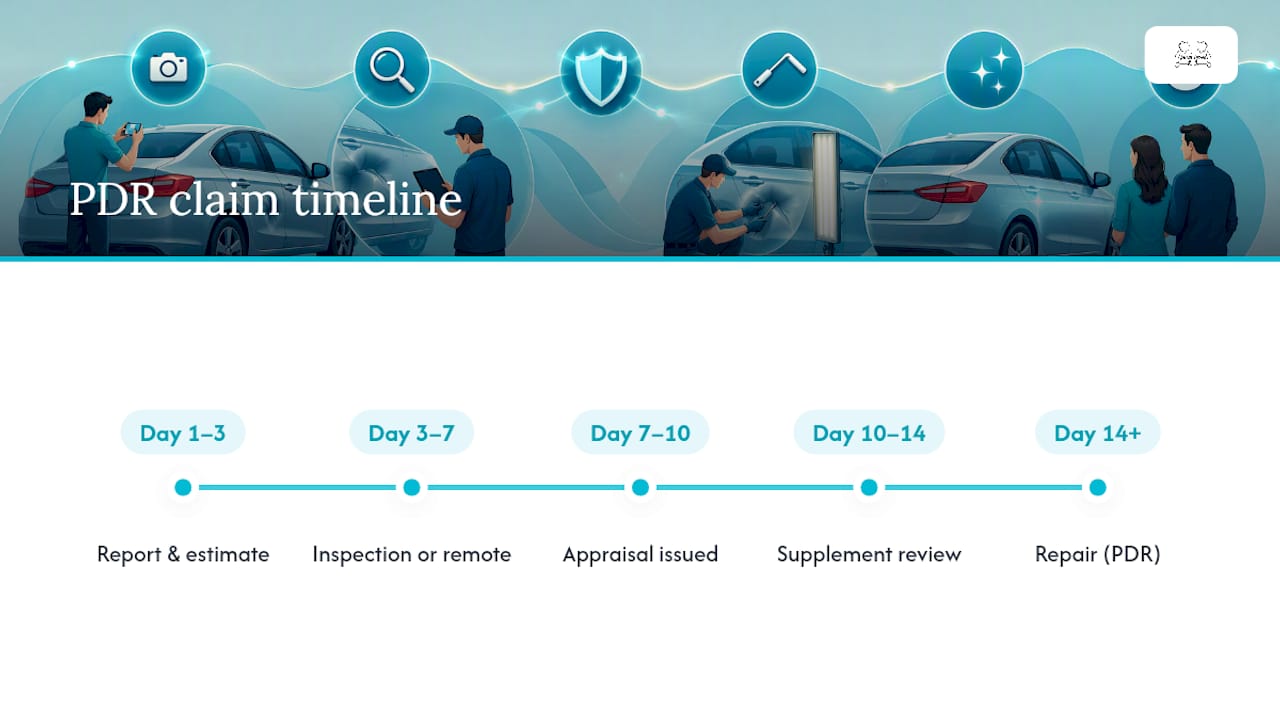
Day 1 to 3: You report the damage and get an initial estimate. If it's a single dent, this can happen the same day at a shop offering mobile service.
Day 3 to 7: The insurer either sends an adjuster to inspect the vehicle in person or accepts photo documentation and the shop's written estimate remotely. Hail claims during storm season often move slower here simply due to claim volume; a single county can generate thousands of claims in one week after a major storm.
Day 7 to 10: The insurer issues its appraisal. If it matches the shop's estimate, you schedule the repair. If it's lower, the shop submits a supplement with additional photos or technical notes explaining why more panels or hours are needed.
Day 10 to 14: Supplement review typically adds three to five business days. Once approved, repair scheduling begins.
Day 14 onward: The actual PDR work itself is fast, often one day for a single dent and one to three days for a full hail-damaged vehicle with dozens of dents across multiple panels. Conventional repair requiring paint work adds days because paint needs curing time that PDR skips entirely.
Subrogation claims involving another driver's insurer add weeks to the deductible reimbursement timeline, since that process runs on a separate track from your own repair.
How Does PDR Coverage Compare Across Major Insurers?
Coverage language varies less than you'd think between carriers, since PDR is a repair method rather than a distinct policy line. What varies is practice: how quickly an insurer approves PDR, whether they push a preferred-vendor network, and how they handle supplements.
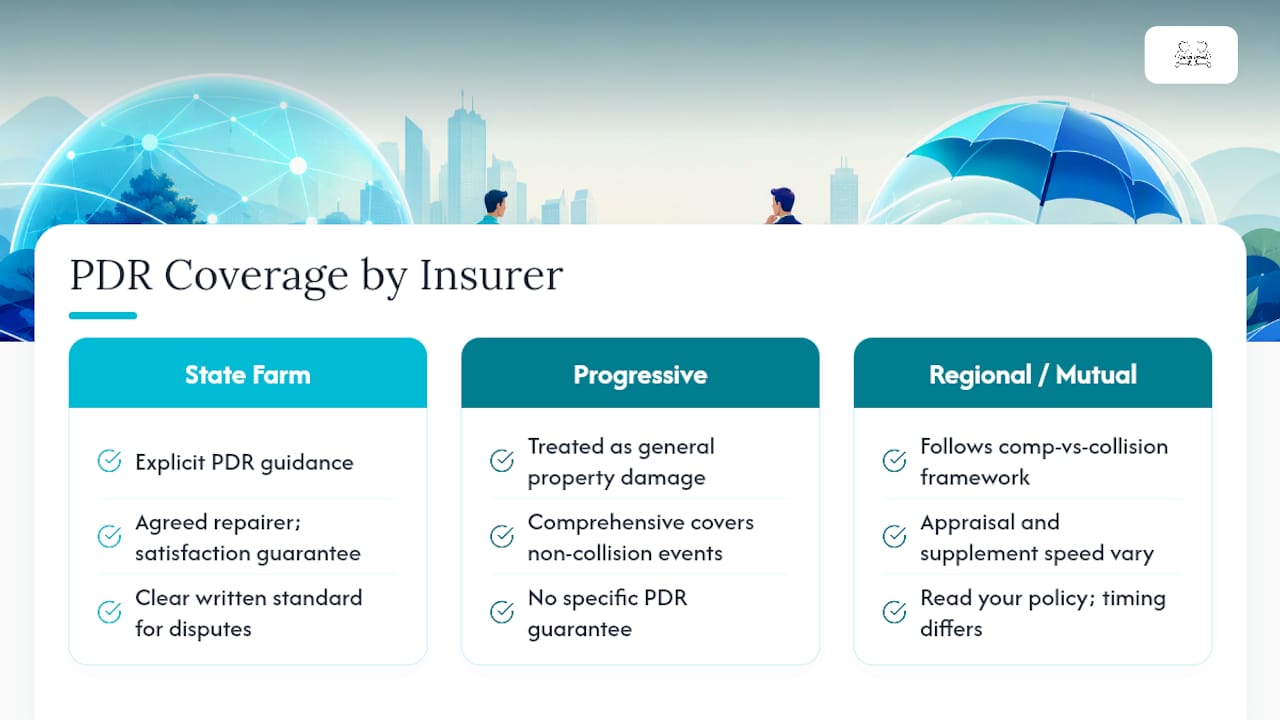
State Farm publishes explicit guidance on PDR, guaranteeing satisfaction with paintless repairs when the repairer is agreed upon and PDR is listed on the estimate. That written guarantee gives policyholders a clear standard to point to if a dispute comes up later.
Progressive treats dents under its general property damage framework, with comprehensive coverage applying to the same non-collision events most carriers recognize: hail, vandalism, falling debris, animal strikes.
Beyond the big national carriers, regional and mutual insurers generally follow the same comprehensive-versus-collision framework, though appraisal speed and supplement approval times can differ noticeably. The practical takeaway: coverage type matters more than which company issued your policy, but claims-handling speed and willingness to approve supplements vary enough that reading your policy's specific PDR language is worth five minutes before a storm ever hits.
Ready to Start a PDR Claim? Here's the Fast Path
If you've read this far because a hailstorm just rolled through or someone dinged your door in a parking lot, you don't need to spend another hour reading insurance fine print. Some repair shops handle the insurance side of PDR directly, ensuring "PDR" is listed on every estimate as required by certain insurers, and assist with supplement paperwork if an insurer's appraisal comes in low.
Request a free estimate and Dent-boys will tell you upfront whether your damage qualifies for paintless repair, what it'll cost if you're paying out of pocket, and how the $0 deductible support and lifetime warranty apply to your specific vehicle. Pick-up and delivery mean you don't lose a day of driving, and a rental vehicle is available while the work gets done. Start your claim or request a quote at Dent Boys and get a straight answer instead of a runaround.
A Quick Take on Insurance vs. Paying Out of Pocket
Run the numbers before you touch your insurer's phone line. Safety comes first, factory paint preservation second, and after that it's simple arithmetic: compare the real PDR estimate against your deductible, get everything in writing with "PDR" explicitly listed, and hire a shop with actual PDR experience, not a generalist body shop bolting it on as an afterthought.
— Martin
Sources
- Paintless Dent Repair - State Farm®
- Does car insurance cover scratches and dents? | Progressive
- Insurance Claims and PDR: Navigating Coverage for Dent Repair | DentAdvisor