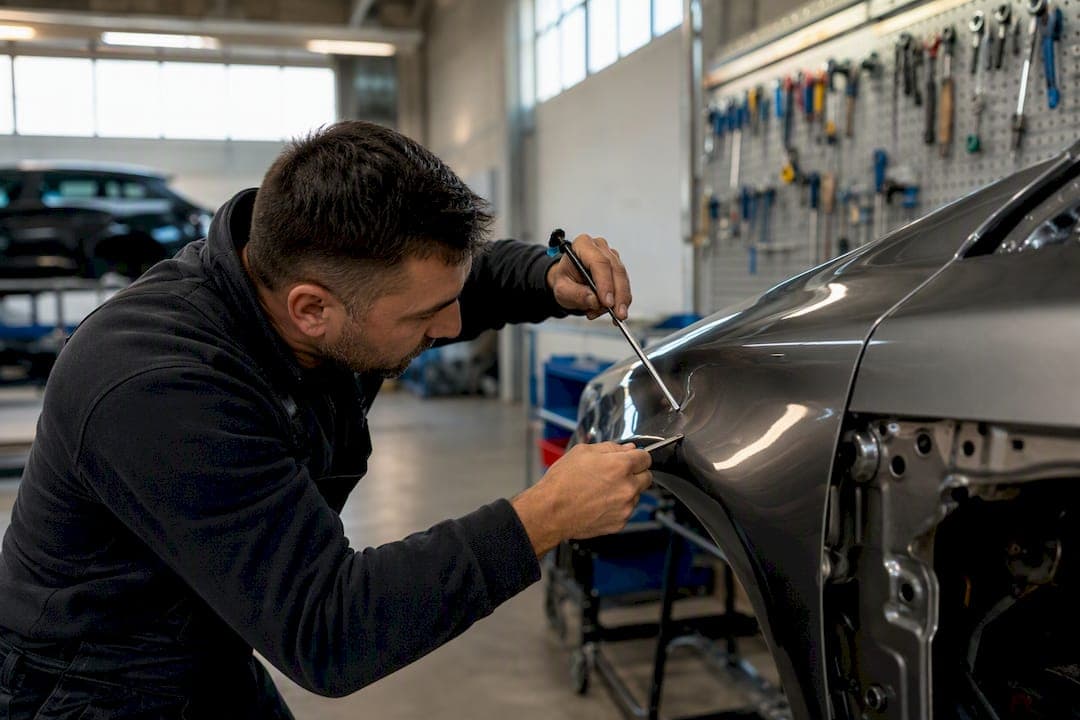
Yes, in most cases you pay your comprehensive deductible before your insurer covers the rest of a hail repair bill, and that amount is due whether you fix a single dent or the whole roof of your car. Some repair shops advertise deductible assistance programs that offset or absorb that cost, but those offers carry real tradeoffs and, in certain states, real legal risks. Dent-boys can help by handling estimates, coordinating with your insurer, and offering $0 deductible support so you're not choosing between a repair and a bill.
TL;DR:
- If your repair estimate is less than your deductible, paying out of pocket may be cheaper than filing an insurance claim, which adds a record.
- Deductible assistance programs can reduce costs but must be transparent and confirmed with your insurer to avoid legal or claim denial risks.
- Many homeowners face percentage-based wind and hail deductibles, which can lead to out-of-pocket costs far exceeding fixed auto deductibles in high-risk states.
- Filing a hail claim makes sense when repairs are close to or exceed your deductible and the total damage approaches your vehicle’s actual cash value.
- Getting a free estimate before filing helps determine whether to pay directly or claim, especially with paintless dent repair, which can offer faster, cheaper results.
Table of Contents
- Options for Paying (or Avoiding) Your Hail Repair Deductible
- How Insurers Calculate and Pay Out Hail Claims
- Is Deductible Assistance Legal? What to Watch For
- When Filing a Hail Claim Actually Makes Sense
- Why Paintless Dent Repair Changes the Deductible Math
- What to Expect When You Contact Dent-boys
- Why Most Owners Underestimate Their Own Decision Power
- Sources
Options for Paying (or Avoiding) Your Hail Repair Deductible
Your deductible doesn't have to wreck your budget, but the path you choose matters more than most people realize.
If your repair estimate comes in under your deductible, skip the claim entirely and pay out of pocket. A repair quote less than your deductible means filing gains you no insurance payment and adds a claim to your record.
Some paintless dent repair shops offer deductible assistance, where they reduce your invoice or handle billing so you owe little or nothing directly. This can work, but ask exactly how the shop bills your insurer and whether the insurer is told about any discount. Deductible assistance programs need clear, written terms, not a verbal promise at drop-off.
A few other routes worth knowing:
- Direct billing: Some insurers pay the shop directly, and you only cover the deductible portion at pickup.
- Deductible buy-down endorsements: Ask your agent if your policy lets you reduce a wind/hail deductible in exchange for a slightly higher premium.
- Short-term financing: A credit card or small personal loan can bridge the gap if the repair is urgent and cash is tight.
Before agreeing to anything, get a written estimate, ask if the shop notifies your insurer of any discount, and request a copy of the final invoice for your records.
Pro Tip: Call your insurer before you sign anything with a shop offering "no deductible" deals. A five-minute call can save you a denied claim later.
How Insurers Calculate and Pay Out Hail Claims
Auto hail claims run through comprehensive coverage, and the math is simple: your insurer pays the approved repair cost minus your deductible. Comprehensive auto policies treat hail as a covered peril in nearly every state, and the deductible you agreed to when you bought the policy is what you owe first.
Here's the math in practice:
- A shop estimates hail repair. Your policy carries a comprehensive deductible. The insurer pays the approved repair cost minus your deductible.
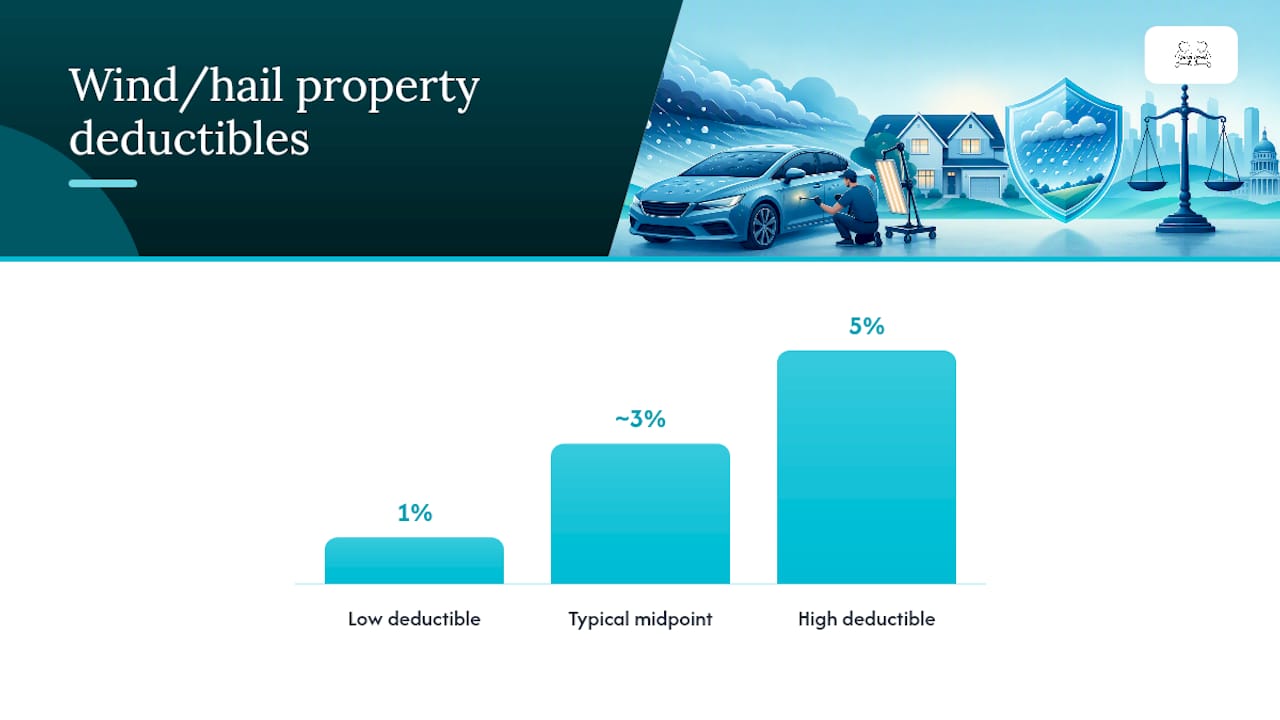
That's straightforward for vehicles. Homeowners face a different structure entirely. Wind and hail deductibles on property policies are often percentage-based, running 1% to 5% of your dwelling coverage rather than a flat dollar figure. On a home, a wind/hail deductible that is a small percentage of the dwelling coverage works out to a substantial out-of-pocket amount, which dwarfs a typical $500 or $1,000 auto deductible. Percentage deductibles are common in many states with high hail and windstorm risk, such as Texas, Oklahoma, and Colorado.
Check your declarations page before a storm hits, not after. It states whether you carry a flat-dollar or percentage deductible, and that single detail determines whether a claim saves you money or costs you thousands.
The claims timeline typically runs: inspection and estimate, adjuster approval, and payment. On replacement-cost policies, insurers often issue an initial actual cash value payment minus the deductible, then release recoverable depreciation once repairs are finished and invoiced.
Is Deductible Assistance Legal? What to Watch For
Deductible waiver offers sound generous, but they sit in a gray area that shifts by state and by insurer. Some states allow shops to discount their labor as a business decision; others treat undisclosed deductible waivers as a form of insurance fraud, especially if the shop inflates the estimate to cover the "waived" amount.
Before you accept an offer:
- Get the deductible assistance terms in writing, not a handshake deal.
- Ask directly: will my insurer be notified about any discount or offset?
- Confirm the shop isn't padding the repair estimate to hide the waived amount.
- Keep your own photos and a copy of every estimate you receive.
Insurers increasingly scrutinize claims for cosmetic-only damage, and a claim built on undisclosed offsets can trigger a denial or, in worse cases, a fraud investigation. When in doubt, call your agent and ask the question directly rather than relying on the shop's explanation.
When Filing a Hail Claim Actually Makes Sense
Run the numbers before you file. A useful decision checklist:
- Compare your repair estimate against your deductible.
- Check your vehicle's actual cash value. If repairs approach that number, you're risking a total loss designation instead of a repair.
- Consider your claims history. Frequent claims can affect renewal terms with some carriers.
- Ask your agent directly whether a comprehensive claim affects your rates in your state, since comprehensive claims are treated differently than at-fault claims by most insurers.
Two quick examples show how this plays out. If your estimate is $400 and your deductible is $500, paying out of pocket is the clear call. Filing adds a claim to your history for zero net benefit. If your estimate is $4,500 against a $500 deductible, filing nets you $4,000 from your insurer, and the math favors filing every time.
Pro Tip: Get two or three independent estimates before deciding. Paintless dent repair shops often quote lower than body shops because there's no paint or fillers involved, which can shift your decision toward paying out of pocket.

Document everything: photos of the damage, every estimate, and your correspondence with the insurer. That paper trail protects you if a dispute comes up later.
Why Paintless Dent Repair Changes the Deductible Math
Hail dents rarely damage paint, which means paintless dent repair is often the right fix, and it's usually faster and cheaper than a body shop repainting a panel. When a lower repair estimate comes back, some owners realize paying out of pocket beats filing a claim altogether.
Dent-boys offers free estimates, $0 deductible support, a rental vehicle while your car is in the shop, and a lifetime warranty on every repair. We coordinate directly with insurers on estimates and billing, so you're not stuck relaying numbers back and forth between an adjuster and a shop. If a dent is deep enough to have cracked paint or bent a panel edge, PDR won't be enough. That's the point where panel replacement or traditional bodywork takes over, and we'll tell you plainly if your car falls into that category.
What to Expect When You Contact Dent-boys
Getting a hail estimate shouldn't take a week or ten phone calls. Dent-boys handles the free estimate, coordinates $0 deductible support where it applies, arranges a rental vehicle, and picks up and delivers your car so you barely lose a day.
Bring your insurance declarations page, photos of the hail damage, and any prior estimates you've already collected. Those three things let us give you an accurate number fast, without back-and-forth. Every repair also comes backed by a lifetime warranty, so the dent that's fixed today stays fixed.
If you're staring at a hail-dented hood wondering whether it's worth filing a claim, get a free estimate from Dent-boys first. You'll know the real repair cost before you decide anything with your insurer, which is exactly the order that decision should go in.
Why Most Owners Underestimate Their Own Decision Power
People treat the deductible like a fixed toll they have to pay to get their car fixed. It isn't. It's a threshold, and the entire point of getting an estimate before you file anything is figuring out which side of that threshold you're actually on.
The bigger mistake I see isn't overpaying for repairs. It's owners assuming a claim is mandatory the moment hail hits their hood, then discovering months later that the claim shows up in their history even though the payout barely covered the deductible itself. A five-minute estimate call would have told them to just pay for it directly.
Deductible assistance gets a bad reputation, and some of that is deserved. Programs that hide the offset from your insurer or inflate the estimate to cover it are asking you to take on legal exposure so a shop can close a sale. But assistance that's disclosed, documented, and confirmed with your carrier isn't a gray-area trick. It's a legitimate way to make repairs affordable, and dismissing every offer as shady ignores the ones done right.
Paintless dent repair is the detail most owners never factor into this decision at all. A lower repair cost doesn't just save money, it changes whether filing makes sense in the first place. Run the estimate before you touch the claims process, not after.
— Martin
Sources
The guidance above draws on insurer explainers and consumer resources built specifically around hail claims. GEICO's overview of hail coverage covers how comprehensive deductibles apply to vehicles. Insurance.com's claims guide walks through payout timing and recoverable depreciation. Insurance Pro Agencies explains percentage-based wind/hail deductibles for homeowners. Rocky Mountain Dents breaks down how deductible assistance programs actually work and where the risk sits.
- Does car insurance cover hail damage? | GEICO
- Insurance
- Windstorm & hail insurance: deductibles, coverage & what to know | IPA