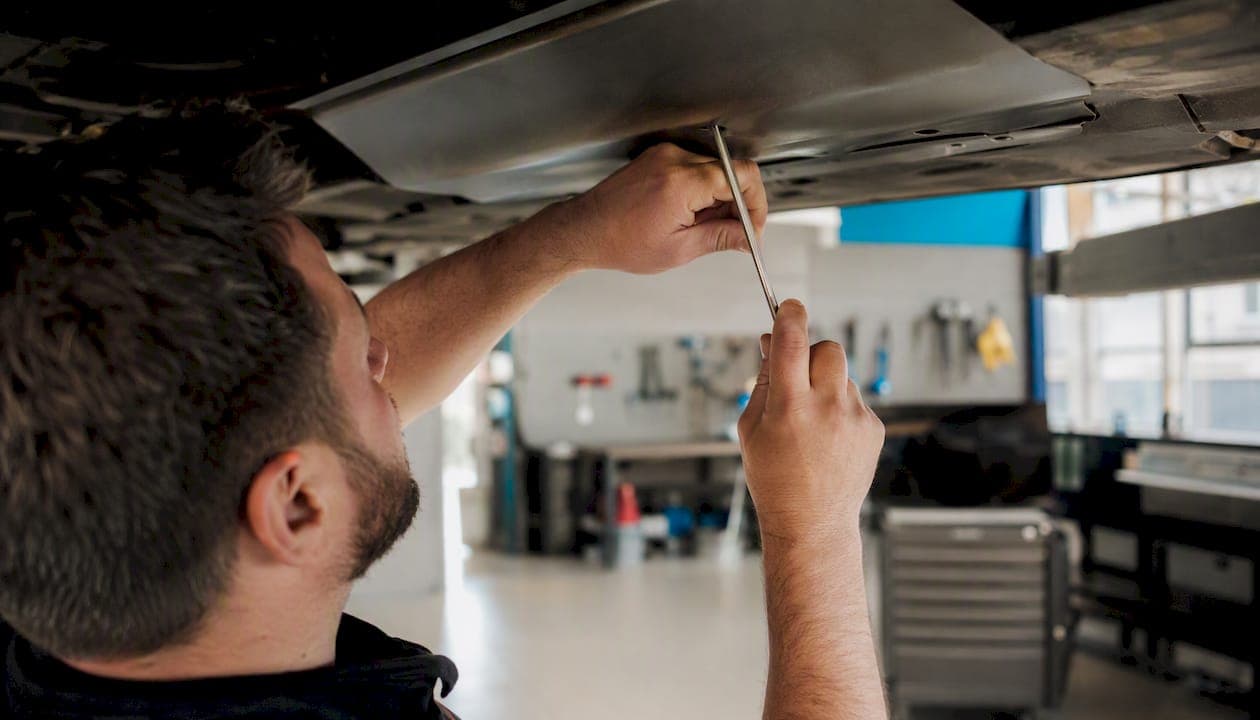
PDR works when paint is intact, the dent is shallow, and a technician can reach the back of the panel. When any of those three conditions fail, you're looking at conventional bodywork. Here's a quick checklist to run before you book an estimate:
- Paint condition: No chips, cracks, or visible flaking around the dent?
- Depth and shape: Shallow and round, not a sharp crease or fold?
- Backside access: Is the panel open, not foam-filled or double-walled?
- Metal type: Steel panel, not aluminum or ultra-high-strength steel (UHSS)?
- Edge proximity: Is the dent more than roughly 1 inch from any panel edge or hem flange?
- Sensors nearby: No ADAS cameras, radar units, or parking sensors in the repair zone?
A shopping-cart door ding on a steel door, paint intact, center of the panel? Strong PDR candidate. A quarter-inch-deep crease running along the door edge near the rear quarter panel? Poor candidate on every count.
Key Takeaways
PDR succeeds when paint is intact, the dent is shallow and accessible, and the metal hasn't been work-hardened by a crease or fold.
| Point | Details |
|---|---|
| Paint condition is the first check | Any chip, crack, or micro-crack at the dent site disqualifies PDR before anything else is assessed. |
| The 1-inch edge rule matters | Dents within roughly 1 inch of a panel edge or hem flange are generally too stiff and inaccessible for PDR. |
| Creases mean plastic deformation | A sharp crease indicates work-hardened metal that PDR cannot reverse; filler or panel replacement is needed. |
| Aluminum and UHSS carry extra risk | Both materials work-harden faster than standard steel; expect a premium or a declined job on these panels. |
| Dent-boys backs every repair | Free estimates, lifetime warranty, $0 deductible support, and pickup/delivery make Dent-boys the practical choice when PDR is appropriate. |
Table of Contents
- How does paintless dent repair actually reshape metal?
- Common PDR limitations examples: grouped by failure mode
- What does the science say about why PDR has hard limits?
- How to assess a dent's PDR candidacy at the estimate
- What does PDR cost, and how does insurance factor in?
- When PDR isn't the answer: practical alternatives
- The gap between what PDR promises and what owners actually expect
- Dent-boys handles PDR the right way, from estimate to warranty
- Sources
How does paintless dent repair actually reshape metal?
PDR works by massaging metal back to its original shape from behind the panel, leaving factory paint untouched. A technician uses steel rods, picks, and sometimes glue-pull tabs on the outer surface to apply controlled pressure from multiple angles until the metal returns to its original contour.
The reason paint condition matters so much comes down to physics. Metal has two deformation zones: elastic (it springs back) and plastic (it stays deformed). A shallow dent stays mostly in the elastic zone, so the metal wants to return. The paint, which has its own elongation limit, flexes with the metal during the repair. If the paint has already cracked or chipped, that bond is broken and PDR pressure will worsen the damage rather than fix it.
Technicians use a combination of rods inserted through door jambs, behind trim panels, or through access holes, plus glue tabs on the dent's face for areas where rods can't reach. The leverage point is always behind the low spot, and the tech "reads" the dent under a reflection board to track progress in real time. PDR preserves factory paint and typically costs less and takes fewer hours than conventional bodywork, but the outcome depends heavily on technician skill.
Pro Tip: Before your estimate, photograph the dent from three angles: straight on, raking light from the side, and a close-up of the paint surface. Note how far the dent sits from the nearest panel edge. These photos help the technician give you an accurate quote and flag paint issues you might miss with the naked eye.
Common PDR limitations examples: grouped by failure mode
Understanding where PDR breaks down is easier when you match your dent to a specific failure mode. Here are the main categories, each with concrete examples.
Paint damage: chips, cracks, and micro-cracks
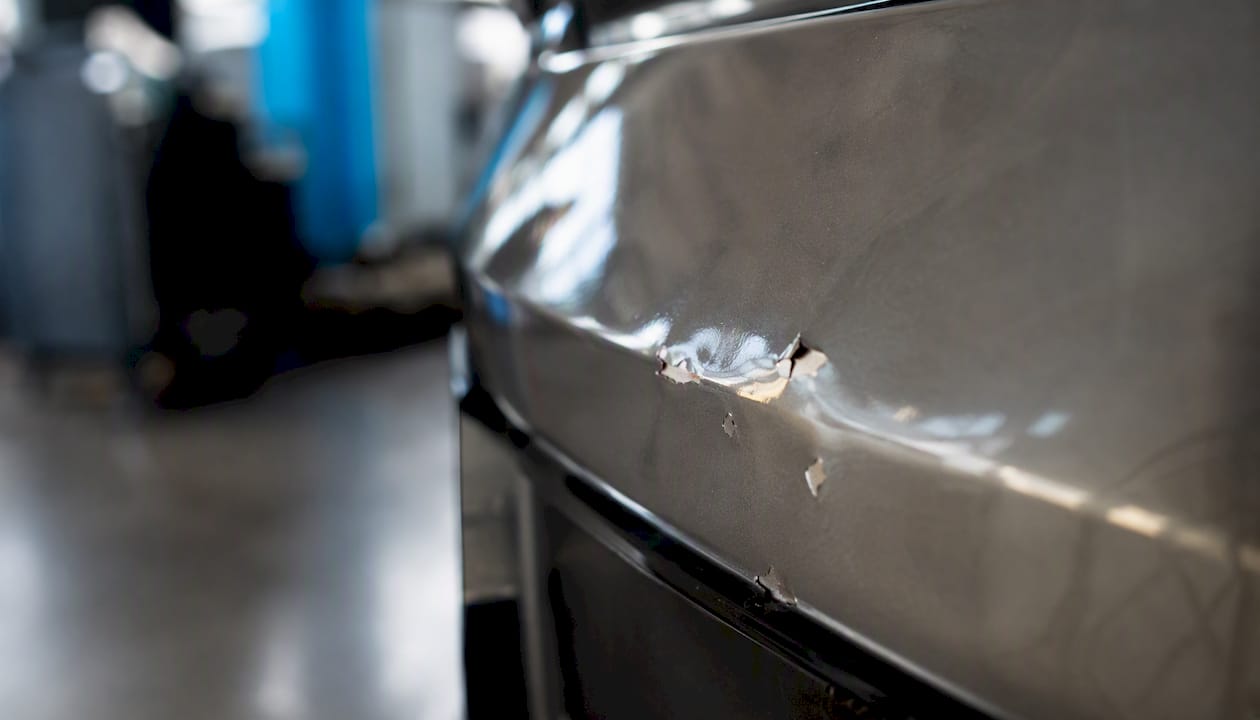
Cracked or chipped paint is the most common disqualifier. If paint has separated from the metal, PDR pressure will pop it further. Micro-cracks are trickier because they're invisible without magnification. Some OEMs, including Rivian, use a 30x magnification standard to check for micro-cracking that disqualifies PDR even when the surface looks fine to the naked eye.
Examples:
- A hail dent on a black hood where the impact center shows a small white stress mark: paint is cracked, PDR is out.
- A door ding that looks clean but shows hairline cracks under a loupe at the dent's edge: micro-cracking disqualifies it.
Creases, folds, and stretched metal
Sharp creases are the clearest PDR dealbreaker. When metal folds, its crystalline structure tears and work-hardens at the crease line. That plastic deformation cannot be reversed by PDR; the metal has permanently changed. Stretched metal presents a similar problem: even if you push it back, the surface area is now larger than the original panel geometry.
Examples:
- A door crease from a low-speed parking lot collision, running 8 inches along the character line: the fold has work-hardened the metal. Filler or panel replacement is the call.
- A shallow but wide dent on a hood from a falling branch: if the center is stretched and slightly rippled, PDR may partially improve it but won't restore it fully. See why crease dents are harder to fix for a deeper breakdown of the mechanics.
Proximity to panel edges and hem flanges
Dents within approximately 1 inch of a panel edge or hem flange are generally poor PDR candidates. The 1-inch rule exists because reinforced edges are too stiff to manipulate and often block tool access entirely.
Examples:
- A dent 0.5 inches from the bottom of a door: the hem flange blocks rod access and the reinforced steel resists movement.
- A rear quarter panel dent that runs into the wheel arch lip: the arch edge stiffens the panel and prevents proper leverage.
Inaccessible locations
PDR requires backside access. Modern manufacturing increasingly blocks that access through foam-filled doors, bonded panels, and double-walled sections.
Examples:
- A dent on a foam-filled door pillar: the foam absorbs rod pressure and prevents any movement.
- A dent on a bonded composite roof panel: no rod access, and the bonding layer means any flex risks delamination.
Aluminum panels
Aluminum work-hardens rapidly and has far less elastic memory than steel. Dents that are straightforward on steel can crack or tear on aluminum, and technicians often charge a premium or decline the job entirely.
Examples:
- A shallow hail dent on an aluminum hood: a skilled tech may attempt it, but the risk of cracking the metal during repair is real.
- Multiple hail impacts on an aluminum truck bed: the cumulative work-hardening from overlapping dents makes PDR impractical.
UHSS and high-strength steel
Ultra-high-strength steel is engineered for crash performance, not repairability. Its yield strength is so high that PDR tools can't generate enough controlled force to move it without risking panel damage or tool failure.
Bumpers, plastics, and composites
PDR is a metal-reshaping technique. Plastic bumper covers, fiberglass hoods, and carbon fiber panels don't respond to rod pressure the same way. Heat and reforming tools exist for plastics, but that's a different process entirely.
Prior body filler or aftermarket paint
This one catches owners off guard. Attempting PDR on a panel with prior polyester filler typically causes the filler to crack or separate, sometimes explosively, damaging the surrounding paint. Aftermarket paint that's thicker or less flexible than factory coatings also raises the risk of cracking under PDR pressure.
Examples:
- A door that was repaired after a previous accident and filled with Bondo: PDR pressure will crack the filler and ruin the repair.
- A repainted fender with a non-OEM clear coat: the paint may not have the same elongation tolerance as factory coatings.
Gray-area cases
Not every borderline dent is a hard no. A large but very shallow dent on a flat hood section, for instance, may be worth attempting with an experienced tech. Shallow damage near a body line might be partially improvable even if perfection isn't achievable. The trade-off is that a partial result still costs money, and the owner needs to accept that outcome upfront.
If a shop doesn't check for these before quoting, that's a problem.*
What does the science say about why PDR has hard limits?
The decisive limits in PDR come down to two physical properties: metal yield strength and coating elongation thresholds. When either is exceeded, the repair is no longer reversible by pressure alone.
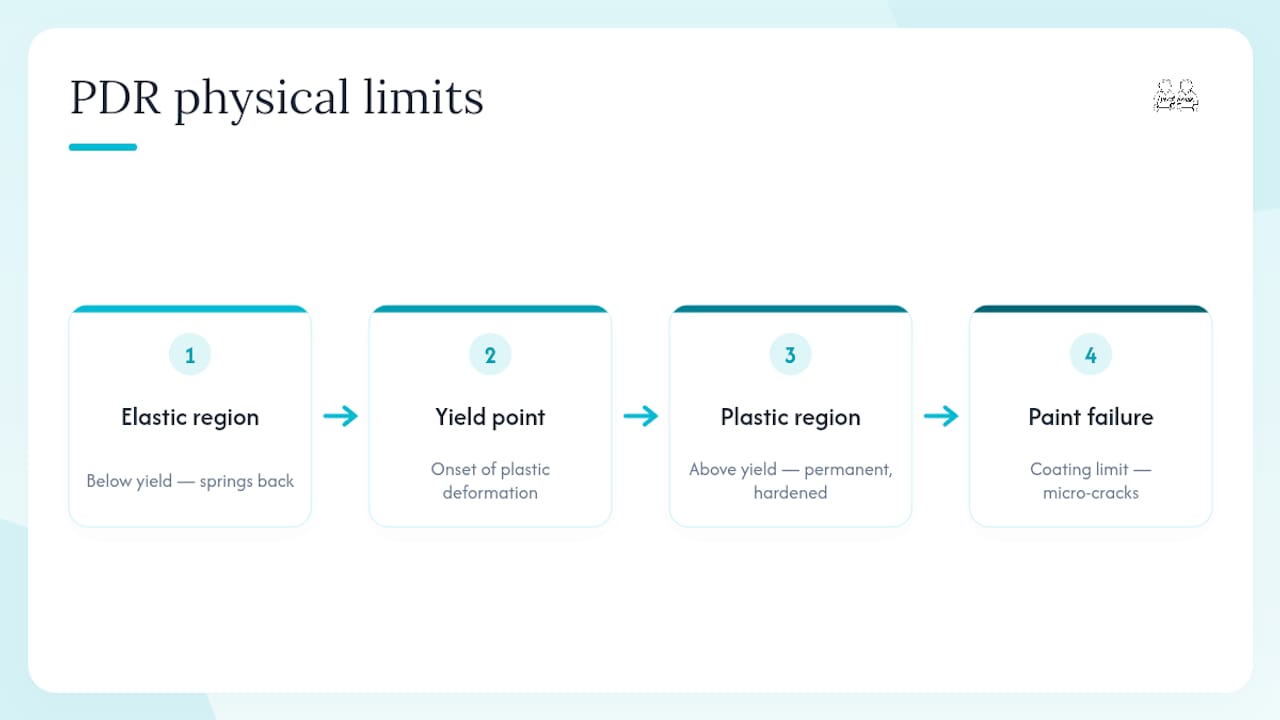
Yield strength is the point at which metal stops behaving elastically and deforms permanently. A shallow dent stays below that threshold; a crease blows past it. Peer-reviewed material science confirms that once metal has undergone plastic deformation, the crystalline grain structure has changed. Work-hardening at the crease line makes the metal stiffer and more brittle at that exact location, which is why sharp creases indicate permanent structural change that PDR cannot reverse.
Paint coatings have their own elongation limit, typically expressed as the percentage stretch the coating can absorb before micro-cracking. Factory coatings are engineered to flex with minor panel movement, but they have a ceiling. Once micro-cracks form, they compromise adhesion and create pathways for moisture and corrosion.
ADAS sensors add a separate layer of complexity. Repairs near radar units, cameras, or ultrasonic sensors may require pre- and post-repair diagnostic scanning. ADAS calibration can add $300–$800 to a repair job, and some OEM keep-out zones effectively prohibit any repair in those areas without a full recalibration procedure.
Key insight: The most important factor in PDR success is not dent size alone but whether the metal has been work-hardened by a crease or fold. A grapefruit-size shallow dent on a flat hood is often repairable. A 2-inch crease on a door edge often is not — regardless of how small it looks.
OEMs and higher-tier manufacturers are tightening these standards. Magnified paint checks and explicit no-repair zones are becoming more common on newer vehicles, which means PDR eligibility is narrowing on late-model cars even as the technique itself improves.
How to assess a dent's PDR candidacy at the estimate
Run through this checklist before or during your estimate appointment. A good technician will cover most of these points without being asked, but knowing them yourself puts you in a better position to evaluate the quote.
- Inspect the paint surface. Look for chips, cracks, or any white stress marks at the dent's center or edges. Use your phone's flashlight at a raking angle.
- Check the distance from panel edges. Measure or estimate the gap between the dent and the nearest edge, hem, or wheel arch. Less than 1 inch is a warning sign.
- Assess crease depth. Run your finger across the dent. A smooth depression is good. A ridge or sharp line means a crease is present.
- Confirm backside access. Ask the tech whether the panel has foam fill, bonded sections, or double walls that block rod access.
- Identify the metal type. Ask whether the panel is steel, aluminum, or UHSS. Check your owner's manual or the door jamb sticker if unsure.
- Locate any nearby sensors. Check for parking sensors, cameras, or radar units within 6–8 inches of the dent.
- Ask about prior repairs. Look for paint texture differences, slight color mismatches, or soft spots that suggest filler underneath.
- Confirm interior trim removal. Some panels require significant disassembly to access; ask whether that's included in the quote.
Questions to ask the technician:
- "Have you inspected the inside of this panel for access?"
- "Is there any prior filler or repaint on this area?"
- "Does this panel have foam fill or bonded sections?"
- "Is this aluminum or high-strength steel?"
- "Are there any sensors I should know about near this dent?"
- "What's the result if the repair isn't perfect — will you stop or continue?"
Red flags that mean PDR should be declined:
- Micro-cracks visible under magnification
- Prior filler confirmed by probing or paint texture mismatch
- Crease depth that casts a visible shadow
- Bonded or foam-filled panel with no rod access
- Sensor proximity requiring calibration that exceeds the repair value
A "good" answer from the tech looks like this: they've physically accessed the backside, confirmed no filler, measured the edge distance, and given you a realistic outcome range rather than a guaranteed perfect result. Technician skill benchmarks matter here as much as the dent itself.
Pro Tip: *Ask for a written estimate that specifies the outcome guarantee.
What does PDR cost, and how does insurance factor in?
PDR is faster and cheaper than conventional bodywork when it's the right tool for the job. No sanding, no filler, no paint booth time, and no waiting for paint to cure. A single door ding can often be done quickly, sometimes within the same day.
Cost drivers to know:
- Panel access complexity (more disassembly = higher labor)
- Number of dents (hail jobs are priced per dent or by panel)
- Metal type (aluminum typically carries a premium)
- ADAS calibration needs ($300–$800 if sensors require post-repair scanning)
- Technician experience and shop location
- Whether interior trim removal is required
Price ranges sourced from trade repair data. Actual quotes vary by shop, region, and vehicle.
Most insurers cover PDR for hail damage when factory paint is preserved, because it's cheaper than conventional repair. For safety-critical components, some insurers require OEM-mandated procedures, which may include calibration costs on top of the PDR fee. Environmental factors like temperature also affect scheduling: cold metal is less pliable, and some shops won't perform PDR below certain temperatures.
Insurance tip: For a single small ding under $200, paying out of pocket often makes more sense than filing a claim and risking a rate increase. For hail damage affecting multiple panels, insurance is almost always the right call. Ask your shop whether they offer $0 deductible support before you file.
Pro Tip: Get the repair estimate in writing before authorizing insurance contact. Some insurers push toward their preferred shops; having your own written estimate gives you negotiating leverage and ensures the scope of work is documented.
When PDR isn't the answer: practical alternatives
When a dent falls outside PDR's range, the right alternative depends on what specifically disqualified it.
- Conventional fill-and-paint: The standard choice when paint is cracked, a crease is present, or the metal has stretched. A body shop applies filler, blocks it smooth, and repaints the panel. Slower and more expensive than PDR, but handles damage PDR cannot. The trade-off is that repainted panels rarely match factory finish perfectly and can affect resale value.
- Panel replacement: The call for structural damage, UHSS panels that can't be safely reshaped, or cases where repair cost approaches replacement cost. OEM replacement preserves crash performance; aftermarket panels vary in fit and finish.
- Heat shrinking and planishing: Used when metal has stretched but paint is still intact. A technician uses heat to contract the stretched area, then planishes (hammer-and-dolly work) to restore contour. More labor-intensive than PDR but avoids filler on some borderline cases.
- Targeted repaint: When paint damage is small and localized, a spot repaint without filler can address the cosmetic issue without a full panel respray. Results depend heavily on color match.
- Bumper cover replacement or repair: Plastic bumpers get heat-reformed or replaced outright. PDR tools don't apply here. See metal reshaping methods for a full breakdown of when each technique fits.
Combining methods: Partial PDR plus paint blending is common on hail jobs where most dents are PDR-eligible but a few have cracked paint. The PDR work is done first, then the damaged areas are spot-repaired and blended. Cost and time increase, but it's still cheaper than a full conventional repair.
One point worth keeping in mind: a repainted panel, even a perfect one, is a documented deviation from factory finish. That shows up on vehicle history reports and can reduce resale value. Preserved factory paint, which PDR delivers when it's appropriate, avoids that entirely. For classic car owners, where originality matters most, this distinction is especially significant.
The gap between what PDR promises and what owners actually expect
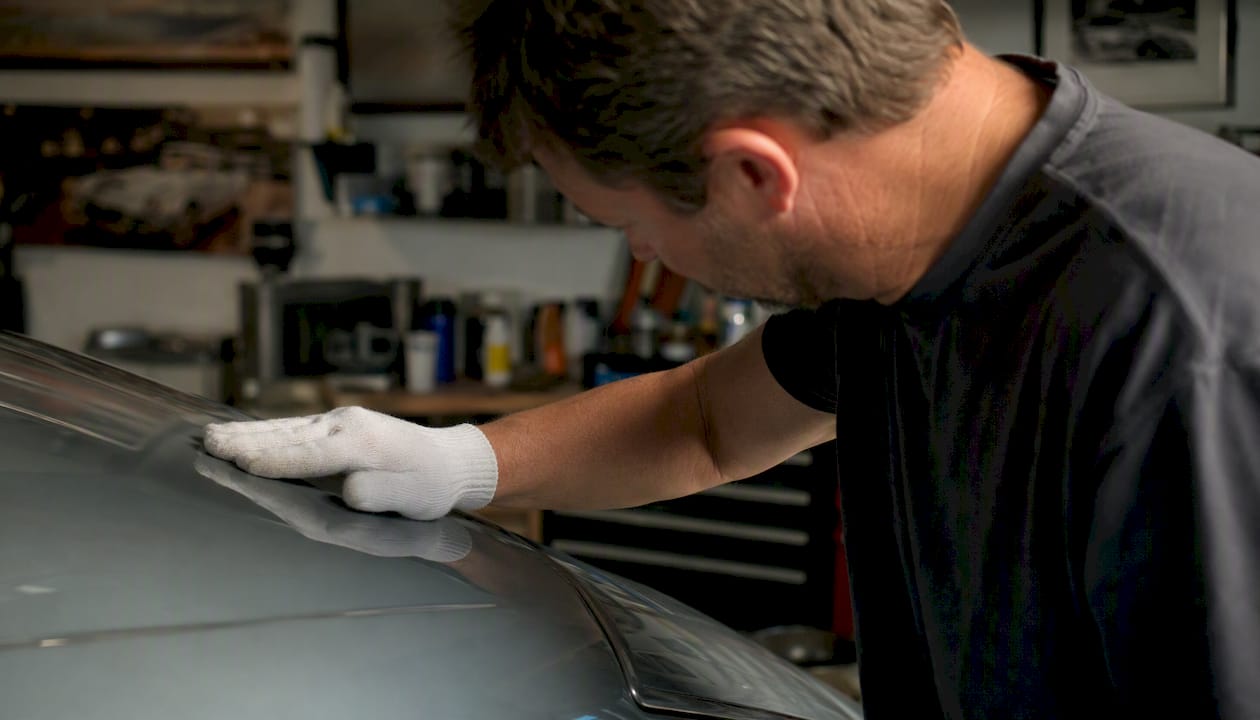
PDR's reputation for near-perfect results is well-earned on the right dents. The problem is that "the right dents" is a narrower category than most owners realize when they first hear about the technique.
The misconception I see most often is that PDR is a universal fix for anything that doesn't have cracked paint. Owners bring in dents with shallow-looking creases, assuming that because the paint is intact, the repair is straightforward. It isn't. A crease that's barely visible from a distance can represent significant work-hardening at the metal level, and pushing that area without understanding the metallurgy leads to a worse result than leaving it alone.
The other underestimated factor is technician skill. PDR has a steeper learning curve than conventional bodywork. A less experienced tech working a borderline dent can over-push the metal, create high spots, or crack the paint from the inside. The technique's ceiling is high, but so is its floor for failure when the wrong hands are on the tools.
That's why Dent-boys backs every repair with a lifetime warranty. It's not a marketing line. It's a commitment that the technician assessed the dent correctly, declined the jobs that shouldn't be attempted, and stands behind the result on the ones that were. Pickup and delivery mean you're not rearranging your schedule around a shop visit, and the $0 deductible support on insurance claims removes the friction that causes owners to delay repairs and let minor damage worsen.
Dent-boys handles PDR the right way, from estimate to warranty
When your dent clears the checklist above, the repair experience should be as straightforward as the diagnosis. Dent-boys offers free estimates with pickup and delivery, $0 deductible support for insurance claims, and a rental vehicle while your car is being repaired.

Every repair comes with a lifetime warranty, which means the technician's assessment is accountable. Dent-boys handles hail fleet jobs and single-panel repairs, works with aluminum-capable technicians, and coordinates calibration when ADAS sensors are involved. For insurance claims, the team manages the paperwork and communicates directly with your insurer so you're not caught between the shop and the adjuster.
If your dent is a good PDR candidate, get a free estimate from Dent-boys and have the car picked up on your schedule.
Sources
The technical claims in this article draw from the following sources. Each is worth reading if you want the full background before your estimate.
- PDR Limitations: Technical Analysis of When Paintless Dent Repair Won't Work | DentAdvisor
- PMC article on material deformation and coating responses
- The metal memory: What PDR can and cannot fix after a hailstorm | Hail Protector
- What Can and Can't Be Fixed With Paintless Dent Repair - Paintless Dent Repair School | Ding King