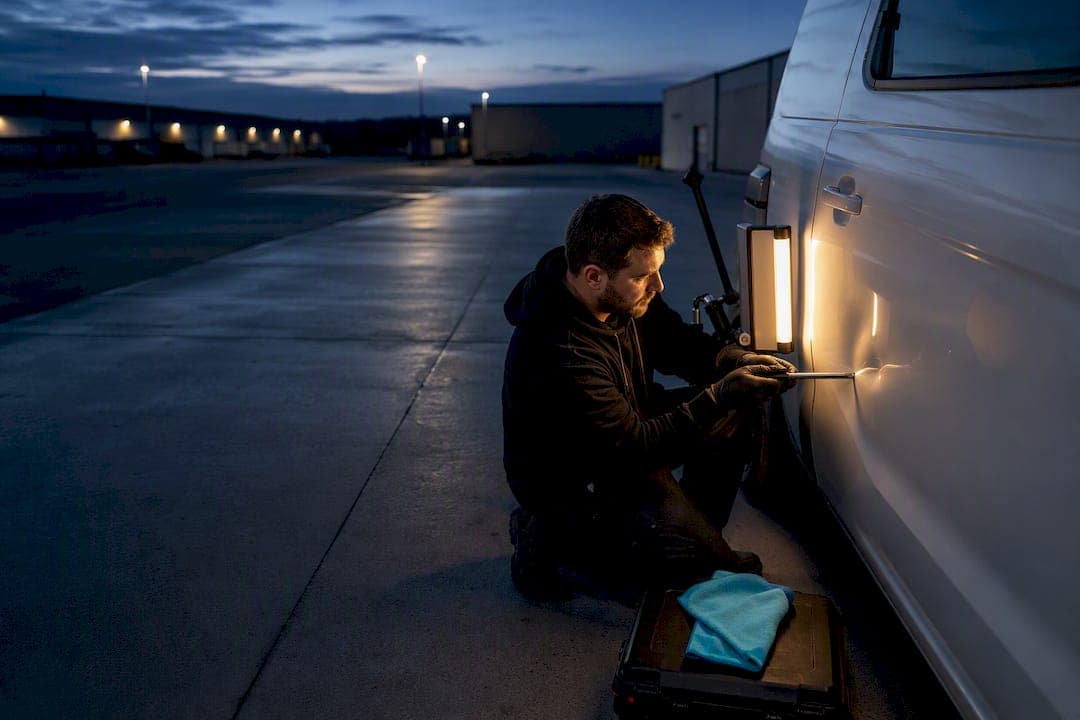
Paintless dent repair is a practical, cost-effective option for most fleet vehicles with minor to moderate dents, including a large share of hail damage. It preserves factory paint and cuts vehicle downtime compared with body shop repairs. It's not the right call for cracked paint, stretched metal, or severe creases, which still need traditional bodywork.
TL;DR:
- Mobile PDR typically repairs 80 to 90 percent of cosmetic dents on fleet vehicles, excluding cracked paint, large or sharp dents, and structural damage.
- Repair times range from 30 minutes to a few hours for minor dents and up to 10 days for extensive hail damage, significantly reducing vehicle downtime.
- Costs are similar to shop rates plus a trip fee, with bulk discounts and insurer coordination offering additional savings and efficiency.
- Fleet experience, capacity, warranty, and logistics support are key vetting criteria when selecting a PDR provider for large-scale or ongoing work.
- Prioritizing scheduled, recurring repairs with mobile providers minimizes fleet downtime and avoids costly, reactive maintenance approaches.
Table of Contents
- How Does PDR Work for Fleet Vehicles On-Site?
- Which Dents Can PDR Fix on Fleet Vehicles?
- How Long Does Fleet Dent Repair Actually Take?
- What Does PDR Cost for a Fleet, and What Drives the Price?
- How Do You Vet a PDR Provider for Fleet Work?
- Why Dent-boys Treats PDR as a Fleet Efficiency Tool
- The Real Case for Treating PDR as Maintenance, Not Cosmetics
- Get a Fleet Estimate From Dent-boys
- Sources
How Does PDR Work for Fleet Vehicles On-Site?
The entire appeal of mobile PDR for fleets comes down to one thing: the technician drives to your lot instead of your driver losing half a day driving to a shop. That single change reshapes the math on downtime, fuel cost, and staff time spent on coordination rather than routes.
A typical mobile visit follows a predictable sequence:
- Pre-visit intake. The provider collects vehicle counts, dent locations, and photos to plan technician staffing and time on-site.
- Arrival and inspection. Technicians walk each vehicle, confirm which dents qualify for PDR, and flag anything needing a body shop.
- On-site repair. Using rods, glue-pulling kits, and specialized lighting, technicians massage metal back into shape from behind the panel.
- Batch processing. Multiple vehicles get worked in sequence during one visit, often with more than one technician on larger fleets.
- Sign-off and documentation. Before-and-after photos and repair notes go into your maintenance records.
Covered parking helps, since direct sun and rain both slow the work and affect how technicians read reflections off the panel to spot dent edges. Good lighting matters more than weather, which is why many providers bring their own rigs.
Scheduling around off-hours, overnight shifts, or a rotating maintenance window means on-site PDR rarely takes a vehicle out of rotation at all.
Which Dents Can PDR Fix on Fleet Vehicles?
PDR resolves the vast majority of cosmetic damage fleets actually deal with day to day: door dings from parking lots, shopping cart dents, minor creases from low-speed contact, and a large share of hail dents. Mobile PDR generally works on 80 to 90 percent of dents that haven't broken the paint, according to industry data on repair outcomes.
That leaves a meaningful exclusion list:
- Cracked, chipped, or scraped paint over the dent
- Stretched or thinned metal, common in dents deeper than about two inches
- Dents on sharp body edges or panel seams
- Very large dents spanning multiple panels or structural creases
Wrapped fleet vehicles add a wrinkle. PDR can often work through a vinyl wrap, but outcomes depend on wrap condition, how long it's been installed, and whether the technician has wrap-specific experience. An older or brittle wrap sometimes needs partial removal before the repair and a patch or rewrap afterward.
Electric vehicles and aluminum-heavy panels are usually PDR-friendly, but aluminum work-hardens faster than steel, so technicians need aluminum-specific technique to avoid overworking the metal.
Pro Tip: Photograph every dent before your provider arrives and flag anything near a wrap seam or body line. It cuts triage time in half once the technician is on-site.
How Long Does Fleet Dent Repair Actually Take?
Downtime is where PDR earns its keep, and the numbers make the case better than any sales pitch could.
- Minor damage (door dings, small dents): 30 minutes to 2 hours per vehicle.
- Moderate damage (multiple dents, one panel): 2 to 4 hours.
- Extensive damage (several panels): 1 to 2 days.
- Hail damage: anywhere from 3 to 10 days depending on severity and how many panels took hits.
The downtime math: A ten-vehicle delivery fleet sending each van to a body shop for a two-day panel job loses 20 vehicle-days of service. The same job done on-site, batched across two technicians over two days, often keeps every van in rotation except during its actual repair window.
Adding a second technician to a hail batch visit roughly doubles throughput without doubling calendar time, since crews split the lot and work in parallel.
What Does PDR Cost for a Fleet, and What Drives the Price?
Mobile PDR pricing usually runs close to shop rates, sometimes with a modest premium once you factor in the trip fee, but the total cost calculus favors mobile service once downtime enters the equation.
Three components typically make up a fleet quote:
- Trip or mobilization fee, covering technician travel to your lot or depot.
- Per-panel or per-dent pricing, scaled by dent size, depth, and panel access.
- Bulk or batch discounts, applied once vehicle count crosses a provider's threshold.
The trip fee is where fleets win. Spread across ten or twenty vehicles in a single visit, that fixed cost shrinks to a rounding error per unit.
Pro Tip: Ask providers for a per-vehicle rate at three different fleet sizes (5, 15, and 30 vehicles) so you can compare quotes on the same basis instead of guessing at bulk math.
Insurance-funded hail claims add another layer. Catastrophe response programs show how specialized vendors coordinate directly with insurers to speed claims and repair large vehicle counts without every job going through separate approval cycles.
How Do You Vet a PDR Provider for Fleet Work?
Fleet dent repair is a different job than one-off consumer work, and the vetting checklist should reflect that.
- Fleet experience. Ask for references from other commercial accounts, not just individual customers.
- Team capacity. Confirm how many technicians they can send for a batch visit and their typical daily vehicle throughput.
- Insurance handling. Ask whether they manage claims directly with carriers on hail jobs.
- Mobile capability. Confirm they bring their own lighting rigs and tooling rather than requiring a garage bay.
Trust signals worth checking before you sign anything: technician certification, a written warranty (lifetime coverage is the strongest signal in the industry), a real before-and-after gallery, and named fleet references you can actually call.
Pro Tip: A provider that can't produce a fleet reference or hesitates on warranty terms is telling you something. Move on.
Operational questions matter just as much: What's their scheduling flexibility for off-hours work? Do they offer rental vehicles or pick-up and delivery for vehicles that need shop-level work? What's their turnaround guarantee, and how do they handle invoicing across a batch job for your accounting team?
Why Dent-boys Treats PDR as a Fleet Efficiency Tool
Fleet managers don't care about cosmetic repair for its own sake. They care about vehicles being available. Dent-boys builds its service around that priority rather than around the repair itself.
Many fleet accounts get a free estimate before committing to a repair plan, reducing cost uncertainty before a batch visit is scheduled. Pick-up and delivery may be offered for vehicles that require it, and rental vehicle support can help keep drivers moving when a unit needs extended shop time. Some providers facilitate insurance deductible handling to ease the paperwork process. Completed repairs often include a warranty, providing coverage for the service performed.
Each of these maps directly to the vetting checklist above: fleet capacity, insurance coordination, warranty terms, and logistics support aren't separate features. They're the same problem solved from different angles.
The Real Case for Treating PDR as Maintenance, Not Cosmetics
Most guides on this topic frame paintless dent repair as a way to keep a car looking nice. That framing misses what actually matters for a fleet: PDR is a downtime-reduction tool that happens to also fix dents.
The conventional advice tells fleet managers to batch repairs quarterly or whenever a vehicle "looks bad enough." That's backwards. Dents left unrepaired don't just hurt resale value; they compound. A door ding ignored for six months becomes rust risk in humid climates, and a fleet with visible damage on customer-facing vehicles carries a reputational cost nobody puts on a spreadsheet.
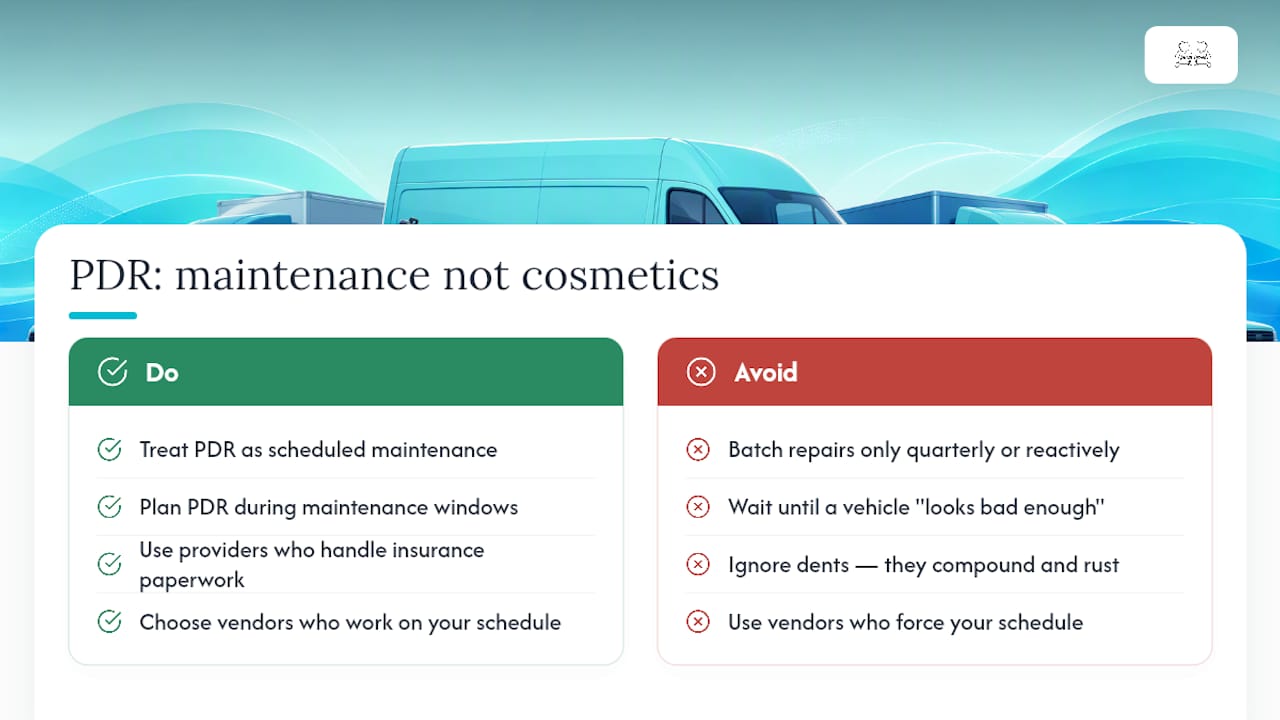
The smarter approach treats PDR scheduling the way you'd treat oil changes: recurring, planned around existing maintenance windows, not reactive. Pair that with a provider who handles insurance paperwork and offers loaner vehicles, and the labor cost of coordinating repairs drops close to zero. That's the piece most fleet managers underestimate. The repair itself was never the expensive part. The coordination was minimized by how fuel delivery reduces fleet downtime for managers.
Prioritize a provider who can show up on your schedule, not one who makes you build your schedule around theirs.
— Martin
Get a Fleet Estimate From Dent-boys
Dent-boys built its service around the exact friction points fleet managers deal with every week: unpredictable dent volume, tight maintenance windows, and insurance paperwork that eats staff time. Every fleet job starts with a free estimate, backed by pick-up and delivery for vehicles that can't sit still, rental vehicle support to keep drivers on the road, $0 deductible facilitation on insurance-funded hail jobs, and a lifetime warranty on every completed repair.
If your fleet has dent damage piling up or a hail event just hit your lot, request a free fleet estimate and get an on-site assessment scheduled around your maintenance calendar, not the other way around.
Sources
The claims in this guide draw on a few sources worth reading directly if you're building out a fleet maintenance policy. DentAdvisor's breakdown of on-site PDR covers the downtime math and repair time ranges in more depth than fits here. Dent Wizard's catastrophe response program is a useful reference for how large-scale hail response actually gets coordinated with insurers. For fleets running wrapped vehicles, 201WRAP's guide to PDR on wraps explains the wrap-condition variables that determine whether a repair is even possible without removal.
- On-Site PDR for Fleets: Minimizing Downtime | DentAdvisor
- Catastrophe Response Fleet Hail Repair Program | Dent Wizard
- Does paintless dent repair work on wrapped cars? - #201WRAP