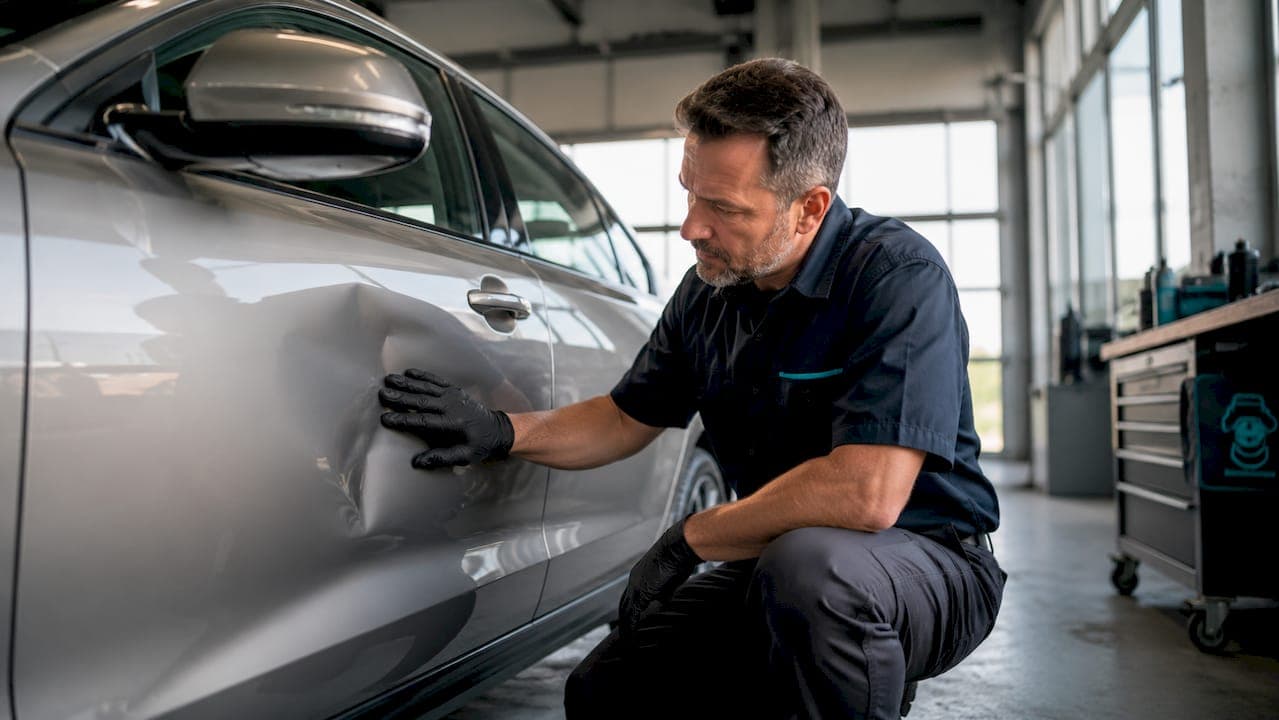
A dent left untreated is a countdown clock on your vehicle's value, safety, and structural integrity. Why prompt dent repair matters becomes clear the moment you understand what happens beneath the surface of even a small ding. Paintless Dent Repair (PDR) is the industry's preferred early intervention method, and it works best when you act fast. Delay long enough, and a $150 fix becomes a $1,500 panel replacement. This article breaks down exactly what's at stake and what to do about it.
Why prompt dent repair matters for your vehicle's value
A dent does more than hurt your car's looks. It signals neglect to every potential buyer who walks around your vehicle. Buyers and appraisers read visible body damage as a sign of poor maintenance, and that perception directly cuts your resale price.
Paint damage is the real accelerant. Once a dent cracks or chips the paint, bare metal is exposed to air and moisture. Rust spreads underneath the paint, and by the time it becomes visible on the surface, the corrosion is already deeper than the original dent. That means more metal to treat, more labor, and a higher bill.
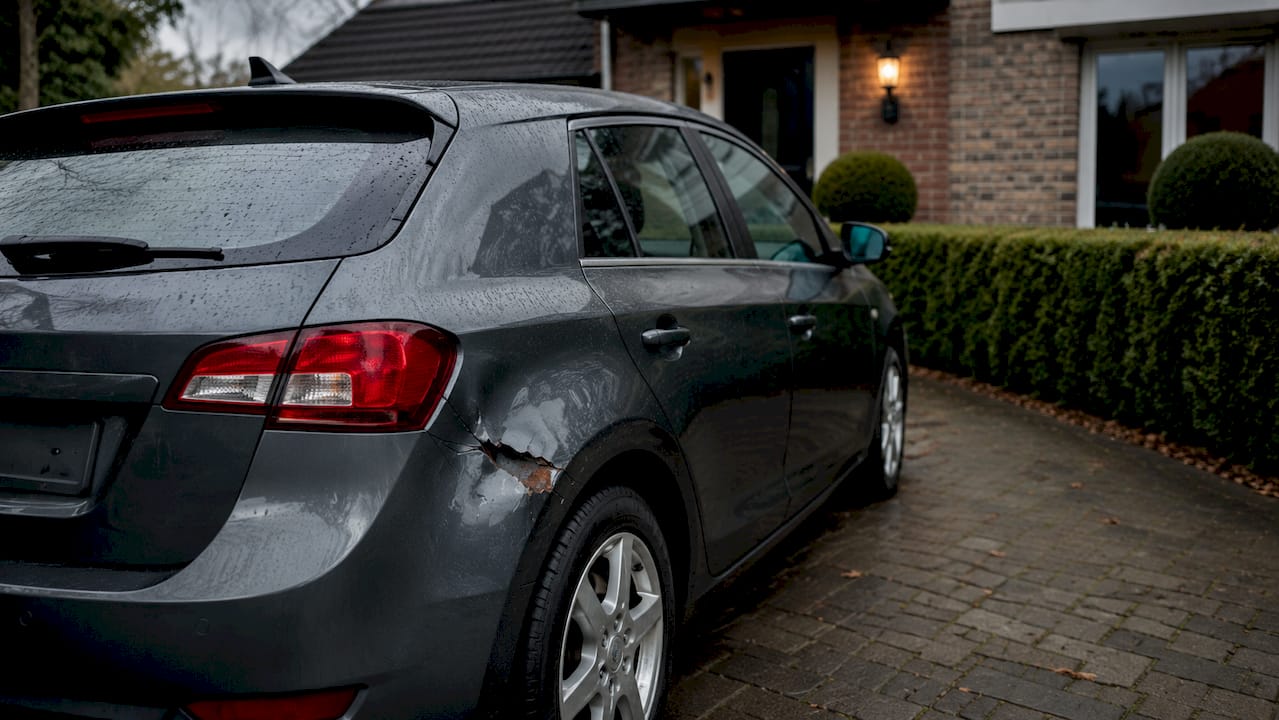
PDR sidesteps this problem entirely when you act early. PDR preserves factory paint and finish by using specialized tools to massage the metal back into shape from behind the panel. No sanding, no filler, no repainting. The factory finish stays intact, and so does your resale value.
Here is how repair costs and outcomes compare based on timing:
| Repair timing | Typical method | Paint impact | Relative cost |
|---|---|---|---|
| Immediate (paint intact) | PDR | None | Lowest |
| Short delay (minor chips) | PDR plus touch-up | Minimal | Low to moderate |
| Extended delay (rust forming) | Traditional bodywork | Significant | High |
| Long delay (deep corrosion) | Panel replacement | Severe | Highest |
The pattern is consistent: the longer you wait, the more invasive the repair and the higher the cost.
What safety risks come from delayed dent repair?
Most car owners think of dents as cosmetic problems. That assumption is wrong, and it can be dangerous. Modern vehicles are engineered with panels that house cameras, radar units, and sensors for Advanced Driver Assistance Systems (ADAS).
Small dents can shift ADAS sensors for distance warnings, lane assist, and collision avoidance. A sensor that is even slightly out of alignment may give false readings or stop functioning altogether. You might not notice the problem until a collision avoidance system fails to trigger.
Beyond sensors, structural panels absorb and redirect crash energy. A dented panel that has been weakened by corrosion or deformation no longer performs as designed in a collision. The safety margin your car's engineers built in gets quietly eroded every week the dent goes unaddressed.
Key safety risks from delayed dent repair include:
- ADAS sensor misalignment causing lane assist, blind spot monitoring, or automatic braking to malfunction
- Structural panel weakening that reduces crash energy absorption
- Hidden corrosion that spreads to adjacent panels and frame components
- Costly sensor recalibration required after delayed repairs involve panel work
Pro Tip: After any dent near a camera, radar unit, or sensor housing, have a professional inspect the system before assuming everything still works correctly.
Why is Paintless Dent Repair usually the best timely solution?
PDR is the gold standard for early dent repair because it is fast, affordable, and leaves your car's original paint untouched. The technique uses metal rods and specialized picks to push the dented metal back to its original shape from behind the panel. No chemicals, no filler, no color matching required.
The speed advantage is real. Minor dings can often be repaired in under an hour using PDR techniques. More complex dents or multiple dings take longer, but most PDR jobs are completed the same day. Traditional bodywork, by contrast, can take days and requires paint curing time.
PDR works best under these conditions:
- The paint over the dent is still intact with no cracking or chipping
- The dent has a smooth, rounded shape rather than a sharp crease
- The metal has not been stretched beyond its elastic limit
- The damaged panel is accessible from behind
PDR does have limits. If the paint has cracked, or if the dent has a sharp fold, PDR alone may not be sufficient and traditional bodywork becomes necessary. Metal also has a memory. Leave a dent long enough and the metal settles into its deformed position, making it harder to restore without filler and repainting.
Pro Tip: Get a professional assessment within the first week of noticing a dent. The window for PDR eligibility closes faster than most car owners expect.
What are the financial consequences of ignoring dent repair?
Procrastination on dent repair is one of the most expensive habits a car owner can have. Small dents left untreated often evolve from simple fixes into panel replacements or full repainting jobs. The repair cost can multiply several times over with just a few months of delay.
Rust is the primary cost driver. Weather conditions accelerate rust where paint is cracked or missing, especially in climates with high humidity, road salt, or frequent rain. A small chip that exposes bare metal can develop surface rust within days and structural corrosion within weeks.
The financial consequences of delay stack up quickly:
- Rust treatment costs added on top of the original dent repair
- Filler and repainting fees when PDR is no longer viable
- Panel replacement costs when corrosion spreads too far
- Insurance complications when a delayed repair turns into a larger claim
- Resale value loss that exceeds the cost of the original repair several times over
Timely repairs reduce costs and avoid the insurance claim complexities that come with major bodywork. Filing a claim for a large repair also affects your premium history in ways that a small out-of-pocket PDR job never would.
The math is straightforward. A PDR repair done promptly costs a fraction of what traditional bodywork costs later. The longer you wait, the more you pay, and the less your car is worth.
How to decide when and how to repair a dent
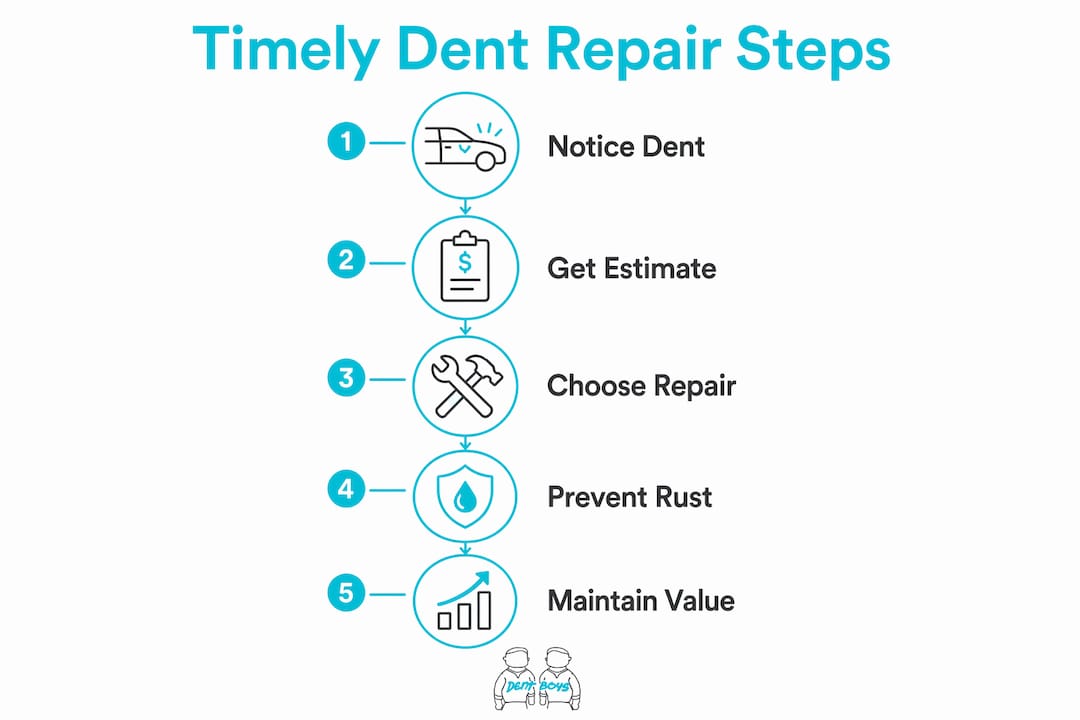
Not every dent demands the same urgency, but most deserve faster attention than car owners give them. A few clear signs tell you a dent needs prompt professional attention:
- The paint is cracked, chipped, or missing over the dent
- The dent is near a camera, sensor, or radar housing
- The dent has a sharp crease rather than a smooth curve
- The damaged area shows any discoloration that could indicate early rust
- The dent is on a structural panel such as a door, hood, or quarter panel
For dents with intact paint and a smooth shape, PDR is almost always the right call. Get a free professional estimate as soon as possible so you know exactly what you are dealing with before the window for PDR closes.
If the paint is already compromised, traditional bodywork is likely needed. In that case, acting fast still matters because it limits how far rust can spread before the repair appointment. Understanding the repair timeline expectations helps you plan around your schedule without putting the job off indefinitely.
The best repair service combines speed with quality. Look for technicians who offer professional inspection, clear pricing, and a warranty on their work.
Key Takeaways
Prompt dent repair protects your vehicle's value, prevents rust, preserves PDR eligibility, and avoids the safety risks that come from ADAS sensor misalignment.
| Point | Details |
|---|---|
| Act before paint cracks | PDR is only viable while factory paint remains intact over the dent. |
| Rust moves fast | Exposed metal can develop surface rust within days in humid or wet climates. |
| ADAS sensors are at risk | Even small dents near sensor housings can misalign collision avoidance systems. |
| Delay multiplies cost | A simple PDR job can escalate to panel replacement if left too long. |
| PDR is the fastest fix | Minor dings repaired with PDR are often completed in under an hour. |
What I have learned from watching car owners delay dent repairs
Car owners consistently underestimate dents. I have seen it play out the same way dozens of times. Someone notices a ding in a parking lot, tells themselves it is minor, and plans to deal with it "eventually." Six months later, there is rust creeping out from under the paint, the PDR window has closed, and what would have been a quick fix is now a full bodywork job.
The misconception I hear most often is that a dent is purely cosmetic. That thinking ignores everything happening beneath the surface. Metal under stress, paint that has lost its seal, sensors that are no longer aligned correctly. None of that is visible from the outside, and none of it gets better with time.
The other mistake is waiting for a "good time" to deal with it. There is no good time. There is only the time before rust starts and the time after. PDR is one of the few car repairs that genuinely rewards you for acting fast. The technique is fast, affordable, and leaves your car looking factory-fresh. But it requires intact paint and metal that still has elasticity. Both of those conditions deteriorate with every week you wait.
My honest advice: treat a dent the same way you treat a chip in your windshield. The longer you leave it, the worse it gets, and the more it costs to fix. Act within the first week, get a professional assessment, and let the technician tell you what is possible. You will almost always be glad you did.
— Martin
Dent-boys makes fast, expert dent repair simple
Dent-boys specializes in Paintless Dent Repair, and the entire process is built around getting your car back to like-new condition without the hassle of a traditional body shop.
Dent-boys offers free estimates, pick-up and delivery service, a rental vehicle while your car is being repaired, and a lifetime warranty on every repair. There is no deductible and no appointment required to get started. Whether you are dealing with a fresh parking lot ding or a hail-damaged hood, the team at Dent-boys has the tools and experience to restore your vehicle fast. The sooner you reach out, the more repair options remain on the table.
FAQ
What is Paintless Dent Repair (PDR)?
PDR is a technique that uses specialized metal tools to push dented panels back to their original shape from behind, without sanding, filler, or repainting. It works best when the factory paint over the dent is still fully intact.
How quickly can a dent turn into a rust problem?
Exposed metal from a cracked or chipped dent can begin to rust within days in humid or wet conditions. Weather accelerates corrosion significantly, which is why acting within the first week is critical.
Can a small dent affect my car's safety systems?
Yes. Small dents can misalign ADAS sensors for lane assist, collision avoidance, and distance warnings, causing those systems to malfunction without any visible warning to the driver.
How long does a PDR repair take?
Minor dings repaired with PDR are often completed in under an hour. More complex or multiple dents take longer, but most PDR jobs finish the same day.
Should I repair a dent before selling my car?
Repairing a dent before selling almost always returns more value than the repair costs. Visible dents reduce buyer confidence and give negotiators a reason to lower their offer.