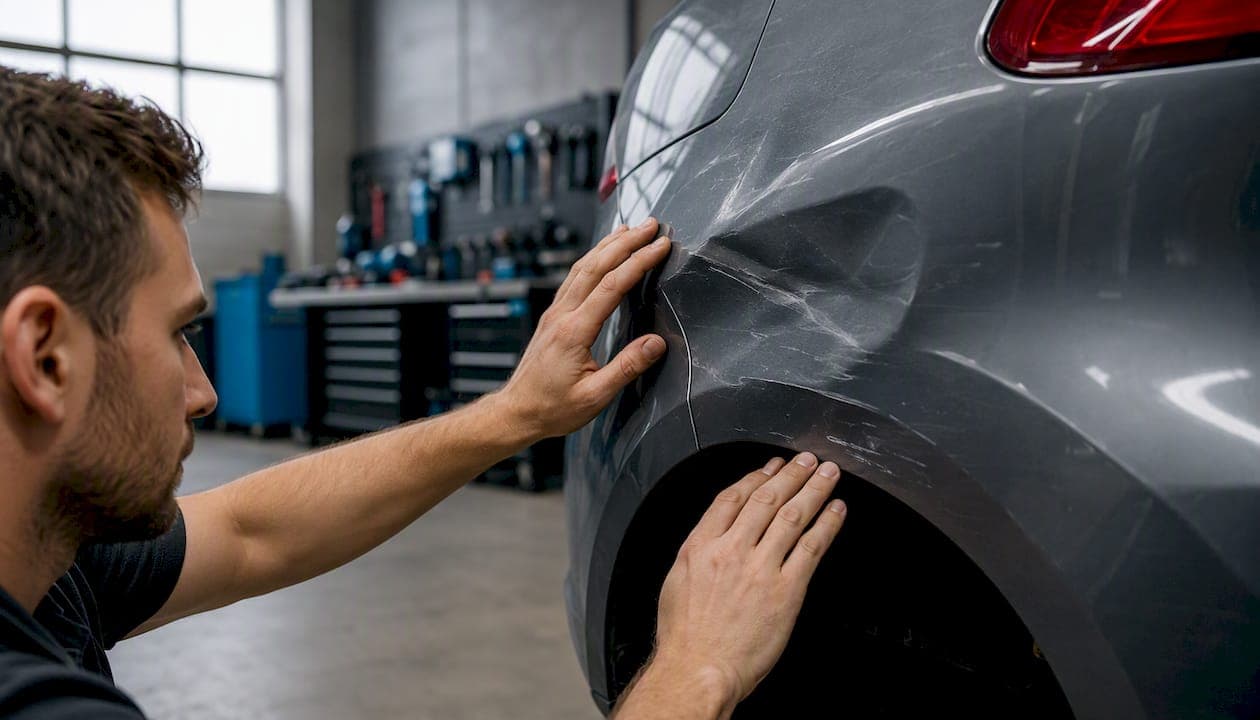
Expect U.S. bodywork on cars cost to fall into four tiers: minor ($150–$1,500), moderate single-panel ($500–$3,500), major multi-panel ($2,500–$8,500), and frame/structural ($5,000–$20,000+), according to UseCalcPro's 2026 repair cost calculator. The national average sits around $2,000, with most jobs landing between $500 and $5,000.
Here's a fast budgeting reference:
- Minor damage (small scratches, shallow dents, touch-ups): $150–$1,500 cash; likely below most deductibles
- Moderate single-panel (one door, fender, or bumper with paint): $500–$3,500; compare against your deductible before filing
- Major multi-panel (side swipe, rear collision, multiple panels): $2,500–$8,500; almost always worth filing a claim
- Frame or structural (bent subframe, unibody damage): $5,000–$20,000+; file immediately and verify shop certification
Labor rates nationally vary significantly depending on your market, which explains why the same visible dent can generate wildly different quotes across town.
Key Takeaways
Auto body repair costs in the U.S. range from $150 for minor surface damage to $20,000+ for structural repairs, and the gap between a smart repair decision and an expensive one usually comes down to knowing your deductible, your vehicle's PDR eligibility, and whether your estimate covers the full scope.
| Point | Details |
|---|---|
| Four cost tiers | Minor $150–$1,500; moderate single-panel $500–$3,500; multi-panel $2,500–$8,500; frame/structural $5,000–$20,000+. |
| The 2× deductible rule | If the repair estimate is under roughly twice your deductible, paying cash usually saves money long-term. |
| PDR saves significantly | PDR runs $75–$500 and preserves factory paint; conventional single-panel repair starts at $400 and often exceeds $900. |
| Always get itemized estimates | Compare scope lines across 2–3 written quotes; a lower total that omits blending or calibration will cost more at pickup. |
| Dent-boys for PDR jobs | Free estimates, $0 deductible support, pick-up/delivery, and a lifetime warranty on paintless dent repair. |
Table of Contents
- What actually drives the price of car bodywork
- Cost ranges for common repair types
- How a repair estimate is actually built
- How insurance, deductibles, and total-loss rules change what you pay
- How long different repairs typically take
- How to get reliable estimates and choose the right shop
- Practical ways to reduce your body repair bill
- When PDR is the right call — and how Dent-boys approaches it
- What most car owners get wrong when budgeting for bodywork
- Dent-boys offers a faster, lower-cost path for eligible repairs
- Sources
What actually drives the price of car bodywork
The number on your estimate isn't random. Every line item traces back to one of these variables, and knowing them helps you challenge quotes that don't add up.
Damage severity and panel count are the biggest levers. A single shallow dent costs a fraction of what a crumpled quarter panel does, and each additional panel multiplies both labor and paint costs. Panel material matters too: aluminum repairs typically run 30–60% more than steel because aluminum requires specialized tools, different filler compounds, and more careful heat management.
Paint complexity is the line item owners most often underestimate. Solid colors are straightforward. Metallic, pearl, and tri-coat finishes require additional coats, longer flash times between layers, and precise color-matching. Paint blending alone can add $400–$1,200 per adjacent panel when a shop needs to feather new paint into existing finish.
Labor hours and shop rate vary more than most people realize. A body shop in Manhattan or Los Angeles charges a very different rate than one in rural Ohio, and coastal metros typically run 5–25% above Midwest and rural averages for identical work. The estimating platforms shops use — CCC ONE, Mitchell, and Audatex — standardize labor times, but shops and insurers apply their own rates and part-sourcing rules on top of those times. That's why two estimates for the same car can differ by hundreds of dollars even when both shops use the same software.
OEM versus aftermarket parts is another split. OEM (original equipment manufacturer) parts fit precisely and preserve resale value; aftermarket parts cost less but may require fitment adjustments that add labor. Insurers often specify aftermarket or recycled parts to control costs, which can affect both the repair quality and your car's value at trade-in.
ADAS calibration is the newest cost driver most owners don't see coming. On 2018 and newer vehicles, sensors embedded in bumpers, windshields, and mirrors often require recalibration after any repair that moves or replaces the component they're mounted on. Expect $100–$500 per calibration depending on whether static or dynamic recalibration is needed. A shop that doesn't mention this on a modern vehicle is either missing it or leaving it off the estimate intentionally.
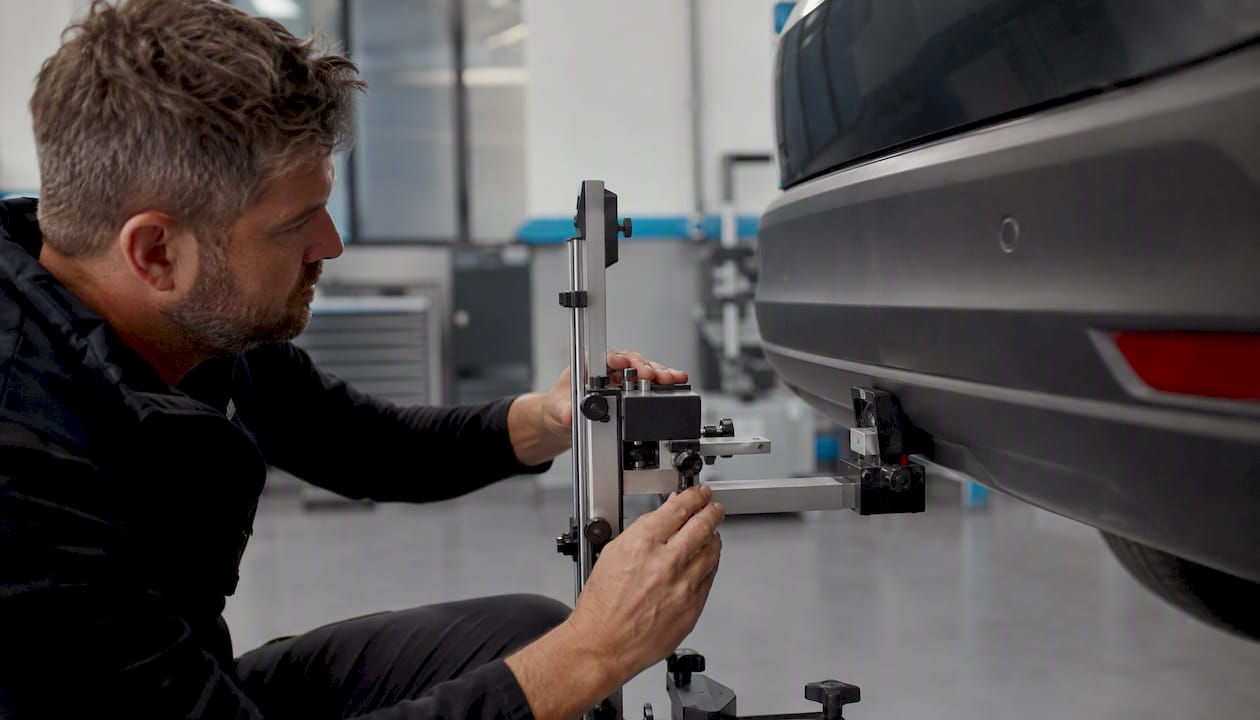
Pro Tip: Ask every shop whether color blending is included in the estimate or priced separately. A quote that covers only the damaged panel but not the adjacent blend panels can look $400–$800 cheaper than it really is — until the final invoice.
Cost ranges for common repair types
The table below reflects typical 2026 U.S. ranges. Actual costs vary by region, vehicle, and shop.
A few notes that affect where your job lands in those ranges:
- Aluminum-intensive vehicles (many Ford F-150 trims, most Audis) push door and fender costs toward the high end or beyond it
- Any repair near a bumper-mounted radar or camera adds ADAS calibration time and cost
- Quarter-panel work almost always requires blending into adjacent panels, so the "what's covered" column understates the true paint scope on those jobs
- About 63% of multi-panel insurance claims generate mid-repair supplements averaging $1,200–$1,800 when hidden damage appears after teardown — budget a contingency on any job over two panels
PDR sits at the low end of the dent-with-paint range for a reason: when paint is intact and the dent has no sharp creases, a technician can restore the panel without any filler or refinishing. PDR typically runs $75–$500 and preserves your factory finish, which matters for resale. More on when PDR applies in section 9.
How a repair estimate is actually built
Understanding the line items on a written estimate is the fastest way to spot a quote that's missing work or padding costs. Shops and insurers both use estimating platforms — CCC ONE, Mitchell, and Audatex are the three dominant systems — to generate labor times and parts prices. The platform sets the time; the shop sets the rate.
Here's how the cost components typically break down:
| Cost Component | Low | Average | High |
|---|---|---|---|
| Parts (OEM or aftermarket) | $100 | $500 | $3,500 |
| Labor | $150 | $800 | $5,000+ |
| Paint materials | $100 | $400 | $1,200 |
| Shop supplies | $30 | $100 | $300 |
| Equipment (frame rack, booth) | $0 | $150 | $600 |
| Taxes and disposal fees | $20 | $75 | $200 |
| Contingency / supplements | $0 | $300 | $1,800 |
A practical example: a single rear bumper repair on a mid-size sedan might look like this — parts $350, labor $420 (3 hrs at $140/hr), paint materials $180, shop supplies $65, taxes $45. Total: $1,060. That's a reasonable estimate for a straightforward job. If the bumper houses a parking sensor, add $150–$300 for calibration. If the paint is pearl or tri-coat, add another $200–$400 in materials and blending time.
The formula shops use internally: base severity cost + (panels × multi-panel add) + paint scope + frame-rack setup + insurance markup − cash discount. Two shops looking at the same car can reach different totals because they apply different labor rates, source parts differently, and may or may not include blend panels in the initial scope.
A single panel repaint rarely falls below $400–$600 even when the damage is minor. Prep, masking, booth time, and cure time add up to 2–6 labor hours before the technician ever sprays color. That's why "just a small scratch" estimates surprise people.
Always ask for a line-item written estimate, not a verbal ballpark. NHTSA guidance on structural repairs specifically calls out the need for documented procedures and certified equipment — a one-line total with no scope breakdown is a red flag on any job, and a serious one on anything structural.
How insurance, deductibles, and total-loss rules change what you pay
The decision to file a claim or pay cash comes down to one number: your deductible. A useful rule of thumb is the 2× deductible threshold — if the repair estimate is less than roughly twice your deductible, paying out of pocket usually makes more financial sense. Filing a claim for a $900 repair with a $500 deductible nets you only $400 from the insurer, and that claim can increase your annual premium by 10–30% for the next several years, often costing more than the repair itself.
Insurance jobs also tend to run higher at the shop level. Insurers negotiate labor rates with Direct Repair Program (DRP) shops, which can mean lower rates for the shop and pressure to use aftermarket or recycled parts instead of OEM. Supplements — additional charges added mid-repair when hidden damage appears — are common on insurance claims and require insurer approval before work continues, which can extend your repair timeline.
File a claim without hesitation when:
- Frame or structural damage is confirmed or suspected
- Airbags deployed
- Anyone was injured in the incident
- ADAS sensors or cameras were damaged
- The repair estimate exceeds your deductible by a clear margin
- A third party was at fault (their insurer pays)
Paying cash often makes sense when:
- The damage is cosmetic only (scratch, small dent, no structural involvement)
- The estimate is under 2× your deductible
- You want OEM parts and the insurer would specify aftermarket
- You want to avoid a claims history entry
Total-loss thresholds vary by state. If your car is older or has high mileage, a moderate collision can push it into total-loss territory faster than you'd expect.
Pro Tip: Before filing, call your insurer and ask whether the claim will be surchargeable. Some policies have accident-forgiveness provisions, and some minor claims don't trigger a rate increase at all. Thirty seconds on the phone can save you years of higher premiums.
How long different repairs typically take
Repair timelines depend on damage scope, parts availability, shop backlog, and paint cure time. Here's what to expect:
- PDR / minor touch-up: Same day to 2 days. No paint means no cure time, and most PDR jobs are completed while you wait or within 24 hours.
- Single-panel paint repair: 2–4 days. Includes prep, prime, paint, and a minimum cure period before the car is safe to wash or expose to weather.
- Multi-panel collision repair: 1–2 weeks. Parts ordering, teardown, structural checks, and paint scheduling all add time.
- Frame or structural repair: 2–4 weeks or longer. Frame-rack work, alignment verification, parts lead times, and ADAS recalibration each add days.
Paint cure time is a real constraint, not a shop excuse. Waterborne basecoats used by most modern shops need 24–48 hours of controlled-environment cure before the car leaves the booth, and full hardness takes longer. Rushing this step causes paint that chips, peels, or fails to match properly within months.
Shop backlog is the variable owners control least. After a major hail event or a busy summer season, wait times for a shop appointment can stretch 2–4 weeks before the repair even starts. Scheduling during off-peak months (typically late fall and early winter) often means faster turnaround and occasionally a better negotiating position on price. Cold weather and high humidity do slow drying times, but a properly equipped shop with a heated booth manages that internally.
ADAS calibration can add a half-day to a full day depending on whether the shop performs it in-house or subcontracts to a dealer or calibration specialist.
How to get reliable estimates and choose the right shop
Getting an accurate written estimate is the single most protective step you can take before authorizing repairs. Here's a practical checklist:
- Get 2–3 written, line-item estimates from different shops before committing
- Compare scope lines, not just totals — a cheaper estimate that omits blend panels or calibration will cost more in the end
- Confirm ADAS calibration is included if your vehicle is a 2018 or newer model with sensors near the repair area
- Ask about part sourcing: OEM, aftermarket, or recycled — and get the answer in writing
- Ask for warranty terms in writing: a reputable shop offers a limited or lifetime warranty on their work
- Verify shop certifications: I-CAR Gold Class and ASE certifications are the two most recognized standards for collision repair competence
Questions to ask during an estimate appointment:
- Is color blending into adjacent panels included in this estimate?
- Does my vehicle require ADAS recalibration after this repair, and is that cost included?
- What parts are you planning to use — OEM, aftermarket, or recycled?
- What is your warranty on paint and bodywork?
- What certifications do your technicians hold?
- How do you handle supplements if hidden damage appears during teardown?
- Will you provide before-and-after photos of the repair?
Red flags to walk away from:
- Unwillingness to provide a written, itemized estimate
- Pressure to sign an authorization before you've compared other quotes
- No before-and-after photo documentation policy
- Turnaround promises that seem unrealistically fast for the scope of work
- A quote that's dramatically lower than the others without a clear explanation
Estimating platforms like CCC ONE, Mitchell, and Audatex produce standardized labor times, so a shop that's significantly underbidding is likely omitting scope, not finding efficiency. Ask them to explain the difference line by line.
Practical ways to reduce your body repair bill
Cutting costs on bodywork doesn't have to mean cutting corners. These tactics work:
- Choose PDR when eligible. If the paint is intact and the dent has no sharp creases, PDR can save you hundreds compared to conventional repair. A job that would cost $900 with filler and paint can run $150–$300 with PDR.
- Accept quality recycled (LKQ) parts. Recycled OEM parts from low-mileage vehicles often match factory fit and finish at 30–50% less than new OEM. Ask the shop to show you the part condition before installation.
- Bundle multiple small repairs. If you have three minor dents and a scratch, getting them done together costs less than three separate appointments. Shops charge for setup, masking, and booth time regardless of panel count — consolidating saves that overhead.
- Schedule off-peak. Late fall and early winter typically mean shorter wait times and more negotiating room on labor.
- Ask for a cash discount. Many shops offer 5–10% off when you pay cash or check, avoiding credit card processing fees. Ask directly — it's a standard practice.
- Request written supplemental authorization thresholds. Ask the shop to get your approval before adding any supplemental work over a set dollar amount (say, $250). This prevents surprise charges and keeps you in control of the final bill.
Pro Tip: PDR is the right call when the paint surface is unbroken, the dent is accessible from behind the panel, and there are no sharp creases or stretched metal. A crease dent or a dent near a panel edge usually requires conventional repair. When in doubt, get a PDR-specific estimate alongside your conventional quote — the cost difference often makes the decision obvious.
One trade-off worth knowing: accepting the cheapest aftermarket parts on a visible panel can affect resale value. Buyers and dealers notice panel gaps, mismatched paint, and substandard finish. On a vehicle you plan to sell within a few years, the $200 saved on a cheaper bumper can cost more at trade-in than it saved at the shop.
When PDR is the right call — and how Dent-boys approaches it
Paintless dent repair is not a universal solution, but for the right job it's the most cost-effective repair available. Here's how PDR compares to conventional bodywork:
| Factor | PDR | Conventional Repair |
|---|---|---|
| Paint condition required | Intact, no cracking | Any condition |
| Dent type | Round, no sharp creases | Any shape |
| Cost range | $75–$500 | $400–$3,500+ per panel |
| Turnaround | Same day to 2 days | 3–4 days |
| Factory finish preserved | Yes | No (repainted) |
| Resale value impact | Minimal | Moderate (repaint noted) |
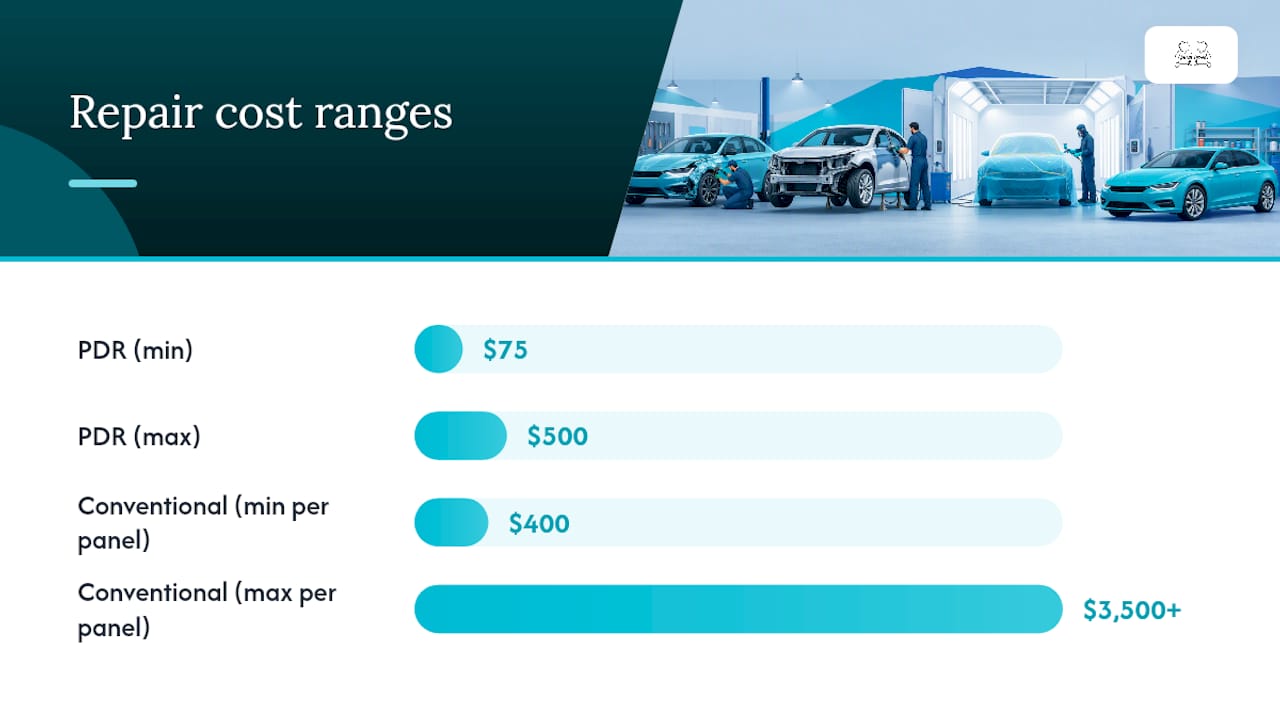
PDR works by using specialized tools to massage the metal back to its original shape from behind the panel, leaving the factory paint untouched. No filler, no primer, no color matching. When it's eligible, it's faster, cheaper, and better for your car's long-term value than conventional repair.
Dent-boys specializes in exactly this. A typical Dent-boys PDR job starts with a free estimate — either from photos you send or an in-person inspection. For hail damage or multi-dent jobs, the scope is mapped panel by panel. The repair is completed using factory-finish-preserving techniques, and every job comes with a lifetime warranty. Dent-boys also handles the insurance coordination directly, including $0 deductible support on covered claims, so you're not navigating that process alone.
Pro Tip: When requesting a PDR estimate, take photos in natural light from multiple angles — ideally with a light source reflecting off the panel. This helps the technician assess dent depth and access before the car even comes in, which speeds up quoting and scheduling.
For dent repair without painting, the key eligibility questions are: Is the paint cracked or chipped? Are there sharp creases? Is the dent accessible from behind? If the answers are no, no, and yes — PDR is almost certainly the better path.
What most car owners get wrong when budgeting for bodywork
The most common mistake isn't picking the wrong shop. It's treating the first written estimate as the final number.
Supplements are the rule on multi-panel jobs, not the exception. About 63% of multi-panel claims generate mid-repair supplements when teardown reveals damage that wasn't visible at estimate time. Owners who budget to the penny of the initial quote get blindsided.
ADAS calibration is the second blind spot. Owners with 2018+ vehicles routinely approve a bumper or door repair without asking whether the sensors need recalibration afterward. The shop completes the bodywork, the car looks perfect, and then a $300 calibration charge appears on the final invoice. Ask about it upfront on every modern vehicle.
Diminished value is the third thing most owners never think about. Even a professionally repaired vehicle is worth less than an identical car with a clean history. On newer vehicles or luxury models, that gap can be significant. If a third party caused the damage, you may have a diminished-value claim against their insurer — but you have to ask for it; insurers don't volunteer it.
Finally, rental costs add up faster than people expect on multi-week structural repairs. If your policy has a $30/day rental cap and the repair takes three weeks, you're covering the difference on anything above that daily rate. Factor rental exposure into your insurance-versus-cash math before you file.
Dent-boys offers a faster, lower-cost path for eligible repairs
For dents where the paint is still intact, Dent-boys delivers a repair that's faster, cheaper, and better for your car's factory finish than a conventional body shop job. No paint, no filler, no weeks in a shop queue.
The Dent-boys offer is built for cost-conscious owners: free estimates (by photo or in person), pick-up and delivery so you're not arranging rides, a rental vehicle during the repair, $0 deductible assistance on insurance-covered jobs, and a lifetime warranty on every repair. There's no pressure to commit before you see the numbers.
If you've got hail damage, a parking-lot dent, or a door ding that hasn't broken the paint, get a free estimate from Dent-boys and see what PDR can save you versus a conventional repair quote. Send photos, get a number, and decide from there.
Sources
These sources back the technical claims and cost figures in this guide. For safety-related or structural decisions, the government and industry sources below are worth reading directly.
- Body Shop Repair Cost Calculator — 2026 Dent, Panel & Frame Damage | UseCalcPro
- Updated for 2026 — national average costs with state-by-state breakdowns
- How Much Is Body Work on a Car? 2026 Pricing Guide (with Real Numbers) - autobodyrepairs