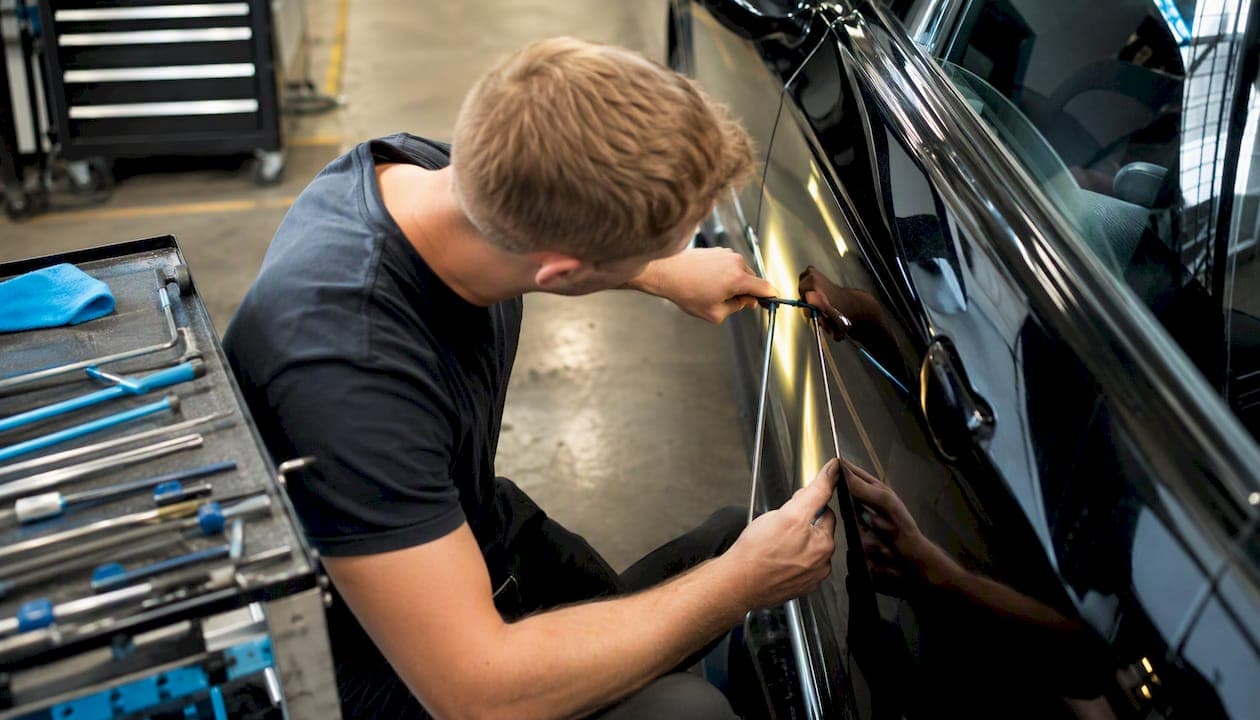
Paintless dent repair (PDR) is the right car appearance upgrade option for dents and hail damage when your paint is still intact. It reshapes the metal from behind without sanding, filling, or repainting, which means your factory finish stays exactly as it left the assembly line. That matters for resale value, and it's usually faster and cheaper than any conventional body shop alternative.
Here's what to do right now:
- Photograph the damage in side-lighting to reveal the full extent of dents
- Get a written PDR estimate before calling your insurer
- Compare that estimate to your deductible to decide whether filing a claim makes sense
- Contact Dent-boys for a free estimate and $0-deductible support
Pro Tip: Take photos from a low angle with sunlight raking across the panel. Dents that look minor straight-on often show more detail from the side, and a better photo set gets you a more accurate estimate.
Table of Contents
- What is paintless dent repair and why does it preserve your car's finish?
- How do the main PDR methods work?
- When PDR won't work and what your options are
- How does insurance handle PDR, what does it cost, and how long does it take?
- What should a professional PDR service provide?
- How do you choose a PDR provider?
- What are the practical next steps to get your car repaired?
- Key Takeaways
- Why most car owners get this wrong the first time
- Dent-boys: free estimates, $0 deductible, lifetime warranty
- Useful sources
What is paintless dent repair and why does it preserve your car's finish?
PDR removes dents by massaging the metal back to its original shape using specialized rods, picks, and glue-tab tools, never touching the paint surface. No filler. No sanding. No color-matching. The dent repair without painting process works because automotive sheet metal is elastic enough to return to its factory contour when pressure is applied correctly from the panel's backside or through a controlled pull from the outside.
PDR keeps your original equipment manufacturer (OEM) paint and clearcoat untouched. A repainted panel, even a perfect color match, can reduce resale value because buyers and appraisers know repainted metal signals prior damage. PDR sidesteps that entirely.
The practical benefits stack up quickly. Factory paint is preserved, so there's no risk of color mismatch or texture difference between panels. Turnaround is measured in hours for isolated dents rather than days in a body shop paint booth. Cost is typically lower because there's no materials overhead for primer, paint, or clear. And your vehicle's Carfax or AutoCheck history stays clean of any paint-work notation.
Pro Tip: Ask any shop to attempt PDR first on a dent before committing to a repaint estimate. If the dent is borderline, a skilled technician can often tell within minutes whether PDR will get you to 95% or better.
How do the main PDR methods work?
The technique a technician uses depends on panel access, dent depth, and whether the paint is still intact. Three approaches cover most real-world jobs:
- Backside pushing: The technician accesses the panel interior through a door jamb, trim opening, or removed taillight, then uses long rods or picks to massage the dent outward. Best for door dings, body-panel dents, and most hail damage where the panel can be reached from behind.
- Glue-tab pulling: When rear access is blocked by structural framing or foam insulation, a technician bonds a plastic tab to the dent's center and pulls it outward with a slide hammer or hand tool. Common on roof panels, pillars, and shallow widespread hail hits.
- Hybrid workflows: Some dents respond well to PDR but have a small paint chip at the impact point. A technician completes the metal reshaping first, then a touch-up painter addresses the chip separately. The metal reshaping methods used in PDR are the same either way; the touch-up is just a finishing step.
PDR preserves OEM paint and resale value in a way conventional repainting cannot. A repainted panel carries a different paint layer age than the surrounding panels, which shows up under UV inspection at resale.
When PDR won't work and what your options are
PDR has clear limits, and a good technician will tell you upfront when you've crossed them.
If the paint is cracked, chipped through to primer, or the metal has stretched beyond its elastic range, PDR cannot restore the surface invisibly. Pushing or pulling stretched metal leaves a ripple. At that point, traditional bodywork is the honest answer.
The decision rules are straightforward. PDR is off the table when:
- Paint is cracked or chipped at the dent site
- The dent sits on a body line or sharp edge (metal deforms differently there)
- The panel shows deep creases rather than smooth curves
- Rust is present at or near the damage
- The panel is structurally inaccessible (some pillars, certain roof sections)
When PDR isn't viable, the alternatives are traditional filler-and-repaint bodywork or full panel replacement. Filler work is appropriate for moderate damage where the metal can be roughed in and painted over. Panel replacement makes sense for severe structural damage or when a panel is too compromised to repair cleanly. The dent repair vs. panel replacement decision comes down to damage severity, panel cost, and whether color-matching risk is acceptable.
One practical rule: always ask for a PDR assessment first. If a shop recommends paint or replacement without attempting PDR, ask for photos of the damage and a written explanation of why PDR was ruled out.
How does insurance handle PDR, what does it cost, and how long does it take?
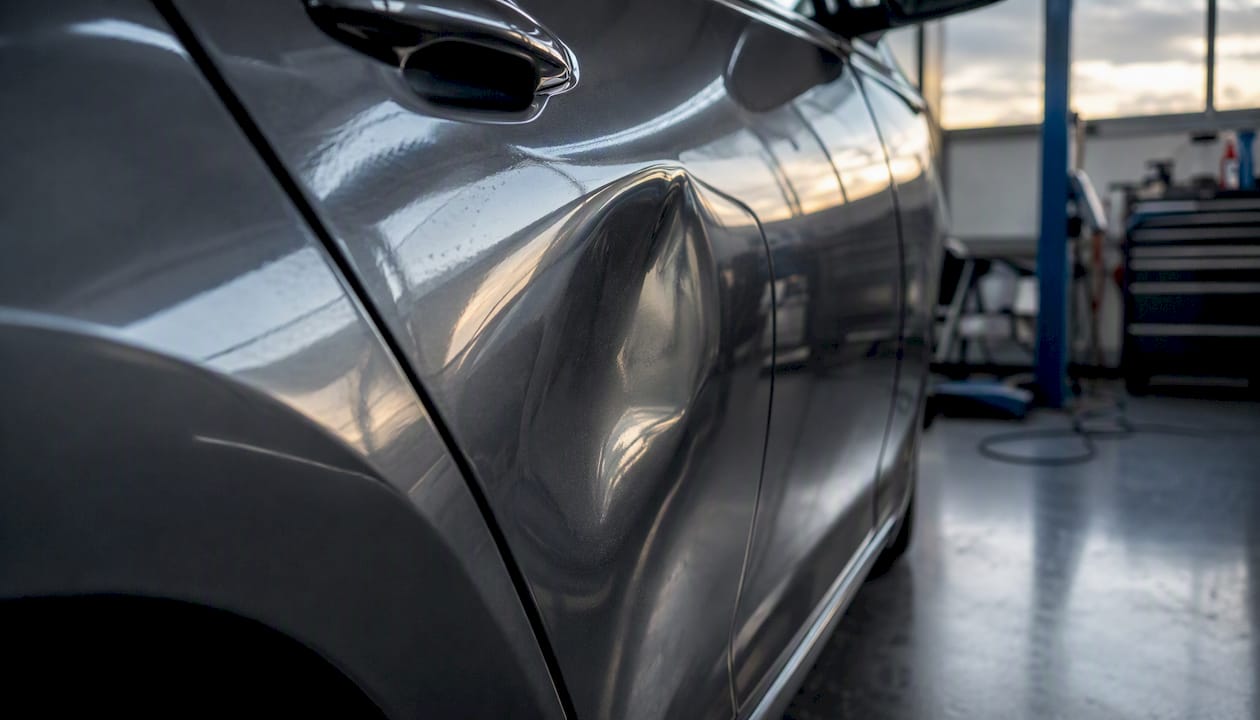
Coverage basics: Hail damage typically falls under comprehensive coverage. Collision coverage applies when another vehicle or object caused the dent. If a third party hit your car, their liability coverage may pay. Insurance generally covers PDR under comprehensive or collision for covered incidents, but the deductible math matters before you file.
The deductible calculation: Many single-dent PDR jobs cost less than a standard $500 or $1,000 deductible. Filing a claim for a repair that costs less than your deductible nets you nothing and adds a claim to your record. Get a written estimate first, then compare it to your deductible.
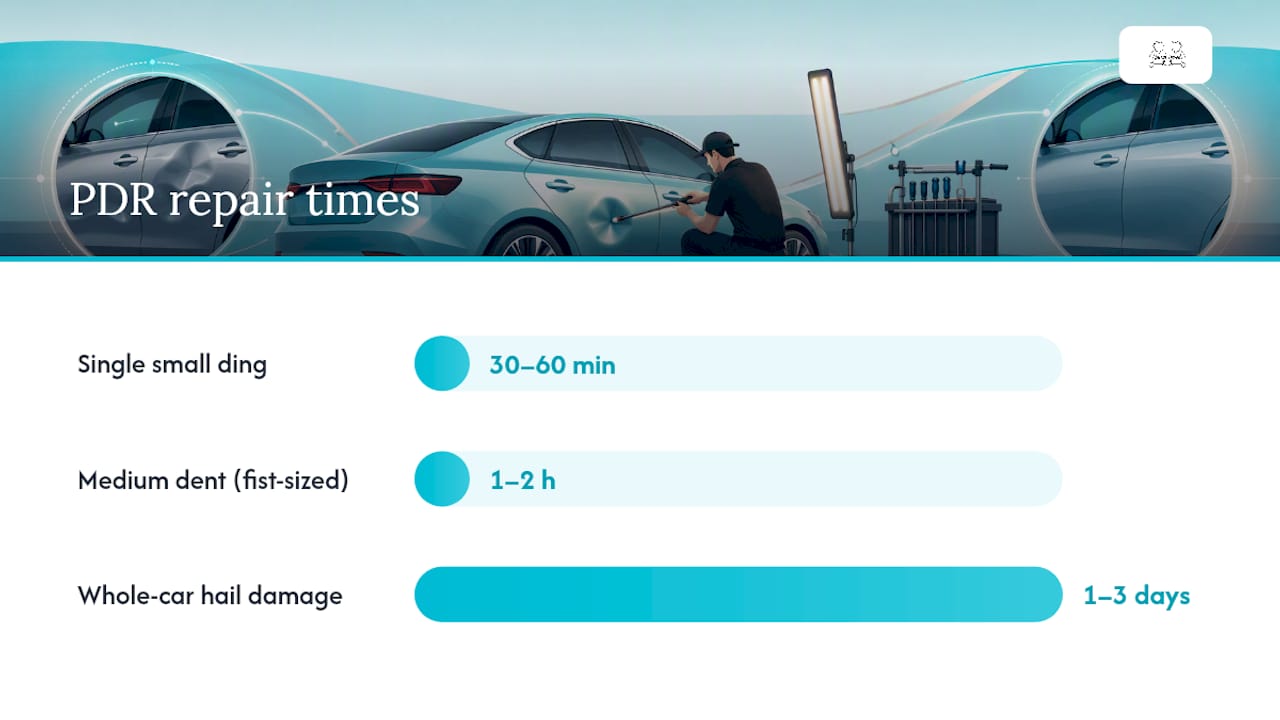
Insurers often prefer PDR for hail events because it costs less and resolves faster, which also reduces rental car exposure on the claim.
| Damage Type | Typical PDR Repair Time |
|---|---|
| Single small door ding | usually 30–60 minutes |
| Medium dent (fist-sized) | typically 1–2 hours |
| Whole-car hail damage | generally 1–3 days |
Note: These ranges reflect common industry repair timelines. Written estimates give you specific timing for your vehicle and damage.
Mobile and on-site PDR options mean many single-dent jobs can be completed the same day you request service.
What should a professional PDR service provide?
A provider worth hiring delivers more than just the repair. Before you sign anything, confirm these are in place:
A lifetime warranty on PDR work, in writing, is the clearest signal that a shop stands behind its technicians. State Farm will guarantee satisfaction with PDR work for as long as you own the vehicle when the repair is authorized, PDR is listed on the estimate, and the insurer pays for the work. That standard is worth holding any provider to.
Core service features to expect:
- Free written estimate with before photos
- Documented before-and-after photos for every job
- Trained, certified technicians
- Written lifetime warranty on completed PDR
- Mobile or on-site repair availability
- Pickup and delivery for multi-day jobs
- Rental vehicle or loaner support during repairs
- Direct insurance billing and $0-deductible facilitation
Pro Tip: Ask for the warranty in writing before the job starts, and confirm it specifically covers PDR work. A general "satisfaction guarantee" is not the same as a written lifetime warranty on the repair itself.
How do you choose a PDR provider?
Checklist before you commit
- Confirm a written lifetime warranty is available and get the exact language
- Ask for proof of technician training or certification
- Verify pickup/delivery and rental vehicle support
- Request a written, itemized estimate with photos
- Ask how the shop handles insurance billing and $0-deductible claims
Questions worth asking
- Does your warranty cover this specific repair type and how long does it last?
- How many hail or multi-dent jobs has your team completed?
- Can you come to me, or do I need to bring the car in?
- What's a realistic turnaround for my damage level?
Red flags
- No written warranty or vague verbal assurances only
- Reluctance to document before-and-after photos
- Recommending repaint or panel replacement before even assessing PDR viability
- Per-panel pricing with no per-dent breakdown on an insurance estimate
On estimates: per-dent pricing is standard for PDR. Per-panel pricing is more common in traditional bodywork. An insurance estimate should list each dent separately so you and your adjuster can verify the scope. Use the scheduling guide to understand what a pickup/delivery appointment looks like end-to-end.
What are the practical next steps to get your car repaired?
The single most useful thing you can do before calling anyone is document the damage thoroughly. Good photos give a technician enough information to give you an accurate estimate over the phone, which saves a trip and speeds up the insurance process.
Step by step:
- Photograph every dent in side-lighting, from multiple angles
- Get one or two written PDR estimates
- Compare the estimate total to your deductible
- Call your insurer only if the repair cost exceeds your deductible
- Schedule mobile on-site service or arrange pickup/delivery
- Request the repair timeline and warranty paperwork before work begins
After the metal is reshaped, a complete detailing session restores surface gloss and removes any micro-contaminants from the repair process. It's a separate step, but it's the right finishing move.
Dent-boys offers free estimates, $0-deductible support, and lifetime-warrantied PDR. Contact them to get a written estimate and schedule your repair.
Key Takeaways
PDR is the fastest, most value-preserving car appearance upgrade option for dents and hail damage when factory paint is intact.
| Point | Details |
|---|---|
| PDR preserves factory paint | Metal is reshaped without sanding or repainting, keeping OEM finish and resale value intact. |
| Do the deductible math first | Get a written PDR estimate before filing; small jobs often cost less than a standard deductible. |
| Insurers prefer PDR for hail | Comprehensive coverage typically applies, and carriers favor PDR because it costs less and resolves faster. |
| Demand a written lifetime warranty | Confirm warranty language covers PDR specifically before any work begins. |
| Dent-boys covers the full process | Free estimates, $0-deductible support, pickup/delivery, rental vehicle, and a lifetime warranty on every PDR job. |
Why most car owners get this wrong the first time
Most people call their insurer before they have an estimate. That's backwards. Filing a claim before you know the repair cost can trigger a premium adjustment for a job that would have cost less than your deductible out of pocket. The estimate comes first, always.
There's also a tendency to assume that any dent needs paint. Shops that lead with a repaint recommendation without attempting PDR are either not equipped for it or not incentivized to offer it. PDR takes skill; repainting is more predictable for a general body shop. That's a shop-capability problem, not a damage problem. If you get a repaint quote without a PDR assessment, get a second opinion from a PDR specialist.
The other misconception is that a lifetime warranty is standard everywhere. It isn't. Most general body shops offer a limited warranty tied to paint adhesion, not the underlying metalwork. A PDR-specific lifetime warranty is a meaningful differentiator, and it's worth asking for explicitly.
Dent-boys: free estimates, $0 deductible, lifetime warranty
Dent-boys handles the full repair cycle without the usual friction. You get a free written estimate, direct insurance billing, and $0-deductible support so the repair doesn't cost you out of pocket when your coverage applies. If the car needs to come to them, pickup and delivery are included. If you need wheels while the job runs, a rental vehicle is available.
Every completed PDR job carries a lifetime warranty. Trained technicians document before-and-after photos on every repair, so you have a record for your insurer and for resale.
To get started, request a free estimate online or call to schedule mobile on-site service or a pickup appointment. The estimate is written, the warranty is real, and the deductible support is built into the process.
Useful sources
- Paintless Dent Repair - State Farm®
- Will Car Insurance Pay For Paintless Dent Removal?
- Complete Guide to Vehicle Detailing | OzKonic Kustomz
- Dent Boys - Auto Hail Repair
- Dent Repair Without Painting Explained for Car Owners
- Dent Repair vs Panel Replacement: 2026 Decision Guide