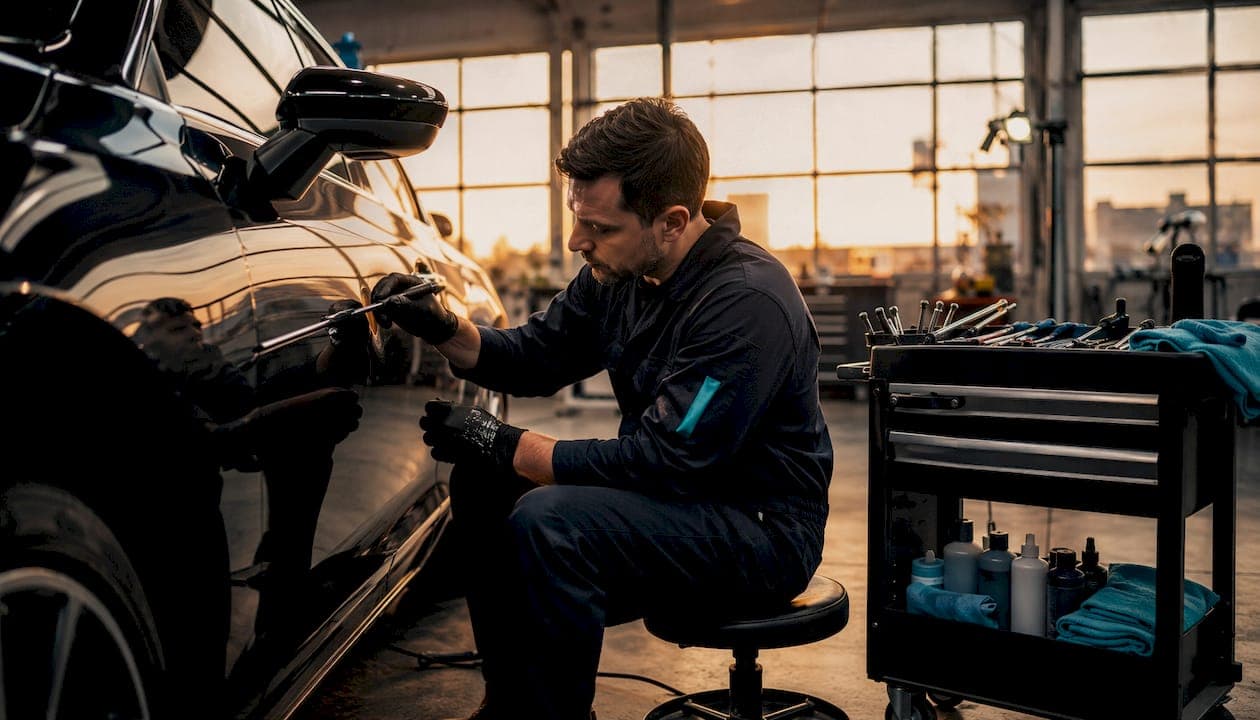
Paintless dent repair (PDR) can absolutely deliver show car quality results — but only when the paint is intact, the metal hasn't stretched or creased sharply, and a technician with real credentials is doing the work. If your dent meets those criteria, you can skip a full repaint and still walk away with a finish that turns heads at a show. If it doesn't, traditional bodywork is the honest answer. Read the decision checklist in Section 4 and the shop checklist in Section 6 before you book anything.
- Paint must be uncracked and unflaked for PDR to preserve the factory finish
- Sharp creases, torn metal, or stretched panels require traditional body and paint work
- Panel location matters: jamb edges and character lines are harder to work without visible traces
- Show-quality PDR depends heavily on technician skill, not just the technique itself
Table of Contents
- What does "show car quality" actually mean?
- How shops actually achieve a show-quality finish
- When can PDR deliver show-car quality — and when can't it?
- What to expect: timelines, costs, and warranty standards
- How to choose a shop that will actually deliver show-quality results
- Mistakes owners make when chasing show-car results
- Dent-boys delivers show-quality PDR without the repaint
- Key Takeaways
- Show quality is the practical sweet spot — here's why that matters
- Useful sources
What does "show car quality" actually mean?
Show car quality is the second-highest tier in vehicle appearance restoration, sitting below concours and above driver quality. It targets near-perfect visual presentation: straight panels, high-gloss paint with minimal orange peel, correct trim and badging fitment, and a presentable undercarriage. You don't need museum-level authenticity, but every surface a judge or spectator can see needs to be right.
Here's how the tiers actually break down:
- Concours quality: Museum-level, authenticity-obsessed, often requiring thousands of hours and six-figure budgets. Cars at this level are frequently trailered to shows, not driven.
- Show quality: Visually stunning, allows reproduction parts and modern improvements, and is judged on appearance rather than strict originality. This is the practical target for most owners.
- Driver quality: Good, functional, presentable — but not scrutinized under show lighting.
PDR fits naturally at the show-quality tier because it preserves the original factory clear coat. A repaint, even a good one, introduces color-match risk and filler that concours judges and sharp-eyed show spectators will notice. When the paint is intact, PDR sidesteps those risks entirely. For owners preparing for classic car shows, that distinction matters more than most people realize.
How shops actually achieve a show-quality finish
The process isn't one step — it's a sequence, and the finishing work at the end is what separates a good repair from a show-worthy one.
- Assessment and access planning: The technician inspects the dent under raking light, checks paint integrity, and maps the access route behind the panel.
- PDR manipulation: Using specialized rods and picks, the technician works the metal back to its original contour without sanding or filler.
- Paint correction: If PDR leaves any micro-texture or the surrounding clear coat has minor swirling, a multi-stage polishing sequence — color sanding, cutting compound, finishing polish — levels the surface to a mirror finish.
- Panel alignment and trim detailing: Gap alignment, jamb cleaning, and trim refitting are checked. These finishing steps are where show-quality work separates itself from a standard repair.
- Final lighting inspection: The panel is viewed under multiple angles and light sources before sign-off.
Pro Tip: The access work and final polish are invisible to most owners, but they're where show-quality is won or lost. Ask your shop specifically how they handle post-PDR paint correction — a vague answer is a red flag.
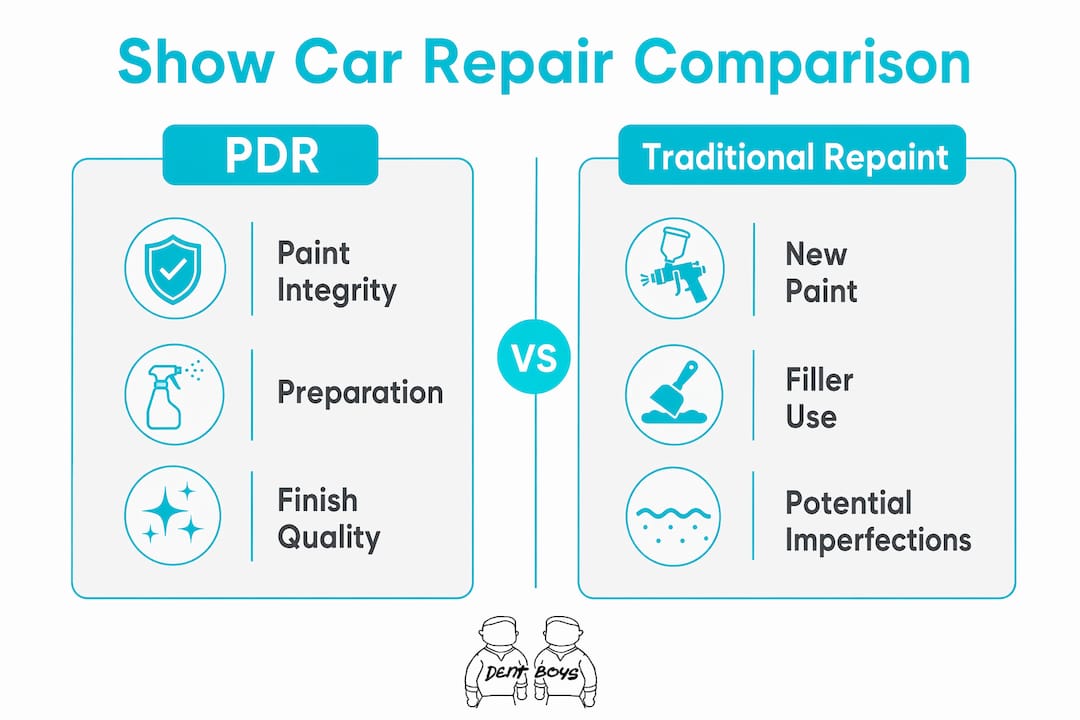
| Dimension | PDR | Traditional repaint and fill |
|---|---|---|
| Paint integrity | Factory finish preserved | New paint layer; color-match risk |
| Filler use | None | Often required for creases |
| Turnaround | Same day to a few days | One to three weeks typical |
| Show suitability | High when paint is intact | Necessary when paint is damaged |
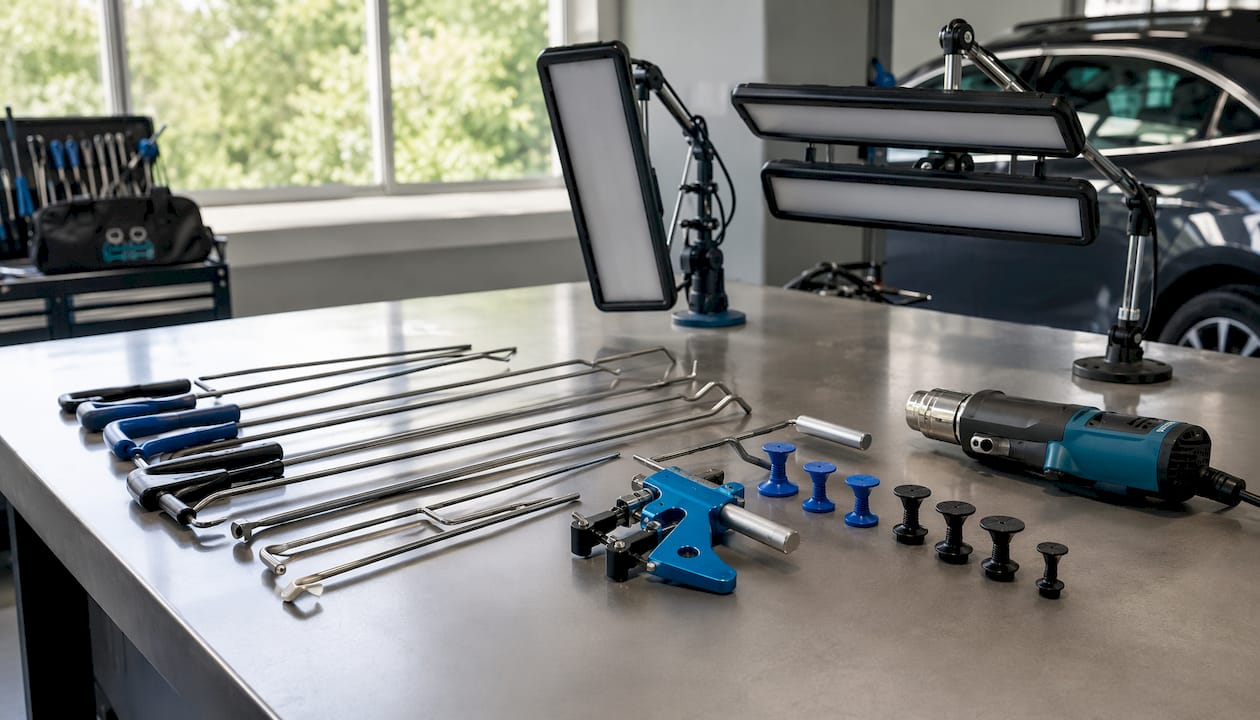
For a deeper look at the tools technicians use to achieve this level of finish, the PDR tools professional overview breaks down what separates entry-level equipment from shop-grade precision tools.
When can PDR deliver show-car quality — and when can't it?
This is the decision most owners get wrong. PDR is not a universal solution, and a shop that tells you otherwise is cutting corners.
PDR is appropriate when:
- Paint is fully intact — no cracks, chips, or flaking at or around the dent
- The metal has not stretched or torn (a smooth, round dent, not a sharp crease)
- There is physical access behind the panel for tooling
- The dent is away from panel edges, character lines, and door jambs
- The panel is steel (aluminum requires more specialized technique but is workable)
PDR is not appropriate when:
- Paint is cracked or missing at the impact point
- The metal is stretched, torn, or has a sharp crease that won't relax
- The panel requires replacement due to structural damage
- The dent sits directly on a body line or folded edge
When paint is cracked or metal is stretched, traditional bodywork with filler and repainting — or full panel replacement — is the only path to show-quality results. Attempting PDR on damaged paint will make the finish worse, not better. If you're unsure, a dent repair vs. panel replacement guide can help you frame the decision before you talk to a shop.
What to expect: timelines, costs, and warranty standards
Timelines vary by scope. A single small dent on an accessible panel can be completed same-day. Multi-panel work combined with paint correction typically runs two to four days. If a shop quotes you two weeks for a straightforward PDR job, ask why.
Cost structure depends on how the shop quotes:
- Flat per-dent pricing works for simple, isolated damage
- Per-panel or tiered-by-severity pricing is more common for show-quality work where paint correction is included
- Expect higher quotes when paint correction, jamb detailing, or aluminum panel work is involved
Warranty and documentation are non-negotiable at the show-quality level. Credible shops provide a written estimate before work begins, before-and-after photos, and a minimum 12-month/12,000-mile warranty on parts and labor. ASE technicians retest every five years to maintain certification — that retest cycle is what keeps credentials current, not just the initial badge.
| Benchmark | Standard | Source |
|---|---|---|
| Technician recertification | Every five years | Consumer Reports |
| Minimum industry warranty | 12 months / 12,000 miles | Consumer Reports |
| Dent-boys warranty | Lifetime | Dent-boys |
How to choose a shop that will actually deliver show-quality results
Credentials and portfolio to verify:
- ASE certification for the technician doing the work (not just the shop owner)
- Documented PDR-specific training, not just general body shop experience
- A portfolio of completed show-quality PDR work — actual photos, not stock images
- Written warranty terms before you sign anything
Questions to ask at the estimate:
- Will this repair be PDR, a blend, or a repaint — and why?
- Can you show me examples of show-quality PDR work you've completed on similar panels?
- What is your written warranty, and does it cover the full repair or just parts?
- How do you handle paint correction after PDR if the surface needs leveling?
Red flags to walk away from:
- Vague scope ("we'll see what we can do")
- No before-and-after photos from previous jobs
- Pressure to repaint when PDR may be viable
- Refusal to provide references or written documentation
- Pricing with no line-item breakdown
On delivery, inspect:
- Panel gaps against adjacent panels (even gaps, no binding)
- Surface under raking light and direct light for subtle waves
- Trim and jamb fitment
- Written warranty paperwork matches what was quoted verbally
Mistakes owners make when chasing show-car results
- Choosing by facility appearance, not technician credentials. A clean waiting room says nothing about the person holding the PDR rod. Verify ASE certification and PDR-specific experience directly.
- Accepting an immediate repaint without exploring PDR. If a shop leads with repaint before inspecting paint integrity, get a second opinion. PDR preserves your factory finish; a repaint introduces variables that can hurt show scores.
- Skipping documentation. No written estimate, no before-and-after photos, no warranty terms in writing — these are not optional at the show-quality level. Insist on all three before work starts.
- DIY compounding before the shop visit. Over-polishing or using an aggressive compound at home thins the clear coat. Once it's gone, PDR and paint correction have less to work with.
Pro Tip: Technician credentials and documented examples of show-level work matter far more than how polished the shop's website looks. A technician who can show you ten completed show-quality PDR jobs is worth more than a shop with a great Instagram page and no portfolio.
Dent-boys delivers show-quality PDR without the repaint
Dent-boys specializes in exactly this situation: owners who want show-quality results from PDR without the cost, downtime, or color-match risk of a full repaint. Every repair comes with a free estimate, pick-up and delivery, a $0 deductible option, and a lifetime warranty — well beyond the 12-month/12,000-mile industry benchmark. Before-and-after documentation is standard, not an add-on. And when PDR isn't the right call because paint is damaged or metal is stretched, Dent-boys will tell you that directly rather than push a repair that won't hold up under show lighting. Request a free estimate and ask to see show-quality PDR examples from their portfolio.
Key Takeaways
Show car quality repair is achievable with PDR when paint is intact and metal is undamaged — but the finishing steps and technician credentials are what actually determine whether the result is show-worthy.
| Point | Details |
|---|---|
| PDR works for show quality | Paint must be intact and metal undamaged; sharp creases or torn paint require traditional bodywork. |
| Finishing steps matter most | Panel alignment, jamb detailing, and multi-stage polishing separate show-quality work from a standard repair. |
| Verify credentials, not facilities | Confirm ASE certification and a portfolio of show-quality PDR work before booking. |
| Warranty baseline | Insist on written estimates, before-and-after photos, and at minimum a 12-month/12,000-mile warranty. |
| Dent-boys advantage | Dent-boys offers PDR with a lifetime warranty, free estimates, and transparent recommendations when repaint is necessary. |
Show quality is the practical sweet spot — here's why that matters
Show quality gets overlooked because owners assume it means "almost concours" and price it accordingly. It doesn't. It means visually stunning, driver-friendly, and achievable without the six-figure commitment that concours restorations demand. For most owners who actually drive their cars, show quality is the honest target: it scores well at events, holds up on the road, and doesn't require trailering the car everywhere to protect a museum-level finish.
The part that most guides miss: PDR, done right, is often better for show-quality goals than a repaint. Factory paint that's been correctly restored through PDR and paint correction has a depth and consistency that fresh paint from a spray booth can struggle to match, especially under show lighting. The key word is "correctly" — which brings everything back to technician skill, documented credentials, and a shop willing to tell you when PDR isn't the right answer.
Useful sources
- The four tiers of classic car restoration — defines show quality, concours, and driver quality tiers with practical distinctions
- Show Quality: What It Is & What It Costs — explains what show quality permits (reproduction parts, modern upgrades) and what it costs
- Use These Paint and Bodywork Steps to Achieve a Show Car Finish — MotorTrend's detailed breakdown of repaint-based show-quality processes and PDR limits
- Before you dive into a restoration, read this — Hagerty on concours cost realities and how to weigh restoration investment against intended use
- How to find a high-quality car repair shop — Consumer Reports on ASE certification cycles, warranty benchmarks, and documentation standards
- Dent Repair Without Painting Explained for Car Owners — Dent-boys overview of PDR fundamentals and when it applies
- High End Vehicle Dent Restoration: The Owner's Guide — Dent-boys guide for collectible and high-end vehicle owners with show-quality expectations