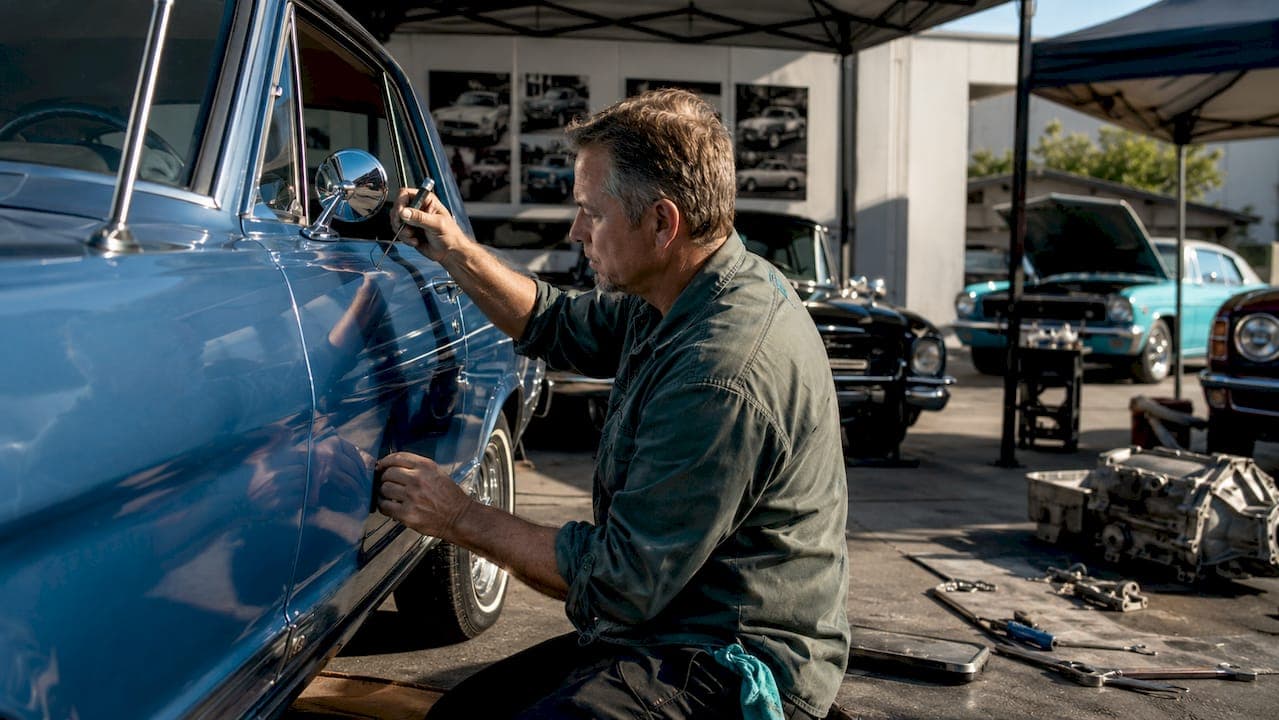
Dent repair for collector cars is the process of restoring body damage without disturbing the vehicle's original paint, metal, or provenance, primarily through paintless dent repair (PDR) performed by technicians who understand vintage materials. Standard collision shops treat every car the same. Collector cars demand something different. The sheet metal on a 1965 Mustang or a 1957 Bel Air is thinner, metallurgically distinct, and carries decades of irreplaceable factory finish. A wrong move costs more than a repair bill. It costs authenticity, appraisal value, and the story the car tells. Getting this right starts with knowing which methods work and which ones destroy what you're trying to protect.
1. Dent repair for collector cars: which methods actually work
Three primary methods apply to collectible car bodywork. Each serves a different situation, and choosing the wrong one causes permanent damage.
Paintless Dent Repair (PDR) is the preferred method for most collector car dents. Technicians use specialized metal rods and body picks to massage dents from behind the panel, restoring the original contour without touching the paint surface. PDR preserves factory paint and avoids body filler or overspray entirely. That matters enormously for appraisal, because original factory paint is a documented asset on any concours or insurance valuation.
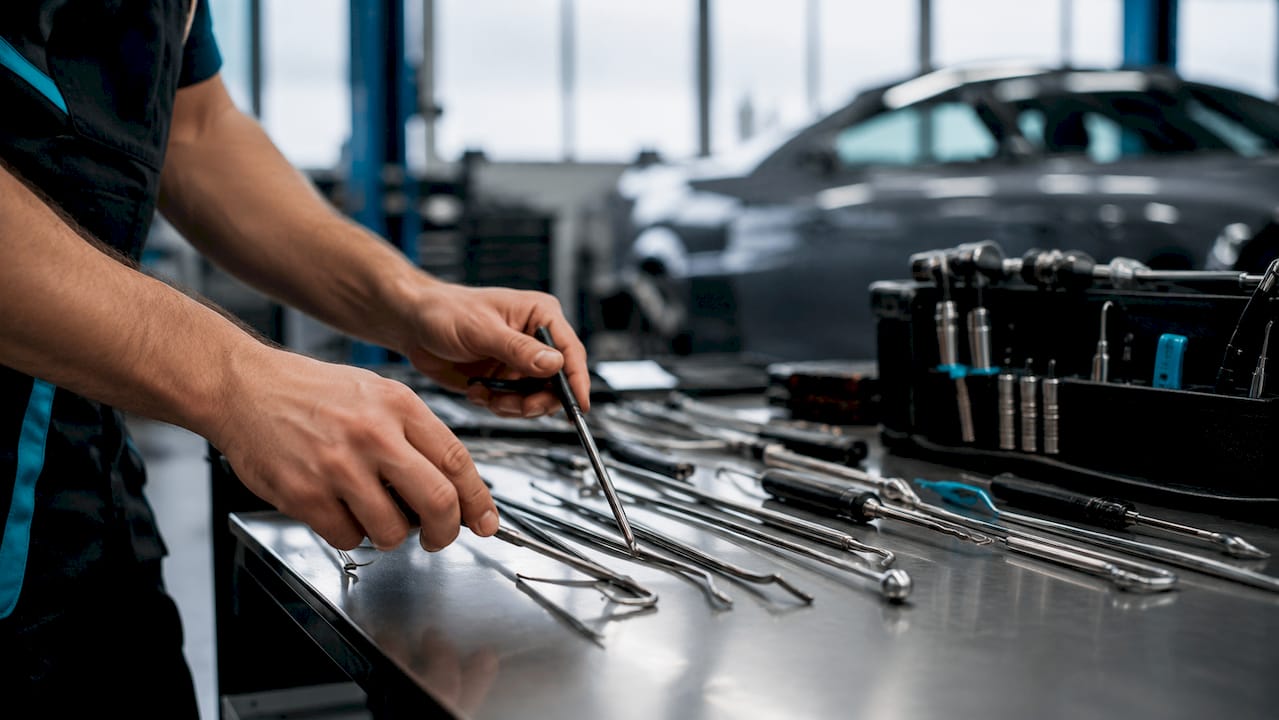
Lead loading is the authentic factory method for seam and joint repairs on pre-1970s vehicles. Lead bonds structurally to steel and expands and contracts at nearly the same rate, making it invisible once finished. Concours judges recognize lead loading as correct period practice. Plastic filler in the same location reads as a shortcut and raises questions about what else was done incorrectly.
Traditional bodywork with plastic filler has its place on driver-quality restorations where originality is not the primary concern. For show cars, numbers-matching vehicles, or anything headed to auction, plastic filler is a liability. It sits on the surface rather than bonding to the metal, and experienced appraisers detect it immediately.
| Method | Best for | Preservation impact | Key risk |
|---|---|---|---|
| Paintless dent repair | Small to medium dents, intact paint | Highest: no paint disturbance | Requires specialist skill on thin vintage panels |
| Lead loading | Seams, joints, period-correct repairs | High: factory-authentic result | Requires trained metalworker; lead dust hazard |
| Plastic body filler | Driver restorations only | Low: reduces originality score | Detected by appraisers; can crack over time |
2. Why vintage sheet metal changes everything
Collector car sheet metal is not the same material as modern automotive steel. Vintage panels are thinner and metallurgically different, which means the pressure required to massage out a dent is far more sensitive than on a contemporary vehicle. Apply too much force and the metal stretches. Stretched metal cannot be compressed back to its original shape without heat shrinking, which introduces its own risks to the paint and surrounding area.
Technicians trained exclusively on modern cars develop a feel for current steel gauges. That feel does not transfer directly to a 1960s panel. The feedback is different, the response is different, and the margin for error is narrower. This is not a skill gap that experience alone closes. It requires specific training on vintage materials.
The risk of getting this wrong is real. Paint cracking, panel distortion, and metal fatigue are all documented outcomes when general technicians attempt high-end vehicle dent fixes on collector cars without the right background. The repair cost then multiplies because you are now correcting two problems instead of one.
3. How to find a qualified specialist for restoration dent services
The technician matters more than the shop name. A qualified restoration dent specialist brings three things: hands-on experience with vintage sheet metal, familiarity with PDR techniques adapted for older panels, and an understanding of what concours judges and appraisers look for.
Pro Tip: Ask any prospective technician to name the steel gauge on your specific vehicle's panels and explain how they adjust their PDR technique accordingly. A specialist answers this without hesitation. A generalist does not.
When evaluating a shop, look for these indicators:
- A portfolio of completed work on vehicles from the same era as yours
- Familiarity with lead loading as a repair method, even if PDR is the primary approach
- Willingness to document the repair method used and provide a written record for your provenance file
- References from other collectors, not just general customers
Restoration experts caution against aggressive repair approaches typical in standard collision shops. The right specialist treats each dent as a puzzle requiring patience and finesse, not a production-line fix. That philosophy shows up in how they talk about the work before they start it.
4. Maintenance and prevention practices that protect collectible car bodywork
The best dent repair is the one you never need. Collector cars require a proactive maintenance approach that treats prevention as seriously as restoration.
- Store in a climate-controlled environment. Temperature swings cause metal to expand and contract. Over time, that stress weakens panel integrity and makes existing minor dents worse. A stable environment between 50°F and 70°F is the standard recommendation for long-term storage.
- Use proper blocking under the frame, not just the tires. Tires flat-spot under sustained weight, and uneven support stresses the body structure. Frame stands distribute weight correctly and protect panel alignment.
- Exercise the car regularly. Running the engine to proper operating temperature and taking the car on a short drive circulates fluids, prevents seals from drying, and keeps you familiar with the car's condition. You notice new dents or dings faster when you drive the car rather than just covering it.
- Document every maintenance event in a logbook. Date, mileage, work performed, and who performed it. This record becomes part of the car's provenance and supports future appraisals.
- Use fitted car covers with soft inner linings. Covers that shift in the wind abrade paint over time. A fitted, breathable cover with a fleece interior protects the finish without trapping moisture.
5. How dent repair affects collector car value and provenance
The method you choose for dent repair directly affects what your car is worth on paper and at auction. Improper filler or repainting on original factory surfaces reduces collector car value, particularly when detected during a professional appraisal or concours judging. Appraisers use paint depth gauges as a standard tool. Any reading above the factory specification signals that work has been done, and that triggers scrutiny.
PDR sidesteps this entirely. Because the paint surface is never touched, timely PDR restores value without triggering the paint depth alarm. The car reads as original because it is original. That distinction is worth real money at auction and on insurance valuations.
Provenance documentation amplifies the effect. Service logs showing specialist restoration work build trust with buyers and appraisers. A file that shows every dent was repaired by a qualified technician using period-correct or non-invasive methods tells a story of careful stewardship. That story commands a premium.
Collectors who treat dent repair as a provenance decision, not just a cosmetic one, consistently achieve stronger appraisal results. The repair method is part of the car's documented history. Choose it accordingly.
Key value considerations for collectors:
- Original factory paint is the single highest-value surface on most collector cars. Protect it above all else.
- Lead-loaded seams on pre-1970s vehicles signal authenticity to judges. Replacing them with plastic filler signals the opposite.
- Written repair records from qualified specialists add credibility to every future sale or appraisal.
- Prompt repair prevents small dents from becoming larger structural issues that require more invasive work. Learn more about protecting your car's value through timely attention.
Key takeaways
Paintless dent repair by a vintage-trained specialist is the most effective method for preserving a collector car's original paint, provenance, and market value.
| Point | Details |
|---|---|
| PDR is the top choice | It restores dents without touching factory paint, protecting appraisal value. |
| Specialist skill is non-negotiable | Vintage sheet metal requires different pressure and technique than modern panels. |
| Lead loading beats plastic filler | Period-correct lead repairs satisfy concours judges; plastic filler raises red flags. |
| Documentation builds value | Written repair records from qualified technicians strengthen provenance and resale price. |
| Prevention reduces repair costs | Climate-controlled storage, proper blocking, and regular exercise minimize dent risk. |
The part most collectors get wrong
I have seen collectors spend six figures on a frame-off restoration and then hand the car to a general body shop for a parking lot dent. That decision undoes years of careful work in an afternoon.
The uncomfortable truth about automotive dent removal for collectors is that the repair method carries as much weight as the repair result. A dent that disappears under plastic filler looks fine from ten feet away. At a concours event or during a formal appraisal, it tells a completely different story. Judges and appraisers are not fooled, and buyers who know what to look for are not either.
What I have found actually works is treating every repair decision as a documentation decision first. Before any tool touches the panel, the question should be: "Will I be comfortable disclosing this method in the car's history file?" If the answer is no, the method is wrong. PDR passes that test every time. Plastic filler rarely does on a car with collector status.
The other thing collectors underestimate is patience. Dent repair without painting takes longer when done correctly on vintage panels. A technician who quotes you a two-hour turnaround on a classic car door dent is either very good or not careful enough. The right specialist takes the time the metal requires, not the time the schedule allows.
— Martin
Dent-boys: specialist care for your collector car
Collector cars deserve repair work that matches the care you have put into owning them. Dent-boys specializes in paintless dent repair for high-end and collectible vehicles, using techniques that protect original paint and preserve the provenance your car has built over decades.

Every repair comes with a lifetime warranty, a $0 deductible, and pick-up and delivery service so your car never sits in a general shop lot. Dent-boys offers free estimates and provides a rental vehicle while your car is being restored. For collectors who take authenticity seriously, professional dent repair from a team that understands what original paint is worth is the only option worth considering. Reach out to Dent-boys and get your free estimate today.
FAQ
What is paintless dent repair and why is it best for collector cars?
Paintless dent repair uses metal rods and body picks to massage dents from behind the panel without disturbing the paint surface. It is the preferred method for collector cars because it preserves original factory paint, which is a primary factor in appraisal and concours judging.
Can all dents on a classic car be fixed with PDR?
PDR works on most small to medium dents where the paint is intact and the metal has not been stretched. Severe creases, rust damage, or dents at panel edges may require traditional metalwork or lead loading instead.
How does dent repair affect a collector car's appraisal value?
Repairs that preserve original paint maintain or improve appraisal value. Repairs using plastic filler or repainting can reduce value significantly, especially when detected by paint depth gauges during a formal appraisal.
Why should I avoid general body shops for my collector car?
General technicians develop their feel for modern steel gauges, which are thicker and respond differently than vintage panels. Applying the same pressure to a 1960s panel risks stretching the metal or cracking the paint, creating a more expensive problem than the original dent.
What documentation should I keep after a dent repair?
Keep a written record of the repair date, the technician's name and qualifications, the method used, and the location of the repair on the vehicle. This record becomes part of the car's provenance file and supports stronger appraisal and resale results.