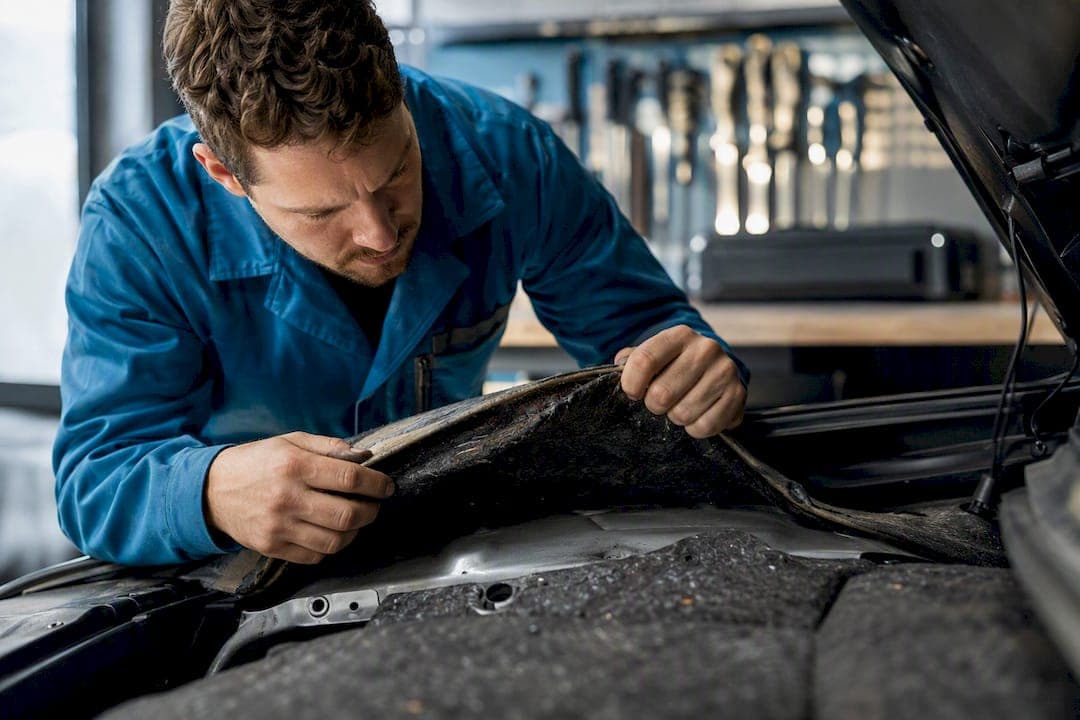
Most hood dents qualify for paintless dent repair as long as the paint hasn't cracked and the metal hasn't been stretched past its limit. That's the short version. PDR relies on the fact that steel and aluminum have "memory," so a technician can massage the panel back toward its original shape from underneath without touching the paint. Estimates suggest 80% to 90% of typical dents are PDR candidates, though hoods carry extra wrinkles, literally and figuratively, because of what sits behind them.
Before you decide anything, run this quick self-check:
- Paint: No cracks, chips, or bare metal visible in or around the dent.
- Depth: Shallow to moderate, no sharp crease line across the metal.
- Location: Not right on a body line, edge, or hinge area.
- Access: You (or a tech) can reach the panel's underside without major disassembly.
If all four check out, PDR is very likely to work. If you're unsure about even one, skip the DIY kit and get a professional inspection first. A five-minute look from a trained eye beats guessing.
Key Takeaways
Hood dents are strong PDR candidates when paint stays intact and a technician can access the panel's underside without major disassembly.
| Point | Details |
|---|---|
| Check paint first | Cracked, chipped, or lifted paint rules out PDR before anything else is assessed. |
| Access decides feasibility | Insulation, bracing, and hardware often must be moved to reach the hood's underside. |
| Combine techniques | Technicians blend underside pushing, glue-pull tabs, and tap-downs for the best cosmetic result. |
| Know the DIY limit | Attempt kits only on shallow, centrally located, easily accessible dents with intact paint. |
| Dent-boys handles the full job | Free estimates, pickup/delivery, $0 deductible support, a rental vehicle, and a lifetime warranty back every hood repair. |
Table of Contents
- What Is Hood Dent Repair PDR and How Does It Work?
- How Do Technicians Actually Fix a Dent on the Hood?
- Why Access Under the Hood Determines the Repair Plan
- Should You DIY a Hood Dent or Call a Professional?
- What Does Hood Dent Repair Cost and How Long Does It Take?
- When PDR Won't Fix Your Hood Dent
- What Happens After a Hood Is Repaired?
- Why I'd Always Push for PDR First on a Hood
- Get Your Hood Dent Fixed Without the Hassle
- Sources
What Is Hood Dent Repair PDR and How Does It Work?
Paintless dent repair, or PDR, is the industry's standard term for reshaping a dent without fillers, sanding, or repainting. Technicians push, pull, or tap the metal back into position while keeping the factory finish intact, which is exactly why the technique has taken over as the default fix for hail damage, door dings, and shopping cart dents. On a hood, though, "paintless" only works if two conditions hold: the paint survived the impact, and someone can physically get behind the panel to work the metal.
That second condition trips up more hood repairs than people expect. A dent on a door panel usually has an access hole or a removable liner nearby. A hood is a different animal, layered with insulation blankets, support braces, washer fluid lines, and sometimes sound deadening bonded directly to the underside. Technicians often need to remove insulation or hardware to reach the damaged area, and that extra step is part of what separates a fast hood repair from a longer one.
Here's the diagnostic checklist a good technician runs through before quoting you anything, and one you can run through yourself before you call.
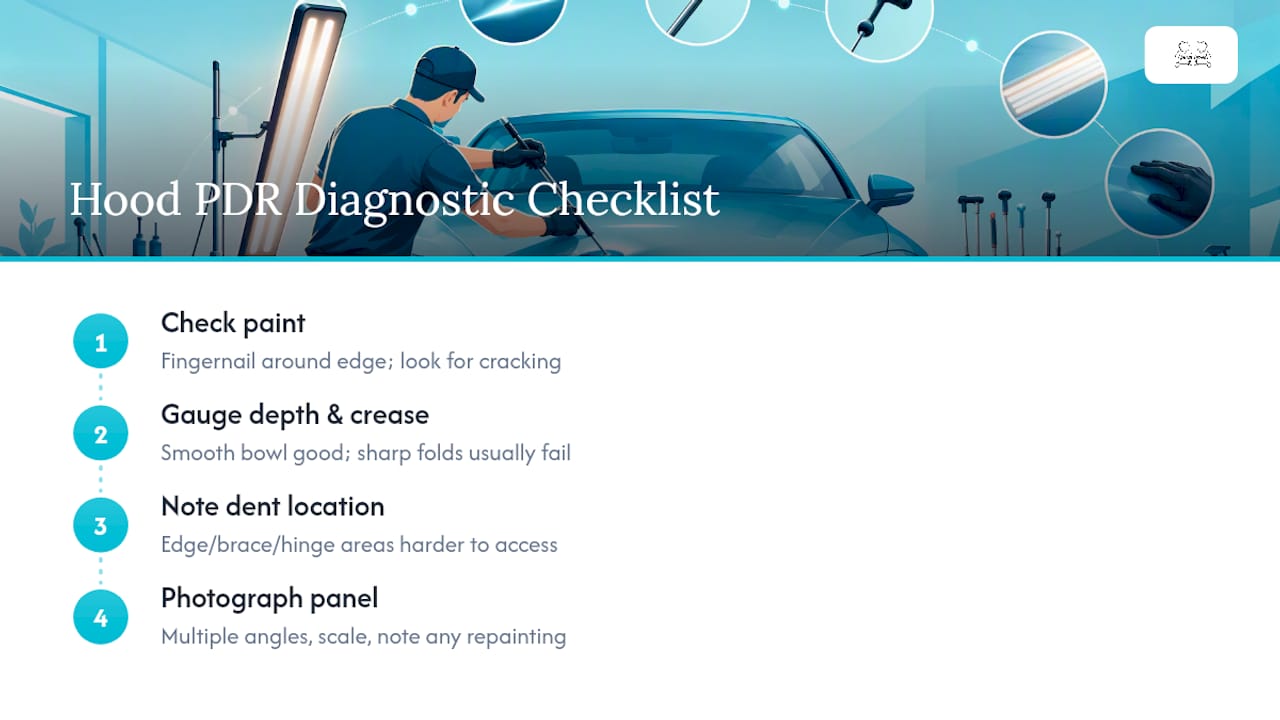
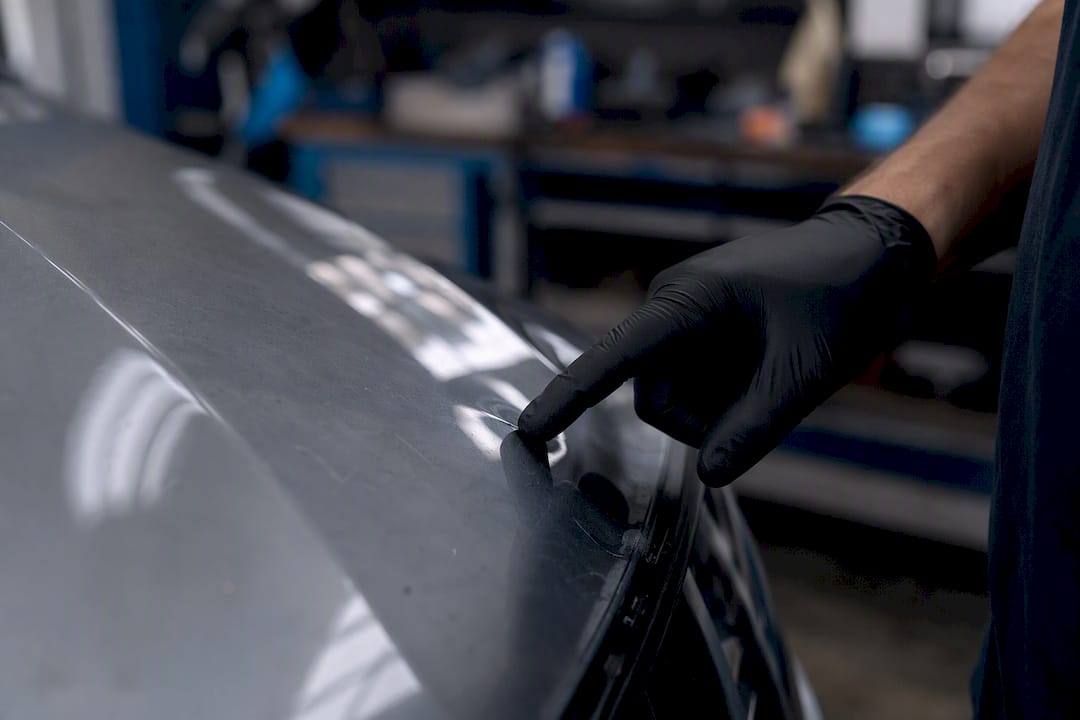
Check the paint first. Run a fingernail lightly around the dent's edge and look closely under good light. Any cracking, flaking, or a dull, chalky patch where paint has separated from primer means PDR is off the table for that spot. Paint that's already compromised can't be pushed back into place, because the flexing that repairs the metal will only widen existing cracks.
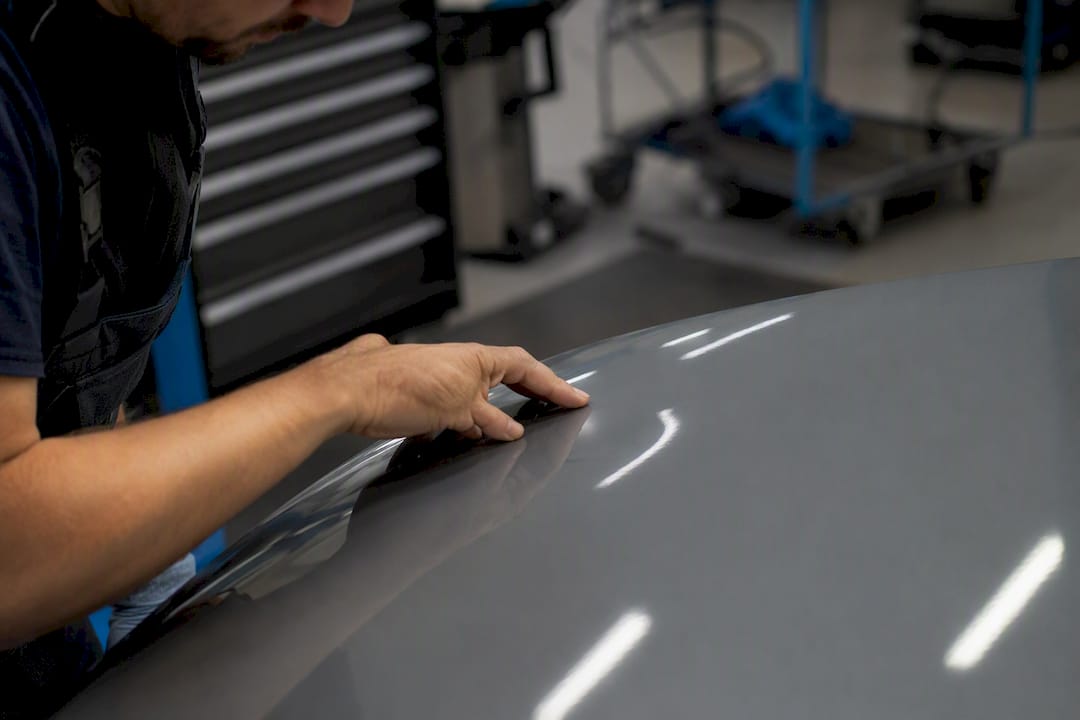
Gauge the depth and feel for a crease. Press gently around the perimeter. A smooth, bowl-shaped dent is a great sign. A sharp fold line, especially one that runs several inches, usually means the metal has been stretched beyond where a rod or glue tab can coax it back.
Note the location. Dents sitting near the hood's edge, over a support brace, or close to hinges and latch hardware are harder to access and more likely to have already stressed the metal in a way that's tough to correct. Center-panel dents on flat sections are the easiest wins.
Photograph everything. Multiple angles, in natural light, with something for scale like a coin or a ruler. If the hood has ever been repainted, mention it. Repainted panels don't always bond to primer the same way factory finish does, raising the odds of paint lifting during the pull.
Pro Tip: Take your photos in overcast daylight or under a shop light angled low across the panel. Direct sun washes out shadow detail, and shadow detail is exactly what reveals a dent's true depth and crease lines.
How Do Technicians Actually Fix a Dent on the Hood?
Hood PDR usually comes down to three techniques, sometimes used in combination on the same dent.
- Underside pushing with rods and picks. This is the preferred method whenever access allows it. A technician slides specialized rods, sized and curved to match the hood's internal contours, through gaps created by removing insulation or trim, then applies steady, calibrated pressure from behind to push the low spot back up. Working largely by feel, technicians use a reflection board on top of the panel to watch the light lines shift as the metal moves, which tells them exactly how much more pressure to apply and where.
- Glue-pull repair when back access is blocked. Some hoods have bonded insulation, complex bracing, or wiring harnesses that make pushing from underneath risky. In those cases, technicians attach specially designed tabs to the outside of the dent using hot glue, then use a pulling bridge or slide hammer to draw the metal outward in controlled increments. It's slower and requires more finesse than it sounds.
- Tap-downs and metal blending. After the bulk of the dent is corrected, small high spots often remain, tiny areas where the metal overshot flat. A fine tap-down tool knocks these back down millimeter by millimeter until the surface reads true under a reflection board.
Why combine all three instead of picking one? Because common PDR technique is pushing from the underside with rods, and using glue tabs to pull from the outside when access is limited, and real-world hood dents rarely fit one clean method. Skilled technicians treat these as complementary tools, not competing methods.
The tool sizing itself matters more than most owners realize. A rod that's too aggressive for the panel's gauge and curvature can overcorrect, creating a new high spot or, worse, stretching the metal so it won't hold its shape at all. That's a mistake that can't be undone with more pushing. Choosing the right dent repair tools for the specific panel geometry is a skill built over hundreds of repairs, not something a one-size-fits-all kit replicates.
- Underside rods and picks: best for open, accessible dents on flat or gently curved sections.
- Glue-pull tabs and bridges: the workaround when insulation, wiring, or bracing blocks direct access.
- Tap-down hammers and knockdown tools: used last, to smooth remaining micro high spots.
Why Access Under the Hood Determines the Repair Plan
Ask any technician what makes hood dents different from door or fender dents, and the answer is almost always the same: getting behind the panel. Insulation, bracing, washer nozzles, and latch hardware often block a straight shot at the dent, which means the technician's first job isn't fixing the dent at all. It's clearing a path to it.
That usually means temporarily lifting or removing the insulation blanket, disconnecting a washer fluid line, or unbolting a support bracket that's in the way. None of this is destructive when done correctly, everything gets reinstalled once the repair is finished, but it does add time to the job compared to a door ding you can reach through an existing access port.
On a smaller number of modern vehicles, insulation is bonded directly to the hood shell rather than clipped in place, or reinforcement structures leave almost no working gap. In those cases, technicians may recommend a different repair approach entirely rather than risk damaging bonded components or wiring while forcing access. This is exactly why access, not dent size alone, so often decides whether PDR is even on the table.
What can you do to help before the appointment?
- Clean the hood so the technician can see the full extent of the damage without dirt masking secondary dings.
- Skip any DIY suction-cup or dry-ice tricks. They rarely fully correct a dent and can hide new stress fractures in the metal from a trained eye.
- Photograph the damage before you do anything else, in case insurance documentation is needed later.
- Book mobile service in shade or an enclosed space when you can. Direct sun makes it harder to spot faint high spots during the reflection-board check.
Pro Tip: If your hood has washer nozzles built into it, mention that when you book. Some technicians bring extra time or parts on hand knowing they'll need to disconnect and reseal fluid lines during access.
Should You DIY a Hood Dent or Call a Professional?
A DIY glue-pull kit is genuinely fine for one narrow situation: a small, shallow dent sitting in the flat center of the hood, with intact paint and no crease, where you can already see and reach the backside without removing anything. That's a fair number of parking-lot dings. It is not most hood damage.
The risk with amateur attempts isn't usually total failure, it's partial success that makes the professional repair harder later. Overworking a spot with a cheap glue-pull kit or a hardware-store slide hammer tends to create secondary high spots, or worse, stretches the metal in a small area so it no longer holds a flat plane. Technicians work largely by feel and years of calibration; a first attempt with no reference point for how much pressure is too much is where things go sideways.
Here's a simple framework:
- Attempt DIY only if: the dent is shallow, centrally located, paint is undamaged, and you have clear backside access without disassembly.
- Call a professional if: there's any crease, the dent sits near an edge or hinge, the paint has ever been touched up, or you simply don't have the tools to check your own work with a reflection board.
- Escalate beyond PDR if: a technician tells you the metal is stretched or the panel has been repainted with a poor bond, since that changes the repair math entirely.
Before hiring anyone, ask what warranty backs the repair, whether they'll show you before-and-after photos of similar hood jobs, and how they handle insurance paperwork if the damage is hail-related. A shop that hesitates on any of those three questions is worth a second opinion. For a deeper look at when repair stops making sense and panel replacement becomes the better call, it's worth reading before you commit to any repair path.
Pro Tip: Ask specifically whether the tech plans to remove insulation or hardware for your hood. A vague answer often means they haven't actually looked at your specific dent yet, just quoted from a photo.
What Does Hood Dent Repair Cost and How Long Does It Take?
A single small, easily accessible hood dent typically runs on the lower end of the PDR price scale, often comparable to a basic door ding, and can sometimes be finished in under an hour by a mobile technician. Multiple dents, hail damage covering the whole hood, or dents requiring insulation removal push both price and time up considerably, since labor is billed on complexity and access difficulty rather than the dent's size alone.
- Single accessible dent: fastest and cheapest, often a same-day mobile appointment.
- Multiple dents or hail damage: more labor hours, sometimes better handled at a shop with full equipment on hand.
- Access-limited hoods (bonded insulation, tight bracing): expect added time for careful disassembly and reassembly.
Mobile PDR service tends to win on speed and convenience for straightforward jobs, while shop-based repair handles the harder access cases better, since a shop has lifts, lighting rigs, and a full tool wall on hand. If your dent is hail related, ask upfront about $0 deductible support and whether a rental vehicle is included while the hood is worked on. Those two features alone can make the difference between a repair you put off for months and one you schedule this week.
When PDR Won't Fix Your Hood Dent
PDR is remarkable, but it isn't magic, and a few damage types rule it out entirely, no matter how skilled the technician.
- Cracked, chipped, or missing paint. Once the paint's integrity is broken, PDR isn't suitable for the repair, because the flexing needed to reshape metal will worsen the crack.
- Deep creases, punctures, or badly stretched metal. Past a certain point, steel simply won't return to its original memory no matter how it's massaged.
- Previously repainted panels. Non-factory paint bonds differently to primer, raising the odds of paint pulling away during a glue-pull repair.
- Heavily braced or bonded areas. Where structural reinforcement or bonded insulation blocks tool access entirely, pushing from underneath simply isn't an option. If your hood falls into one of these categories, comparing repair against replacement is the more honest next step, and it's worth reading how a rushed DIY attempt can even worsen existing paint cracking before you try anything yourself.
What Happens After a Hood Is Repaired?
Once the dent is corrected and tap-downs finish smoothing the surface, treat the panel gently for the first few days. Skip automated car washes with stiff brushes, and keep an eye on the repaired area for a week or two to make sure nothing shifts back as the metal settles.
A lifetime warranty, common among established PDR shops, typically covers the repaired spot against the dent reappearing or the metal not holding its correction, for as long as you own the vehicle. Ask specifically what's covered before you sign anything.
- Avoid pressure washers directed straight at the repair for the first few days.
- Watch for any reappearing low spot, which can signal incomplete correction.
- Keep before-and-after photos and your repair receipt for insurance files or resale documentation.
- Confirm whether pickup and delivery or a rental vehicle is included if you're without a car during the repair.
Pro Tip: Photograph the hood again a week after the repair, in the same lighting as your original damage photos. It's the easiest way to confirm the fix held and gives you a clean record if you ever sell the car.
Why I'd Always Push for PDR First on a Hood
Preserving factory paint isn't a minor perk, it's the whole reason PDR exists, and on a hood, which takes more sun and road grit than almost any other panel, original paint tends to age better than a respray ever will. I'd rather pay slightly more for a technician who takes the extra ten minutes to remove insulation properly than save money on someone who forces access and risks the finish.
When you call around, ask direct questions: what tools will they use, will they need to remove anything, what's covered under warranty. A tech who answers specifically, rather than vaguely, is usually the one who's actually looked at your dent. Mobile service is great for a clean, accessible ding you want gone by lunch. Anything with a crease, hail clustering, or blocked access is worth sending to a shop with full equipment and time to do it carefully.
— Martin
Get Your Hood Dent Fixed Without the Hassle
Dent-boys handles the exact scenario this article walks through: a hood dent where paint integrity and access determine everything. Every job starts with a free estimate, so you know before committing whether your dent is a strong PDR candidate or needs a different approach. If it's hail related, Dent-boys works directly with insurance and supports $0 deductible options, plus a rental vehicle so you're never stuck without a car during the repair.
Pickup and delivery mean you don't have to rearrange your day around a shop visit, and every completed repair comes backed by a lifetime warranty, covering the work for as long as you own the vehicle. That combination, convenience plus a warranty that actually protects your investment, is why factory paint preservation doesn't have to come with added hassle. Request a free estimate from Dent-boys and find out exactly what your hood repair will take before you commit to anything.
Sources
- About Paintless Dent Repair – NAPDRT
- How paintless dent removal works — HowStuffWorks
- Paintless dent repair — Wikipedia