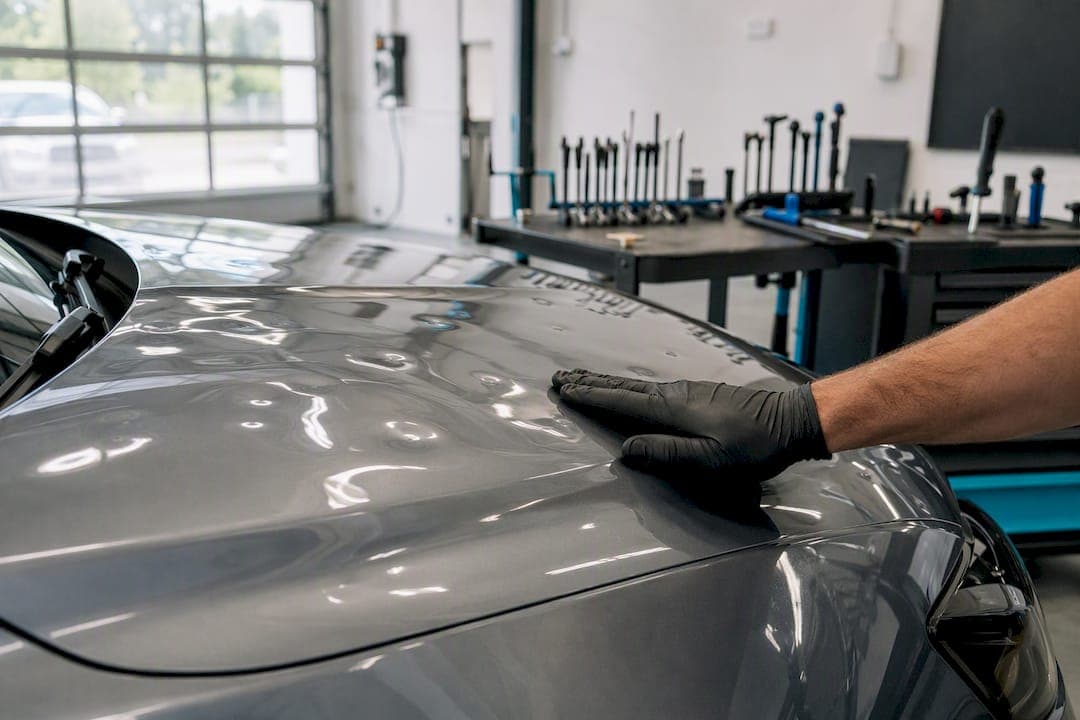
Hail, freeze-thaw cycles, road salt, and extreme heat each damage car exteriors in predictable ways. Most small hail dents and dimples with intact paint are good candidates for paintless dent repair, while large creases, torn metal, or cracked paint usually need traditional bodywork. Here's what to do the moment you notice damage:
- Photograph every panel in daylight, wide shots and close-ups
- Circle each dent with a washable marker so nothing gets missed at the estimate
- Book a free PDR estimate before the damage sits through a freeze cycle or salt exposure
Waiting doesn't make weather damage cheaper to fix. It usually makes it worse.
Key Takeaways
Seasonal weather damages car exteriors through four distinct mechanisms, hail impact, cold brittleness, salt corrosion, and heat degradation, and fast documentation combined with a PDR estimate is the most reliable way to limit repair cost and scope.
| Point | Details |
|---|---|
| Know your hail threshold | Hail at 1 inch or larger is the severe threshold most likely to cause dents, not just cosmetic dimples. |
| Check paint before assuming PDR | Intact paint with a rounded dent usually qualifies for PDR; cracked paint or torn metal usually doesn't. |
| Document within 72 hours | Photograph damage, circle every dent with washable marker, and save all records for insurance. |
| Don't wait through winter | Freeze-thaw cycles and road salt turn minor dents and chips into corrosion problems if repairs are delayed. |
| Start with a free estimate | Dent Boys offers free PDR estimates, pick-up and delivery, $0 deductible support, and a lifetime warranty on repairs. |
Table of Contents
- How Seasonal Weather Damages Exterior Panels: Hail, Cold, Salt, and Heat
- Is Your Dent a Good Candidate for Paintless Dent Repair?
- What to Do in the First 24 to 72 Hours After Weather Damage
- Why Temperature Changes When and How Well PDR Works
- Simple Habits That Cut Down Seasonal Damage
- Getting Your Car Repaired Through Dent Boys
- Frequently Asked Questions
- Sources
How Seasonal Weather Damages Exterior Panels: Hail, Cold, Salt, and Heat
Each season attacks your car's exterior differently, and knowing the mechanism tells you what kind of repair you're actually looking at.
Hail is the most obvious offender. The National Weather Service classifies 1 inch (quarter-sized) hail as the severe threshold, and stones at that size or larger are what reliably dent sheet metal instead of just bouncing off. Anything smaller tends to leave shallow dimples that are usually cosmetic. Hood, roof, trunk lid, and side mirrors take the worst of it because they face straight up and offer the most exposed surface area.
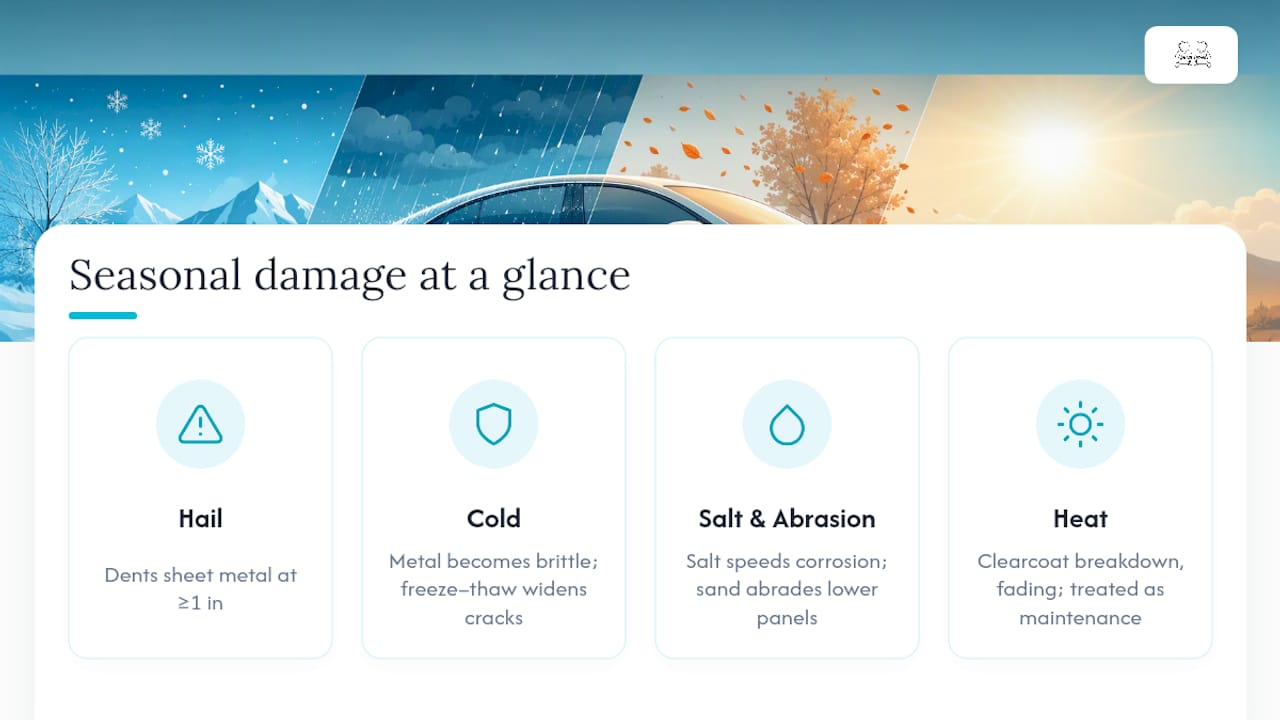
Cold weather changes how metal behaves. Steel and aluminum both get more brittle as temperatures drop, which means a hailstone or minor impact that would have bounced off in July can leave a permanent crease in January. Freeze-thaw cycles compound the problem: water works into existing paint cracks, freezes, expands, and widens the crack a little more each time it happens. That's how a hairline chip in October becomes a peeling patch by March.
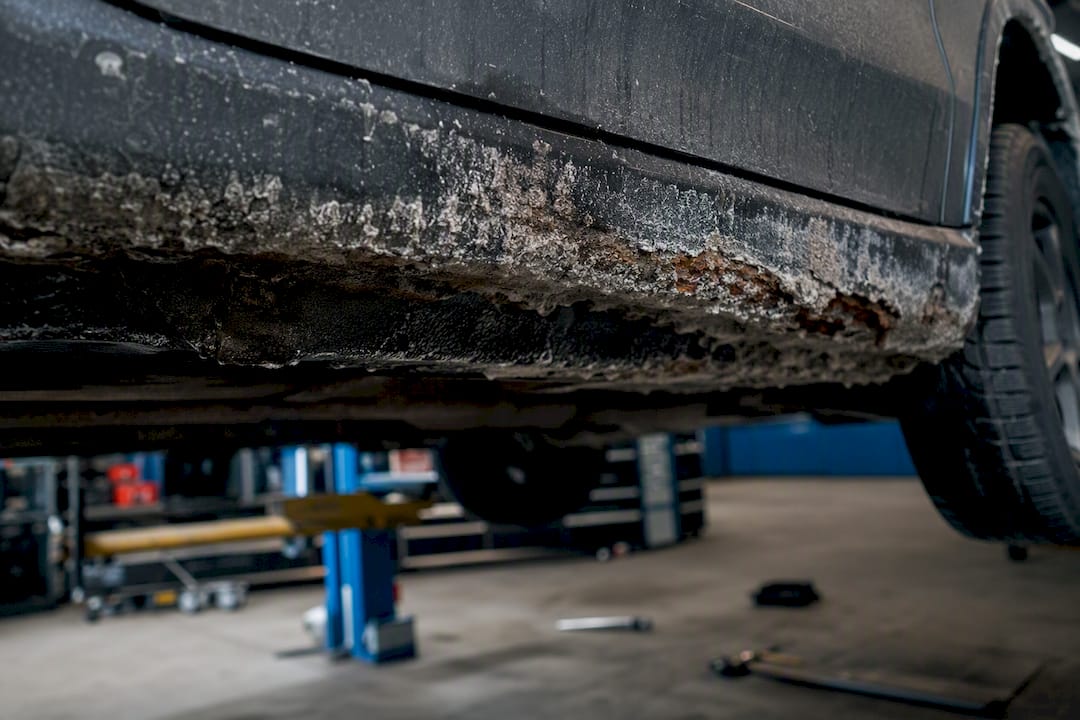
Road salt and sand bring a different kind of damage entirely. Salt acts as an electrolyte that speeds up oxidation once it reaches bare metal, and sand kicked up from plowed roads abrades paint like sandpaper, especially on lower rocker panels, wheel wells, and the undercarriage. Once salt finds an existing paint chip, corrosion can start spreading underneath the surrounding clear coat where you can't see it.
Heat works slower but isn't harmless. Extreme heat strains paint, seals, and interior materials, accelerating clear coat breakdown and fading over repeated summers. One detail worth knowing before you file a claim: insurers generally treat heat-related wear as ordinary maintenance, not a covered peril, which is a different category than a hailstorm or a falling branch.
Is Your Dent a Good Candidate for Paintless Dent Repair?
Not every dent belongs in a PDR bay, and knowing the difference before your estimate saves you a wasted trip.
Technicians generally look for three things when they decide if a dent qualifies:
- Paint is intact — no cracking, chipping, or exposed primer over the dent itself
- The dent has moderate depth without sharp creases — a smooth, rounded dimple responds to PDR far better than a sharp fold
- The technician can access the back of the panel — PDR works by massaging metal back into shape from behind, so reinforced areas or tight body cavities can rule it out
Dents that usually push a job toward traditional bodywork instead: cracked or missing paint, deep creases where metal has stretched past its limit, and any spot where rust has already eaten through. Aluminum panels also behave differently than steel under cold conditions, sometimes showing subtle bruising that's easy to miss without a trained eye running fingers across the surface, not just eyes scanning it.
At the estimate stage, a good technician circles every dent with a washable marker and does a per-panel count. This matters more than it sounds. On a hood with 40 hail dimples, an undercounted estimate means an undercounted insurance payout.
Pro Tip: Run your fingertips across the panel in slow, overlapping passes, especially in bright shade. Dents that are nearly invisible to the eye often announce themselves the moment you touch them.
What to Do in the First 24 to 72 Hours After Weather Damage
Speed matters here, not because PDR is time sensitive by the hour, but because delay invites corrosion and complicates your insurance file.
- Photograph the vehicle wide, then close up on every dent, with a timestamp and location noted
- Circle each dent with a washable marker before anything shifts or gets touched
- Contact a PDR shop for a free estimate within a few days, not weeks
- Save every receipt, photo, and email in one folder for your insurer
A few things to avoid in that same window:
- Don't power-sand or scrub aggressively at chipped paint. That often spreads the exposed area and gives corrosion more surface to grab
- Don't attempt a DIY suction-cup pull on a hail dent. It can stretch the metal and turn a PDR-eligible dent into one that isn't
- Don't skip the itemized quote request. A vague estimate is harder to dispute later if your insurer pushes back
Why Temperature Changes When and How Well PDR Works
Timing your repair around the weather isn't just scheduling convenience. It genuinely affects the outcome.
Cold metal resists the gentle push-and-pull that PDR relies on. When panels are stiff, technicians often need heated bays or warmed tools to get proper flexibility back into the metal before they can work a dent out cleanly. That's one reason winter repair jobs tend to run more complex, and claim volume tends to climb in cold months as more cars come in with weather-related dents at once.
The bigger risk with cold isn't the repair difficulty, though. It's what happens if you wait. Delaying repair into winter lets freeze-thaw cycles and road salt work on exposed metal, and a dent that would've been a same-day PDR job in October can turn into a rust-and-paint job by February.
Summer isn't automatically easier, either. Warm metal is more pliable, which generally helps PDR technicians, but high humidity can slow paint curing on any touch-up work running alongside the dent repair.
Pro Tip: When you call for an estimate in winter, ask directly whether the shop works in a heated bay. It's a fair question, and the answer tells you a lot about how they handle cold-weather jobs.
Simple Habits That Cut Down Seasonal Damage
None of this eliminates weather damage entirely, but a few habits noticeably reduce how often you're dealing with it.
- Park under a carport, in a garage, or under a fitted cover before storms roll in
- Skip parking under trees or roof ledges where ice chunks can fall without warning
- Rinse the undercarriage and wheel wells after any drive on salted or sanded roads
- Apply wax or a ceramic coating on a regular schedule to slow clear coat breakdown from UV exposure
- Walk the car and circle new dents after every major storm, and keep a simple log with dates
That log matters more than most owners realize. It gives you a clean record for insurance claims and it's genuinely useful at resale time, when a buyer or appraiser asks about the car's history.
Act fast, and let PDR do the heavy lifting
The single biggest mistake I see owners make isn't picking the wrong repair method. It's waiting. A dent that sits through one freeze-thaw cycle with a hairline paint crack is a different, more expensive job than the same dent addressed within a week. Get the estimate first, before you decide anything else.
Dent Boys offers free estimates plus pick-up and delivery, which removes the excuse to put it off. Every repair carries a lifetime warranty, and that's the kind of guarantee that only makes sense when a shop is confident in getting the metal right the first time.
Getting Your Car Repaired Through Dent Boys
Dent Boys handles the entire process so you're not stuck coordinating estimates, insurance calls, and a rental car on your own. Every job starts with a free estimate, and if you're filing through insurance, Dent Boys works directly with your carrier and supports $0 deductible arrangements where eligible.
Pick-up and delivery means you don't need to carve out a day to sit in a waiting room, and a rental vehicle option keeps you moving while your car's in the bay. Every repair is backed by a lifetime warranty, which matters most on hail jobs where a dozen small dimples need to disappear without a trace of paint work. If winter is approaching, ask about heated-shop scheduling when you book so cold metal doesn't slow down your repair.
Start with a free PDR estimate at Dent Boys and get an itemized quote before deciding on next steps with your insurer.
Frequently Asked Questions
Does paintless dent repair work on hail damage from any size hailstone? It works best on hail-caused dimples where the paint stayed intact. Stones at or above the 1 inch severe threshold cause deeper impacts that sometimes stretch the metal past what PDR can correct, so an in-person estimate is the only way to know for sure.
Will my insurance cover weather damage to my car's exterior? Hail and storm damage are typically covered under comprehensive auto insurance, but heat-related wear like fading paint or dried seals is generally treated as maintenance, not a covered peril. Check your policy's comprehensive coverage terms directly.
How soon after a hailstorm should I get an estimate? Within a few days is ideal. Waiting through a freeze-thaw cycle or a salt-heavy stretch of road can turn a clean PDR job into one that needs paint or panel work.
Can cold weather really stop a shop from doing PDR? Cold metal is stiffer and harder to manipulate, so many shops use heated bays or wait for panels to reach a workable temperature. Ask directly about their winter process when you book.
What's the difference between a dent that needs PDR and one that needs a body shop? PDR handles dents with intact paint, rounded shapes, and back-panel access. Cracked paint, sharp creases, stretched metal, or existing rust generally require traditional repair methods instead.
Sources
- Hail damage: How to identify it and what it costs | Farmers' Almanac
- 8 ways extreme heat damages your car | The Zebra
- Delaying auto body repair into winter | Estes Collision
- Winter auto body damage: Salt, sand, and rust risks | Committed Collision