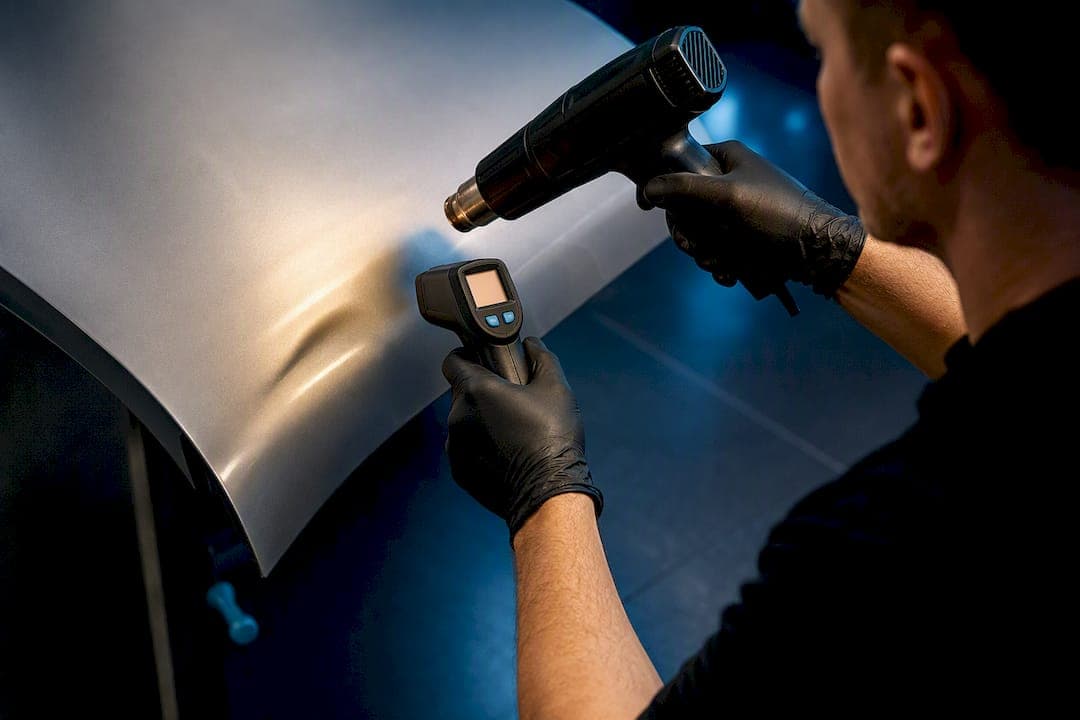
Yes, paintless dent repair can fix many dents in aluminum panels, but only when the technician uses aluminum-specific technique and tools. Success depends heavily on whether the metal stretched, how deep the dent runs, and whether the paint cracked on impact. The biggest variable isn't the aluminum itself. It's whether the person working on your hood or F-150 bed has trained specifically for it.
TL;DR:
- Aluminum-specific tools, techniques, and controlled heat application are essential for successful paintless dent repair on aluminum panels.
- PDR on aluminum often requires fewer passes, slower work, and careful assessment of metal stress to avoid work-hardening and cracking.
- Repairs on aluminum take longer and cost more than steel, with typical turnaround times ranging from three to seven days for heavy damage.
- Damage involving stretched metal, sharp creases, or impact at panel edges generally cannot be fixed with PDR and may require traditional repair.
- Choosing a technician with specialized aluminum training, experience, and proper equipment is crucial to ensure a lasting and damage-free repair.
Table of Contents
- How Often Does PDR On Aluminum Actually Work?
- Why Does Aluminum Behave Differently Than Steel During PDR?
- What Does A Proper Aluminum PDR Workflow Look Like?
- When Won't PDR Work On Aluminum?
- What Should You Expect To Pay And How Long Will It Take?
- How Do You Choose A Technician Who Actually Knows Aluminum?
- What We've Learned Doing Aluminum Repairs In The Field
- Get An Aluminum-Capable Estimate From Dent-boys
- Sources
How Often Does PDR On Aluminum Actually Work?
Aluminum PDR succeeds less often than steel PDR, and shops that do this work honestly will tell you that upfront. The NAPDRT and ASA aluminum study put real numbers behind what technicians had suspected for years: aluminum hoods required substantially more pressure to move than steel hoods under identical test conditions.
Several factors decide whether a given dent is fixable:
- Dent size and depth: shallow, wide dents respond far better than small, sharp impacts.
- Crease versus smooth bowl: a rounded dent from hail is workable; a sharp crease from a door edge often isn't.
- Paint condition: any visible cracking at the dent site usually rules out a clean PDR fix.
- Alloy grade: some OEM aluminum panels flex more predictably than others, which affects how the metal responds to pressure.
A hood full of hail dents might come back looking factory-new, while a single deep crease on the same panel needs traditional bodywork. Mixed outcomes on one panel are common, not a sign something went wrong.
Why Does Aluminum Behave Differently Than Steel During PDR?
Aluminum work-hardens faster than steel, meaning the metal stiffens and resists further movement the more a technician pushes on it. Steel tends to "remember" its original shape better through repeated pressure. Aluminum has a shorter memory, so a tech has fewer chances to get it right before the metal locks up.
The ASA/NAPDRT aluminum study measured this directly. Technicians estimated they needed significantly more pressure to move aluminum than steel in comparable hood samples, and the aluminum test panels showed shallower damage depths at the same impact force. That gap changes everything about how a repair has to be approached:
- Fewer total passes with the rod, since each pass carries more risk of hardening the metal further.
- Controlled, gradual heat application rather than brute mechanical force.
- Heavier, purpose-built tooling designed to distribute pressure instead of concentrating it.
Aluminum also conducts heat faster than steel, which is exactly why heat control, not just tool choice, separates a good aluminum repair from a botched one.
What Does A Proper Aluminum PDR Workflow Look Like?
A technician who knows aluminum won't just grab the same rods they use on steel. The process looks noticeably different from the inspection stage forward.
- Inspect for micro-fractures first. Aluminum panels can show hairline paint cracks invisible under normal light; some shops use raking light or magnification before quoting the job.
- Warm the panel to a controlled range. Shop practice generally keeps surface temperatures in the 140 to 180 degree Fahrenheit range so the metal and clear coat flex together instead of fighting each other.
- Access the back of the panel. This might mean removing interior liners, headlight assemblies, or trim, since aluminum work usually demands more disassembly than an equivalent steel repair.
- Work in slow, small increments. Aluminum-specific rods with sharper, more precise tips let the technician move small amounts of metal without overworking the surrounding area.
- Reassess after every few passes. A careful tech stops and checks for stiffening or resistance changes, both early signs of work-hardening.
- Switch to glue-pulling when access is limited. Glue tabs and pull equipment can lift dents in spots the rod can't reach, though this approach still can't fix stretched metal.
Pro Tip: Ask your shop whether they check panel temperature during aluminum repairs. If a technician looks confused by the question, that's a sign they're treating aluminum the same as steel, which is exactly what causes stretched metal and cracked clear coat.
Shops that lean heavily on glue-pulling as their only method, rather than one tool among several, are usually working around a lack of aluminum-specific rod experience rather than choosing the best technique for your dent; protecting your vehicle's appearance afterward with ceramic coatings can help maintain paint condition after repair.
When Won't PDR Work On Aluminum?
Some damage simply can't be pushed, pulled, or heated back into shape. Knowing the failure signs helps you avoid paying for a repair that was never going to hold.
- Stretched metal (oil-canning): the panel flexes or "oil-cans" when pressed, a sign the aluminum passed its elastic limit and won't return to its original contour.
- Sharp creases: unlike a rounded dent, a crease folds the metal, and folded aluminum tends to crack rather than smooth out under PDR pressure.
- Hem-flange edge damage: dents right at a panel's folded edge often involve structural bonding that PDR tools can't safely reach.
- Paint cracks: any crack at the impact point means the surface has already failed, and pushing the metal further will only widen it.
A shop that documents these limits with photos before starting work, and recommends conventional repair or panel replacement when PDR won't hold, is protecting you from paying twice for the same dent.
What Should You Expect To Pay And How Long Will It Take?
Aluminum repairs generally take longer and cost more than the same dent on a steel panel, and that's not upselling. It reflects real added labor.
- Turnaround: light aluminum hail damage often runs a similar timeline to steel, while heavier damage on trucks and SUVs can stretch to three to seven days depending on access and dent count.
- Labor per dent: expect higher per-dent time on aluminum, since the slower, heat-controlled process simply takes more passes to reach the same result.
- Why the premium: specialized rods, heat equipment, and the extra disassembly needed for access all add cost that steel repairs skip.
- Insurance: most policies cover aluminum PDR the same as steel, but the choice of technician still falls on you, and an aluminum-inexperienced shop can turn a covered repair into a denied claim if the panel gets damaged further.
How Do You Choose A Technician Who Actually Knows Aluminum?
Most of the vetting happens before your car ever reaches a shop, in a five-minute phone call or estimate conversation.
- Ask directly about aluminum training. Certifications tied to programs like NAPDRT signal a technician has gone beyond general PDR skills.
- Ask about experience with your specific vehicle. An F-150 hood and a Tesla fender use different aluminum alloys, and a tech who's worked your model has already learned its quirks.
- Request before-and-after photos of aluminum jobs. Real examples, not stock photos, tell you far more than a sales pitch.
- Ask what they can't fix. A technician who explains stretched metal and crease limits clearly is more trustworthy than one who claims everything is fixable.
- Watch for pressure toward glue-only shortcuts. Glue-pulling has its place, but a shop that reaches for it exclusively may be avoiding rod work they're not confident doing.
Pro Tip: A shop that keeps a separate bay or dedicated tool set for aluminum, rather than mixing it with steel tools, is following the same practice recommended after F-150 hail damage jobs, and it's a quiet but reliable sign they take the metal difference seriously.
Vague answers or a rushed estimate over the phone are the two biggest red flags before you ever hand over the keys. For a deeper look at what separates experienced technicians from the rest, our technician skill benchmarks guide covers the questions worth asking before you commit.
What We've Learned Doing Aluminum Repairs In The Field
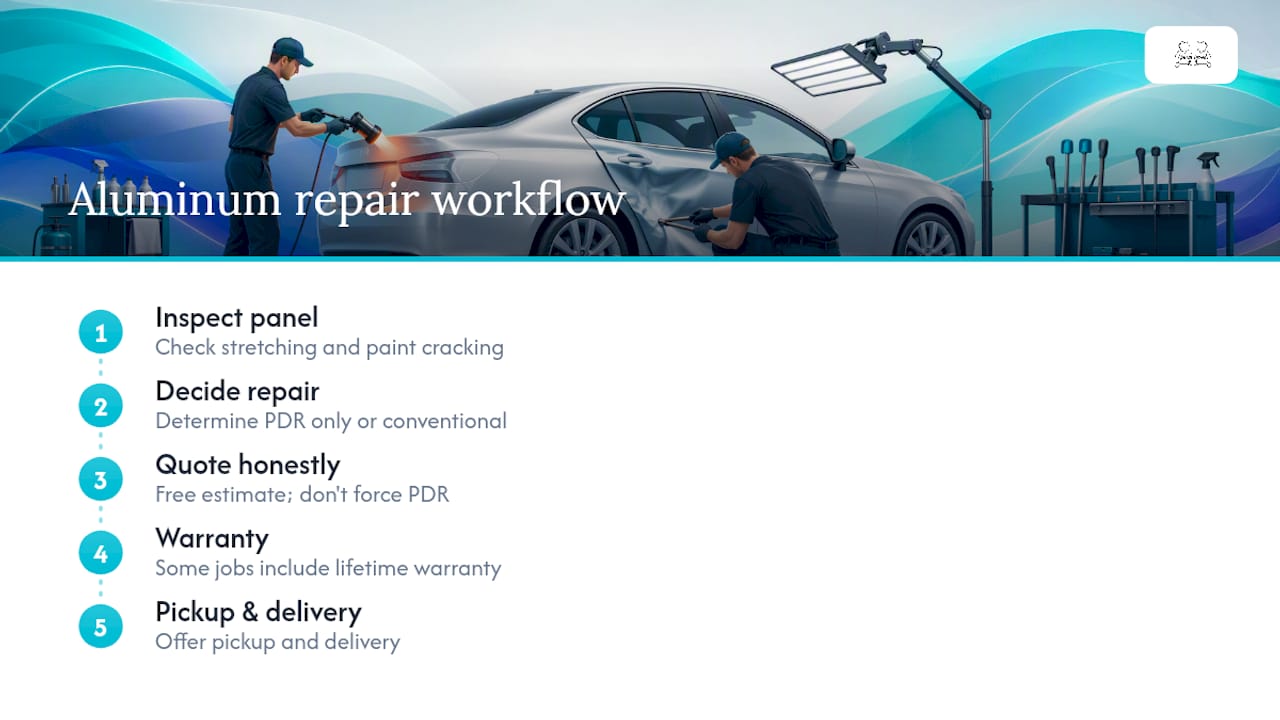
Dent-boys evaluates every aluminum panel the same way before quoting a repair: inspect for stretching and paint cracking first, then decide whether PDR alone will hold or whether conventional repair needs to enter the conversation. That order matters. A shop that quotes before inspecting is guessing.
When conventional repair is the honest answer, we say so rather than forcing a PDR fix that won't last. Every estimate is free, some aluminum jobs come with a lifetime warranty, and pick-up and delivery can help so you're not stuck without a car while the dent category is determined.
— Martin
Get An Aluminum-Capable Estimate From Dent-boys
If your hood, tailgate, or fender has aluminum dents you're not sure about, Dent-boys gives you a free estimate before you commit to anything, including whether PDR is even the right call for your specific damage.
Pick-up and delivery, rental vehicles during repair, and warranties on completed repairs are available to help minimize time without your vehicle during an aluminum job. When you request an estimate, send clear photos of each dent along with its location on the panel (hood, door, roof, tailgate) so we can flag anything that looks like stretched metal or cracked paint before you drive in. Start your aluminum-capable repair estimate today and find out exactly what your panel needs.
Sources
- The NAPDRT and ASA Aluminum Study… The Final Report! – NAPDRT
- PDR on Aluminum Vehicles: What Tesla and Ford Owners Need to Know | DentAdvisor