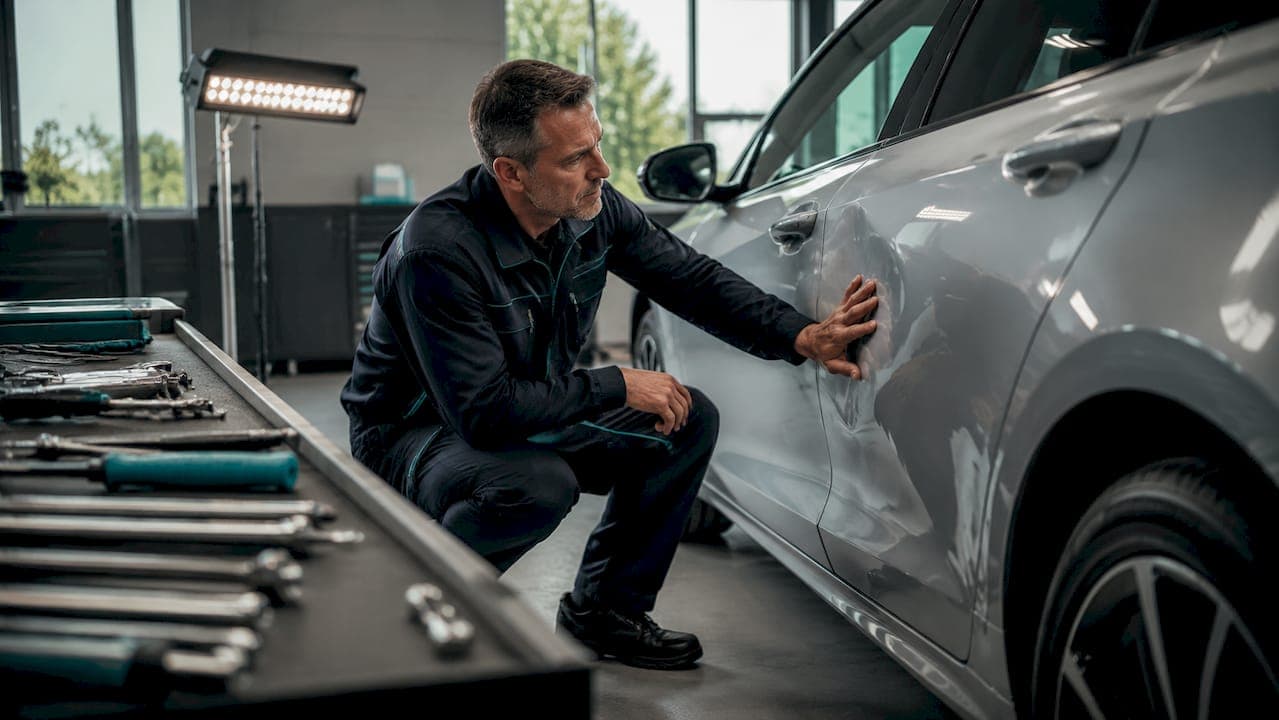
High end vehicle dent restoration is the process of removing dents from luxury vehicles using paintless dent repair (PDR), a method that preserves the original factory paint without sanding, fillers, or repainting. PDR is the industry's preferred standard for luxury car dent repair because it protects the multi-layer paint systems that define a vehicle's finish and resale value. Choosing the wrong repair method on a Bentley, Porsche, or Mercedes-AMG can permanently reduce market value. This guide covers what separates luxury dent restoration from standard repair, how the process works, and how to choose the right service.
What makes high end vehicle dent restoration different?
Standard dent repair shops treat all vehicles the same. Luxury vehicles require a fundamentally different approach, and the gap between the two is wider than most owners realize.
Luxury cars carry multi-layer paint systems, including hand-applied clear coats that react differently to heat, pressure, and tools than standard automotive paint. A technician trained on mainstream vehicles may not recognize when a luxury finish is at risk. That gap in knowledge is where expensive mistakes happen.
The materials themselves add complexity. Aluminum panels, carbon fiber body sections, and composite trim pieces all behave differently than steel under pressure. Aluminum, for example, work-hardens when deformed, meaning the metal becomes stiffer and more brittle the more it is manipulated. A technician who applies standard steel repair techniques to an aluminum door panel risks cracking the metal or the paint above it.
Factory panel tolerances on luxury vehicles are also tighter. Body lines on a Maserati or Aston Martin are sculpted to fractions of a millimeter. Restoring those lines after a dent requires a level of precision that general body shops rarely achieve. Improper repair methods like sanding, filler, or repainting can reduce a luxury vehicle's value by altering the original finish and violating those tolerances.
- Multi-layer paint systems require careful handling to avoid delamination or micro-cracking.
- Aluminum and carbon fiber panels need material-specific tools and techniques.
- Tight factory tolerances demand precision that standard shops cannot consistently deliver.
- Sensor integration in modern luxury vehicles means panel removal must follow OEM procedures to protect electronics.
- Luxury buyers scrutinize paint thickness and repair history, favoring vehicles with unaltered factory paint.
Pro Tip: Before any shop touches your vehicle, ask specifically whether their technicians have worked on your car's make and material type. A shop that hesitates or gives a vague answer is not the right choice for a luxury finish.
What tools and certifications does expert dent restoration require?
The quality of a luxury dent repair depends directly on the tools in the shop and the credentials on the technician's wall. Both matter equally.
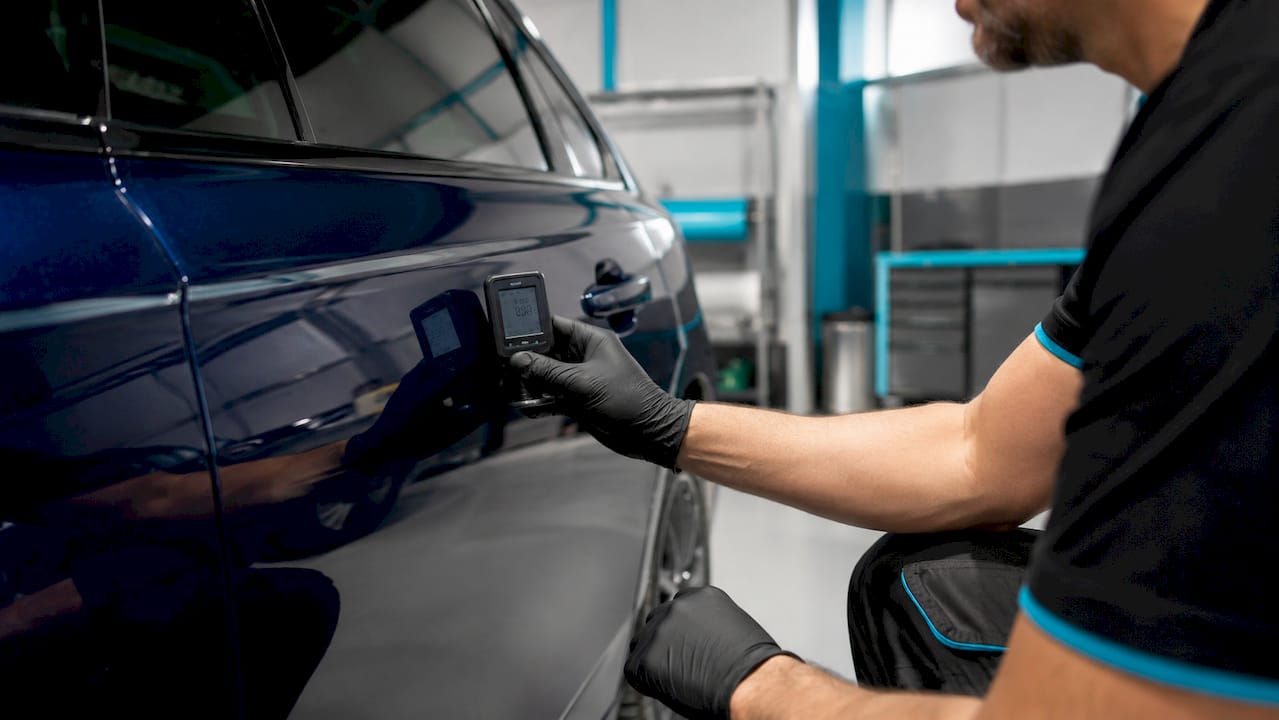
LED reflection boards are the primary diagnostic tool for detecting minute dents and surface irregularities invisible to the naked eye. The board casts a uniform light across the panel, and any deviation in the reflection reveals the exact shape and depth of the damage. Paint thickness gauges verify that the paint system remains intact before and after the repair. These tools are standard in professional luxury repair environments and absent in most general body shops.
I-CAR Platinum certification represents the highest technician achievement in collision repair. Certified technicians also complete manufacturer-specific training for aluminum and multi-material repairs. That training matters because luxury vehicles often integrate sensors and complex construction that require careful coordination during panel removal to avoid damaging electronics or voiding warranties.
| Tool or Credential | Purpose |
|---|---|
| LED reflection boards | Detect surface irregularities and guide precise dent removal |
| Paint thickness gauges | Verify paint integrity before and after repair |
| Aluminum-specific PDR rods | Apply controlled pressure without cracking aluminum panels |
| I-CAR Platinum certification | Confirms advanced training in luxury and multi-material repair |
| Manufacturer-specific credentials | Ensures OEM procedure compliance and warranty protection |
| Climate-controlled workshop | Protects sensitive finishes from temperature and humidity changes |
Climate-controlled workshops protect premium finishes during dent removal by keeping temperature and humidity stable. Paint on a luxury vehicle behaves differently at 50°F than at 80°F. A shop without climate control introduces a variable that can compromise the repair outcome.
Pro Tip: Ask any prospective shop to show you their paint thickness gauge readings before and after the repair. A reputable technician will document this data as a matter of course. If they don't, walk away.
How does the PDR process work on a luxury vehicle?
Paintless dent repair on a luxury vehicle follows a structured sequence. Each step builds on the last, and skipping any one of them increases the risk of a flawed result.
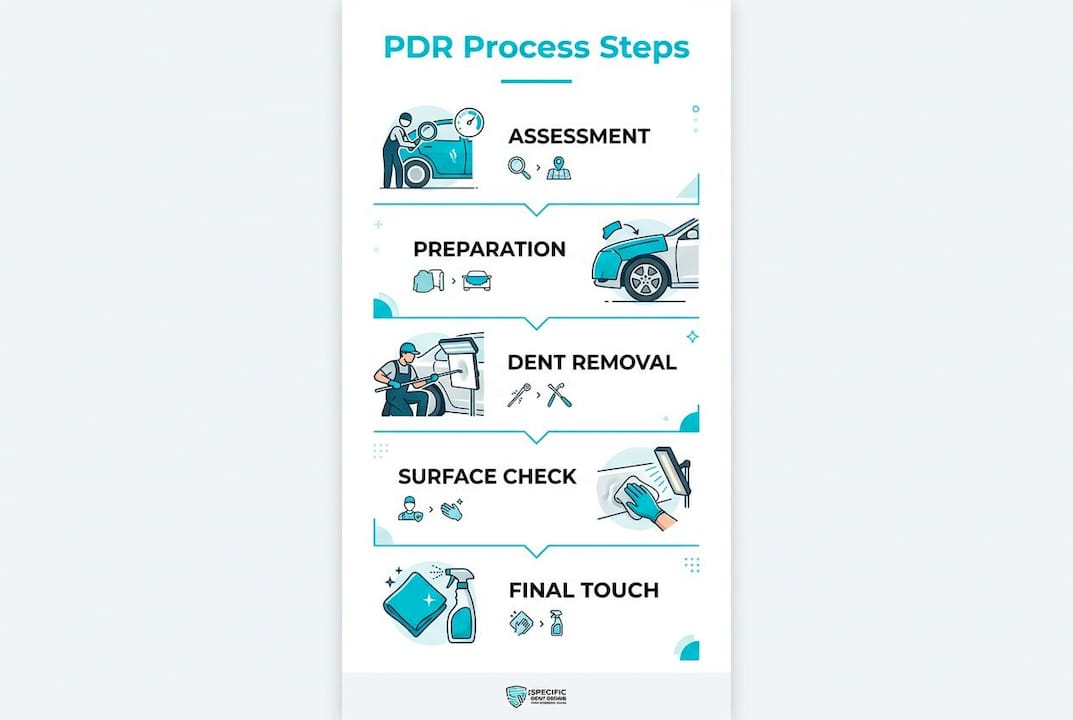
- Initial damage assessment. The technician examines the dent under LED lighting to classify the damage type, measure depth, and map the panel's contour. This step determines whether PDR is viable or whether traditional bodywork is required.
- Paint condition check. The technician uses a paint thickness gauge to confirm the paint system is intact. Cracked, chipped, or previously repaired paint disqualifies a dent from PDR candidacy.
- Access point identification. The technician determines how to reach the back of the dent without removing unnecessary panels. On luxury vehicles, this step requires knowledge of OEM construction to avoid disturbing sensors or wiring.
- Tool selection for material type. Steel panels use standard PDR rods. Aluminum panels require specialized techniques like cold-puck application and induction heating to restore metal malleability without cracking the surface.
- Controlled pressure application. The technician slowly massages the metal back into its original shape using a series of small, deliberate movements. This is not a single push. It is a gradual process that can take hours on a complex dent.
- Induction heating for aluminum. When aluminum has work-hardened, induction heating restores flexibility to the metal without open flame or risk to the paint above it.
- Final inspection under controlled lighting. The technician re-examines the panel under LED reflection boards to confirm the surface matches the original factory contour. Any remaining imperfection is addressed before the vehicle leaves the shop.
The full process for a minor dent takes roughly one hour. Extensive damage on a luxury vehicle can require one to two days of repair time. Rushing this process is the single most common cause of substandard results.
- Dents repaired correctly with PDR leave no trace of the damage.
- Dents repaired incorrectly often show rippling, paint stress, or misaligned body lines.
- The difference between the two outcomes is almost entirely determined by technician skill and tool quality.
Does your dent qualify for luxury paintless dent repair?
PDR is suitable for 80–90% of minor dents without paint damage, including door dings and hail damage. That statistic is reassuring, but the remaining 10–20% of cases require traditional bodywork. Knowing which category your dent falls into protects you from paying for a repair that cannot deliver the result you need.
A dent qualifies for PDR when all of the following conditions are true:
- The paint above the dent is fully intact, with no cracks, chips, or peeling.
- The dent is smaller than roughly 6–8 inches in diameter.
- The dent has a smooth, rounded shape without sharp creases.
- The metal has not stretched or work-hardened beyond recovery.
- The dent is located on a panel that a technician can access from behind.
A dent does not qualify for PDR when any of the following apply:
- The paint is cracked or chipped at the dent site.
- The dent has a sharp crease running through it.
- The metal has stretched significantly and cannot return to its original shape.
- The dent is located on a panel edge or body line where access is impossible.
- The panel is made of carbon fiber, which cannot be massaged back into shape.
DIY dent repair kits sold online are not appropriate for luxury vehicles. Pulling tools and suction cups apply uneven force that can stretch aluminum panels or crack paint. The cost of correcting a DIY repair attempt on a luxury finish frequently exceeds the cost of the original professional repair. For guidance on protecting custom paint finishes during any dent work, the risks of amateur intervention are well documented.
How do you choose the best dent restoration service for a luxury vehicle?
The most expensive mistake luxury vehicle owners make is choosing a shop based on price rather than credentials. Luxury car dent repair costs 25–50% more than mainstream vehicle repair because of the skill, risk, and time involved. A shop offering a significantly lower price is almost certainly cutting corners somewhere.
Avoid any shop that:
- Cannot name the specific certifications their technicians hold.
- Recommends repainting or filler as the first solution for a minor dent.
- Does not use LED reflection boards or paint thickness gauges as standard practice.
- Lacks a climate-controlled workspace.
- Cannot provide a detailed written estimate explaining the method and materials.
Ask every prospective shop these questions before committing:
- Do your technicians hold I-CAR Platinum or manufacturer-specific credentials?
- Have you repaired dents on my vehicle's specific make and material type before?
- Does your insurance cover the full replacement value of my vehicle during the repair?
- Will you provide a written estimate that specifies whether PDR or traditional repair is recommended and why?
Preserving the original factory paint is the single most important factor in maintaining a luxury vehicle's long-term resale value. Any shop that treats paint preservation as secondary to speed or cost is not equipped to handle premium vehicle bodywork. For owners who want to understand the full dent repair timeline before committing to a service, reviewing what to expect at each stage helps set realistic expectations.
Pro Tip: Request before-and-after photos of previous luxury vehicle repairs from the shop. A technician confident in their work will have a portfolio. One who cannot produce examples has not done enough of this work to be trusted with your vehicle.
Key Takeaways
Preserving original factory paint through certified PDR is the most effective way to protect a luxury vehicle's appearance and resale value after dent damage.
| Point | Details |
|---|---|
| PDR preserves factory paint | Paintless dent repair removes dents without sanding or repainting, protecting original finish. |
| Luxury materials need specialist tools | Aluminum and carbon fiber panels require induction heating and material-specific PDR rods. |
| Certifications signal real expertise | I-CAR Platinum and manufacturer-specific credentials confirm a technician can handle luxury repairs. |
| Not every dent qualifies for PDR | Sharp creases, cracked paint, and stretched metal require traditional bodywork instead. |
| Cost reflects skill and risk | Luxury dent repair costs 25–50% more than standard repair; low quotes signal compromised quality. |
Why I always tell luxury owners to prioritize the technician, not the shop
The most consistent mistake I see luxury vehicle owners make is treating dent repair as a commodity. They compare prices, pick the lowest number, and then spend twice as much correcting the damage done by an unqualified technician.
What I have learned from watching this play out repeatedly is that the shop's equipment matters less than the person using it. A skilled PDR technician with solid tools will outperform a mediocre technician in a state-of-the-art facility every time. The LED boards and gauges are only as useful as the hands interpreting them.
Luxury vehicle owners also tend to underestimate how much a single bad repair affects resale value. A CarFax report showing bodywork on a Porsche 911 will cost you far more at sale time than the repair itself ever cost. Buyers of high-end vehicles are sophisticated. They check paint thickness readings. They know what unaltered factory paint looks like. A repair that looks fine to the casual eye will not fool a serious buyer.
My honest recommendation: spend the time to verify credentials before you hand over your keys. Ask for the technician's name, their certifications, and examples of their work on your vehicle's make. A shop that cannot answer those questions confidently is not the right shop for a luxury finish. The investment in getting this right the first time is always smaller than the cost of fixing it twice.
— Martin
Dent-boys: certified luxury dent restoration you can trust
Dent-boys specializes in paintless dent repair for high-end and luxury vehicles, with certified technicians trained in aluminum, multi-material, and complex paint system repairs. Every repair includes a free estimate, pick-up and delivery, a $0 deductible option, and a lifetime warranty on the work performed.
Owners who need expert dent removal for hail damage, door dings, or collision dents on luxury vehicles can contact Dent-boys for a no-obligation assessment. The process is designed to protect your factory finish, your vehicle's value, and your time.
FAQ
What is high end dent restoration?
High end dent restoration is the use of paintless dent repair techniques specifically adapted for luxury vehicles, preserving original factory paint and maintaining resale value without sanding or repainting.
Can PDR fix dents on aluminum luxury car panels?
Yes. Technicians use cold-puck application and induction heating to safely restore aluminum panels without damaging the paint above them.
How long does luxury car dent repair take?
Repair time ranges from one hour for minor dents to one to two days for extensive damage, depending on panel complexity and dent severity.
Does dent repair affect my luxury vehicle's resale value?
PDR that preserves the original factory paint has no negative effect on resale value. Traditional repair involving repainting or filler can reduce value because luxury buyers prioritize unaltered factory finishes.
What certifications should a luxury dent repair technician hold?
Look for I-CAR Platinum certification and manufacturer-specific credentials covering aluminum and multi-material repair techniques.