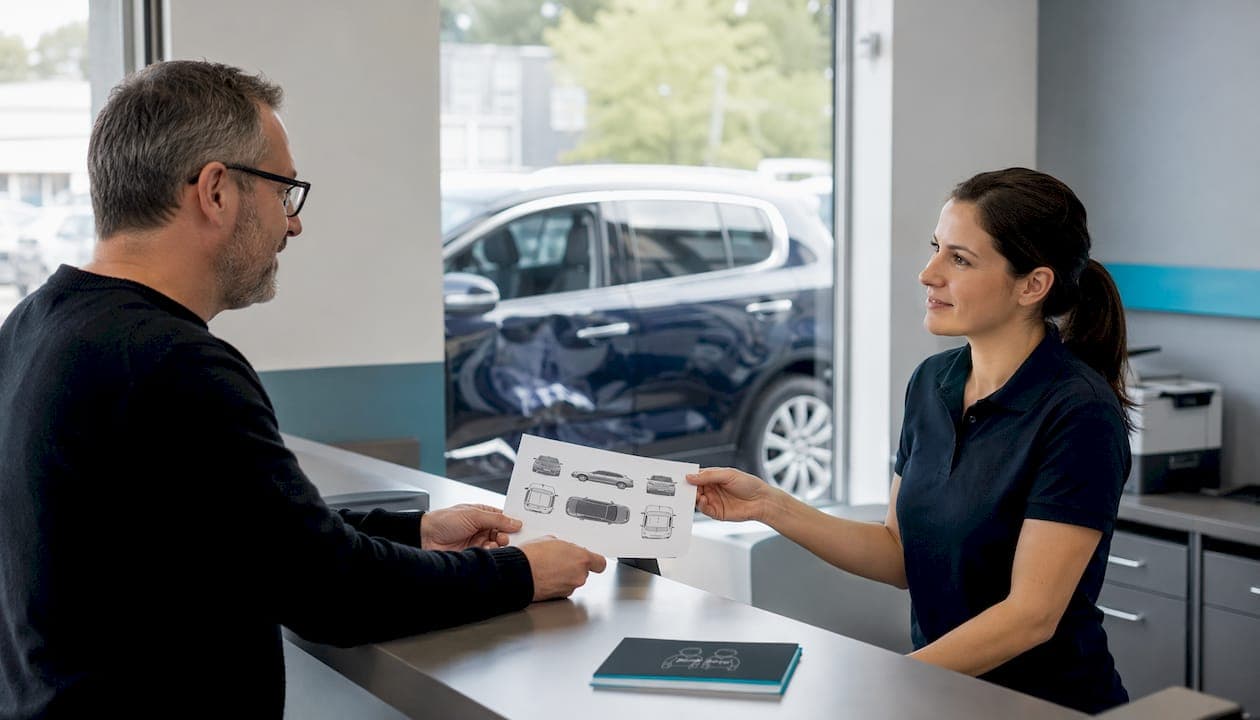
When a shop offers zero deductible dent repair, it means one thing for you: you pay nothing out of pocket at pickup on an insurer-approved repair. The shop absorbs your deductible internally as a discount from its own margin, bills the insurer the true cost of the work, and you walk away with a repaired car and a $0 balance. This is the standard model for legitimate deductible-assistance programs in the U.S., and it is legal in most states when done correctly.
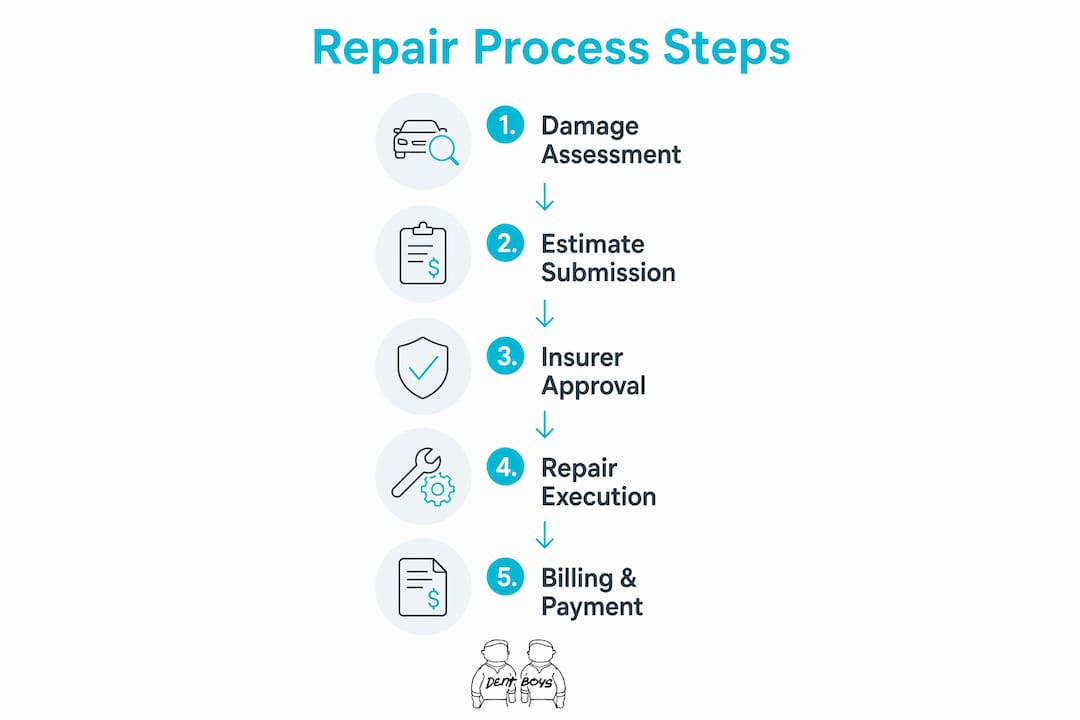
Here is what the typical process looks like from start to finish:
- Inspection and free estimate: The shop documents your damage in person or via photos and produces a written estimate.
- Insurer approval: You or the shop files a claim; the insurer reviews the estimate and approves a repair scope.
- Repair performed to approved scope: The shop completes the work exactly as the insurer authorized, using paintless dent repair (PDR) where eligible.
- Deductible absorbed: The shop applies an internal discount equal to your deductible, so you owe $0 at pickup.
- Warranty and delivery: The repaired vehicle is returned to you with a written warranty.
State insurance regulators, including the Texas Department of Insurance, have published guidance on when this arrangement is lawful. Dent-boys is one provider that structures its $0 deductible support this way, on insurer-approved PDR jobs.
Table of Contents
- How does the zero deductible dent repair process actually work?
- What are the steps in a deductible-free car repair?
- How does filing a claim affect your insurance rates?
- Which dents actually qualify for PDR and deductible assistance?
- What does a zero-deductible repair actually cost, and how long does it take?
- What red flags should you watch for in deductible-assistance offers?
- What questions should you ask before agreeing to a zero-deductible repair?
- Key Takeaways
- Why transparency matters more than the $0 promise
- Dent-boys handles the insurance paperwork so you do not have to
- Useful resources for your next steps
How does the zero deductible dent repair process actually work?
The mechanics are simpler than most people expect, but the legal line matters.
The three common program models
Discount from margin is the most common and most legally defensible model. The shop performs the repair to the insurer-approved scope, bills the insurer the actual cost, and then absorbs the deductible amount as an internal discount. The insurer pays its share; the shop eats the rest. No one is overbilled.
Installment plans let you pay your deductible in smaller amounts over time rather than all at once. This does not reduce what you owe, but it makes a $1,000 deductible manageable. It is a cash-flow tool, not a waiver.
Insurer-approved scope absorption is a variation of the first model, specifically tied to the timing of the insurer's determination. Texas TDI guidance makes the timing explicit: the discount is permissible after the insurer has determined the claim amount and the repair is performed in accordance with that determination. That sequencing is the compliance control.
The billing flow
The shop submits a genuine invoice to the insurer reflecting the actual repair cost. The insurer pays that amount minus your deductible. The shop then applies its internal discount to cover the deductible, so your out-of-pocket balance is zero. The insurer is never overbilled. That is the entire mechanism.
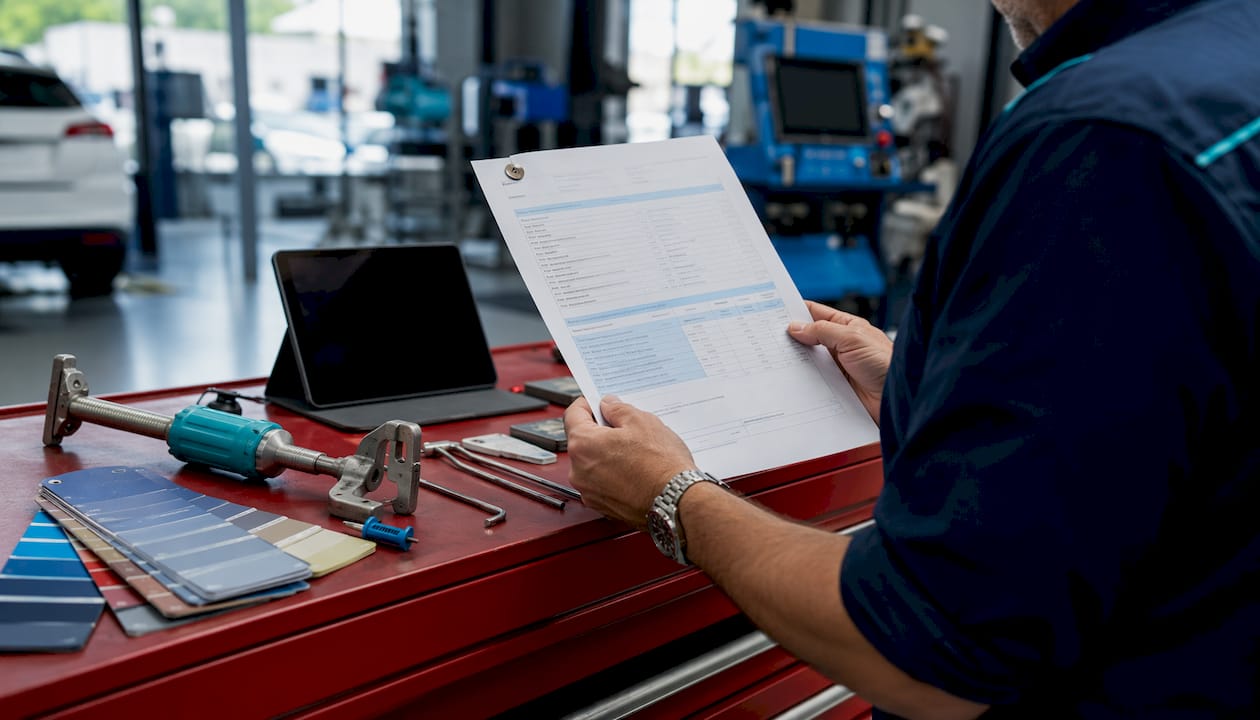
Larger jobs give shops more margin to work with. A shop can more easily absorb a $500 deductible on a $5,000 hail repair than on a $1,200 single-panel job. On smaller repairs, deductible assistance is less common precisely because the math is tighter.
Where it becomes fraud
The illegal version looks almost identical on the surface: the shop inflates the estimate to cover the deductible, so the insurer is billed more than the actual repair cost. That is insurance fraud, and it is illegal in every state. The legal pivot is always the same question: was the insurer billed the true cost of the work?
Pro Tip: Ask any shop offering deductible assistance to show you the invoice they plan to submit to your insurer. If they hesitate or the number does not match your written estimate, that is a red flag worth taking seriously.
What are the steps in a deductible-free car repair?
Here is the sequence you can expect when you choose a zero-deductible PDR service.
-
Schedule a free estimate. Contact the shop and bring photos of the damage, your VIN, and your insurance policy number. Dent-boys provides free estimates in person or virtually, so you do not need to drive in before you know what you are dealing with.
-
Review the written estimate. The shop documents every dent, notes which panels are affected, and produces a written cost breakdown. Keep a copy.
-
File the claim. You can file directly with your insurer, or the shop can assist. Filing yourself gives you more documentation control and a direct line to your adjuster. Having the shop assist speeds up the process if you are unfamiliar with the claim system. Either way, working with your insurer on documentation from the start prevents disputes later.
-
Insurer inspection or virtual appraisal. The insurer assigns an adjuster who either visits the shop or reviews photos remotely. They approve a repair scope and dollar amount.
-
Repair authorization. Once the insurer approves the scope, the shop is cleared to begin. This is also the point at which deductible assistance becomes legally permissible under state guidance.
-
Repair performed. PDR technicians work the dents out from behind the panel using specialized tools, no paint, no filler. Timeline varies by damage volume: a single small dent can be done same-day; a hail-damaged roof or hood typically takes two to five business days.
-
Delivery and final billing. The shop delivers your vehicle, hands you the warranty documentation, and your balance is $0. The insurer has already paid its portion directly to the shop.
What to bring: photos of all damage, your policy number, your VIN, the written estimate, and any prior repair records for the affected panels.
How does filing a claim affect your insurance rates?
The honest answer: it depends on your insurer, the cause of the damage, and your claims history.
What the insurer actually pays
Deductible assistance does not change what the insurer owes. The insurer pays the approved repair amount minus your deductible, exactly as your policy specifies. The shop's internal discount covers the deductible portion. Your insurer is not paying more because the shop is helping you.
Rate impact
Filing a comprehensive claim for hail damage typically has less rate impact than filing a collision claim, because hail is a no-fault weather event. That said, multiple claims in a short period can still affect your renewal premium depending on your insurer's underwriting rules. A single hail claim on an otherwise clean record rarely causes a significant rate increase, but it is worth asking your insurer directly before you file. For small repairs near or under your deductible, the premium impact can outweigh the payout, which is why many owners pay cash for minor dings.
Subrogation
If a third party caused the damage, their liability insurance should cover the repair with no deductible to you. If you file through your own collision coverage first, your insurer may pursue the at-fault party through subrogation. When subrogation succeeds, your deductible is typically reimbursed. Deductible assistance is most relevant when you are filing through your own policy and there is no clear at-fault party to pursue.
Pro Tip: If you know who caused the damage, ask your insurer whether filing through the at-fault party's coverage eliminates your deductible entirely before you consider any deductible-assistance program.
Statistic to know: PDR jobs commonly range from about $80–$600 for small dings, while typical collision deductibles run $500 or more. When repair cost and deductible are close in value, filing a claim often costs more in future premiums than it saves.
Which dents actually qualify for PDR and deductible assistance?
Not every dent is a PDR candidate, and not every PDR job qualifies for deductible assistance. Here is how to read your damage quickly.
PDR-friendly damage
- Small to medium dents with no paint cracking or chipping
- Hail damage across a panel where the metal has flexed but not stretched
- Door dings and parking lot impacts with accessible panel backs
- Dents on flat or gently curved surfaces away from panel edges and seams
Damage that rules out PDR
- Creased dents where the metal has folded sharply
- Any dent with cracked, chipped, or peeling paint (the paint must be repaired separately)
- Stretched metal that cannot be massaged back to factory shape
- Damage near panel edges, over body seams, or in areas where a technician cannot reach the back of the panel
- Rust at or around the dent
- Panels with prior body filler or repaint that limits access
For a deeper look at PDR technique and its limits, understanding the distinction between a repairable flex and an unrepairable crease is important before you call a shop.
How eligibility affects deductible assistance
A single door ding with no paint damage is a clean PDR candidate, but at $80–$150 it is likely below your deductible. You would probably pay cash. A hail-damaged hood with 40 dents is a different story: the repair cost reaches $600–$1,500, the insurer approves the scope, and the shop has enough margin to absorb a $500 deductible. Multiple creased panels that need conventional body work are not PDR jobs at all, so deductible assistance through a PDR-specific program would not apply.
What does a zero-deductible repair actually cost, and how long does it take?
Typical PDR price ranges
| Damage Type | Typical PDR Cost | Deductible Assistance Likely? |
|---|---|---|
| Single small ding (door, fender) | $80–$150 | Rarely — often below deductible |
| Multiple dents, one panel | $80–$600 | Sometimes, depending on job total |
| Hail damage, one panel (hood or roof) | $600–$1,500 | Often, on insurer-approved claims |
| Whole-vehicle hail damage | $1,500–$5,000+ | Yes, most common scenario |
Cost drivers include panel count, dent density, metal thickness, and how accessible the back of the panel is. Panel access and damage severity are the two factors that most affect whether a shop can absorb your deductible.
The deductible math in plain numbers
Small job example: Repair cost is $350; your deductible is $500. Filing a claim makes no sense because the insurer pays nothing (repair is under the deductible), and you would pay $350 out of pocket anyway, plus risk a premium increase. Pay cash.
Hail job example: Repair cost is $2,800; your deductible is $500. The insurer pays $2,300. The shop absorbs the $500 deductible from its margin. You pay $0 at pickup.
The break-even point is roughly where repair cost exceeds your deductible by enough to justify a claim. For most owners with a $500 deductible, that threshold is around $1,000–$1,500 in damage.
Timeline
A virtual estimate can happen within hours of submitting photos. Insurer appraisal typically follows within a few business days. The repair itself runs one to five business days for most PDR jobs, though whole-vehicle hail damage can take longer if supplements are needed. Supplement delays, where the shop discovers additional damage during repair and must get insurer approval for added scope, are the most common cause of extended timelines. A realistic repair timeline depends heavily on insurer response speed.
What red flags should you watch for in deductible-assistance offers?
Some shops use deductible-assistance advertising to pressure owners into signing paperwork before the insurer has approved anything. That is the scenario regulators warn about.
Red flags to watch for
- A shop asks you to sign an assignment of benefits or authorization form before the insurer has determined the claim amount.
- The shop offers a verbal-only promise that your deductible will be covered, with nothing in writing.
- The written estimate you receive does not match what the shop says it will bill the insurer.
- The shop asks you to tell your insurer the damage is worse than it is, or to omit prior damage.
- Advertising promises a deductible waiver before any insurer determination has been made.
The legal line
That principle holds across all U.S. states. The Texas Department of Insurance frames it around timing: assistance offered before the insurer has determined the claim amount is the risky zone. Assistance offered after insurer approval, on a repair performed to that approved scope, is the lawful model.
What to do if something feels wrong
- Ask for every promise in writing before signing anything.
- Request a copy of the invoice the shop plans to submit to your insurer and compare it to your estimate.
- Get a second written estimate from another shop.
- Contact your state insurance department if you believe a shop is inflating estimates or pressuring you to misrepresent damage.
What questions should you ask before agreeing to a zero-deductible repair?
Getting clear answers before you sign protects you from surprises on both sides of the transaction.
Questions for the repair shop
- Do you absorb the deductible from your own margin, or do you inflate the invoice to cover it?
- Will the invoice you submit to my insurer match the written estimate I receive?
- Is all work performed to the insurer-approved scope only?
- What warranty do you provide, and is it in writing?
- Do you offer pickup and delivery, and is a rental vehicle available during the repair?
Questions for your insurer
- Will filing this claim affect my renewal premium?
- Do I have the right to choose my own repair shop?
- How does subrogation work if a third party caused the damage?
- Will you accept a virtual appraisal, or do you require an in-person adjuster visit?
Pro Tip: Before you authorize any repair, ask the shop for a written deductible-assistance agreement that states the exact dollar amount being absorbed, confirms the insurer will be billed the actual repair cost, and specifies the warranty terms. One page of clear paperwork prevents most disputes.
Key Takeaways
A zero-deductible dent repair is financially sound when the repair cost clearly exceeds your deductible, the damage is PDR-eligible, and the shop bills the insurer the true cost of the work.
| Point | Details |
|---|---|
| When zero-deductible makes sense | Repair cost well above your deductible on an insurer-approved PDR job. |
| When to pay cash instead | Repairs near or under your deductible — filing often costs more in future premiums than it saves. |
| Legal requirement | The shop must bill the insurer the actual repair cost; absorbing the deductible from margin is legal, inflating the invoice is fraud. |
| Documentation to keep | Written estimate, insurer-approved scope, invoice submitted to insurer, and warranty terms in writing. |
| Dent-boys | Offers $0 deductible support on insurer-approved PDR jobs, with free estimates, pickup/delivery, rental vehicle assistance, and a lifetime warranty. |
Why transparency matters more than the $0 promise
The deductible-assistance conversation in the auto repair industry has a trust problem, and it is mostly self-inflicted. Shops that advertise "$0 deductible" without explaining the mechanism create exactly the kind of consumer confusion that regulators step in to address. The result is that legitimate programs get lumped in with fraudulent ones, and owners either overpay out of caution or sign paperwork they do not understand.
What actually separates a trustworthy program from a problematic one is not the dollar amount. It is the paper trail. A shop that hands you a written estimate, shows you the invoice it plans to submit to your insurer, and puts the warranty in writing before any work begins is operating transparently. A shop that asks you to trust verbal promises and sign authorization forms before the insurer has approved anything is not.
The lifetime warranty question is also underweighted by most owners. A deductible waiver saves you $500 once. A lifetime warranty on the repair protects the value of your vehicle for as long as you own it. Those two things are not equivalent, and the warranty is the better indicator of shop quality. Dent-boys backs its PDR work with a lifetime warranty precisely because the repair method, when done correctly, holds permanently. If a shop cannot commit to that in writing, the $0 deductible offer is the wrong thing to focus on.
Dent-boys handles the insurance paperwork so you do not have to
Hail damage is stressful enough without spending hours on hold with your insurer. Dent-boys provides free estimates in person or virtually, coordinates directly with your insurance company on approved repairs, and absorbs your deductible from its own margin so your out-of-pocket cost is $0 at pickup. Every repair comes with pickup and delivery, rental vehicle assistance while your car is being worked on, and a lifetime warranty on all PDR work.
The billing is straightforward: Dent-boys submits the actual repair cost to your insurer, the insurer pays its portion, and the deductible is absorbed internally. No inflated invoices, no verbal-only promises. You get a written estimate before anything starts and a written warranty when the job is done. Schedule your free estimate to see what your repair will cost and whether your damage qualifies for $0 out-of-pocket service. Have your photos, VIN, and insurance information ready, and the first call takes about 15 minutes.
Useful resources for your next steps
Before you commit to any repair, these resources help you verify a shop's practices and understand your rights.
- Texas Department of Insurance — deductible assistance guidance: tdi.texas.gov explains when deductible discounts are permitted and what questions to ask a contractor.
- Your state insurance department: Every U.S. state has a department of insurance with a consumer complaint line. Search "[your state] department of insurance" to find the right contact for licensing checks and complaint filing.
- Dent-boys free estimate guide: What to bring and how to prepare for your first inspection, including photos, VIN, and policy information.
- PDR explained: How paintless dent repair works and which damage types it can and cannot address.
- Insurance claim how-to: Step-by-step guidance on filing, documentation, and subrogation from the Dent-boys blog.
- When to file vs. pay cash: The 2026 guide to filing insurance claims for dents walks through the break-even math for common deductible amounts.
Next steps checklist:
- Photograph all damage before the vehicle is moved or cleaned.
- Get at least one written estimate from a licensed PDR shop.
- Confirm with your insurer whether the damage qualifies under comprehensive or collision coverage.
- Ask the shop for a written deductible-assistance agreement before authorizing repairs.
- Keep copies of every document: estimate, insurer approval, invoice, and warranty.
This article is general information, not legal or insurance advice. Deductible-assistance rules vary by state. Confirm the current rules with your state insurance department or a licensed professional for your specific situation.