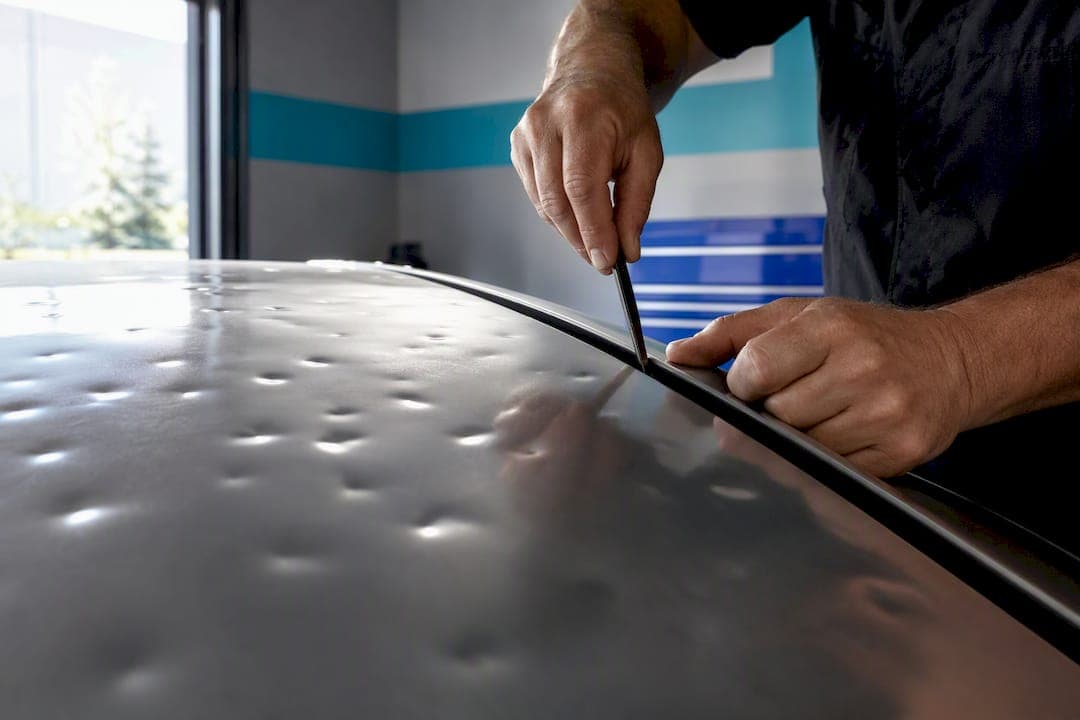
No. If your policy doesn't include comprehensive coverage, your insurer will not pay for hail damage to your vehicle. Comprehensive is the specific coverage that handles weather-related claims, and without it, the repair bill is yours to cover out of pocket. A shop like Dent-boys can still help you get the dents out affordably, just not through a claim.
TL;DR:
- Only comprehensive coverage pays for hail damage; liability or collision policies do not cover weather-related damage.
- If your policy lacks comprehensive, you must pay for repairs out of pocket, often with paintless dent repair options that are cheaper and preserve the paint.
- Filing a claim is only worthwhile if the repair estimate exceeds your deductible by a significant amount; otherwise, paying out of pocket is better.
- Documentation through photos, weather reports, and estimates is crucial within days of damage to support your claim or repair process.
- Filing a hail claim typically does not raise your insurance premium unless you have multiple claims or specific policy conditions.
Table of Contents
- Does Liability Cover Hail Damage? What Your Policy Actually Pays For
- What Are Your Options Without Comprehensive Coverage?
- Is Filing a Hail Claim Worth It? The Deductible Math
- How to Document Hail Damage Before You File a Claim
- Will Filing a Hail Claim Raise Your Premium?
- Paintless Dent Repair: The Practical Fix Whether or Not You Have Coverage
- What I See Owners Get Wrong After a Storm
- Get Your Hail Damage Fixed Without Waiting on a Claim
- Sources
Does Liability Cover Hail Damage? What Your Policy Actually Pays For
Auto insurance splits into three main buckets, and only one of them touches hail. Comprehensive coverage pays for damage from events outside a collision: hail, falling branches, theft, vandalism, fire, and flooding. Comprehensive is the specific product that covers hail damage, and if it's not on your policy, hail simply isn't a covered peril.
Liability insurance works differently. It pays for injuries or damage you cause to other people or their property, never your own car. Collision coverage handles crashes and impacts with objects or other vehicles, but it has nothing to do with weather. That's the gap that trips people up.
- Comprehensive: hail, theft, fire, vandalism, flooding, animal strikes
- Liability: damage or injury you cause to others (required in nearly every state)
- Collision: crashes with another vehicle or a fixed object
If your car is financed or leased, this isn't optional. Lenders typically require comprehensive and collision as a condition of the loan, and dropping comprehensive on a financed vehicle can violate your lender agreement, sometimes triggering force-placed coverage at a much higher cost than what you'd pay to keep your own policy intact.
What Are Your Options Without Comprehensive Coverage?
Once the hail has passed and you realize you're not covered, a few myths need clearing up fast. Homeowners insurance won't touch it. That policy covers your house and, in some cases, contents inside a garage, not a vehicle parked in the driveway. And no, you cannot call your insurer the next day and add comprehensive retroactively.
Coverage has to be in force before the damage happens — insurers won't backdate a policy to pay for a storm that already occurred.
That leaves paying for repairs yourself. The good news: hail damage is almost always cosmetic, meaning paintless dent repair (PDR) can usually fix it without touching the factory paint. Costs vary by severity, but multi-panel PDR jobs often run well below the price of traditional bodywork that involves repainting or panel replacement.
Hail is a very common type of non-collision claim, and the frequency and cost of hail losses are exactly why insurers price comprehensive the way they do. If you're renewing a policy soon, adding comprehensive before the next storm season is the only real protection going forward.
- Get quotes from PDR specialists before assuming panel replacement is necessary
- Ask about payment plans if the shop offers them
- Add comprehensive coverage at your next renewal to avoid a repeat situation
Is Filing a Hail Claim Worth It? The Deductible Math
If you do have comprehensive, the decision to file still comes down to one number: your deductible. Every claim gets measured against that deductible before the insurer pays anything. If your repair estimate is at or below your deductible, filing gets you nothing. The insurer pays the difference between the repair cost and your deductible, not a dollar more.
Here's the simple version:
- Get a repair estimate first, before contacting your insurer.
- Compare that number to your deductible.
- If the estimate exceeds the deductible by a meaningful margin, filing usually makes sense.
- If it's close to or under the deductible, paying out of pocket avoids a claim on your record for little or no payout.
Two quick examples: a $500 deductible against a $1,200 PDR estimate nets you roughly $700 from the insurer. A $1,000 deductible against a $900 estimate nets you nothing, and you've filed a claim for zero dollars.
Pro Tip: Watch for cosmetic-damage exclusions. Some policies in hail-prone states specifically exclude minor cosmetic dents, so read your declarations page before assuming a payout is guaranteed.
How to Document Hail Damage Before You File a Claim
Whether you're filing a claim or paying out of pocket, the documentation you gather now protects you later. Insurers rely on timely, dated evidence to confirm damage matches a specific storm, and waiting even a week can make that harder to prove.
- Photograph every panel in daylight, including wide shots and close-ups of individual dents.
- Note the date, time, and your location, plus a link to local weather reports confirming the storm.
- Call your insurer promptly if you're filing, and have your policy number and photos ready before the call.
- Ask for a written estimate from an independent repair shop, not just the insurer's preferred vendor.
- Keep copies of every estimate and communication
- Save weather alerts or news coverage of the storm
- Store photos somewhere you won't lose them if your phone changes
Our guide on what to do when hail damages your car walks through this process in more detail if you want a longer checklist.
Will Filing a Hail Claim Raise Your Premium?
Generally, no, not the way an at-fault collision would. Comprehensive claims are typically treated as no-fault weather events, and insurers tend to weigh them differently than crashes you caused. That said, "generally" isn't "always."
- Rate impact varies by state and by individual insurer's underwriting rules
- A pattern of multiple comprehensive claims can still affect pricing at renewal
- Some states restrict insurers from raising rates for weather-related claims specifically
Check your declarations page and, if you want a definitive answer for your situation, call your insurer directly or check with your state insurance department. Our breakdown on whether a hail claim raises your rates goes deeper into how different carriers handle this.
Paintless Dent Repair: The Practical Fix Whether or Not You Have Coverage
Paintless dent repair works by massaging dents out from behind the panel, preserving the factory paint instead of stripping and repainting it. It's the standard fix for hail because hail dents rarely crack paint, they just push metal. Panel replacement only becomes necessary when paint has split or a panel is bent beyond what PDR technicians can access.
Dent-boys built its process around exactly this situation, whether you're filing through insurance or paying yourself.
- Free estimates before you commit to anything
- Pick-up and delivery, so you're not driving around with a dented hood
- A rental vehicle while repairs are underway
- $0 deductible assistance on qualifying insurance jobs
- A lifetime warranty on completed repairs
Pro Tip: Get your PDR estimate before you decide whether filing a claim clears your deductible. Dent-boys documents damage in detail, which helps if you decide to file later even after starting the repair conversation.
Learn more about how the method works in our explainer on paintless dent repair.
What I See Owners Get Wrong After a Storm

The biggest mistake isn't skipping insurance, it's waiting. People assume the dents will still be provable a month later, and by then a shop can't confirm which dings came from which storm. Others assume homeowners coverage or a warranty will somehow apply. It won't. And plenty of people never get an independent estimate, so they have no idea whether filing a claim would even clear their deductible.
The priority order is simple: document first, get an estimate second, decide third.
— Martin
Get Your Hail Damage Fixed Without Waiting on a Claim
If you're stuck without comprehensive coverage, Dent-boys is the practical alternative to a full insurance claim or a body shop repaint. You skip the deductible math entirely and pay for the repair directly, and because hail dents rarely crack paint, PDR usually costs far less than panel replacement.
Contact Dent-boys when you don't have comprehensive, when you'd rather avoid a claim on your record, or when you just want a fast, affordable fix without the insurance back-and-forth. The process includes a free estimate, pick-up and delivery so you're not without a car for days, a rental option while work is underway, and a lifetime warranty on every repair.
Before reaching out, snap a few photos of the damage and note the date of the storm. Then head to Dent Boys to get your estimate started.
Sources
- Hail Damage and Car Insurance Coverage
- How do car insurance deductibles work?
- Does car insurance cover hail damage? | Liberty Mutual
- Does Car Insurance Cover Hail Damage?
- Facts and statistics about hail — III