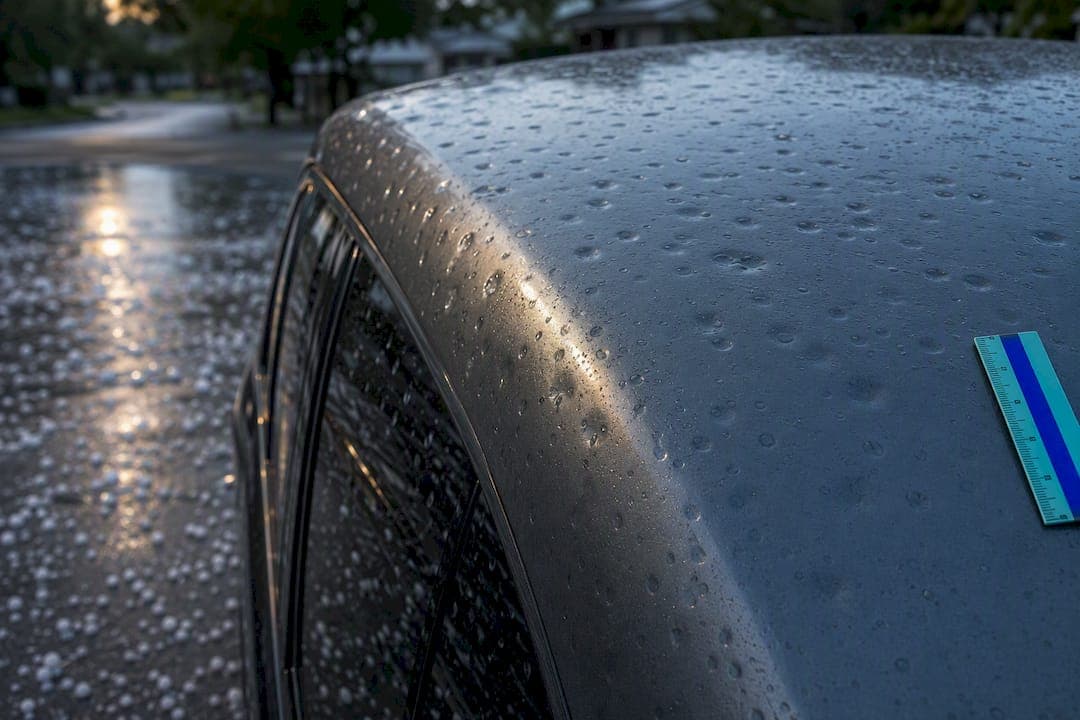
Hail smaller than a quarter (1.0 inch) is usually cosmetic on both cars and roofs, while stones a half-inch bigger, around golf ball size, are where the National Weather Service and most insurance adjusters expect functional, repair-worthy damage. Pea-sized hail (0.25 inch) rarely dents anything. Baseball or softball hail (2.75 to 4 inches) can total a vehicle and punch through roofing in one pass. Wind, panel material, and shingle age all shift those thresholds in either direction.
TL;DR:
- Hailstones larger than a quarter inch typically cause functional damage to vehicles and roofs, especially when they reach 1 to 1.75 inches in diameter.
- Damage assessment benefits from comparing hail size to common objects and testing a 10-foot by 10-foot roof section with about eight impacts as a benchmark for replacement.
- Filing a damage claim should be done within roughly one year, or up to two years in Texas, with proper documentation and repair estimates to avoid claim delays.
- Paintless dent repair is effective for most vehicle hail damage under 1.75 inches, while roof repairs depend on the extent of damage, age, and shingle type.
- Immediate documentation after a storm is critical, prioritizing safety and timely photos of the damage before making repair or claim decisions.
Table of Contents
- Hail Damage Size Chart: Diameter to Common Objects
- What Size Hail Causes Damage to Cars and Roofs?
- How Do You Properly Assess and Document Hail Damage?
- When Should You File a Hail Damage Insurance Claim?
- What Are Your Repair Options After Hail Damage?
- How Dent Boys Handles Vehicle Hail Repair
- Safety First, Documentation Second, Decisions Third
- Get a Free Hail Damage Estimate From Dent-boys
- Sources
Hail Damage Size Chart: Diameter to Common Objects
Weather spotters and insurance adjusters use the same shorthand: comparing hailstones to things you already recognize. It's faster than pulling out a ruler mid-storm, and it's precise enough for both a 911 report and an insurance claim narrative.
| Diameter | Common Object | Typical Damage Level |
|---|---|---|
| 0.25 in | Pea | None to negligible |
| 0.5 inch | Marble | Cosmetic on soft surfaces |
| — | Penny | Cosmetic, minor paint chipping possible |
| 1.0 in | Quarter | NWS severe threshold; light functional damage begins |
| 1.75 in | Golf ball | Functional damage likely on vehicles and roofs |
| 2.5 in | Tennis ball | Substantial to severe damage |
| 2.75 in | Baseball | Severe, often totals vehicles |
| 4 inches | Softball | Catastrophic, structural roof risk |
| — | Grapefruit | Catastrophic |
This object mapping comes from the National Weather Service's own field guides, and offices distribute a printable version for exactly this kind of quick reference during or after a storm.
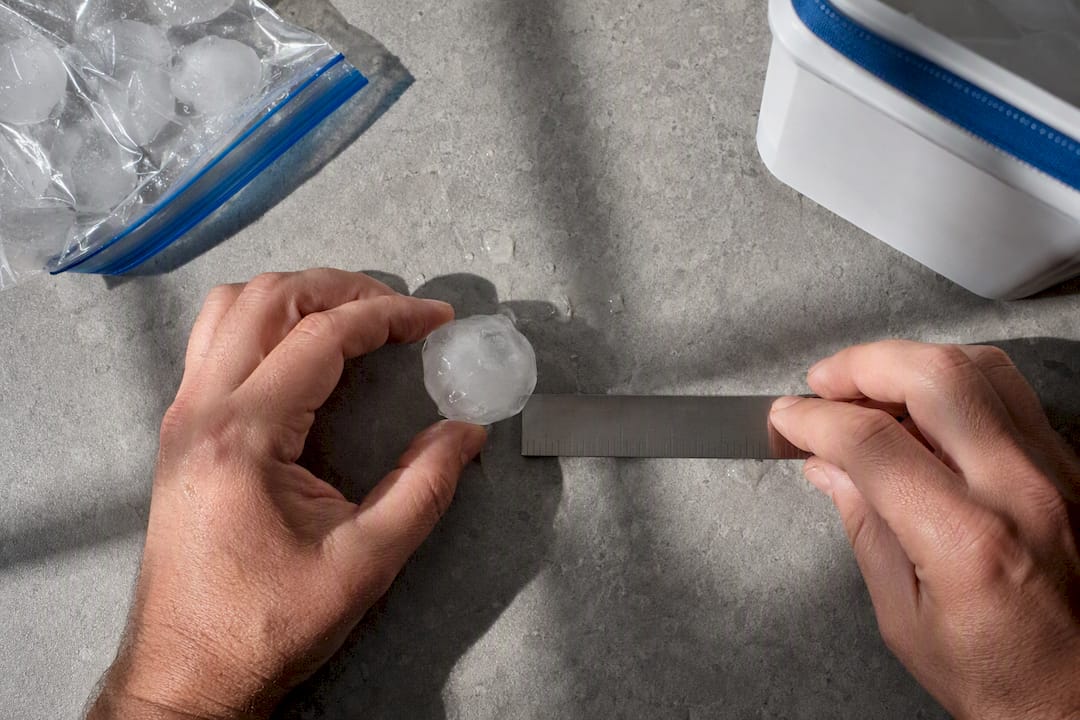
If you find hailstones on the ground, the most accurate method is to freeze one immediately (a plastic bag in the freezer works) and measure it with a ruler once things calm down. Comparing a stone to a photographed coin or ball works in a pinch, but lighting and camera angle distort size more than people expect. And diameter alone doesn't tell the whole story. Wind-driven hail hits at an angle and at higher speed, which means a 1.5-inch stone in a 60 mph gust can outperform a 2-inch stone falling straight down.
What Size Hail Causes Damage to Cars and Roofs?
The jump from "cosmetic" to "functional" damage isn't gradual. It clusters right around that 1 to 1.75 inch band, which is exactly why the industry treats it as the line worth watching.
On vehicles:
- Under 1 inch: shallow dents, usually just cosmetic
- 1 to 1.75 inches: reliable dent formation on hoods, roofs, and trunk lids
- 1.75 to 2.5 inches: cracked windshields and mirrors become common
- 2.5 inches and up: severe body damage, frequent total-loss calls
On residential roofs:
- Under 1 inch: little to no measurable impact on asphalt shingles
- 1 to 1.75 inches: granule loss and bruising on shingles begins
- 1.75 inches and up: mat fracturing, exposed fiberglass, active leaks
- 2.5 inches and up: risk of punctures on lighter roofing materials
The number that matters most: The National Weather Service defines a "severe" thunderstorm as one producing hail at least 1.0 inch in diameter, quarter-sized or larger. That's the threshold insurers, meteorologists, and roofing inspectors all treat as the point where damage claims start becoming routine rather than exceptional.
Material matters as much as size. Aluminum body panels, increasingly common on trucks and newer sedans, dent more easily than the steel panels they replaced, so two identical hailstorms can leave very different marks depending on what year and trim you're driving. Roofs behave the same way. Three-tab shingles bruise at smaller sizes than architectural laminated shingles, and granule loss that looks minor at first can shorten a shingle's service life for years after the storm passes. Hail can also leave a car with more than one dent per panel, which changes how an estimate accounts for clustering rather than counting hits individually.
How Do You Properly Assess and Document Hail Damage?
Adjusters trust systematic evidence over a homeowner's word, so the goal is to build a paper trail that would hold up even if you weren't in the room to explain it.
- Walk the property first. Photograph gutters, downspouts, AC condenser fins, mailboxes, fence posts, and any parked vehicles. Soft metal shows hail impact clearly and corroborates what happened even before anyone gets on the roof.
- Use the test-square method for roofs. Inspectors mark a 10 foot by 10 foot section (100 square feet) and count qualifying hits inside it. A widely cited benchmark treats roughly 8 qualifying hits per 100 square feet as grounds for recommending a full slope replacement, though individual carriers set their own thresholds.
- Repeat the test square on multiple slopes. Damage often varies by roof orientation depending on wind direction during the storm.
- Leave roof access to professionals. Wet or damaged shingles are unstable, and a fall risk isn't worth a photo you could get from a ladder or drone instead.
Pro Tip: Timestamp every photo and video the same day, and note the storm date, time, and your address in a text file or email to yourself. Adjusters weigh contemporaneous documentation far more heavily than photos taken weeks later with no clear date.
When Should You File a Hail Damage Insurance Claim?
Insurers generally want the same three things regardless of state: photo or video evidence, a professional repair estimate, and documentation tying the damage to a specific storm date and location. Skip any of those, and the claim moves slower or gets challenged.
Filing deadlines vary more than most people assume:
- Most states give policyholders roughly one year from the date of loss to file
- Texas is a notable exception, allowing up to two years to file a hail damage claim
- Waiting too long can also raise questions about whether damage was storm-related or wear-related
Before you file, compare your repair estimate to your deductible. If the repair cost barely clears the deductible, filing may not be worth the hit to your claims history. It's also worth weighing whether a hail claim could affect your future premiums before deciding to move forward, especially for borderline cosmetic damage. Getting an independent estimate first, separate from any insurer-suggested vendor, gives you a number to negotiate from rather than accept outright.
What Are Your Repair Options After Hail Damage?
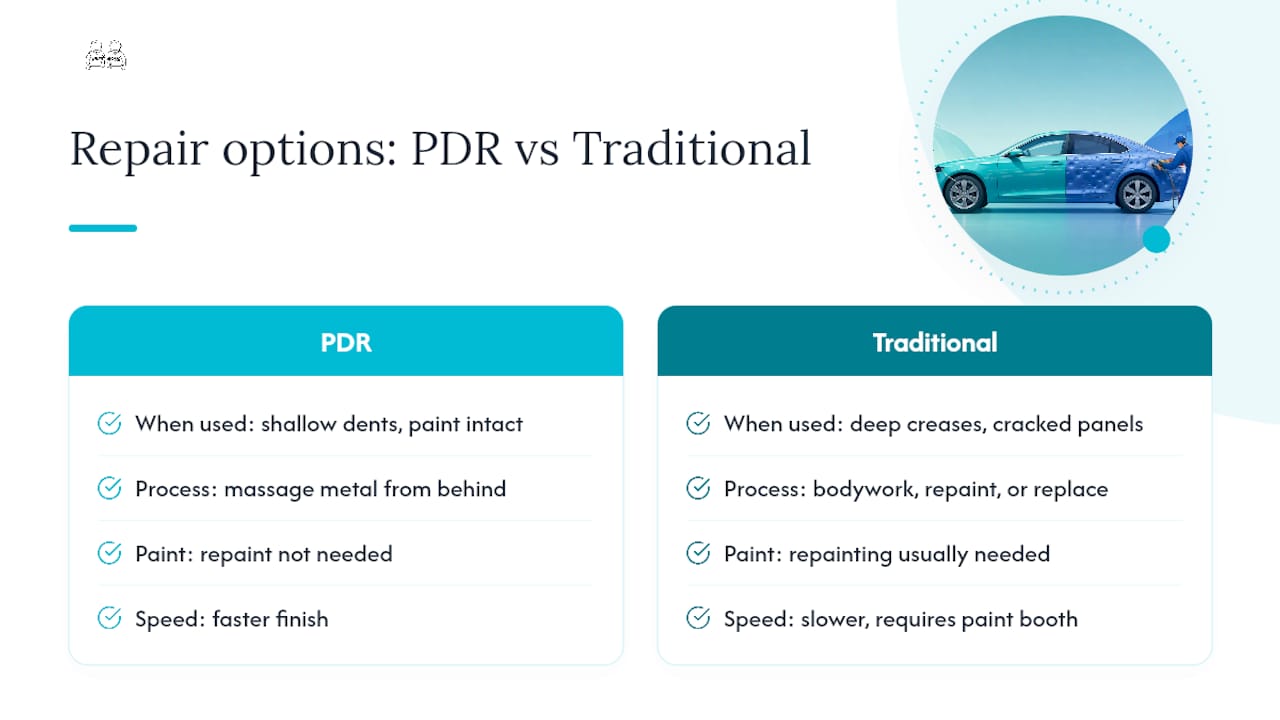
For vehicles, paintless dent repair works well on the majority of hail dents because the paint itself usually stays intact. A trained technician massages the metal back into shape from behind the panel, which is why PDR skips the paint booth entirely and finishes faster than traditional bodywork. Deeper creases, cracked panels, or shattered glass need traditional repair or replacement instead, and comparing those two paths against the damage extent is worth doing before you commit to either.
For roofs, the repair-versus-replace decision hinges on hit count per test square, the roof's age, and shingle type. A 3 year old architectural roof with scattered hits might only need a targeted repair; a 15 year old three-tab roof with widespread granule loss usually points toward full replacement. Get more than one estimate, and confirm any warranty terms in writing before signing off on a vendor, insurer-recommended or otherwise.
How Dent Boys Handles Vehicle Hail Repair
Dent-boys built its process around getting your car back to pre-storm condition without the delays that usually come with body shop scheduling. Estimates are free, and if your vehicle can't be driven in for a look, some providers offer pick-up and delivery so the car comes to the technician instead of the other way around.
For insurance-funded repairs, some providers offer deductible support and may provide a rental vehicle while your car is in the shop, so a hailstorm doesn't leave you without transportation. To speed up an estimate, send clear photos of each affected panel, the storm date, and your vehicle's make and model. Some providers offer warranties on completed repairs and document the work in a format insurers recognize for claims.
Safety First, Documentation Second, Decisions Third
Hail damage assessment doesn't need to be complicated, but it does need to happen in the right order. Get everyone off the roof and out of the driveway until the storm actually passes, then start documenting before you touch anything. A dented hood can wait a week. A cracked windshield or a compromised roof slope cannot.
Small cosmetic dents rarely justify the hassle of a claim, but anything at golf ball size or larger deserves a professional look, fast water spot removal can preserve your car's finish after the storm. Paintless dent repair tends to be the quickest and cleanest path back to normal for moderate hail damage, mainly because it keeps the factory paint intact instead of sending the car through a repaint cycle that adds days to the timeline.
— Martin
Get a Free Hail Damage Estimate From Dent-boys
If you've already photographed the damage and matched it against the chart above, the next move is simple: get a professional look before you decide whether to file a claim. Unlike a standard body shop that requires a drop-off appointment and a loaner car hunt on your end, Dent Boys comes to you, with pick-up and delivery built into the process from the start.

To get a fast, accurate estimate, send photos of each damaged panel, the date of the storm, and your vehicle's make and model. Some repair services offer deductible assistance, provide rental cars while repairs are underway, and back completed jobs with warranties. Start your free hail damage estimate today and find out whether paintless dent repair can get your car back to pre-storm shape without a repaint.
Sources
For definitions, the National Weather Service's severe hail threshold is the primary source. For inspection protocol, see Haag's test-square methodology. For shingle research, consult ASCE's hail impact studies.
- NWS outreach: severe thunderstorms and hail definitions
- Texas hailstorm: how long do I have to file a damage claim? — Kirk Law Firm
- Hail damage roof inspection: what inspectors check — The Roofing Brief
- Hail impact research and effects on asphalt shingles (ASCE)