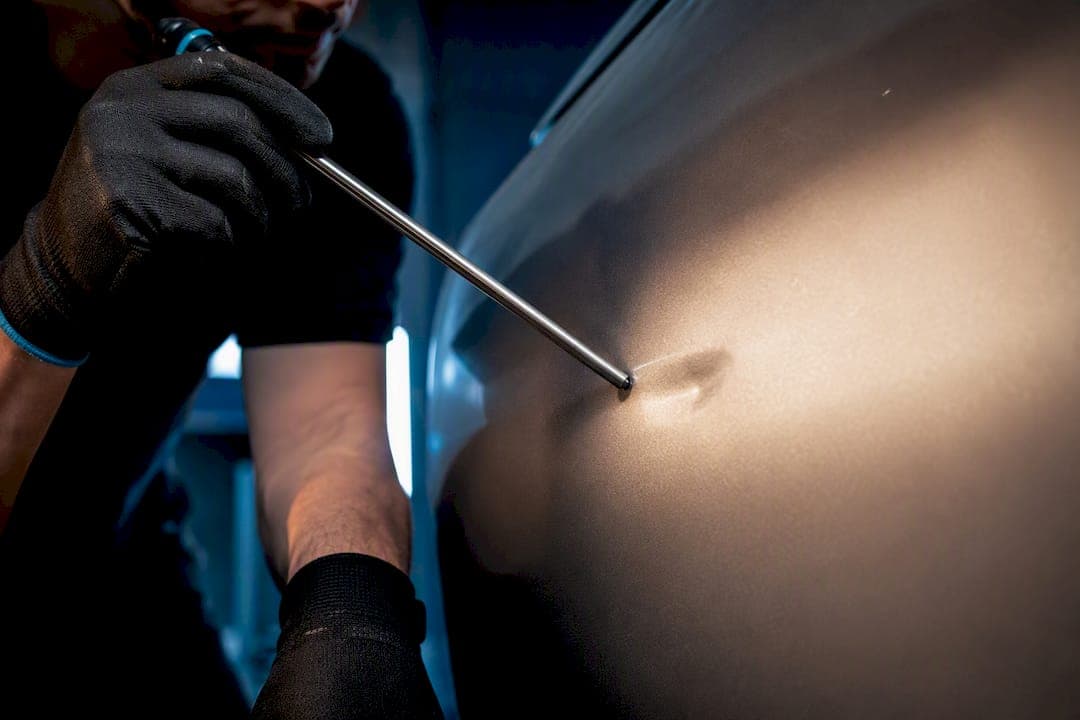
Depth and access, not diameter, decide whether paintless dent repair works, and a shallow dent stretched across a foot of hood can be an easier fix than a dime-sized crease. As a rule of thumb, shallow dents up to several inches across are usually good candidates, and even larger shallow lows can qualify when a technician can reach the backside cleanly. The sections below break down the diagnostic checks, real-world size ranges, and hard stop points that determine the answer for your specific dent.
TL;DR:
- Depth, access, and paint condition are critical factors in determining whether a dent is repairable with PDR, often more important than the dent's size or diameter.
- Shallow dents up to several inches across are usually fixable, especially if accessible from the backside, while deep or fractured metal dents generally cannot be repaired using PDR.
- Dent size alone is not a reliable indicator; wide, shallow damages can be repaired if access and material conditions are suitable, but small, deep, or creased dents often disqualify PDR.
- Dent repairability near hem flanges, folded edges, or ADAS sensor zones is limited or forbidden due to access difficulties and calibration risks.
- Proper inspection and preparation, including photos, panel location, and insurance info, are essential for an accurate estimate and to confirm if PDR suits the specific dent.
Table of Contents
- What Technical Factors Determine How Big a Dent PDR Can Fix?
- How Big Is "Big" in Real PDR Jobs?
- What Makes a Dent Impossible for PDR to Fix?
- How Does a Technician Decide If Your Dent Qualifies?
- Dent Boys' Take on When PDR Is the Right Call
- What a Dent Boys Estimate Actually Tells You
- Sources
- FAQ
What Technical Factors Determine How Big a Dent PDR Can Fix?
Diameter is the number owners fixate on, but it's the least useful one. A technician reading your dent is really running through five checks, and any one of them can override how "big" the damage looks.
Depth versus width matters most. A wide, shallow low spreads the stretched metal over a large area, so it pushes back out with steady, even pressure. A small, deep pit concentrates that same stress into a tight spot, which is exactly why depth, metal stretch, location, and access matter more than diameter alone when a technician sizes up the job.
Access and tool route come next. If a rod can't get behind the panel, size is irrelevant.
- Rear-side access through wheel wells, door panels, or trunk liners
- Hem flanges and folded edges where tools physically can't reach
- Bracing, sound-deadening material, or bonded structural panels blocking the path
Paint condition sets a separate limit. Some automakers, including Rivian, apply a 30x magnification rule to check for micro-cracking invisible to the naked eye. Intact-looking paint isn't the same as sound paint, and pushing metal that's already cracked at the polymer level causes the finish to fail later.
Material and construction narrow the field further. Aluminum stretches differently than steel and can develop stress marks a technician has to manage carefully. Ultra-high-strength steel and Boron, common in modern safety cages and door reinforcements, resist deformation to the point that forcing them risks cracking rather than reshaping.
Creases, folds, and oil-canning are the real deal breakers. A sharp crease means the metal's grain has fractured, not just stretched, and no amount of patience with a PDR rod fixes torn or memory-locked steel.
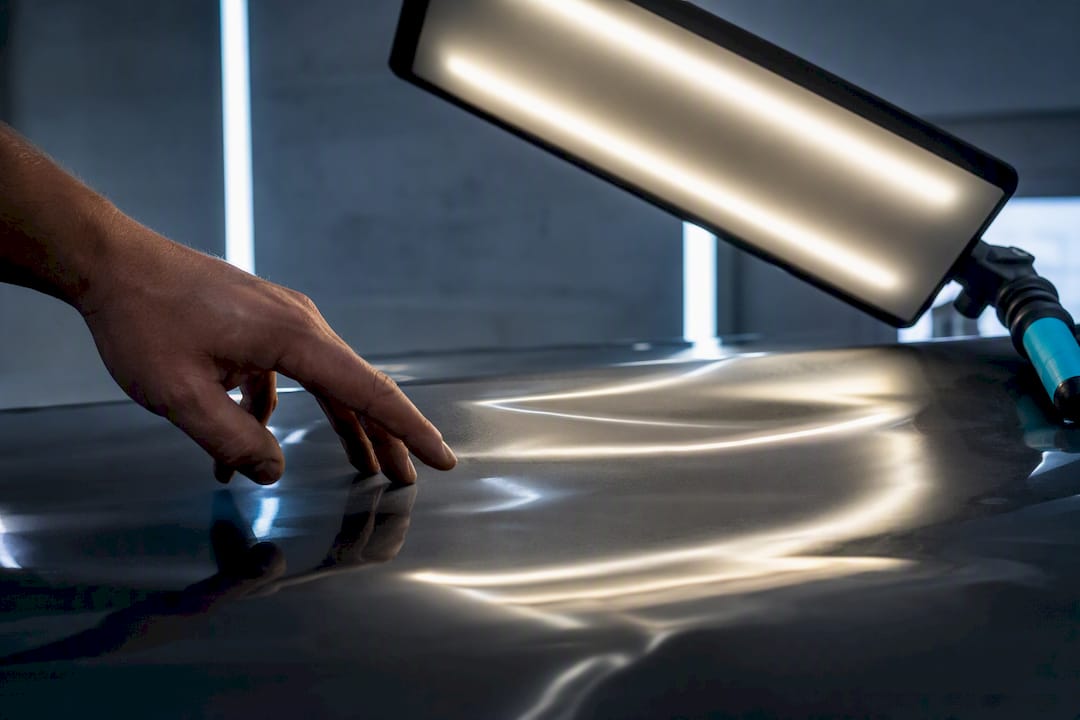
Pro Tip: Take a photo of your dent in raking light, at a low angle across the panel, before your estimate. It reveals whether you're looking at a smooth shallow low or a sharp-edged crease, and that difference alone often predicts the outcome.
How Big Is "Big" in Real PDR Jobs?
Owners often ask how big of a dent PDR can fix in inches, but the honest answer is a range tied to depth and access, not a single number. Here's how repair shops typically bucket the work:
- Minor dents (roughly coin to fist sized, shallow): Usually a same-day fix, often in the $75 to $250 range depending on panel and location.
- Medium dents (broad areas, several inches to about a foot across, still shallow with good access): Commonly a half-day to full-day job, often landing between $250 and $600.
- Large dents (wide, shallow panel-spanning lows, like a hood or roof section with good crown control): These can take a full day or more and run higher, sometimes into four figures, but they're still viable because they're shallow, not despite their size.
A dent that fails to make this list entirely is the small, deep pit near a body line, or a crease that runs across a panel edge. Those often get quoted for conventional repair instead, and cost estimates should reflect replacement versus repair math once a technician flags them. The pattern holds across categories: size alone rarely disqualifies a job, but a small dent in the wrong spot frequently does.
What Makes a Dent Impossible for PDR to Fix?
Every technician working a checklist runs into the same handful of hard stops, and they have almost nothing to do with how large the dent looks.
- Damage near a hem flange or folded panel edge where tools can't get leverage and prying risks breaking bonded seams
- Metal stretch, tearing, or fractured grain, which shows up as sharp creases or oil-canning that won't hold a repaired shape
- Paint micro-cracking or old filler, both of which mean the surface can't survive the pushing and tapping PDR requires
- Ultra-high-strength steel, Boron reinforcements, or ADAS sensor zones, where forcing the metal risks structural or calibration problems
The one-inch hem-flange rule is worth remembering because it's the single most common reason a technician says no to an otherwise reasonable-looking dent. Bumpers and panels near radar or camera mounts carry their own risk: pushing metal near ADAS sensors can throw off calibration, which turns a cosmetic fix into a safety issue if it's not handled carefully.
When a dent hits any of these disqualifiers, the honest move is escalation, not a workaround. Conventional repair methods exist precisely for the cases PDR can't touch, and real examples of where the line falls out this way in practice, including hem-flange failures and crease-driven write-offs, tend to look a lot alike once you've seen a few.
How Does a Technician Decide If Your Dent Qualifies?
A good inspection follows a set order, and knowing the sequence helps you ask sharper questions at the estimate.
- Paint check first: magnified inspection for cracking, prior repaint, or filler
- Line-board reading: technicians watch how reflected lines bend across the dent to map where the crowns, highs, and lows sit
- Access check: confirming a clean route to the backside without cutting into trim or bonded panels
- Geometry read: a single controllable low is good news; multiple displaced crowns or a long crease usually means staged work or conventional repair
Bring three things to your estimate: clear photos in raking light, the exact panel location, and your insurance information if you're filing a claim. Ask the technician to show you the access route before work starts, ask directly whether the repair could affect ADAS calibration, and ask what warranty backs the work. Panel access questions separate technicians who know their limits from ones guessing at yours.
Pro Tip: Ask to see before-and-after photos of a similar dent on the same body panel type. A technician who can't produce comparable case examples is asking you to trust a guess, not a diagnosis.
Dent Boys' Take on When PDR Is the Right Call
Dent-boys recommends PDR whenever the diagnostics support it, because it preserves the factory finish in a way removing swirl marks from your car's paint never fully matches. That's the whole appeal of the process, and it's why we push for it first rather than jumping to filler and paint. Services such as estimates, pick-up and delivery, rental vehicles during repair, and warranties may be offered to make that decision low-risk for you. When a hood or door panel checks out clean on access and paint condition, the outcome tends to be the kind of result that makes the dent hard to find again.
— Martin
What a Dent Boys Estimate Actually Tells You
A free estimate answers the question this whole article has been circling: is your specific dent a PDR candidate, or does it need something else? A Dent-boys technician checks paint condition under magnification, traces the access route to the backside, and reads the panel's geometry the same way described above.

Before you book, snap a few photos in raking light, note the exact panel and roughly how the damage happened, and have your insurance details ready if you're filing a hail or collision claim. That prep speeds up the estimate and gives the technician a head start on judging repairability before they ever touch the panel.
The estimate itself covers three things: whether PDR is viable given depth and access, a realistic timeline, and what the lifetime warranty covers once the work is done. Support through insurance and rental vehicles may be available during the repair, reducing potential downsides to finding out. Get your free estimate started and get a straight answer on your dent instead of a guess.

Sources
The hem-flange and ADAS keep-out rules come from DentAdvisor's technical breakdown of PDR limitations. The five-factor repairability matrix is SuperPDR's technician-facing framework. SEMA offers broader trade guidance shaping how these standards evolve industry-wide.
- PDR Limitations: Technical Analysis of When Paintless Dent Repair Won't Work | DentAdvisor
- What Dents Can Be Repaired With PDR? A Repairability Matrix for Technicians and Buyers | SuperPDR
FAQ
How big of a dent is too big for PDR?
There's no fixed size cutoff. A wide, shallow dent spanning a foot or more can still qualify if a technician has clean access to the backside, while a small, deep, or creased dent a few inches wide can be disqualified entirely.
What are the limitations of paintless dent repair?
PDR can't fix damage near hem flanges, torn or fractured metal, cracked paint, or dents in ultra-high-strength steel and Boron panels. It's also limited near ADAS sensor zones where calibration risk comes into play.
What can PDR not fix?
PDR generally can't fix sharp creases, oil-canning, prior filler repairs, or dents within about an inch of a folded panel edge, since tools can't reach or safely leverage those areas.
How much does PDR cost for a large dent?
Large but shallow dents with good access typically run from a few hundred dollars into four figures, depending on panel size and time required. A free estimate from Dent-boys gives you an exact figure once a technician inspects the damage.
Does PDR work on aluminum panels?
Yes, though aluminum behaves differently than steel and requires more careful technique, since it stretches and can develop stress marks that a skilled technician has to manage during the repair.