
Filing an insurance claim for dents is the right move when repair costs clearly exceed your deductible and a covered event caused the damage. Not every dent qualifies, and not every claim is worth filing. Understanding the difference saves you money and protects your coverage record. This guide breaks down exactly when dent insurance coverage works in your favor, what the process looks like, and when paying out of pocket is the smarter call. Whether you're dealing with hail damage, a parking lot collision, or vandalism, the decision to file a claim for car dents deserves a clear-eyed financial analysis.
Why file an insurance claim for dents?
Filing a dent claim makes financial sense when the repair cost significantly exceeds your deductible and the damage stems from a covered event. The core logic is simple: insurance exists to protect you from large, unexpected losses, not to cover routine wear and cosmetic maintenance.
Dent insurance coverage depends entirely on the type of coverage you carry and the event that caused the damage. Misunderstanding your policy leads to false expectations and denied claims. Knowing your coverage type before you call your insurer is the first step toward a successful outcome.

There is also a documentation benefit that most car owners overlook. Filing a claim creates an official record of the damage, the event, and the repair. That record protects you if related injuries or structural issues surface later, especially after a collision.
What types of dent damage are covered by car insurance?
Two coverage types handle most dent scenarios: collision and comprehensive. Knowing which applies to your situation determines whether your claim will be approved.
Collision coverage pays for dents caused by:
- Accidents you cause or share fault in
- Impacts with another vehicle
- Hitting a stationary object like a pole, curb, or guardrail
- Rollovers
Comprehensive coverage pays for dents caused by:
- Hail storms (one of the most common dent events in the U.S.)
- Vandalism or keying
- Falling objects such as tree branches or debris
- Theft-related damage
- Animal strikes
Collision and comprehensive coverage handle dents differently based on the event type, and your policy determines which applies. Hail damage, for example, falls under comprehensive, not collision. That distinction matters because deductibles and premium impacts can differ between the two.
Paintless Dent Repair (PDR) is frequently covered when the paint surface remains intact. PDR is the industry-standard technique for reshaping metal without sanding or repainting. Insurers favor it because it costs less than traditional bodywork and preserves the factory finish.
What insurance does not cover:
- Pre-existing dents present before your policy started
- Cosmetic damage with no covered triggering event
- Normal wear and tear
- Dents you caused intentionally
When another driver is at fault, their liability coverage should pay for your repairs. Filing even when not at fault protects your rights and can speed up the compensation process, especially if the at-fault driver's insurer delays.
How do deductibles, repair costs, and premiums affect the decision?
The financial math behind filing a dent claim is straightforward once you know the numbers. Your deductible is the amount you pay before insurance covers the rest. A typical deductible sits around $500.
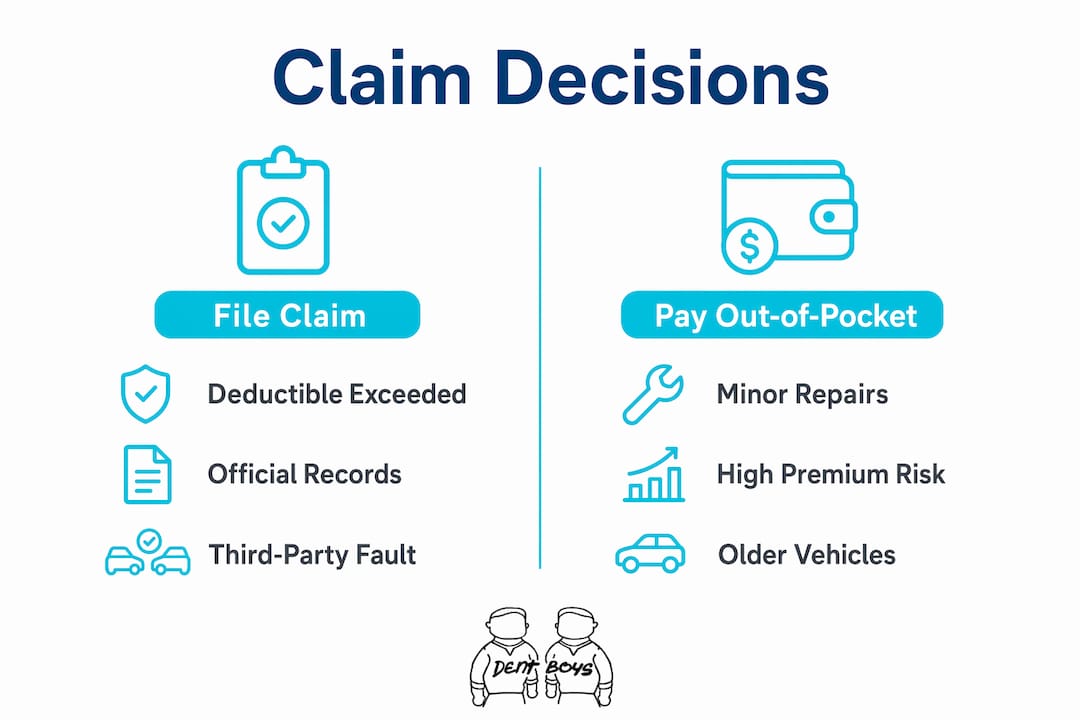
Repairs between $600 and $1,200 often do not justify a claim when your deductible is $500. The insurance payout is minimal, and the long-term cost of a premium increase can erase any short-term savings. That is the trap many car owners fall into.
A single auto insurance claim raises premiums by about 9%. On a $1,800 annual premium, that is an extra $162 per year. Over three years, you pay $486 more, which often exceeds the original repair cost.
| Scenario | Repair Cost | Deductible | Insurance Payout | 3-Year Premium Increase |
|---|---|---|---|---|
| Minor parking dent | $650 | $500 | $150 | ~$486 |
| Hail damage (multiple dents) | $3,500 | $500 | $3,000 | ~$486 |
| Collision dent | $2,200 | $500 | $1,700 | ~$486 |
| Small door ding | $300 | $500 | $0 | N/A |
The table makes the pattern clear. Small repairs near or below your deductible produce little to no payout while still triggering a rate increase. Large repairs, like extensive hail damage, produce a meaningful payout that justifies the claim.
Filing also affects your no-claims bonus. Many insurers reward drivers who go claim-free for extended periods with lower rates. Frequent small claims erode that bonus and raise your long-term cost of coverage. One unnecessary claim can cost you years of accumulated savings.
Pro Tip: Before filing, get a written repair estimate from a professional shop. Compare that number against your deductible and calculate the 9% premium increase on your current rate. If the math does not favor filing, pay out of pocket and protect your claims record.
Understanding dent repair cost factors before you call your insurer gives you a stronger position in the claims conversation.
What are the steps for filing an insurance claim for dents?
A well-documented claim moves faster and pays out more completely. Rushing the process or skipping steps creates gaps that insurers use to reduce or deny payouts.
-
Document the damage immediately. Photograph every dent from multiple angles in good lighting. Capture the full vehicle, close-up shots of each dent, and any surrounding context like hail on the ground or a damaged object nearby.
-
Get a professional repair estimate. Visit a reputable body shop or PDR specialist before contacting your insurer. A written estimate gives you a baseline and prevents lowball assessments from the insurance adjuster.
-
Notify your insurer promptly. Most policies require timely reporting. Delaying notification can give the insurer grounds to question the claim. Notifying your insurer quickly protects your rights even when you are not at fault.
-
Choose which insurer to file with. If another driver caused the damage, you can file with their liability insurer or your own collision coverage. Filing with your own insurer speeds up repairs but uses your deductible. Filing with the at-fault party's insurer avoids your deductible but takes longer.
-
Keep all communication records. Save every email, text, and call log with your insurer. Avoid admitting fault or speculating about the cause of damage in writing.
-
Watch for hidden damage. Bumper dents often conceal broken clips, sensors, or structural components that only appear after a professional teardown. Hidden structural damage behind bumpers is covered through insurance supplements, but only after the claim is initiated and an inspection is performed.
-
Challenge denials when warranted. If your claim is denied, request the specific policy language used to justify the decision. Many denials are overturned when car owners provide additional documentation or a second repair estimate.
Pro Tip: Take timestamped photos of your entire vehicle every few months. That habit creates a clear before-and-after record that makes new damage undeniable to adjusters.
For a detailed walkthrough of the claims process, working with insurance for dent repair covers the notification and documentation steps in depth.
When should you pay out of pocket instead of filing a claim?
Insurance covers catastrophic losses, not cosmetic maintenance. Minor dents that do not affect your vehicle's function or safety fall into the maintenance category, not the insurance category.
Pay out of pocket when:
- The repair cost is at or below your deductible
- The dent is purely cosmetic with no structural impact
- You have filed another claim within the past 12–24 months
- You are close to earning or renewing a no-claims discount
- The vehicle is older and depreciation has already reduced its market value significantly
Vehicle depreciation changes the math on dent claims. An older car with high mileage loses value regardless of dents. Paying a premium increase to repair a $400 dent on a vehicle worth $6,000 rarely makes financial sense. Prompt dent repair matters most on newer or higher-value vehicles where resale price is a real concern.
The smartest approach treats your insurance record as an asset. A clean claims history keeps your premiums low and gives you leverage when negotiating rates at renewal. Spending $300 out of pocket to fix a small dent today can save you far more over the next three years.
Key Takeaways
Filing a dent insurance claim pays off when repair costs clearly exceed your deductible and the damage comes from a covered event like hail, vandalism, or a collision.
| Point | Details |
|---|---|
| Coverage type determines eligibility | Collision covers impact dents; comprehensive covers hail, vandalism, and falling objects. |
| Deductible math matters | Repairs near a $500 deductible rarely justify a claim after factoring in premium increases. |
| Premium impact is real | A single claim raises premiums by about 9%, which can exceed the repair payout over time. |
| Documentation protects you | Photos, estimates, and records strengthen your claim and prevent lowball adjuster assessments. |
| Minor dents belong out of pocket | Cosmetic damage without a covered event is maintenance, not an insurance event. |
What I've learned about dent claims after years in the repair world
Most car owners either file too often or not at all. Both extremes cost money.
The owners who file for every small ding end up paying more in premiums than they ever recovered in payouts. I have seen drivers lose their no-claims discount over a $400 repair that netted them $50 from their insurer after the deductible. That is a bad trade by any measure.
The owners who never file miss legitimate payouts on significant hail events or collision damage. A proper hail claim on a vehicle with 40 or 50 dents can easily justify the process, especially when a skilled PDR technician can restore the car to factory condition without repainting.
The real skill is knowing the line. Get the estimate first. Always. Do not call your insurer until you know what the repair actually costs. That number tells you everything about whether filing makes sense.
I also think car owners underestimate the value of documentation. Even when you decide not to file, photograph the damage and keep the estimate. If that same area gets hit again six months later, you have a clear record of what was new damage versus what was pre-existing. Adjusters look for reasons to reduce payouts. Good documentation removes those reasons.
The other thing worth saying: not all repair shops are equal in how they handle insurance work. A shop that understands the claims process, knows how to identify hidden damage, and communicates clearly with adjusters will get you a better outcome than one that does not. Choose your repair partner as carefully as you choose whether to file.
— Martin
Dent-boys makes the insurance claim process straightforward
Dealing with dents is stressful enough without fighting your insurer alone. Dent-boys specializes in paintless dent repair and works directly with insurance companies to help car owners get the coverage they are entitled to.
Whether your vehicle took a beating from a hail storm or picked up collision damage in a parking lot, Dent-boys handles the repair and the paperwork. The service includes free estimates, pick-up and delivery, a $0 deductible option, and a lifetime warranty on every repair. Visit Dent-boys to get your free estimate and find out how much your insurance will cover. Your car gets restored to like-new condition without the hassle of managing the claim on your own.
FAQ
Does car insurance cover dents from hail?
Yes. Hail damage falls under comprehensive coverage, which pays for dents caused by weather events, vandalism, and falling objects. Your deductible applies before the insurer pays the remainder.
Is it worth filing a claim for a small dent?
Generally, no. Repairs near or below your deductible produce little payout, and a single claim raises premiums by about 9%, which often costs more over time than the repair itself.
What is paintless dent repair and does insurance cover it?
Paintless Dent Repair (PDR) is a technique that reshapes dented metal without sanding or repainting. Insurers frequently approve PDR when the paint surface is intact because it costs less than traditional bodywork.
Should I file a claim if another driver dented my car?
Yes. Filing when you are not at fault protects your rights, creates an official damage record, and can speed up compensation. You can file with the at-fault driver's insurer or your own, depending on which process moves faster.
How do I document dents for an insurance claim?
Photograph every dent from multiple angles in good lighting, capture the full vehicle, and get a written estimate from a professional repair shop before contacting your insurer.